Thursday, February 24, 2022

A Red letter bird.

My local patch list is kept on a colour coded excel spreadsheet. The species are listed down the left hand column and the years are horizontally along the top. I've described it on here before, so to get the full boredom feel, see link. 

This makes it easy to monitor the species, what is missing for a given year etc. The exciting bit (well ok, the exciting bit for me) is to see how many 'red' species turn up in a year. These are species recorded on 3 or less years since recording began in 2009. The birds might not be rare on your patch or on a national or even county level, but on mine they make the heart skip a beat.

On Tuesday one such species turned up for the 2022 list, my first 'reddity' of the year.

At lunchtime I was out taking Peggy for her walk. The coast seemed quite busy with a  layby full of cars, so we headed off down the 'Teepee Track'. It is a bridle path that runs south from Seahouses Farm where it passes the now defunct site of a reconstructed neolithic hut. It's a mostly bird barren site apart from a stubble field that holds a few finches and larks and it was while scanning for these, the birding took a turn for the better...

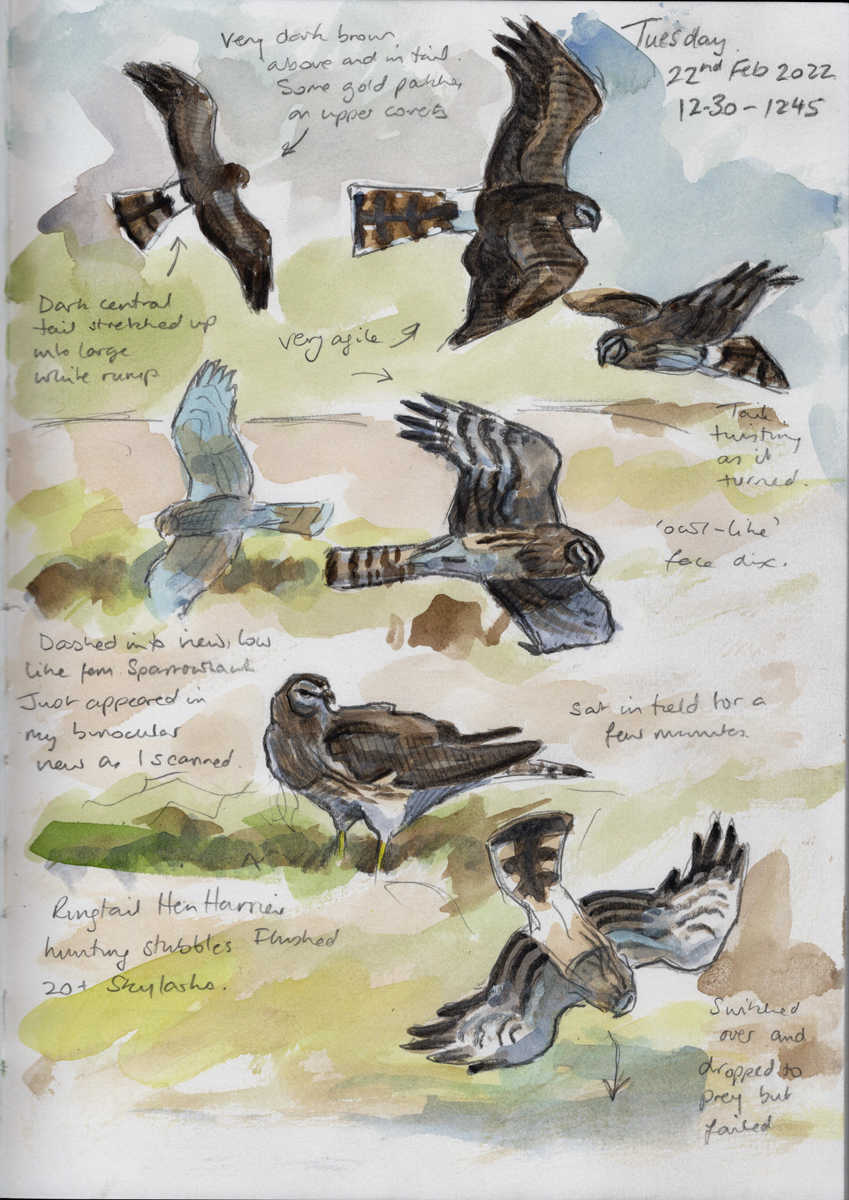
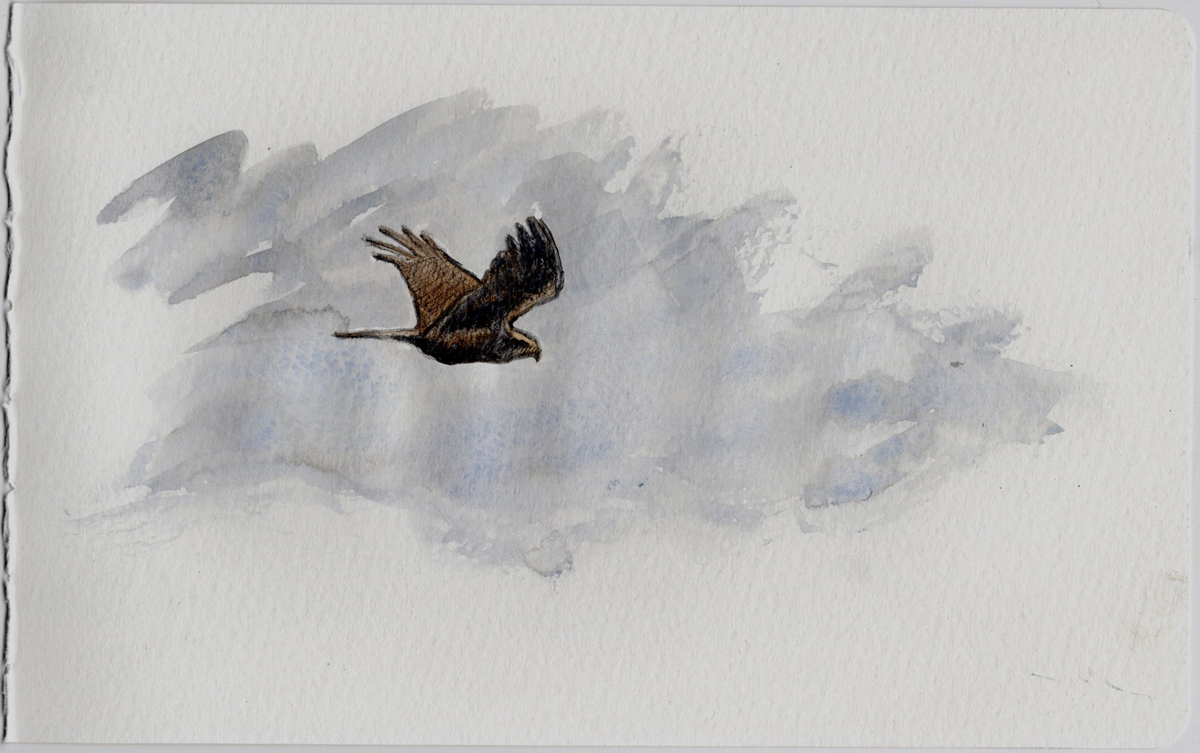
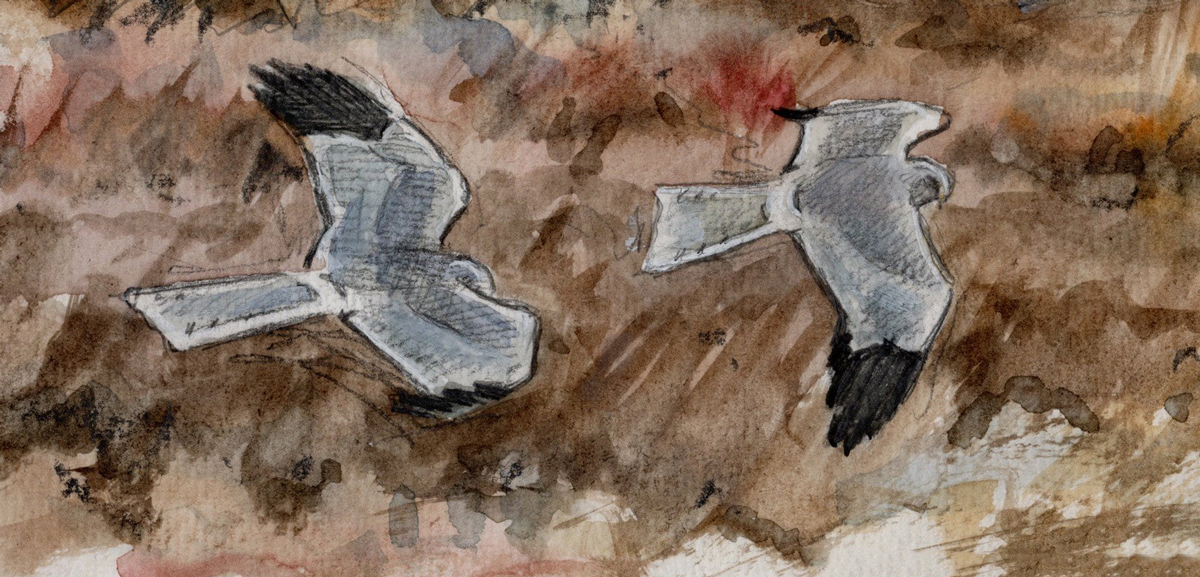
We were stood on the old teepee site as I scanned north west across the field hoping for a twite or lapland bunting or even a Meadow Pipit that has not shown so far this year, when, into my binocular view , dashed a direct, low flying, raptor. The first thought was female Sparrowhawk but it looked odd, darker, when it turned to reveal a massive square white rump - a ringtail Hen Harrier!

On this site, Hen Harrier is a knee trembling rarity with only one previous record from 2010 during that hard winter. Concentrating, I leaned on the fence to get the best possible steady views of the bird, thinking it was just passing through. Luckily for me, it was in hunting mode and began quartering the stubble, hovering, sometimes with legs dangling before changing direction and taking another line. It was flushing larks and linnets all over. The sun was behind me, lighting the harrier beautifully as it floated and pirouetted around the field for about 10 minutes. Once it even landed for a look around before getting back up and quartering its way to the north and off towards our village. I wonder if it went over our garden?

Without a camera, I concentrated as much as possible so I could do this sketch as soon as I got back in to the house...

What a great 'red box' bird for my Local Patch year list... 


Monday, February 21, 2022

A flock of storms...

These storms are beginning to irritate now. We've had roll call of  Arwen, Barra, Corrie, Malik, Dudley, Eunice and Franklin since 26th November. I knew when we had those two weeks of  fine, calm, weather in January that we would pay for it. This last week we have had three of these storms and it looks set to be windy for the forseeable.

As a result, I haven't been too far birding and the last two Sundays have been written off due to the weather. Roll on spring!

Around the village this last 10 days or so birding has been done while dog walking with a few things into the notebook.

The back field flash still has a tiny puddle of a marsh that held 4 Snipe the other day and 6 Skylarks flew N, the first signs of viz mig this year.

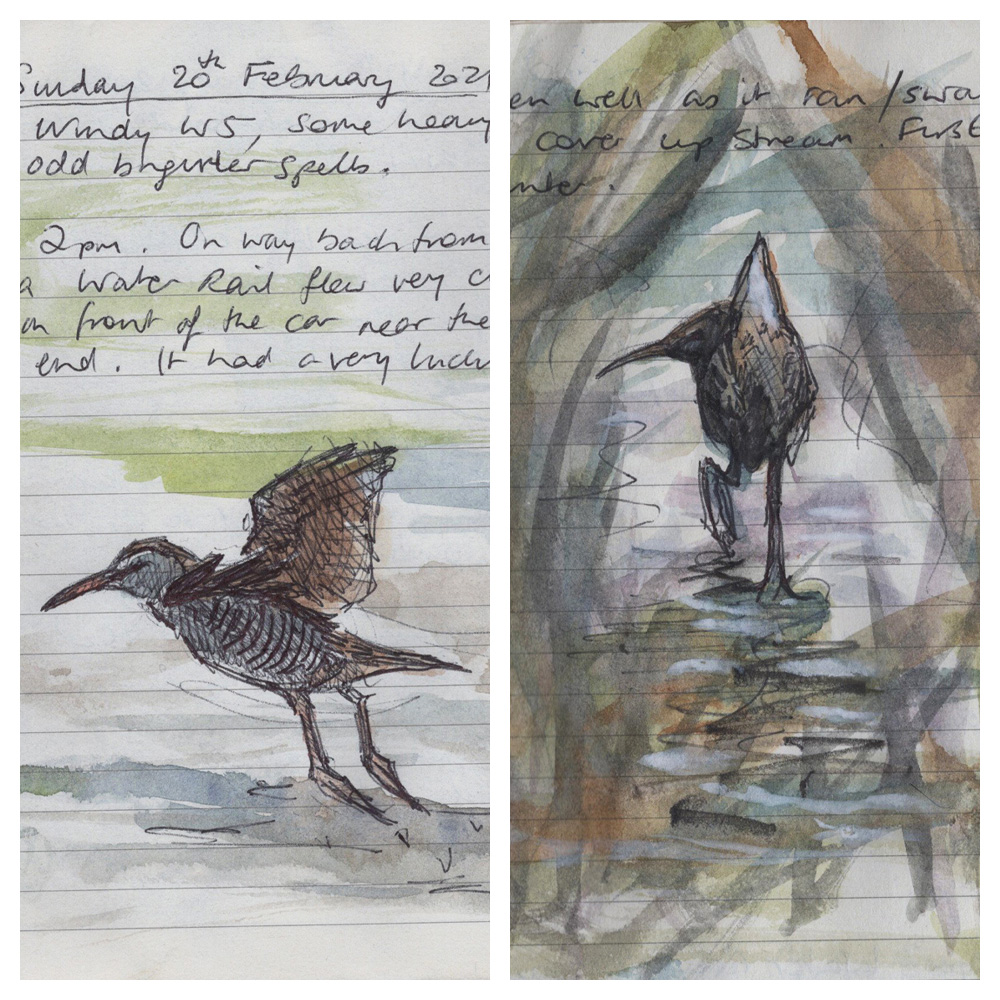
 On Friday I was pleased to see a Water Rail in the village burn, my first this winter. It paused briefly before scuttling off upstream at a pace. Yesterday, it had a near miss as I drove along the lane when it flew very low right infront of the car into the hedge across the road. Luckily I make a point of driving slowly here as there are always Blackbirds or Roe Deer popping out.

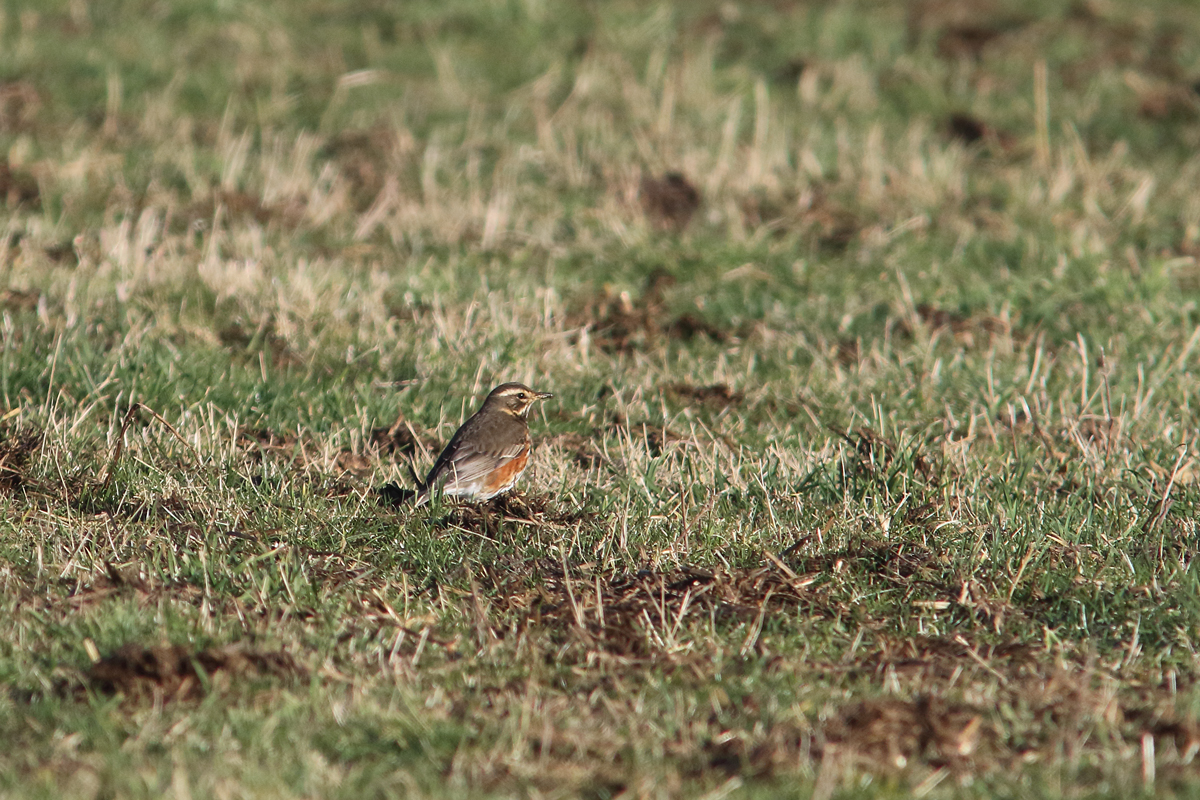
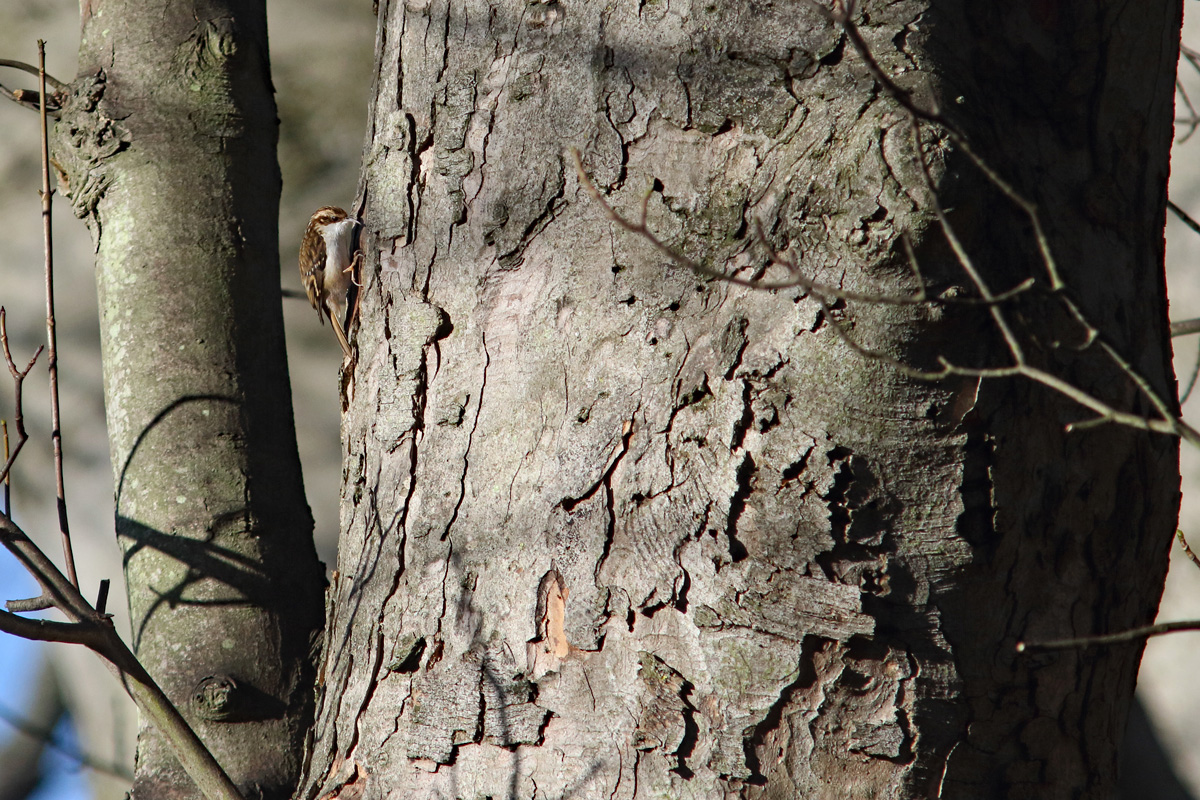
A large flock of 90 - 100 Chaffinches are feeding in the Rectory paddock but there are no Bramblings with them, yet. If the flock holds until April it should attract a few on return migration. Also here 9 Redwings but no Fieldfares. In the wood, Treecreepers are vocal, while Sparrowhawk and Buzzard have been seen each week. 

Not much there to set the ornithological world alight, but there is always something to look at. Maybe this northerly off  'Franklin' will give the chance of a white winged gull or even better, its namesake in coming days?


Redwing.

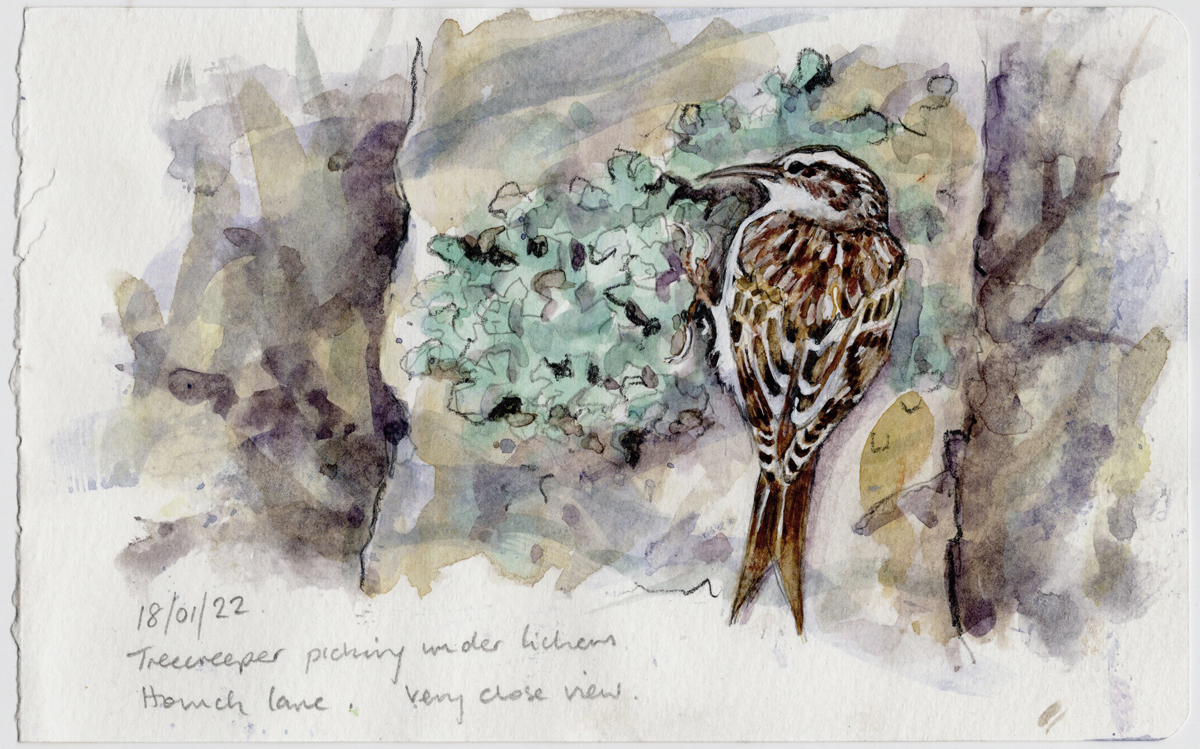
Treecreeper


Thursday, February 17, 2022

Storm Dudley and Storm Eunice..

 That's another one over, this time unscathed. Dudley did some sabre rattling but left without satisfaction.

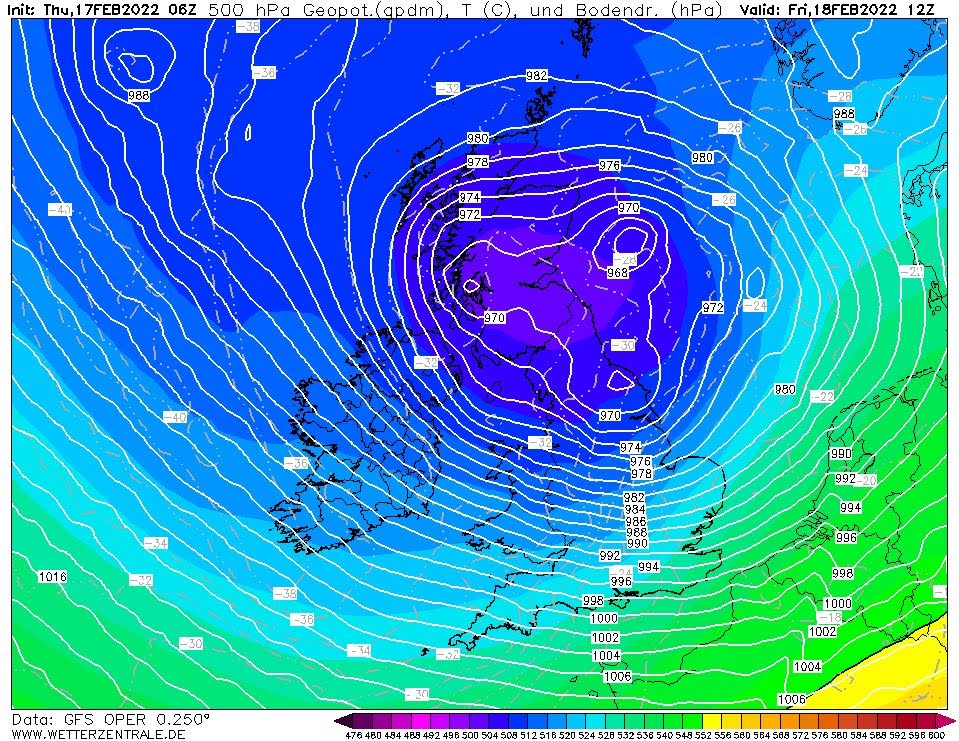
Now its time to watch Dudley's neighbour, Storm Eunice, a nasty little 'explosive cyclogenesis' of a storm who is due in tomorrow.  This time, it looks like the South of England will be worst hit with 80 mph winds even inland, but we are not going to be sunning it here, the north flank of the low pressure is due to give us snow and blizzards. Which is nice.

My own thoughts on these ever more regular features of the weather are divided. The main part of me hates it and just wish it would stop, but in the back of my mind, I always wonder if any birds will be displaced by it.

As I write this, the Met Office has upgraded Eunice to a Red Warning. Yet, loads of messages on social media are joking about it and how it might blow their wheelie bin over... Good luck to anyone in the red and amber areas, stay safe....

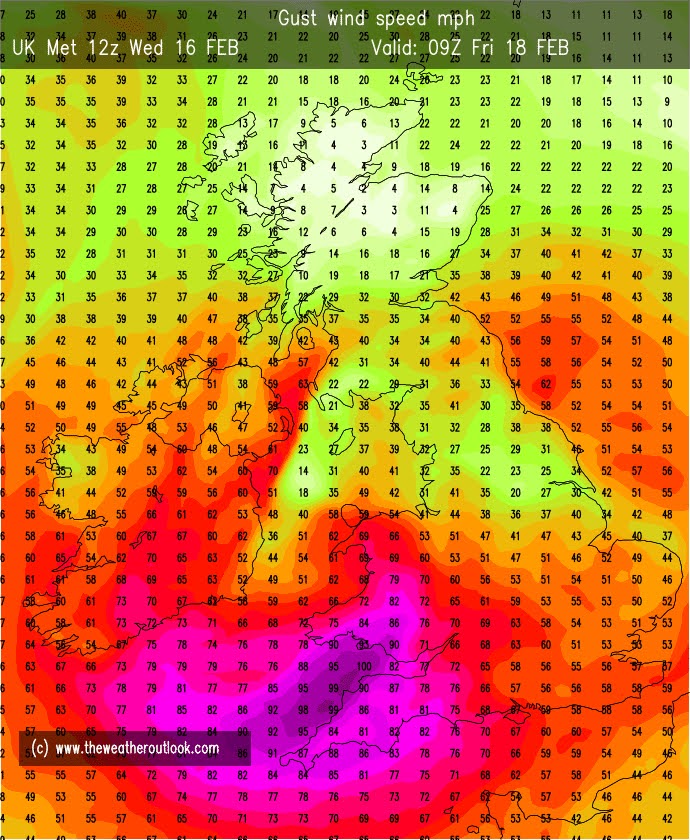
As Eunice arrives in the SW these are expected wind speeds.

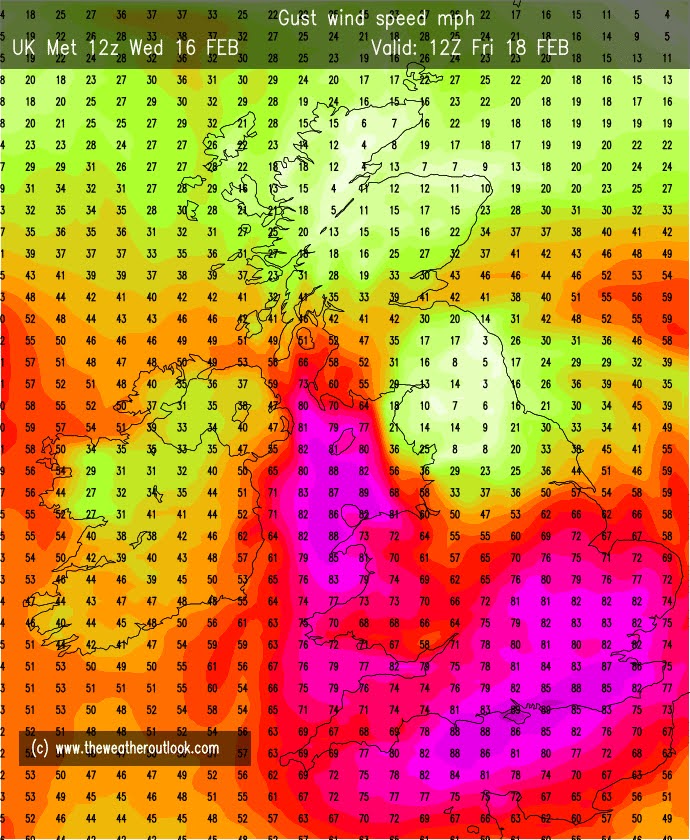
Eunice tracks further inland...


Monday, February 07, 2022


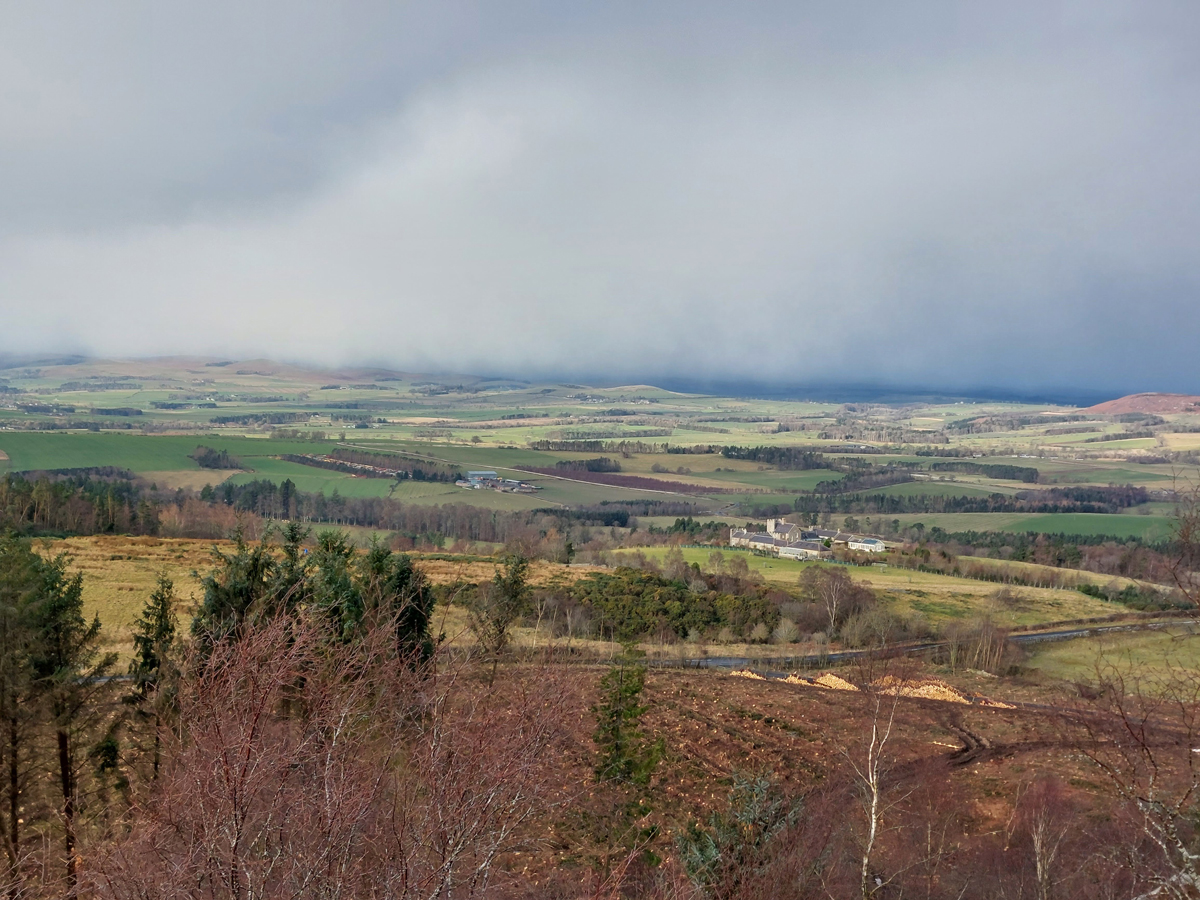
The View West towards the Cheviots. You wouldnt want to be up there today...

Sunday was cold and windy, with a W5 being particularly irritating. 

February is a slow time in Northumberland so rather than face the visitors at Boulmer we headed inland for some solitude. Maybe a bit too much solitude as even the birds were keeping a low profile.

I wanted to check out the access to Corby Ponds, just to see if we will be able to get there at all come the dragonfly season. Many woods around here are totally inaccessible after the storms so I didnt expect anything good. As it happens, apart from a couple of trees across,  the ride through the wood was free of obstruction. A few Crossbills were flying around, one song flighting, and a small flock of birds keeping out of the wind comprised of 3 Lesser Redpolls, 12 Chaffinches and a Reed Bunting. 

Then a sleet squall came in forcing us to take cover in the pines for a short spell until it passed over.

The dragonfly pond is looking good, and I cant wait for some nicer weather later on to get back up here for some invertebrate hunting.

We then checked out Oxen Wood ( top photo) at Lemmington Crossroads. The pines have been felled leaving an unfamiliar look to the landscape but it should let more light in to some nice Green Hairstreak habitat.

And that was the morning about finished really. Not much in the notebook but at least we got some excercise... 

The dark, peaty waters of Corby Pond in the sleet. Hopefully the scene will be better next time we visit.


Tuesday, February 01, 2022

Big Garden Birdwatch.

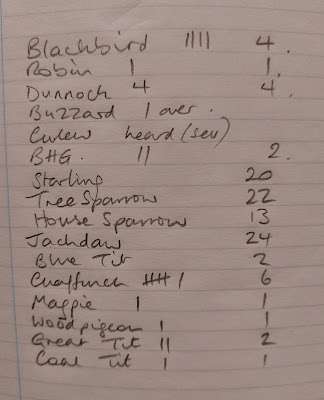
 Sunday morning was calm and fine, a pleasing contrast after the blasting we had on Saturday so we did the garden bird count. I watched the kitchen window, Jane from the other side in the bedroom calling out additions.

Totals from 10.50 - 11.50am.

The list is pretty much as last year but without Great Spotted Woodpecker and Sparrowhawk. Both species are around, just not in the hour we counted.

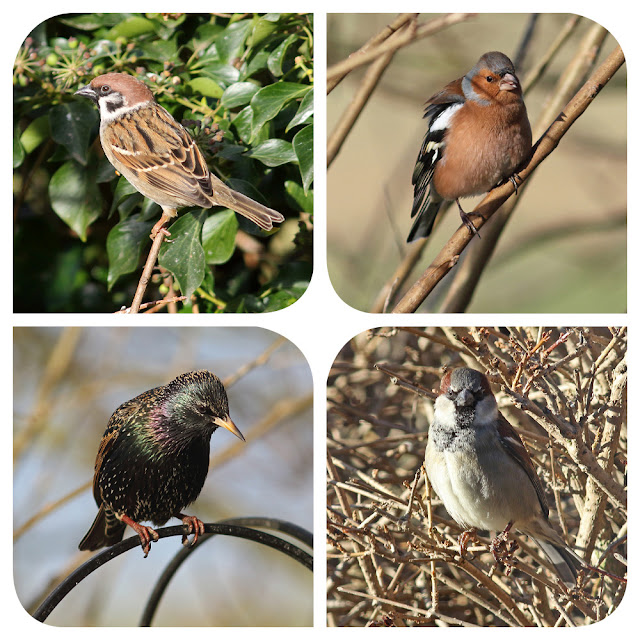
Its still great to see my second most numerous species after Jackdaw is Tree Sparrow. I have had up to 32 birds this winter but only the 22 today. The RSPB webpage for recording the count doesnt have Tree Sparrows as a standard garden species so I had to add them as an extra with no number. People are telling me it is possible to add them so I'll see if it can be edited.

Some of the cast as seen from the kitchen window...


Monday, January 31, 2022

January

 That's the last orders bell ringing for January. Since the previous post, we have had another power outage taking us to 298 hours without electricity since the 26th November. 

Its unbelievable in the 21st century that this can happen in the UK. As if that's not bad enough there is no mobile phone signal in our village either. That's another hard one to get your head around. On the mainland UK, 5 miles from the A1, 20 odd years since mobile phones became de rigeuer and its like 1970. You could call from Novosibirsk or Merzouga just not from here. 

Getting back on track, how has the local patch fared this month.

Very different to 2021, with a good few species absent including -

Canada Goose, Brent Goose, Whooper Swan, Grey Plover, Purple Sandpiper, Med Gull, Little Egret, Barn Owl, Kingfisher, Peregrine, Hooded Crow, Reed Bunting, Greenfinch and Meadow Pipit.

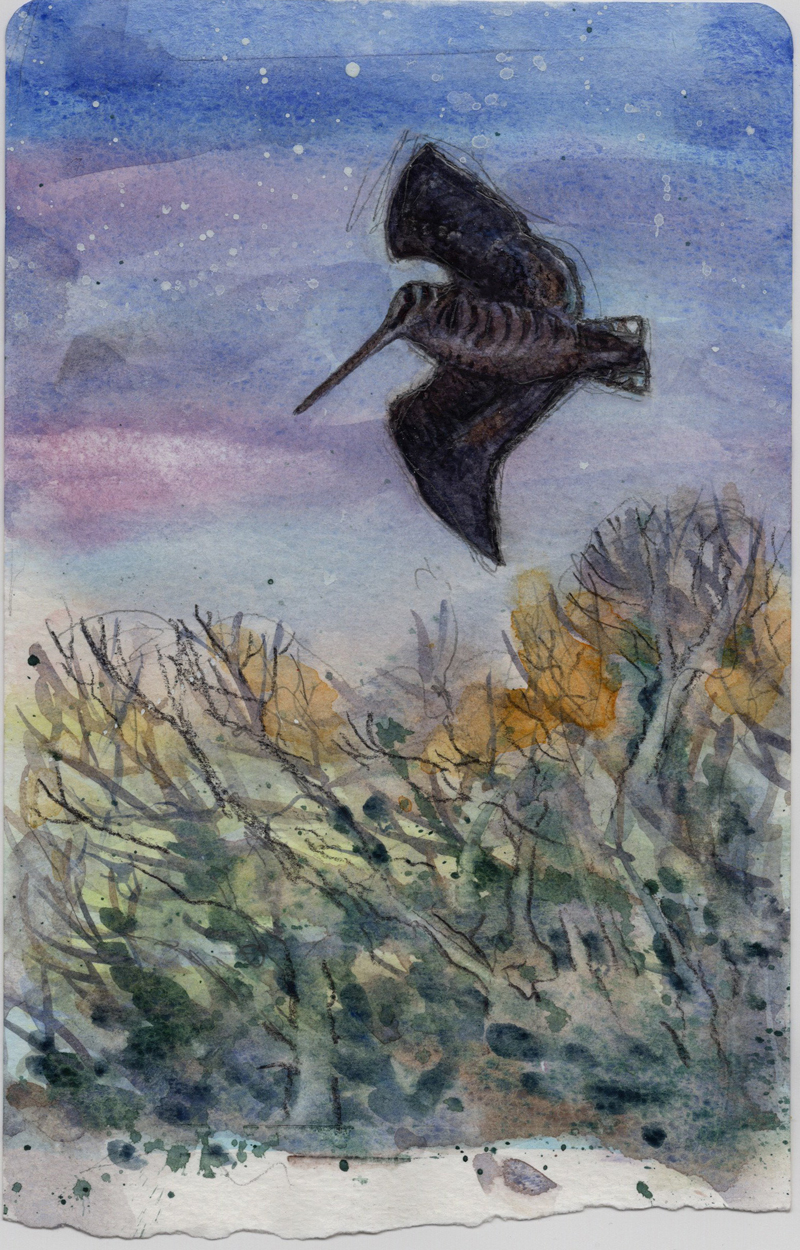
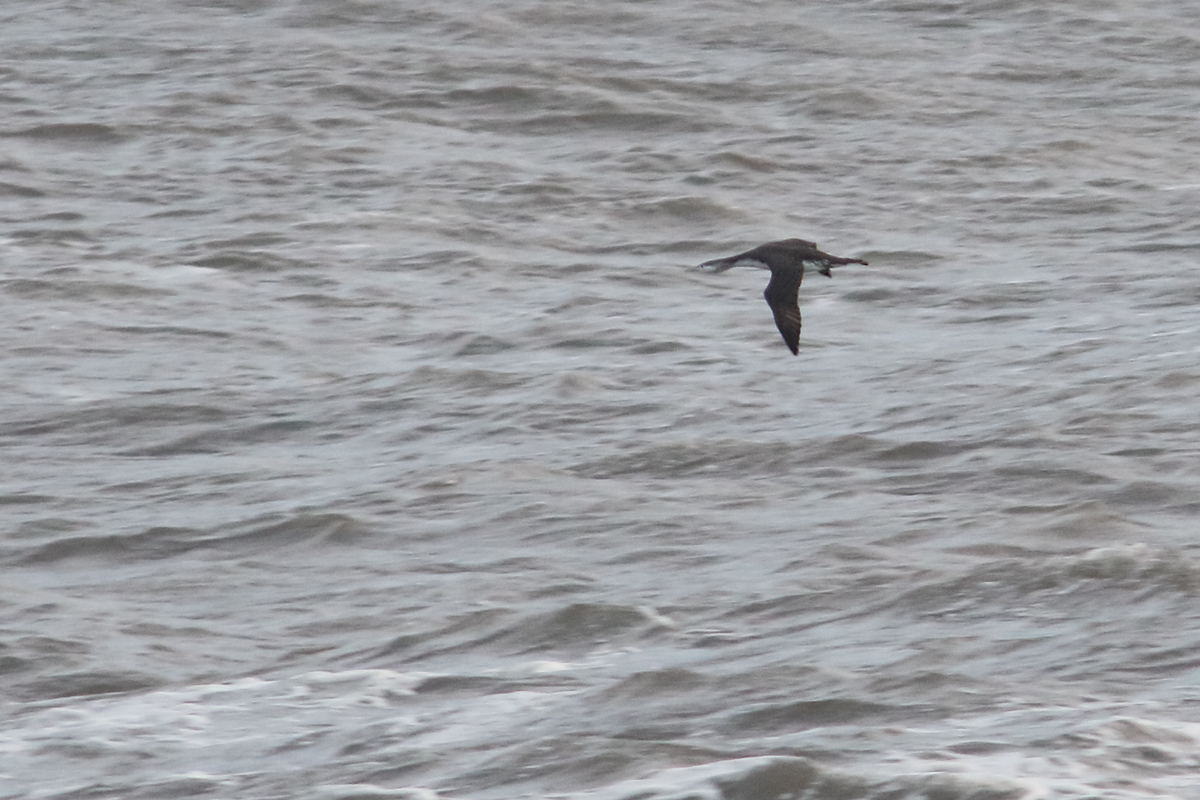
Highlights have been Great Northern Diver, Raven, Twite, Marsh Harrier, Gadwall and Woodcock.

Overall, I am about 8 species short on last years total despite having reasonable weather for most of the month and being out everyday. At least there is still a lot to play for in February.


Monday, January 24, 2022

Surprise...


 An unexpected patch surprise crossed my path on Saturday afternoon when a dark 'buzzard' over the pond field and woods turned out, on closer inspection, to be a female Marsh Harrier. Not on my radar in winter, this is only my 5th or 6th on patch in the last 12 years, the rest all being between April and August. Saturdays are not good here in winter as a shoot takes place all over the estate between 9am and lunchtime so I didn't expect to see anything at all let alone the bird of the month so far. Needless to say, it didn't linger and just flew steadily west over the tree tops...

Today at the pond field on Peggy's lunchtime walk, the ducks have returned with 19 Teal, 6 Mallard, 6 Gadwall and 7 Tufted Duck plus 3 Little Grebes, 1 Coot a few Moorhens, 5 Herons and the first Sparrowhawk of the year.  As we arrived back in the village a Raven called overhead.

Saturday coming sees the final day of the shooting season, so the birds will be left in peace until next winter.


Friday, January 21, 2022

Keep it Real...


Another home working week of fine cold days at least meant I could get a walk in at lunchtime with Peggy.

The video, if it works, above was taken on yesterdays lunchtime walk where it shows the bay beside our village and Cullernose point at the back. The sea is coming off a stiff northerly breeze making for some nice rollers coming in. At night they were banging at the base of the cliffs making a huge thunderous noise.

Without enough time to have a seawatch yesterday I fancied that today might have some birds re-orientating back north . Its never very good in mid winter but there can be a few birds moving with a chance of Little Auk or maybe a white winged gull for those prepared to get frozen., so I clocked off mid morning for an hour and sat out on the point. So much for possibilities. There were no birds. This is not quite literally, but there were very very few birds at all though I managed a single Gannet and 4 Kittiwakes that were new for the year, but there wasn't even a sniff of an auk or a diver. No worries, they will come.

Around the village lane and pond field another few new additions made every days walk worthwhile. Apart from Shoveler, Gadwall and Treecreeper, 2 Woodcock did a dusk flight out from the woods across the lane to the coast fields to feed.

A site record count of 7, yes 7 Gadwall along with 3 drake Shoveler were good.


So that's not too bad. Before the months end I might still have another  8 or 9 good possibilities with the likes of Meadow Pipit and Reed Bunting still to be located. 

With my expectations being kept to an ultra realistic level, its good to appreciate the very common birds we take for granted. Hopefully I will get to draw a few more of those too over the year and not just the big arrivals....  


Tuesday, January 18, 2022

Curlews 'n' that .


 As John was under lock and key with Covid, I was out, at a loose end, on Sunday morning. 

Without any plans, I just decided to stay around home trying to fill in some of the blanks in my New Year local patch list. Last week I had jotted down some of the common species I would expect or have had in January in previous years that were playing hard to get. 

There were two strands to look for. Those birds that could be had along the shore and those from the woodland areas a short way inland. From the former, I was missing most of the common wintering waders, some wildfowl or seabirds and from the latter the likes of  Treecreeper, Redpoll, Brambling and Tawny owl could all be added. I expected to get maybe 4 or 5 to add, more if lucky.

The day was dry and fine but cool with a light westerly breeze. At dawn, I was standing on the Rumbling Kern, a good high rock feature overlooking the sea and a small area of rocky shore, scanning with the scope. The sea was dormant, with very few birds. 3 Red throated Divers were about it with not even a Razorbill to add. Scanning into the bay at the south 3 Goldeneye, a few Wigeon and 50 Lapwing were all new so it seemed there might be more if I headed that way. Sure enough a nice pair of Stonechats were added but that was it. I couldn't even get a Meadow Pipit.

A change of plans had me heading along to Craster with nailed on Purple Sandpiper and a good chance of Willow Tit or Greenfinch(!). An hours walk around coastal scrub and the village turned up exactly zero. Four Bullfinches looking smart in the bright sunshine were the highlight.

Every night since the New Year I take Peggy for her last late stroll around 11pm hoping for Tawny Owl calling. This is a common bird here, but I only heard my first last night, 17 days in, despite excellent weather conditions. Barn Owl is even worse. Last year they were on show at any time of day, every day, right until the summer. This year zilch. I do now think that those storms have had some serious knock on effect. Only time will tell, to see if there are any breeding successes locally later on.   

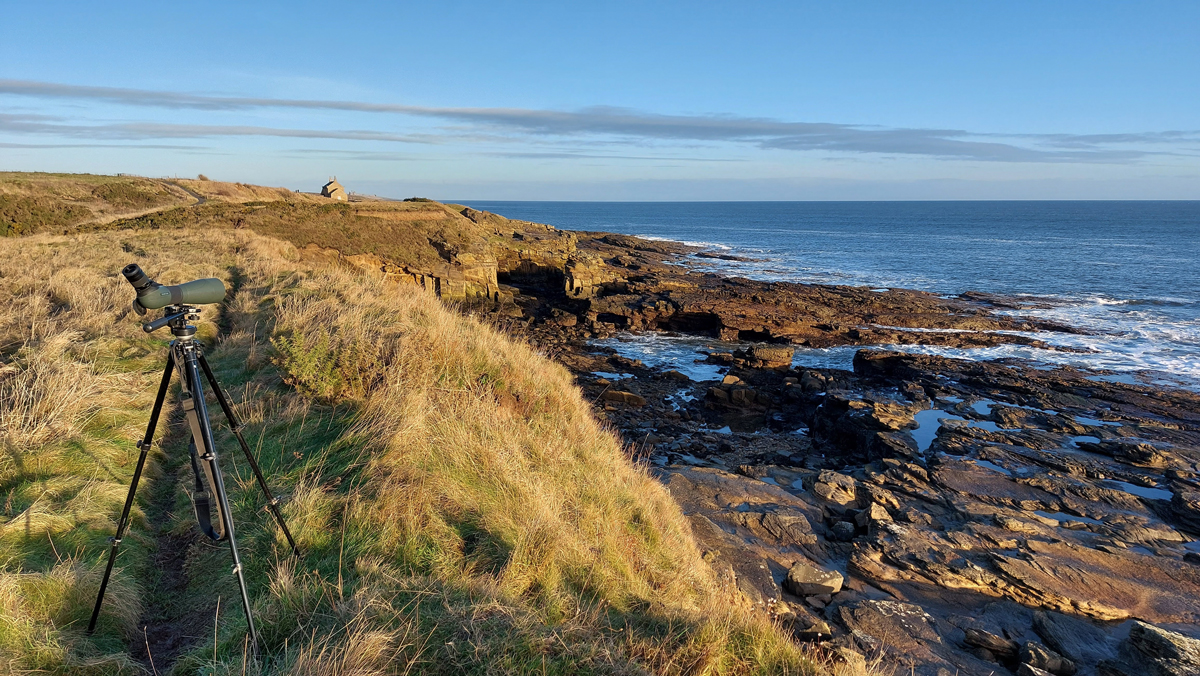
A bird free Rumbling Kern with the Bathing House and Dunstanburgh Castle in the distance.


Thursday, January 13, 2022

Signs


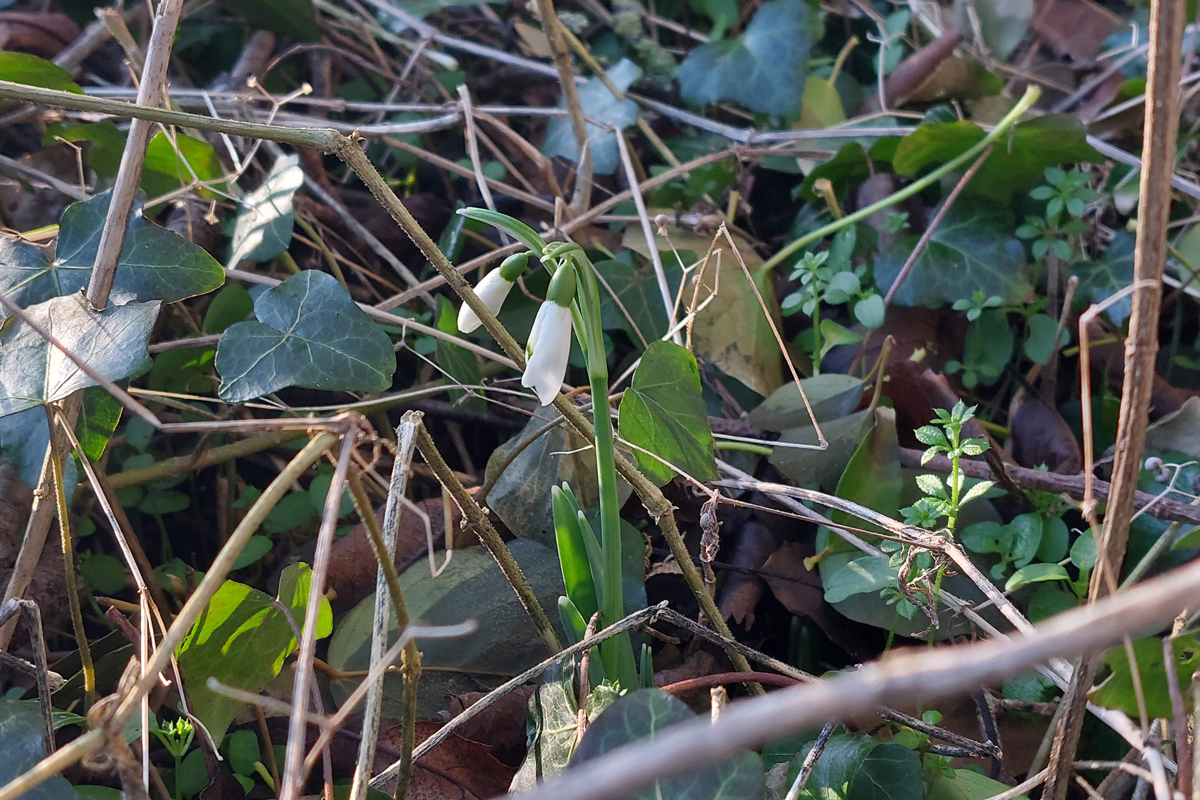
 The first local Snowdrops of the year are a few days late this year, but, better late than never, they are always a joy to see.

Its a lovely day, today with blue skies and bright sun. Some birds were showing a change in the year too with 10 piping Oystercatchers on the back flash creating such a commotion I had to get up from my work station to check them out. A pair of Collared Doves were singing and display flighting, while Great spotted Woodpeckers were drumming in the woods. Down at the pond there was some head nodding going on between Mallards too...

Its always exciting at this time. This year I am planning on spending a bit more time looking at two over-looked ( by me) groups. 

Wild Plants and the Seashore. Like the birding, it will be a laid back affair just trying to learn a few more new species mainly to get me looking in some less watched local spots.  I have just bought the Simon Harrap Wild Flowers Guide and might look into a user friendly Seashore guide too. 

I've looked at rockpooling books before but they all seem to think that the only bit of coast with rock pools is Cornwall. There will be overlap I am sure but the western Atlantic and the North Sea are nearly different countries let alone habitats....

Looking back up the pond field track by the wet wood.


Monday, January 10, 2022

The shore.


Yesterday was my first visit to Boulmer, patch #2, of the year.

 As I left the house, a Raven called low overhead in the still semi dark sky.  

It was a lovely calm and bright morning on the coast. We managed to get ahead of the crowds by striding along to Seaton Point at sunrise where the tide was well in and a lot of waders were gathered right along the shore. A rough tally produced 108+ Sanderling, 62+ Dunlin, 23+ Bar tailed Godwits, 13+ Oystercatchers, 13+ Ringed Plover, 12+ Grey Plover, 50+ Redshank, 22+ Turnstone and 8 Purple Sandpipers. There was very little moving at sea though 1 Red breasted Merganser, 2 Goldeneye , 10+ Red throated and 1 Great Northern Divers were seen.

After we had tea at the car, the still flooded Bull Mere was counted. There were plenty of common birds but maybe 88 Wigeon were the only things of note.


Back down to the shore in front of the pub there were more waders to count. 123+ Dunlin, 1 Knot, 9 Ringed Plover, 4 Grey Plover, 2 Sanderling and 7 Bar tailed Godwit while nearby were 3 Goldeneye, a Shelduck and 1 sea-going Little Grebe in its usual rockpool channel.

 As you can see, I kept a basic list. Its not complete and there is no end total. 

This year I am keeping lists (see here for Gav's take on it at Not Quite Scilly) in a slightly different way.  I wont be keeping totals online, but may post the final result at the end of year round up. Or not, I'll see?

Usually we hare-arse around in January breaking our neck to get a Yellowhammer or Treecreeper or whatever when we know full well that we cannot go a full 12 months not seeing them. So this time, I am taking it easy, accepting what comes my way without the pressure. 

Of course I will incorporate variety into my areas but without hammering it. I am trying to focus on patch value this year by seeing what each day's highlight will be and enjoying it for its own sake without the numbers running the show, so no Bubo this time. 

Back home, we had a walk with Peggy down to the pond field. 2 Crossbills calling from the spruce were the first I've seen here for months


Friday, January 07, 2022

Garden Scrape

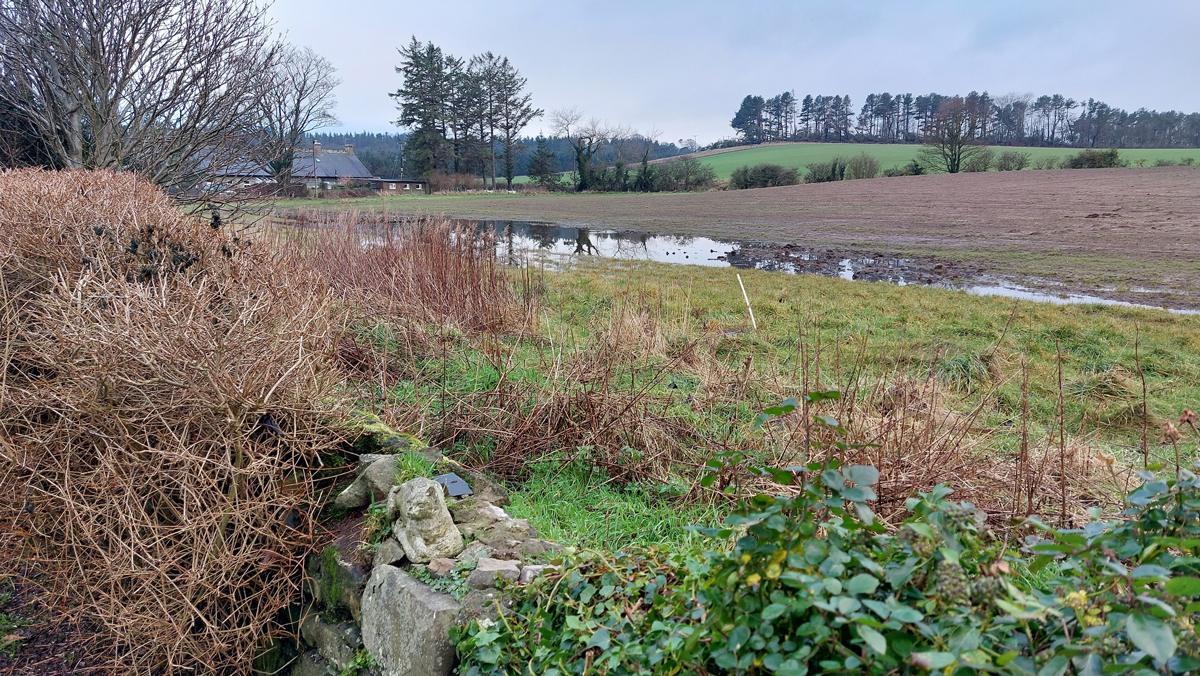
 That title is not strictly true. The mini flash-puddle now deemed the obs 'wader scrape' by me (what an imagination) is actually 30 mtrs over the garden wall in the back field, but it is very visible from the kitchen and bathroom windows and the drive. The new flooded area measures around 30 mtrs long and 10 mtrs wide. 

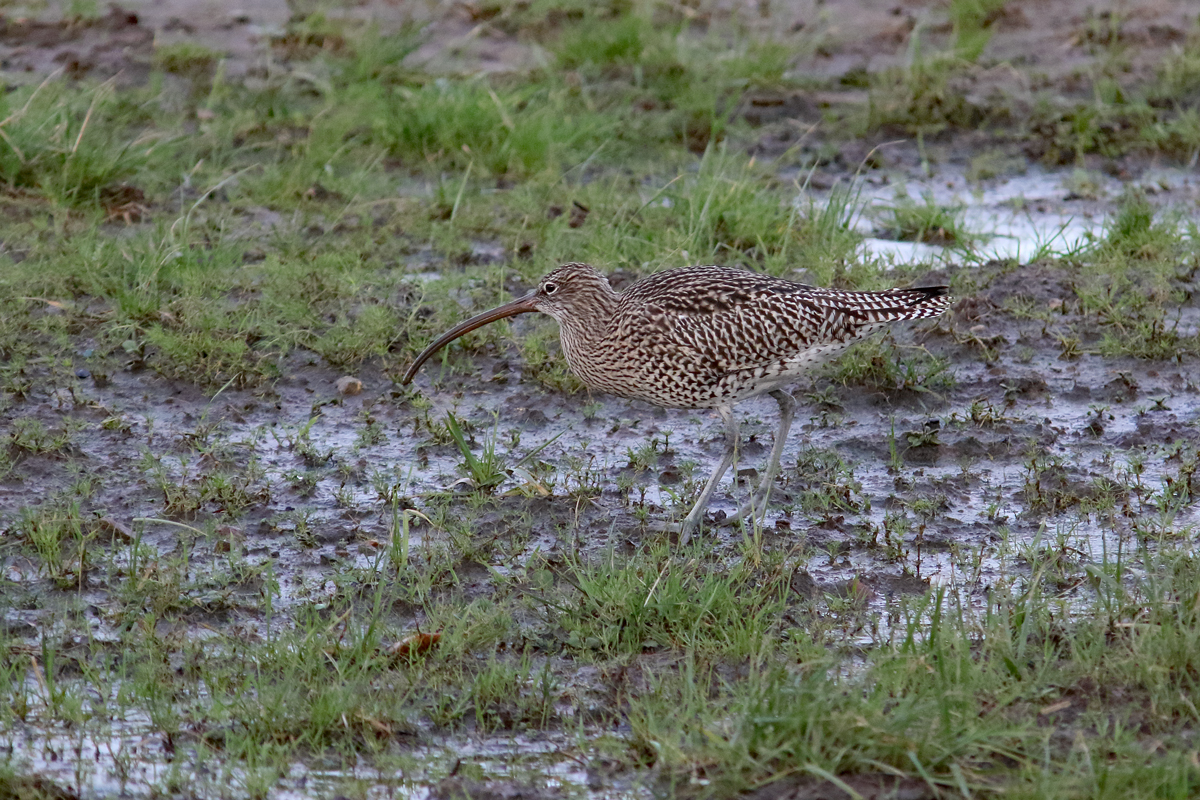
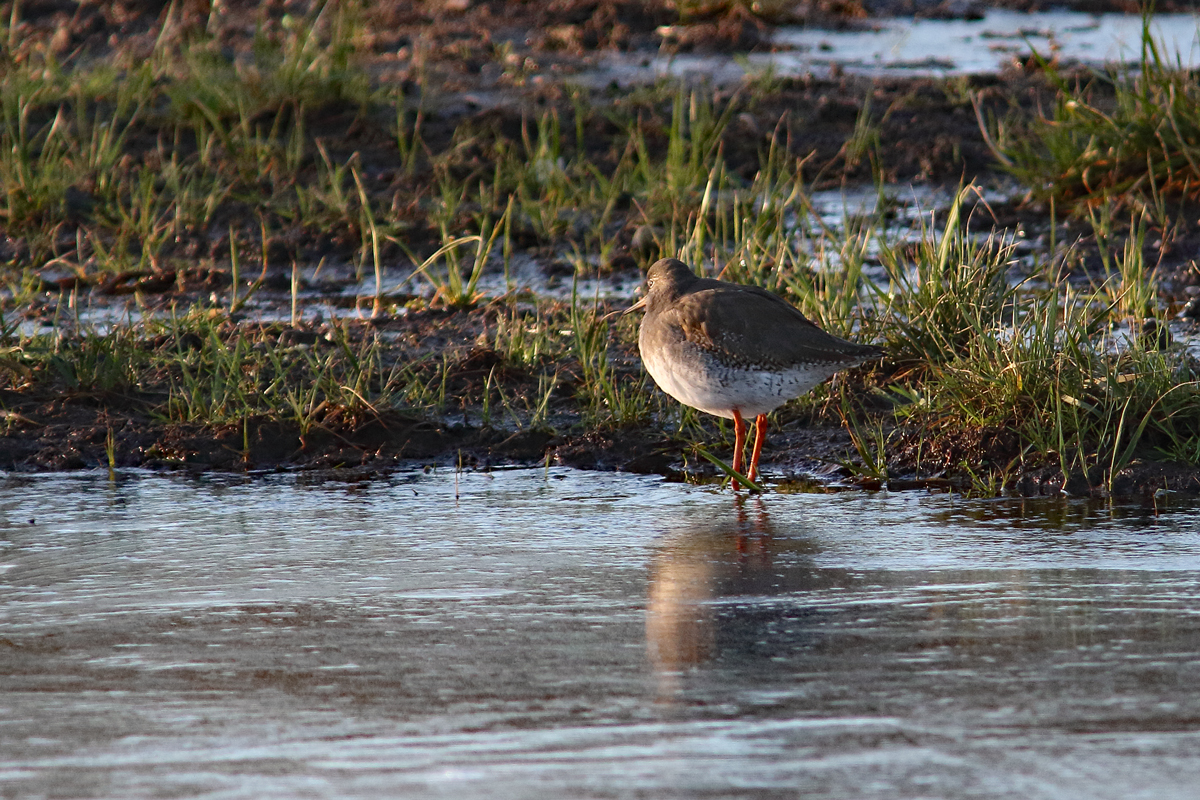
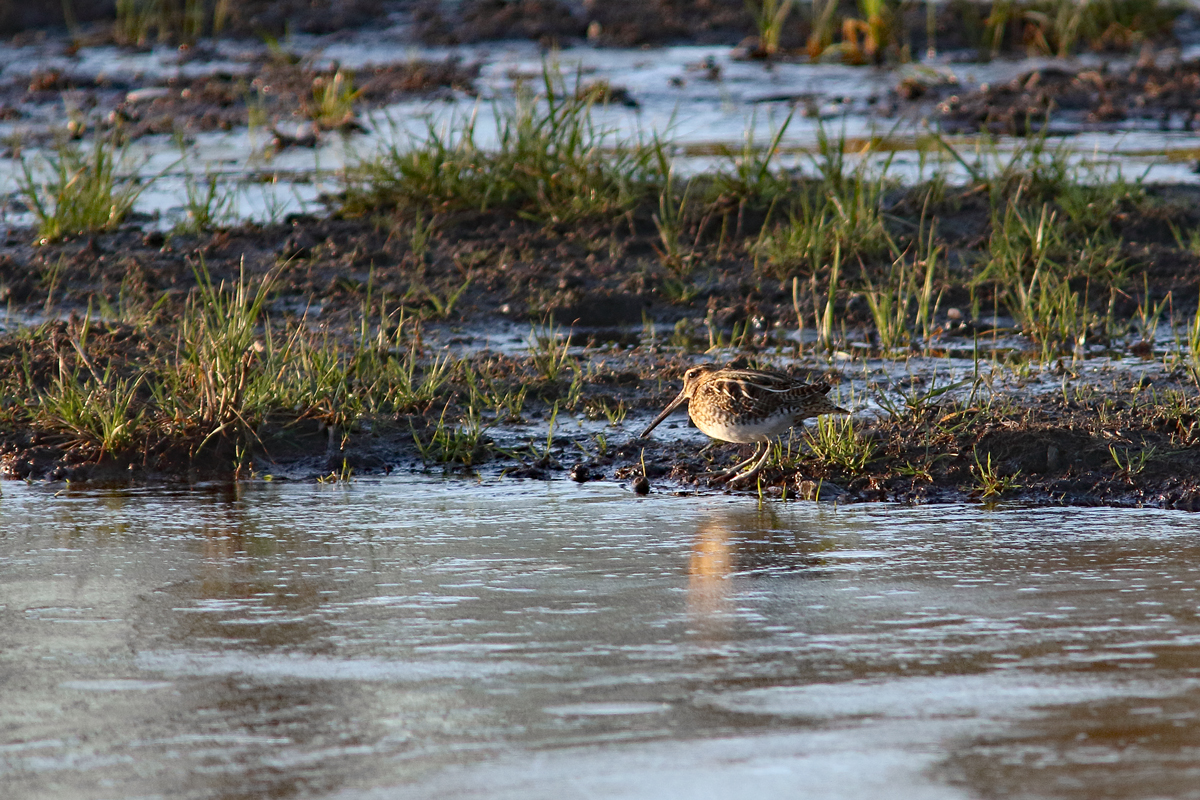
Remember the mega Dunlin before Christmas? Well, today another four wader species have used it. This is excellent because if it manages to retain water until say, late April, there might be a chance of migrants taking advantage. The problem is, it is so close to ours and our neighbour's houses that when anyone steps outside or delivers something that's the pond cleared but some of today's birds returned and are showing some tolerance. When the mornings get lighter it might pay to have a first thing glance each day before anyone has a chance to disturb it. 

I am thinking big*, with the likes of Wood and Green Sand, Little Ringed Plover or even (swoon) Temminck's Stint. Lynemouth flash has had 2 Citrine Wagtails and its not much different to this so who knows what could happen. This clarty plough is my oyster(catcher).

The obs Wader Scrape. 

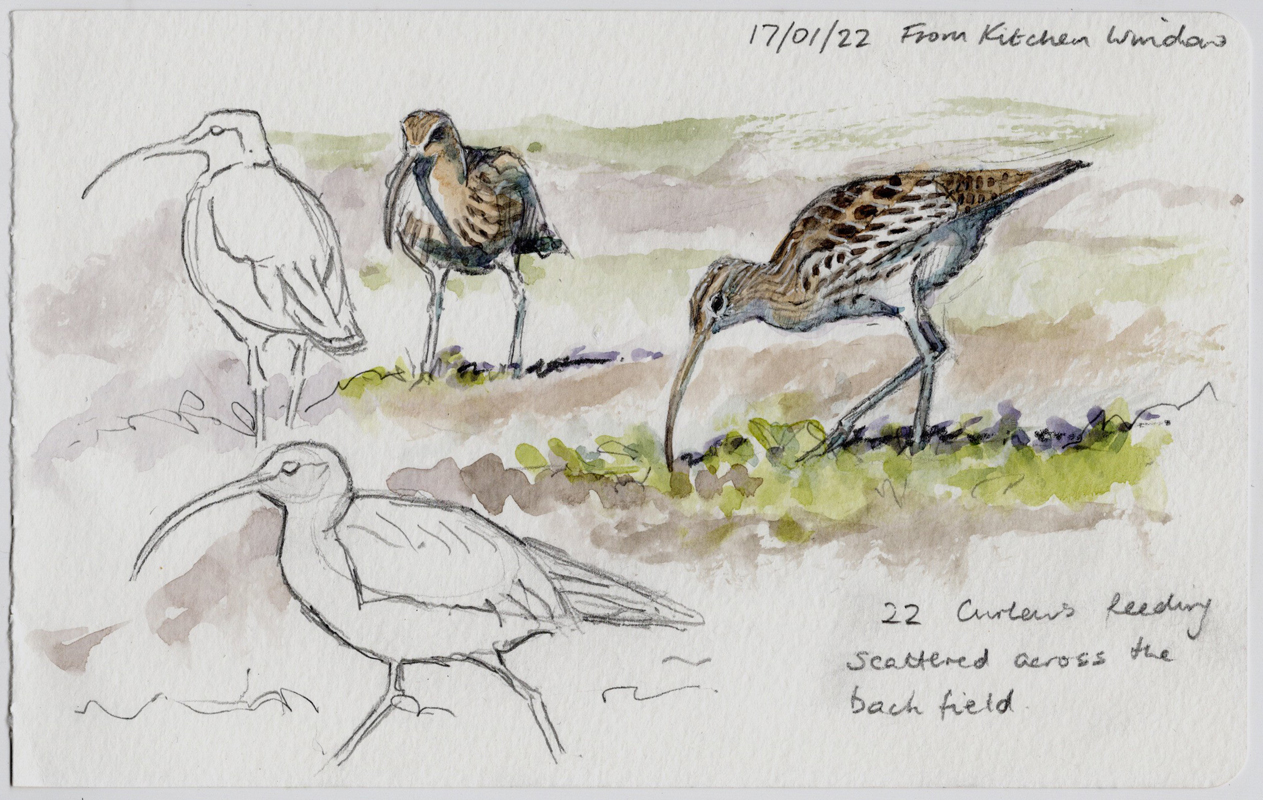
Curlew, one of five.

Redshank

Snipe

Elsewhere around the doors, 6 Redwings were feeding in Rectory paddock usually a sign of poor weather inland, while 18 Teal and 2 Tufted Duck were on the main pond.

Its amazing how many common birds can be missed in a small area. I've had 60 species here so far this year but another 44 are possible and have been recorded in January in previous years with 29 of those being common or regular species here. Where are they all?

*by April this will be a damp patch covered in long grass, rush and oilseed rape. A White Stork might be visible.

Wednesday, January 05, 2022

Opening seawatch.

 A smart North westerly breeze this morning that seemed to rise from the arctic circle prompted a short visit to Cullernose for the first time this year. It certainly felt arctic too soon numbing fingers at the scope.

We have a cold climate in Northumberland. Often it can be one of the coldest parts of the UK on the forecast and in keeping, this mornings Beeb weather map showed us to be milder only than Speyside. It is also quite a dry place so that balances it out a little bit.

I gave it an hour this morning, just long enough to turn blue.

Red throated Diver 36N

Great Northern Diver 1N

Guillemot 20N

Common Scoter 3S

Eider 1 N 2 S

plus a scatter of Fulmar, Shag and gulls but little else.

A huge Raven sat in the field just behind me and some Twite flew N overhead as I was watching the Great Northern so I only heard them.  

Had a nice chat with a couple from Teddington ( London) who were here on holiday this week. They asked what the black and white birds with long red beaks were and they looked even colder than me...  


Red throat in typical pose.


Tuesday, January 04, 2022

Happy New Year ....

According to the oracle that is Twitter, the majority of birders this year are going to be either local or green or both. Long term readers of this blog might remember I did my first on foot from home list (OFFH) back in 2010, 12 years ago. Since then I have decided that it is too easy to play the martyr and forsake all others to prove a point so now, my annual routine for several years has been a nice balance of both local birding with some variety too. Four basic patterns are followed.

My local patch recording is done within a 1km radius of home mostly but I consider a couple of kms either way north and south to be 'local' I tried the 5km radius last year and found it too much. It was starting to become a job again where I was not allowed out for good behaviour. So that's gone by the by this year. At least my home patch gets watched every single day of the year unless I am away on holiday.

I also have a second patch all of 3km south, at Boulmer. Again this is an area I have watched for even longer than my home patch with early visits in the 90s and with a more concentrated effort since 2005. I treat it like a fair weather friend that is visited weekly or if the weather dictates.

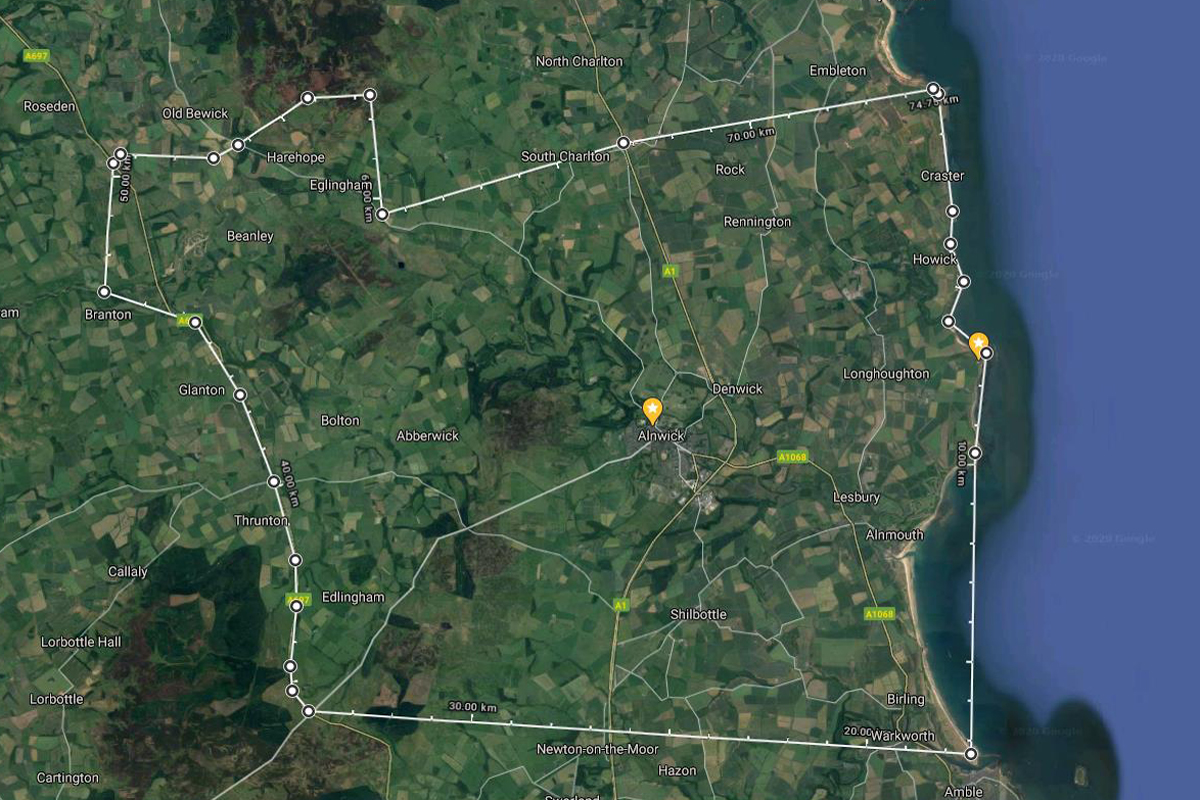
Then we have the rest. If the coast is busy or the weather is clear and birding quiet we cover several 'inland patches' for a whole range of biodiversity from Fungi to Spiders. This wider picture is described well here - Steve Gale's 'Uber Patch'...

Ive posted this image before, but here is the extended or 'Uber Patch'.

The final bit of the puzzle is a confession that yes I do like a county twitch and even a bit further too if it takes my fancy, which is, its fair to say, quite rare these days, but I never rule it out. A Pallas's Sandgrouse in Yorkshire would certainly fire up the Quattro...


2022 will be made up of a smorgasbord of these things, in that order.

To avoid the crowds the Uber called on Sunday morning and delivered too...

A good hike on the moors turned up some nice birds to start the year...

On arrival, several flocks of Redwings flushed out of roosts in battered flat conifer plantations first thing. The devastation in these upland woods from Storm Arwen is amazing. It might even have done some good to the dark monoculture, allowing light in to the areas and in future they will be clear felled.

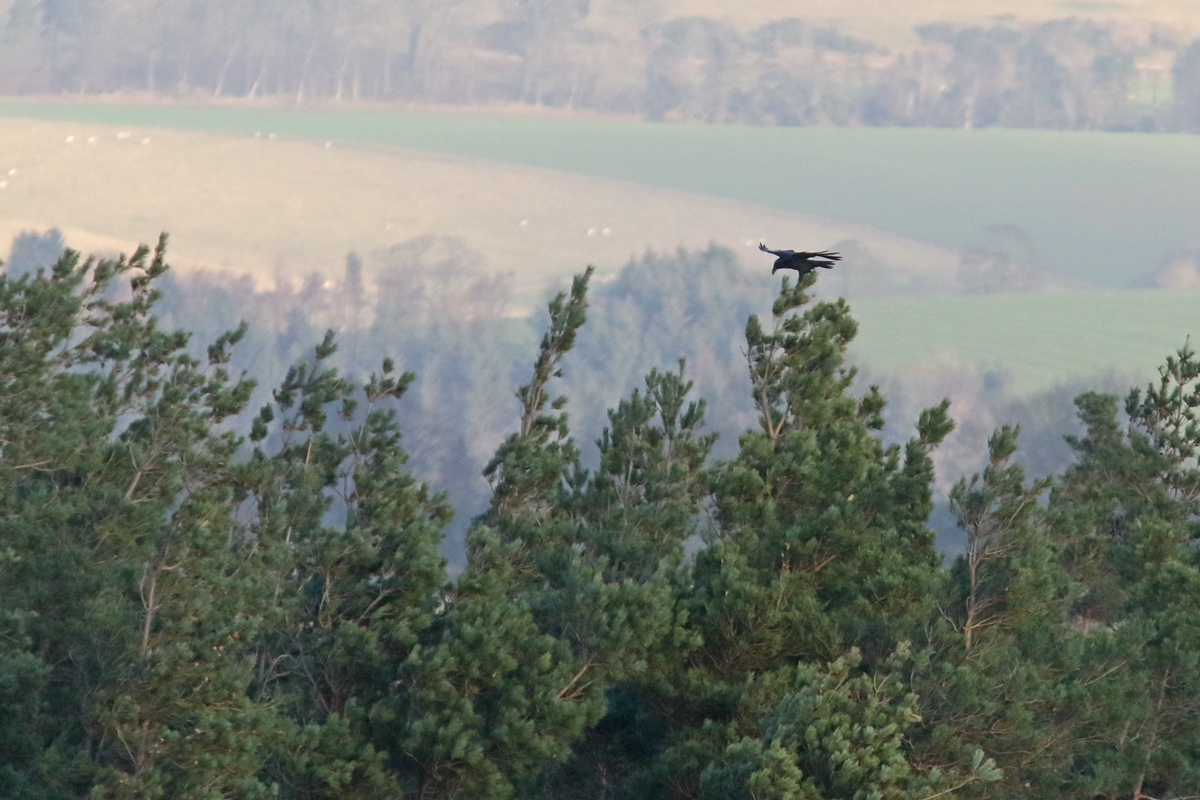
Mistle Thrush was in full song as were a few male Crossbills with a dozen being seen. 3 Ravens included a displaying bird trying to fly upside down then snapping the tops off the remaining upstanding pines. 

Raven, trying to take greenery from the pine tops.

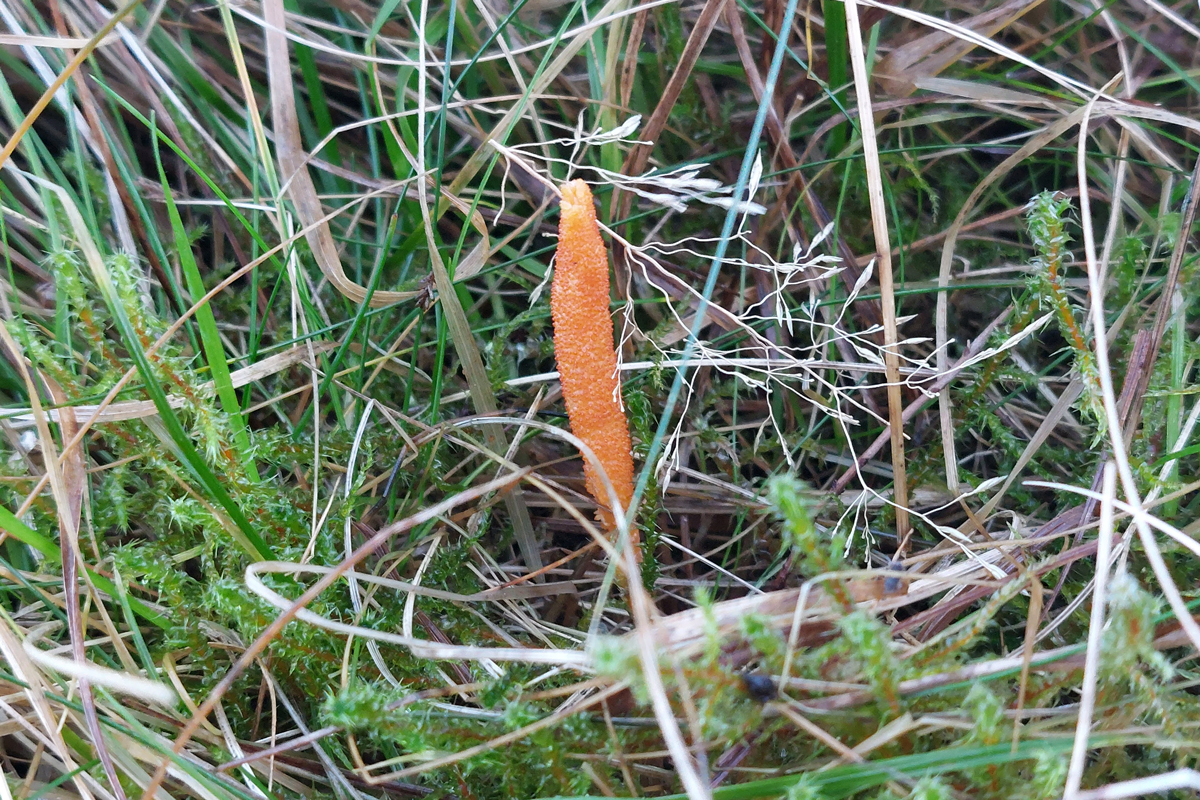
After trying unsuccessfully to navigate a normally open track through the the wood due to a Grand National type blockage of fallen trees making countless 'fences' we eventually made it out on to open moor. John came up with the double here. While standing trying to get our breath back he noticed this, small Scarlet Caterpillar Club fungi emerging from the grass. It doesn't look much but is quite sinister in its ecology as it is growing out of the body of a caterpillar or pupa it has infected, below the grass. The first I've seen.

Scarlet Caterpillar Club fungi.

 As I tried to get a shot in focus with my phone, above, John called again - Hen Harrier, grey male! Up onto my feet and I had missed it over the brow of a hill, but it soon drifted back over, giving us a distant view as it skirted up the rise to eventually vanish from sight. Its always a good morning when it involves a Hen Harrier. I did not release news of this bird, and forgive me, but will not be giving a location here either.

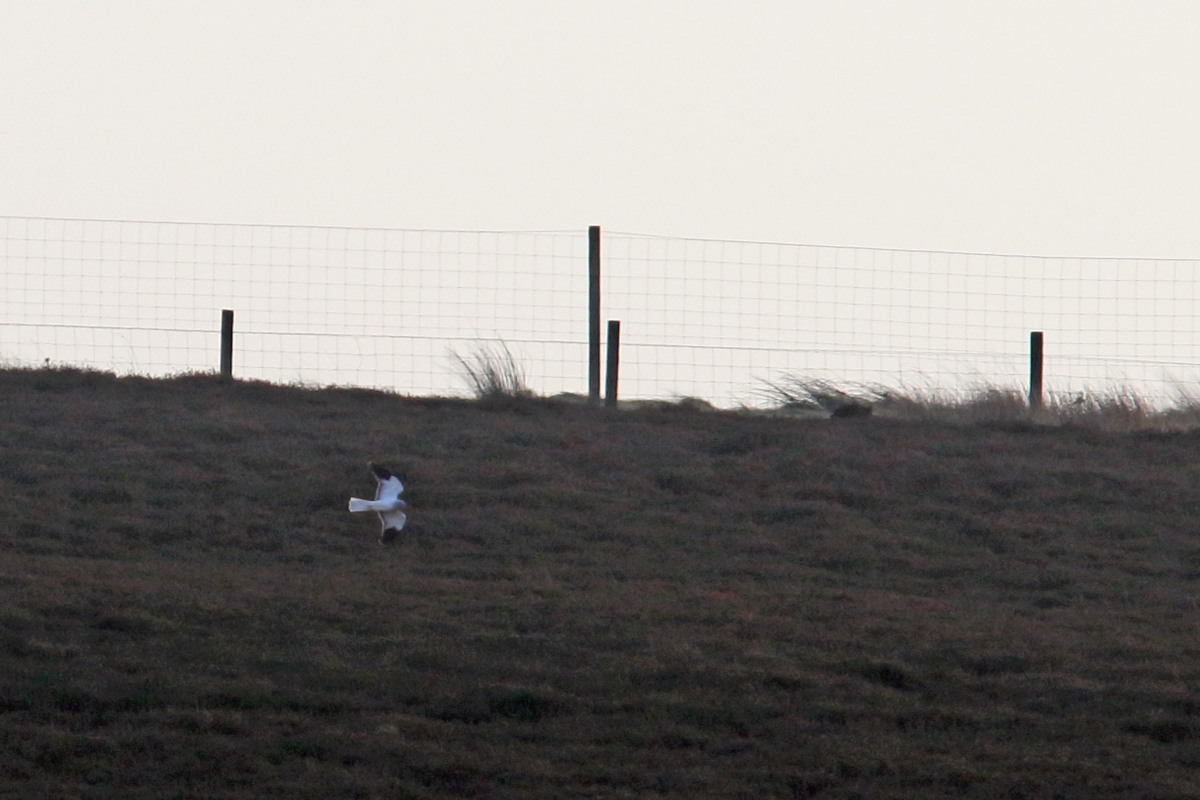
Distant and into the light etc, but it is a male Hen Harrier so who cares!


Onwards beyond the next plantation where more Crossbills are dotted about,   never seen well enough for a photo, but a juv male Peregrine came very close, if only I was quick enough to get the camera off my shoulder. A nice dark streaked, black hooded bird with an over all brown colouring, it was seen twice on our walk. Kestrel and Buzzard were also seen.

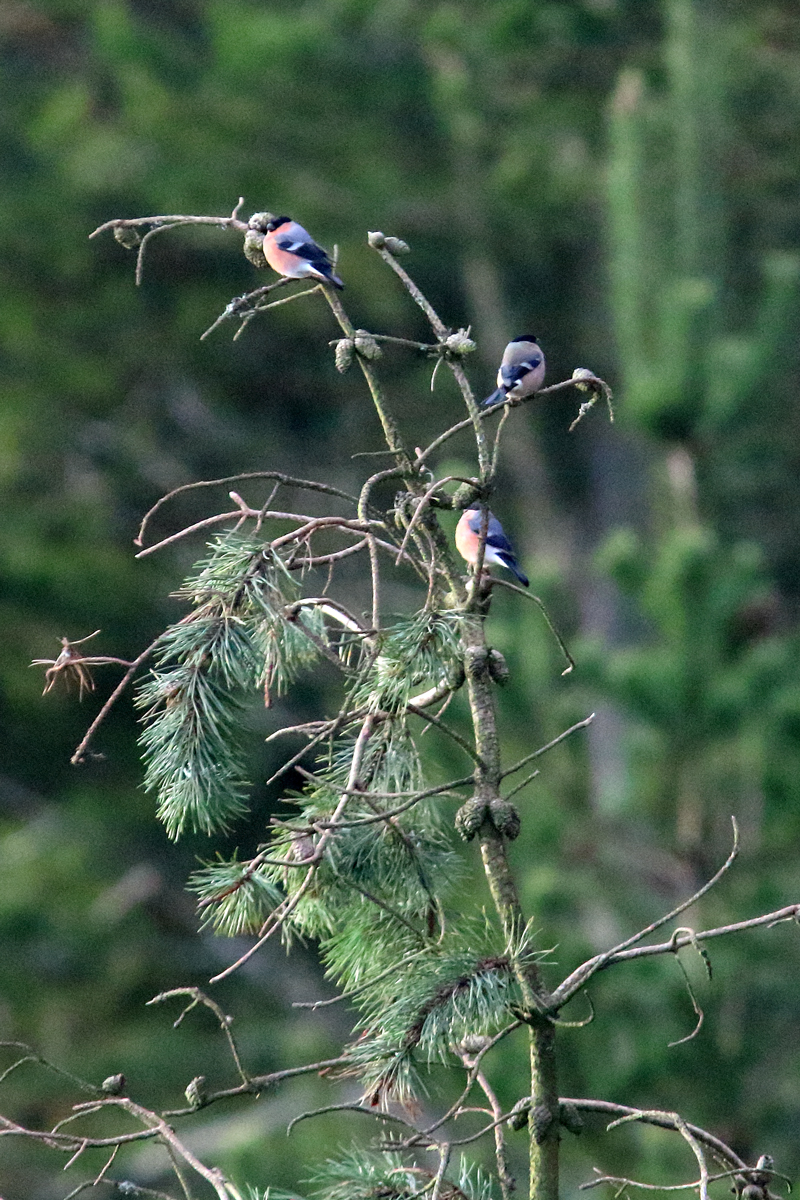
Down on another newly cleared area a flock of 13 Lesser Redpolls fed on heather seeds between the stumps as did these three nice Bullfinches to brighten the day.

Bullfinch Christmas tree.

A good Sunday morning trip out, not on patch, granted, but not another human was seen ( always good) and some good birds all within that Uber patch above...


Friday, December 31, 2021

2021 Highlights...Rare Moths to Walrus.

 Whilst this year was not the same vintage as 2020, Northumberland still managed to pull some good birds out of the bag. Our county seems to be getting a lot better at this in recent years. Maybe we have more observer coverage these days?

January - 

We began the year in full lockdown mode. Well, some of us did. 

There was only one outright winner in the opening month of the year and that was significantly bigger than any bird.  On 31st our neighbour Mandy found a showy Humpback Whale just off the Bathing House. 'Ive only seen one Minke here before so this had us speed walking along the road to check it out. Unfortunately as with most of these poor animals in the North Sea, it was finally found moribund, entangled in lobster pot ropes.

The wintering Hooded Crow became a garden favourite eating most forms of meal left overs first thing in the mornings.
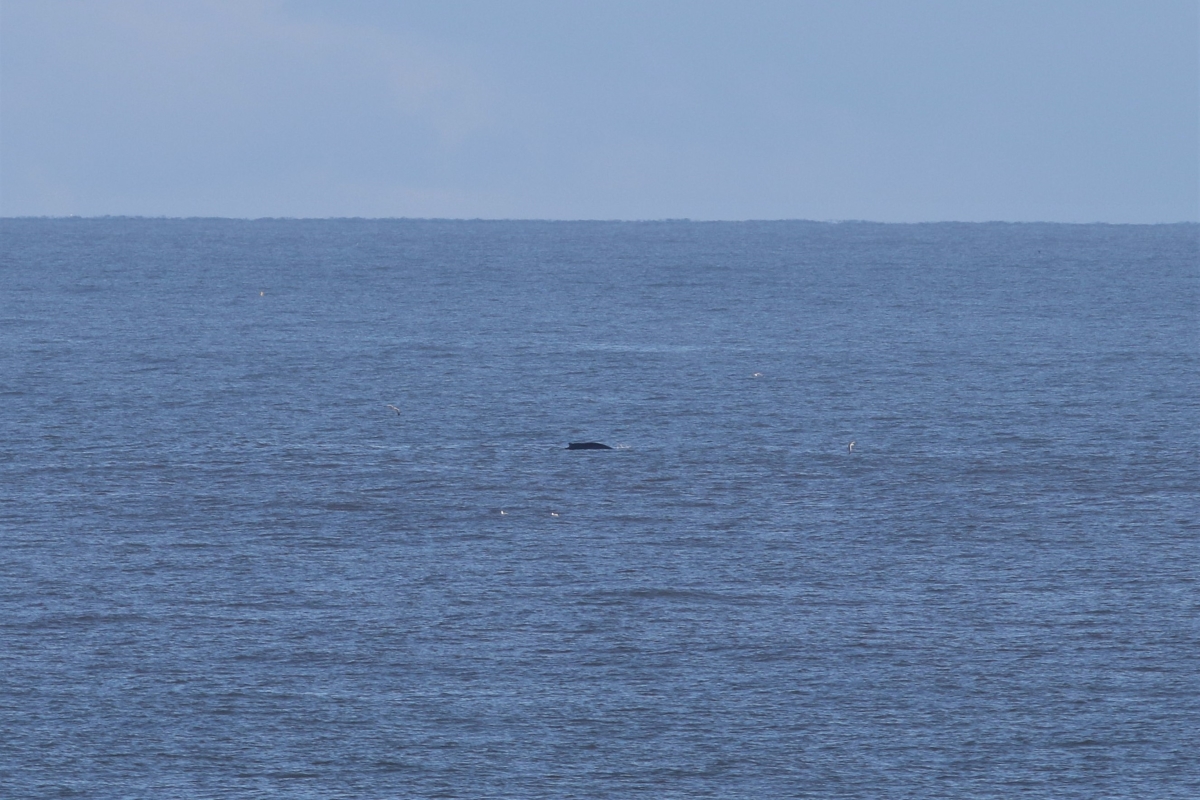
Humpback Whale


February - 

A cold stormy spell at the beginning of the month left us with some good garden bird activity but a day without electric. De-ja-vu. Barn Owl, Woodcock, 2 Kestrels and Hooded Crow plus a load of Fieldfares all feeding in our garden.

On 21st a Water Rail took up residence in our tiny village pond until spring though it remained very elusive throughout its stay.  

The Humpback Whale remained during the month. A county first was found near the end of the month with a one day wonder drake Bufflehead at Cresswell. I could have gone but decided to stick with the lockdown rules on essential travel and didn't bother. If it had remained another day I don't think my resolve would have held out. 

March -

Hoodie still around and Barn Owls every day from the house. We finally got out and about mid month. On the 14th an adult Mediterranean Gull was over our house. On the 18th the only patch Red legged Partridge of the year was calling on top of the Hips Heugh, scoped from our garden and on the same date, a new invert for me, were 25+ Water Crickets in a ditch in the village wood. Spring seemed to be here on 22nd with a Hairy footed Flower Bee on flowering currant in the garden.

Some garden safari mayhem occurred on 27th when my first ever Weasel in the garden caught a Jackdaw below the feeders. The Jack eventually flew off carrying the unlucky mustelid!

April - 

We received our first vaccinations against Covid on 3rd.  A cold but sunny day, the garden was alive with 5 species of Bumblebee. Spring migrants much in evidence with Wheatear, Sand Martin, Blackcap and Sandwich Tern around. The first village Swallows were back on the 10th but on 11th we had a covering of snow. Very strange seeing a Swallow flying over a white dusted landscape.

An Osprey narrowly missed slipping through Alnmouth unnoticed on 11th.

A few new inverts during these early spring days, 2 Hoverflies and a mining bee, Criorhina ranunculi and Eristalis intricaria plus Andrena nigroeana. See blog pages for details.

A morning inland west of Alnwick on 18th was nice with a good party of 6 Ring Ouzels the largest group Ive seen locally, Redstart and Willow Warbler.

On 23rd my first rarity of the year, a lifer, came when Gary Woodburn found a Red throated Pipit on Embleton Golf Course. A very nice bird too.


May - 

The month began up on the moors with Green Hairstreaks and Emperor Moths, a Redstarts nest, Tree Pipit, Cuckoo and Whimbrel.

Things certainly took an upturn on 6th when the Northern Mockingbird from Devon relocated to a  Newbiggin garden for a few days. What a totally unpredictable occurrence. Fabulous though.

The best at Boulmer were Little Terns and a very imposing Bonxie sitting around on the beach as tourists walked by. It even gave a small Daschund the eye at one point.
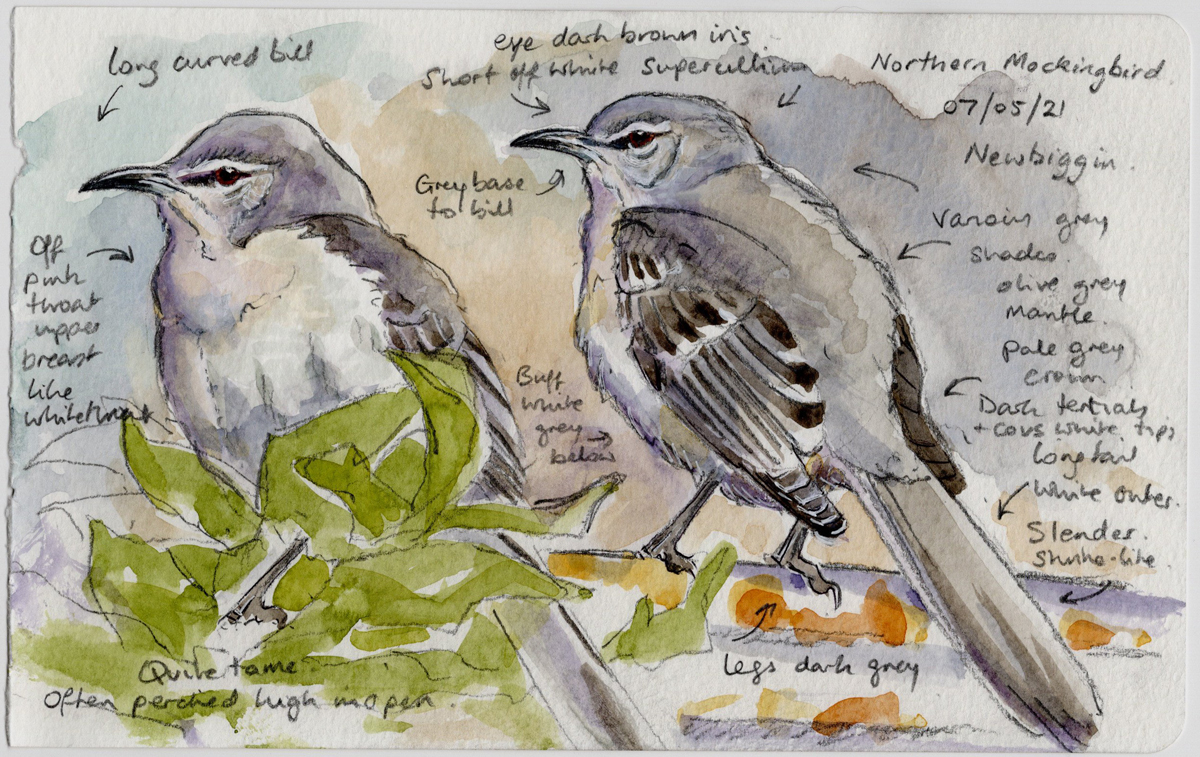
Northern Mockingbird


June - 

Another 'biggie' was worthy of a twitch down to Blyth on 5th  for mine and Northumberland's second Red necked Stint, and what a cracker it was too. A Great Reed Warbler was singing and showing at East Chevington on the same day made for a good morning out.

Less than a week later, on the 10th, another county first showed up, this time a British tick for me too. A Pacific Swift showed brilliantly, again, at East Chev where it strafed past us at ranges down to 10 mtrs. 

Some local inland Nightjars gave the best ever views near the month end.


July - 

Came in like the proverbial Lion on the first when a reported Fea's Petrel flew North at Flamborough early morning. As I'd only ever seen one, we staked it out at Cullernose where it came close past at 6.15pm giving great views.  Later on the socials, Paul French of the BBRC commented that 'Did it really have a breast band? After seeing photos posted by two observers from Newbiggin. It surely did, making it actually a first for Britain, a Soft Plumaged Petrel Pterodroma mollis. Amazing.

The 10th was my worst birding day of the year when we spent 11 hours at Bempton dipping the Albatross. Subsequent analysis of its presence showed that it eventually was present for 90 days but on 30 of those days it was not seen from the cliffs. Only a 66% chance of success then. Better luck in 2022.

Another bit of dippage occurred on 20th when the long staying Black Tern up at the Long Nanny at Low Newton was reidentified as an American Black Tern. I went up for a look but it had already gone for the autumn. Again it may come back next year?

On 24th a lovely Water Shrew showed very well scrummaging around our drive for 10 minutes before vanishing into a neighbours old greenhouse.


August -

Some August staples began to appear on patch with Sooty Shearwaters, Roseate Terns and returning waders.Best of these was my first patch Spotted Redshank at Seaton Point, a rare bird in this fresh water scrape devoid area.

The best of the month though was a flock of 5 Black tailed Godwits N past our garden on 24th. A rare patch bird at the best of times but from the garden, get in.

August ended with a second year Long tailed Skua on the sea with an Arctic Skua for comparison, at Boulmer.

September - 

Seawatching proper commenced on the 1st with a very smart spooned up Pomarine Skua close north at Cullernose, making it a four skua year on patch.

On 3rd we went to Suffolk for two weeks. Down here I get taken up with the multitude of new insects that can be found that we just dont get at home. A pristine Clifden Nonpareil and a Buttoned Snout both came to sugar, while Box Tree Moth was also new to me. At Carlton Marshes, a few Fen Raft Spiders Dolomedes plantarius showed well enough for photos with a supporting cast of Chinese Water Deer, Wasp Spider and Brown Hawker. 

On the day I returned, the 19th, my tardiness ensured I dipped out on a patch Semi palmated Sandpiper by 5 minutes. Its getting to be a theme this year.

On the 29th, another new spider, but more local near our village was found - Invisible Spider Drapestica socialis.
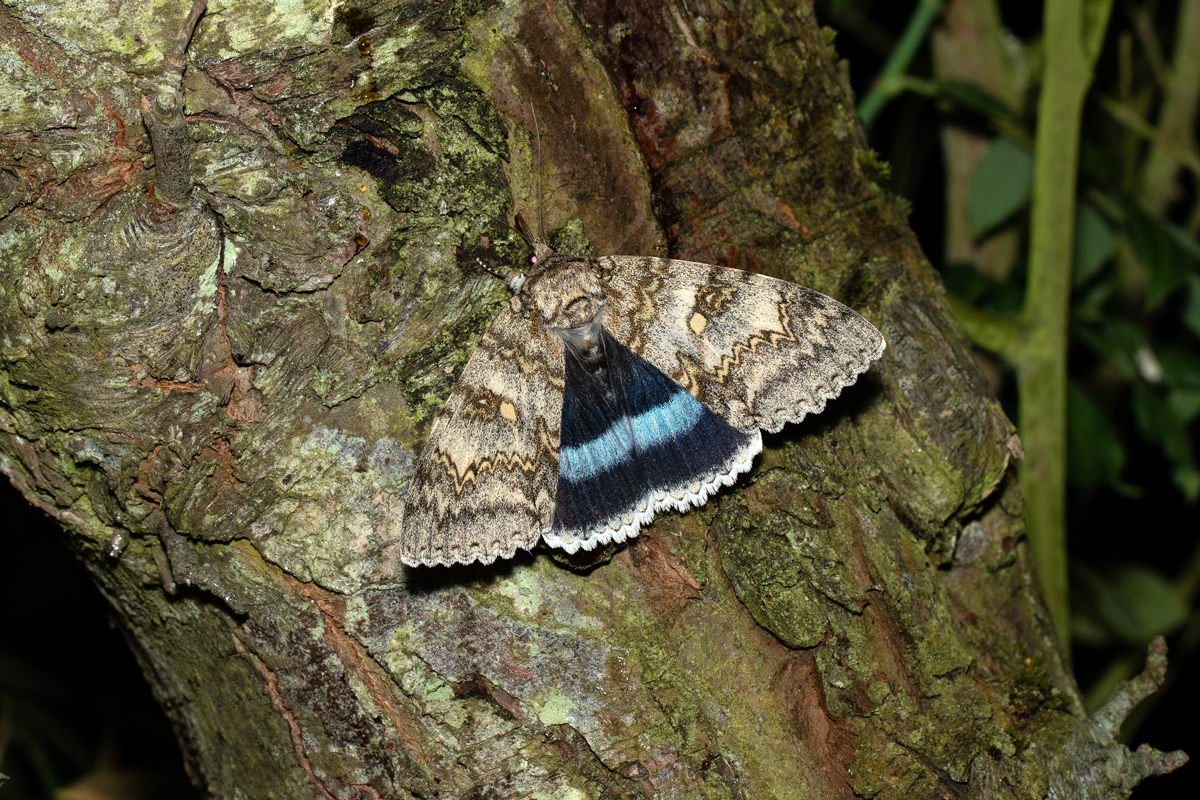
Clifden Nonpariel


October - 

A Norwegian colour ringed Bar tailed Godwit was at Boulmer but on the 9th it was good to get a huge county grip back. A visitor found Northumberland's 3rd Red eyed Vireo on the Straight Lonnen, Holy Island. Unlike the last two flitters, this one stayed for a week where despite being in thick cover with some patience decent views could be achieved.

Around this time some garden moth migration began to take place. A very unusual phenomena here. Gem, Rush Veneer, Dark Swordgrass, Silver Y and Diamond backs were all found but even better was a Delicate caught by Mandy at Seahouses Farm and on 11th I caught the North of England's first Radford's Flame Shoulder. The furthest north in the UK by about 200 miles!

Still the wind remained stubbornly in the west with a distinct lack of migration on the coast. My first year for a while with no sightings of Yellow browed Warbler.
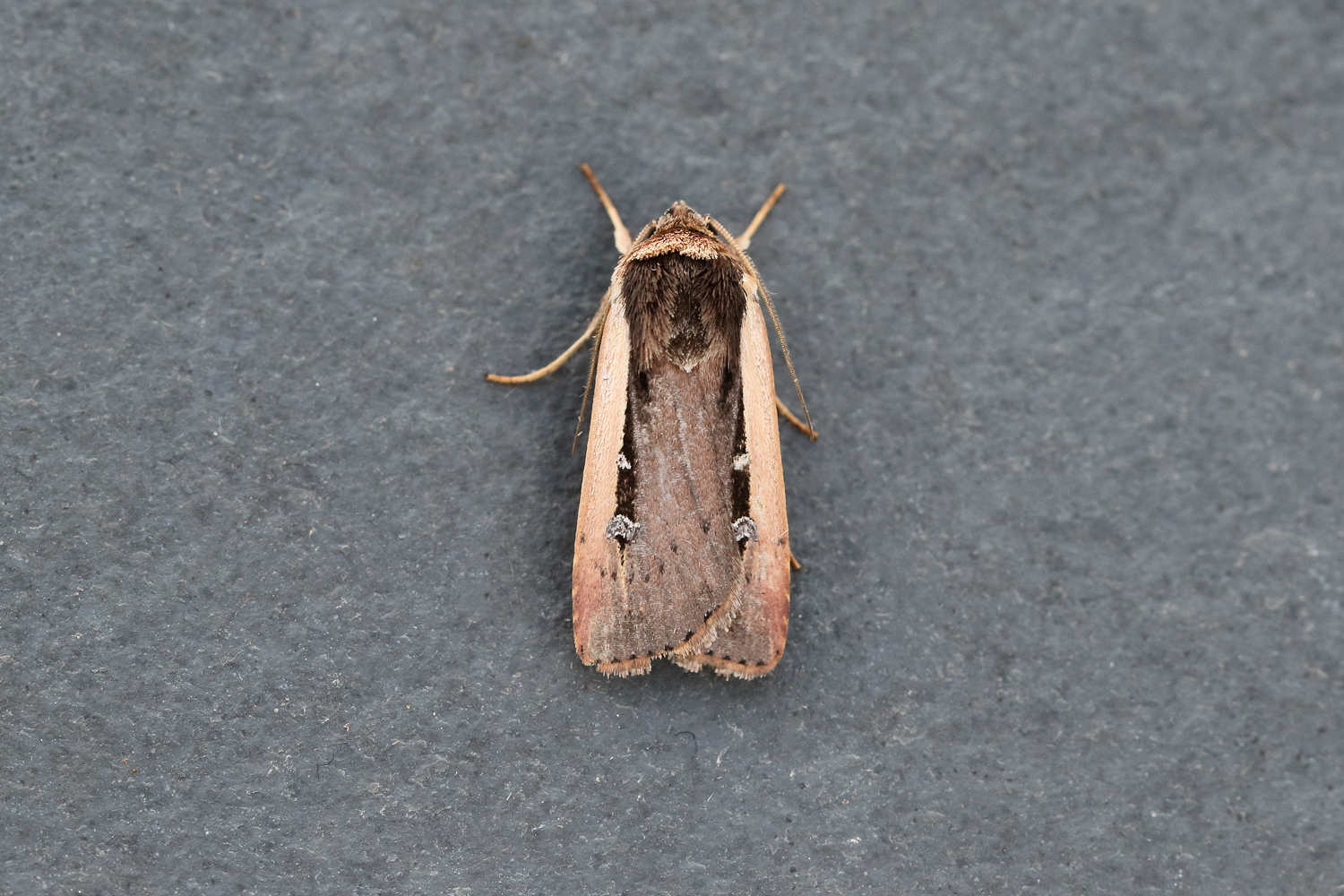
Radford's Flame Shoulder


November - 

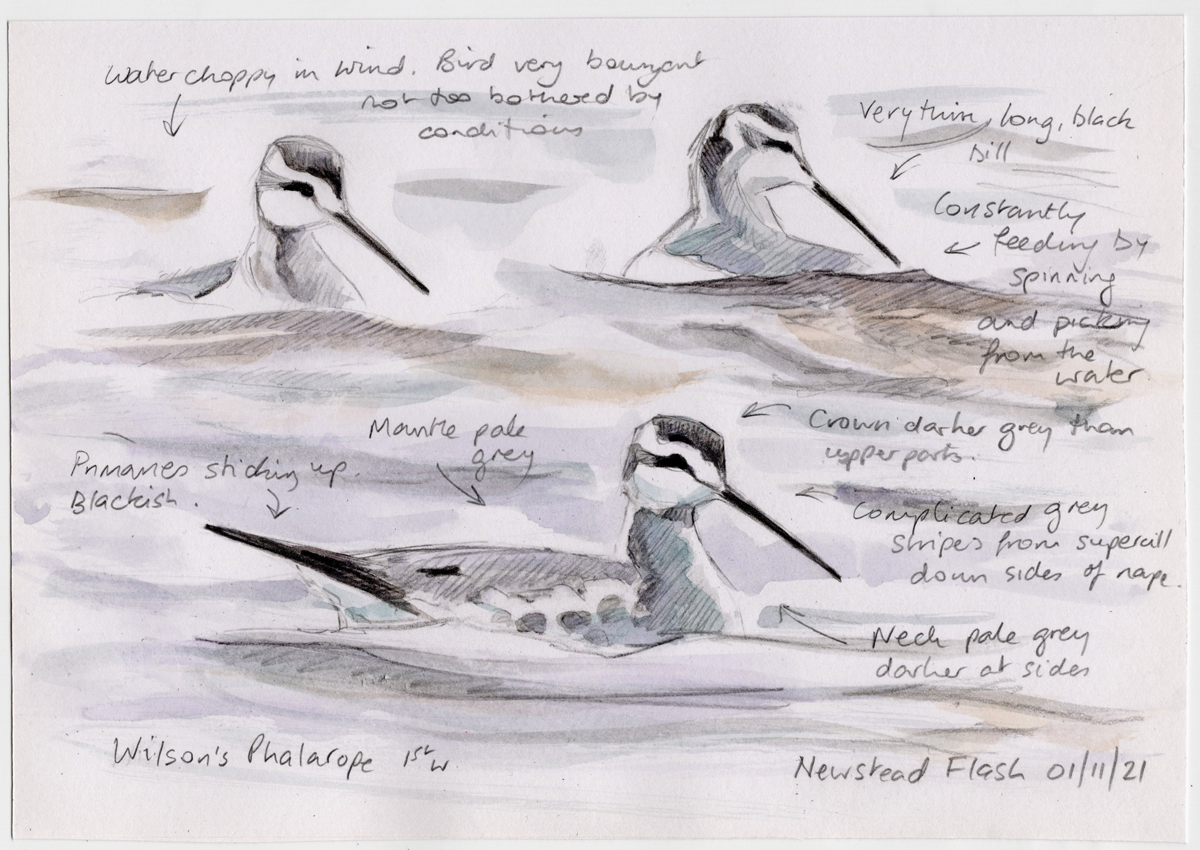
A nice Wilson's Phalarope saw in the month on a small farm pond at Newstead. A county tick for a few, this was my third in Northumberland.

One of the absolute wildlife highlights of the year must be the female Walrus that graced Seahouses Harbour on 14th. A appreciative pilgrimage continued all day but she was not seen in the morning. Freya has subsequently been relocated in December in Shetland on her way back North.

A not so welcome visitor, Storm Arwen arrived on the 26th and knocked us back into the stone age for a fortnight. Still, it did give some great late season seawatching with Great Shearwater, 2 Black Guillemots, Little Auk, Great Northern and Black throated Divers, Red necked Grebe, Glaucous Gull and Velvet Scoters.
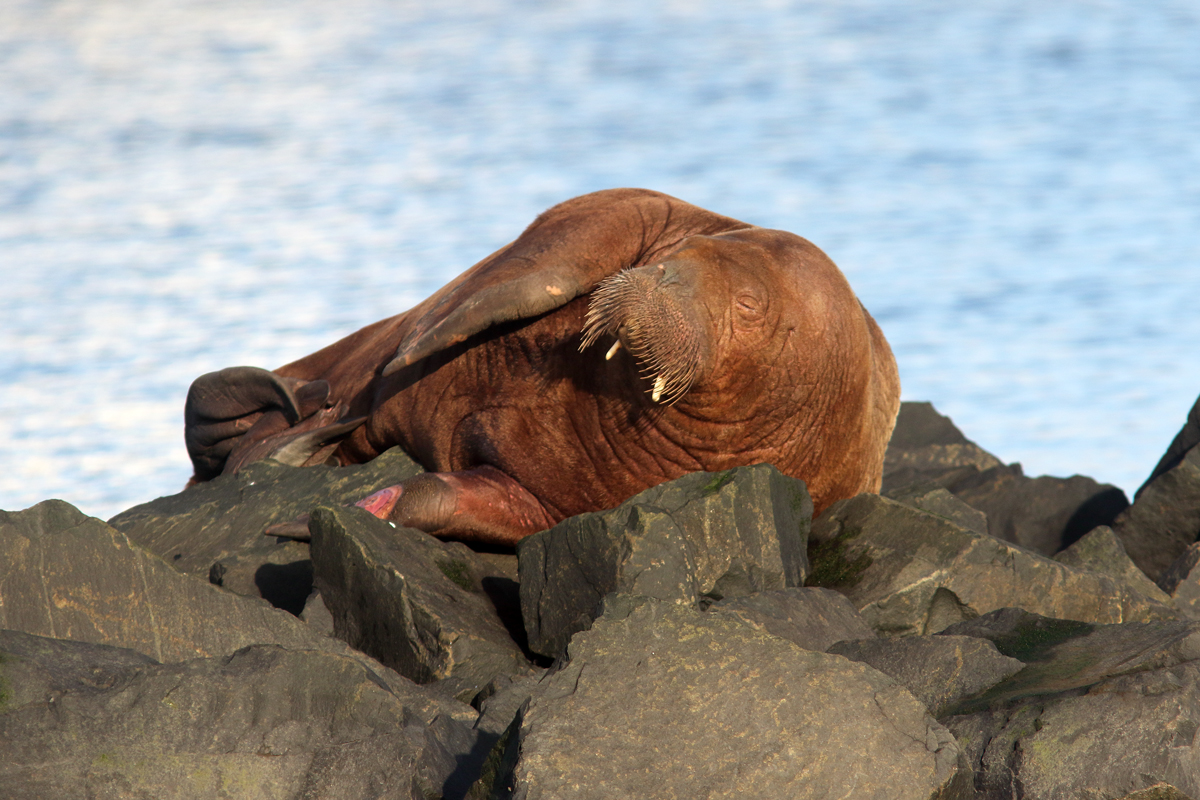
 

Freya the Walrus


December -

After 10 days without power, probably the most significant event, personally, this year  we were back in the land of the living on 6th December only to find Storm Barra banging on the windows on the 7th. Fortunately it did not have the impact of his older sister.

The month did not really produce a lot locally other than a Lapland Bunting south on 16th. A Surf Scoter passed Whitburn and St Mary's on the solstice but bailed out before getting near the home patch. While I waited, a Great Northern Diver and a Woodcock were some compensation.

The year ended where it began, facing further Covid restrictions in the wave of new strain Omicron. In such uncertain times, who knows what 2022 will bring so there will not be any predictions from me other than to hope the Bempton Albatross liked it so much it decides on a return summer visit.

Stay safe everyone, thank you for all of your engagements on here, emails and tweets, its much appreciated.


Happy New Year!

Thursday, December 30, 2021

Who came first, the patch or the list?

 In light of the Birdguides / Birdwatch magazine promotion of a greener, more local type of birding lots of birders on social media are coming around to the idea. One of the best things I see in the 'new dawn' is the lack of emphasis on list keeping. There is more a focus on the positive experiences gained from this type of back to basics birding with prizes for things like best bird in a local context etc.

My next thoughts are difficult to express clearly but there are definitely a few things not right in the way many birders view this local patch challenge. Well, in my humble opinion anyway. There are no rules so there cant be mistakes but somethings aren't 'in keeping' I don't think?

Firstly it seems that the term local patch, to many, actually refers to the nearest birding hot spot to home. This may be 1 mile or 20 miles it doesn't seem to matter. People will happily pass quite good areas, ironically in their car, to get to the nearest Titchwell, Spurn or other well birded site. I can see this for urban residents who are in the middle of some conurbation but many aren't . Again it's down to personal choice I suppose.

One other thing (sounding like Columbo) is how a patch is defined. This is maybe my biggest OCD type niggle. 

For me, when selecting a patch I'd pick an area of workable size that might have potential and is under watched or rarely watched at all. Then define the boundaries of the area. Once done you can work out routes, watch points, geographical and habitat features that might be productive. Lastly do some research into what, if anything, has been already recorded there, and away you go. In this, your new place, you visit regularly to document the ornithological comings and goings over the seasons and you will end up with a record of the species that use your area. 

Seems straight forward, yes?    

Well no apparently its not.

What appears to be the fashion is to take the whole British List or at least your County List and pull and stretch your patch to take in every possible species. 

Can you see the difference? One begins with an area, the other begins with the list. 

Birders love to say 'Ooh I will just move that boundary up to that wood so I should get Tawny owl, Jay and Nuthatch that I'll not get on the beach'  or 'if I just make my patch a 10 miles radius instead of 3 miles it will reach Blacktoft' or where ever. 

Of course you won't get every bird in your whole vicinity in one year but that's not the point. If you do get one of those birds like those above, it will be all the more worth while!

Some patches end up looking like multi-legged starfish stretched to this place for one species and that place for another. Is that really how patching works? What if we all just went to the same county hotspot?  

I think this is how some fall by the wayside by May. They've run out of interest having seen most of whats possible, the impossible is a bit harder to come by, leaving half a year with little to hope for. They've already had the Nuthatch in February that might have been a mega out of context in August. 

These massively stretched 'patches' are not local patches. Its more like county listing.

Or maybe its just me... 

What ever method you use, be it starfish, 20 miles drive to it or your garden, good luck in 2022. Try not to abandon ship when a Blyth's Reed turns up in someone else's spot ... 😉  


Tuesday, December 28, 2021

A light in dark times...

 I hope everyone had a good Christmas? Things were pretty much as usual at chez Boulmer Birder, which is something to be grateful for. In today's trouble ridden times it is a big thing to have our health, food and a roof over our heads when a lot of people in a world run and bled dry by a litany of greed fueled oligarchs, billionaires and liars have none of these things. 

Now that Omicron is set for global domination I can't help feel that its shadow is creeping up on us all. Not being a very social animal these days, hopefully it can be avoided for a while longer.

Today the weather was pretty miserable, maybe that's the inspiration for this post, being heavily overcast with rain for most of the daylight hours making it uncomfortable to be out in the open. This is what drove the decision for what to do on today's final birding session of 2021.

I met up with John in near darkness at 8am in tipping down rain. On any other day it would likely have been written off as hopeless, but as it was going to be the birding finale of '21 we headed for a very quiet Seaton Point, where an unused holiday chalet veranda gave us a dry place to watch the sea over the early high tide. Its a bit like the tale of Goldilocks and the three bears where we half expect an irked owner to arrive and turn us out on our ear - 'Who's been seawatching from MYYYY shed?' Luckily for us we came and went like church mice with no one any the wiser of our presence, that is providing they don't read this!  

The sit and watch paid off. From 08.30am - 10.30am we had a reasonable 2 hours for this time of year.

Red throated Diver 74N 3S

Red necked Grebe 1N

Great crested Grebe 2 N

Gannet 1N

Wigeon 40

Common Scoter 5N

Velvet Scoter 1 drake and 1 duck N very close in.

Red breasted Merganser 1 drake N.

Bonxie 1 N an unusual winter record here.

Kittiwake 1N

Grey Plover 15N

Bar tailed Godwit 8N

Knot 4 N

Purple Sandpiper 16

The view from our watch point.

Yesterday there was a nice garden birding surprise. There is an area of water forming just over our back wall in the field that was recently ploughed for oilseed rape. Since the flower rich grassland was obliterated, there is significant rain run off into the low corner, forming this flash. 

Recently it has been favoured by two or three Redshanks but today one flew and with it a smaller bird? Dunlin was suspected, an idea that was soon confirmed by a scan with the bins. This is the very first sighting I have had of a Dunlin from my garden, although I have had a couple of nocturnal birds calling overhead. Dunlins while common down the road at Boulmer are not so easy on the home rocky coast line where to get one for a year tick they are usually flying past on a seawatch. There was no sign of it today, but it was almost like finding a rare bird to see it from our drive. Maybe the flash will attract other new garden birds if it lasts? Water Pipit, Wood Sand or Little Ringed Plover would be mega here!

Garden mega!


Thursday, December 23, 2021

If you go down to the woods today...

 For the first time since Storm Arwen we took a walk into the Arboretum. It is not open to the public at the minute anyway, plus there are a few trees causing 'tripping hazards' shall we say.

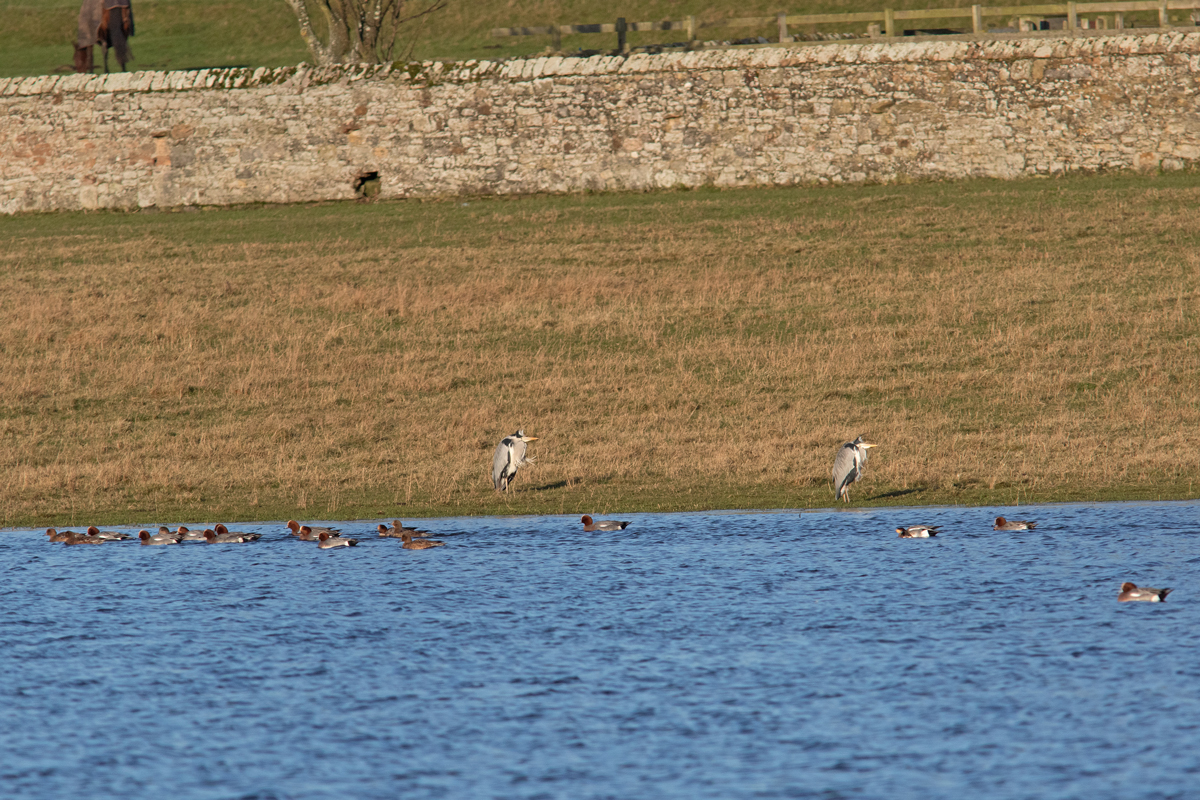
The pond has a good showing of ducks today with 25 Teal, 10 Mallard, 9 Tufted Duck and a pair of Gadwall, a decent record for here. A pair of Mute Swans,a  few Moorhen and a Grey Heron were the only other things seen.

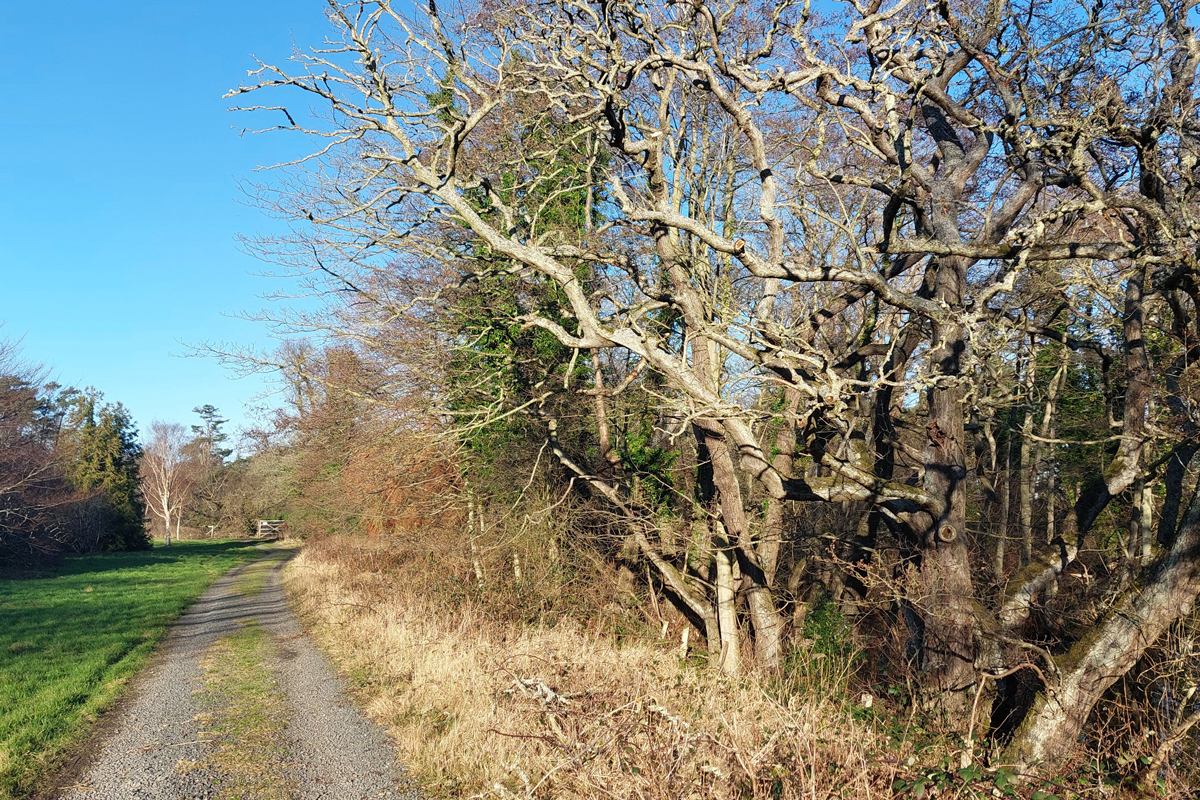
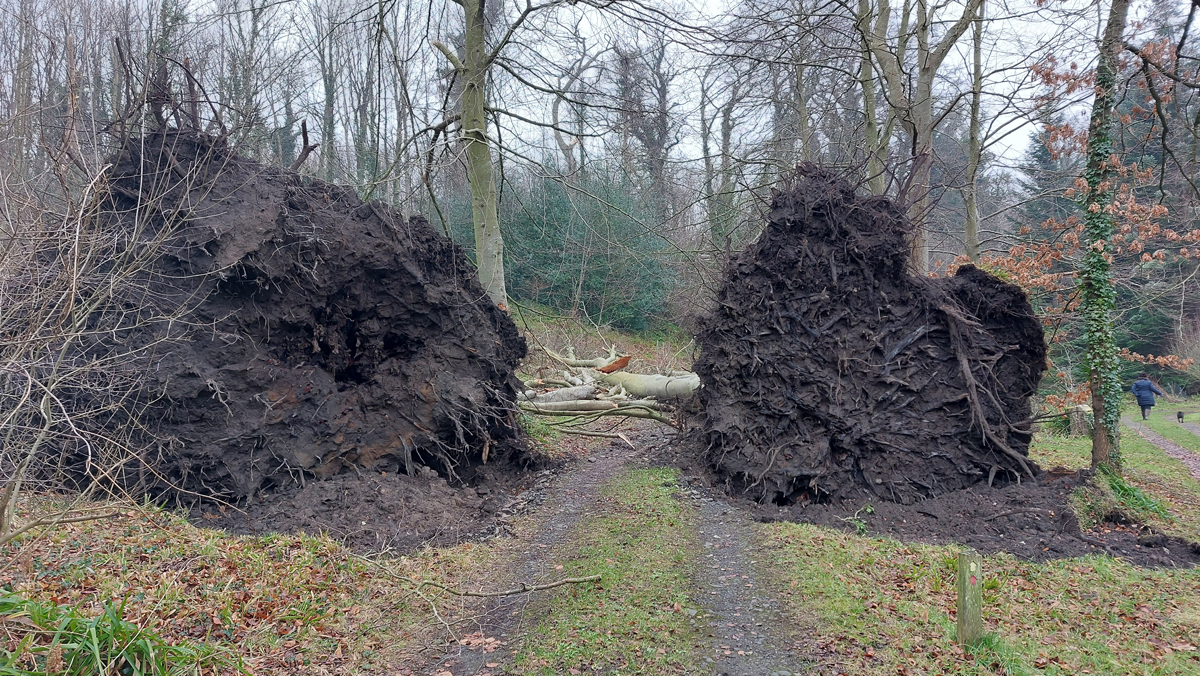
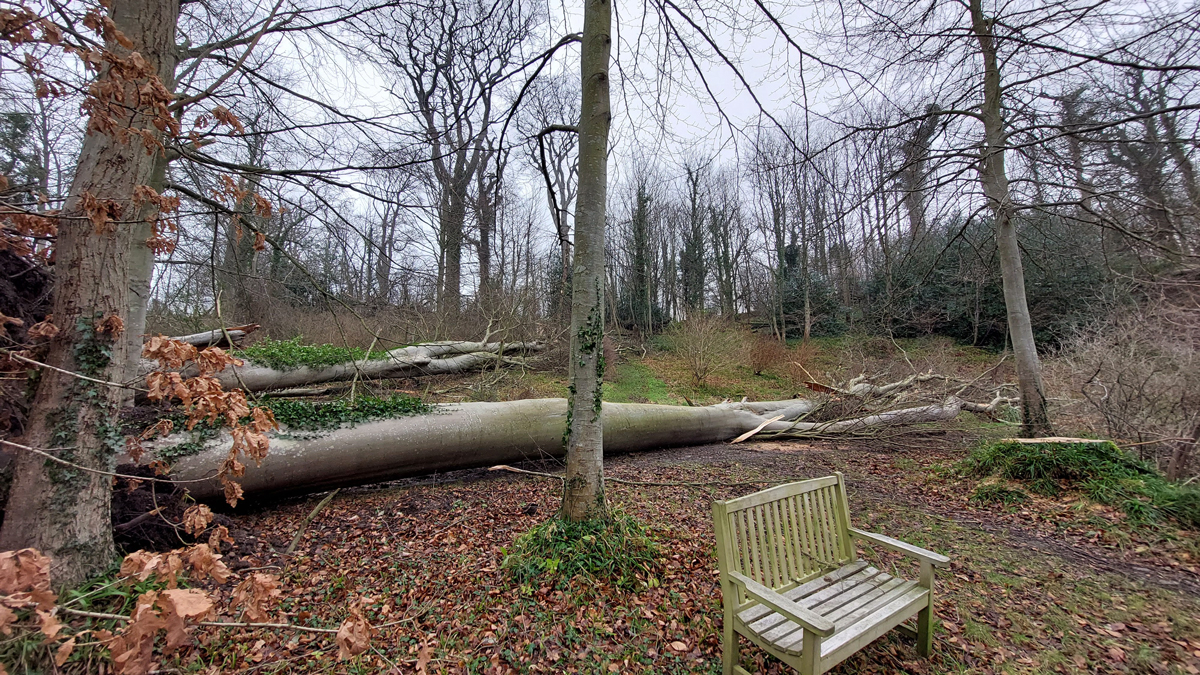
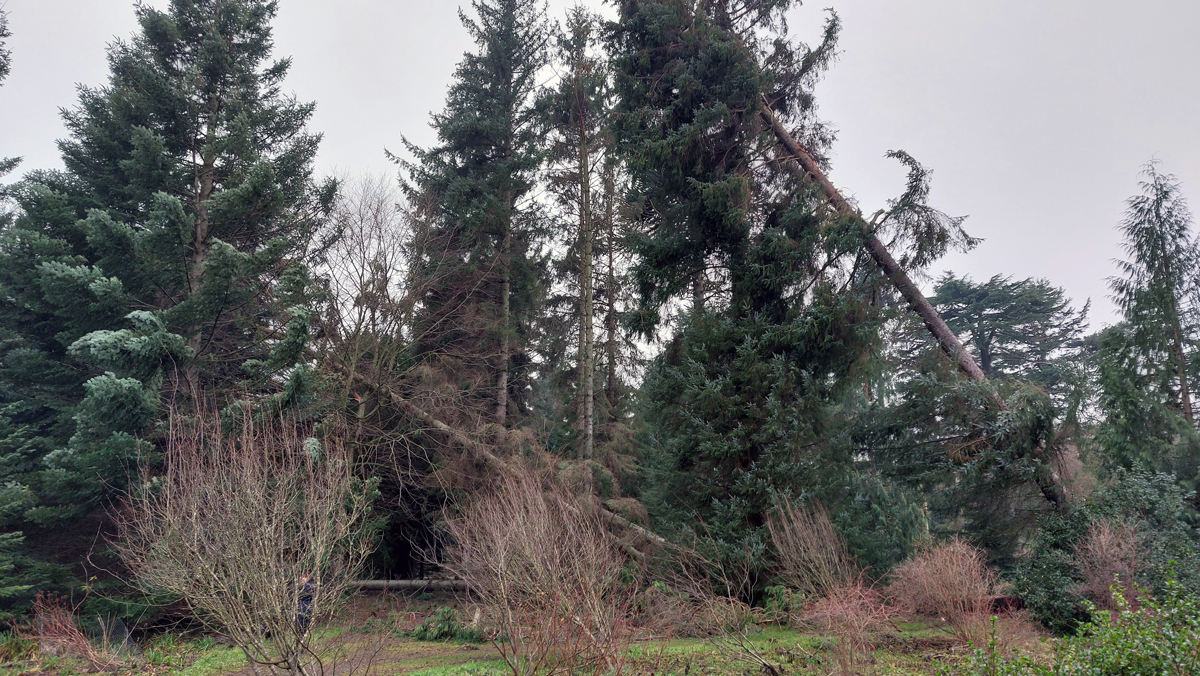
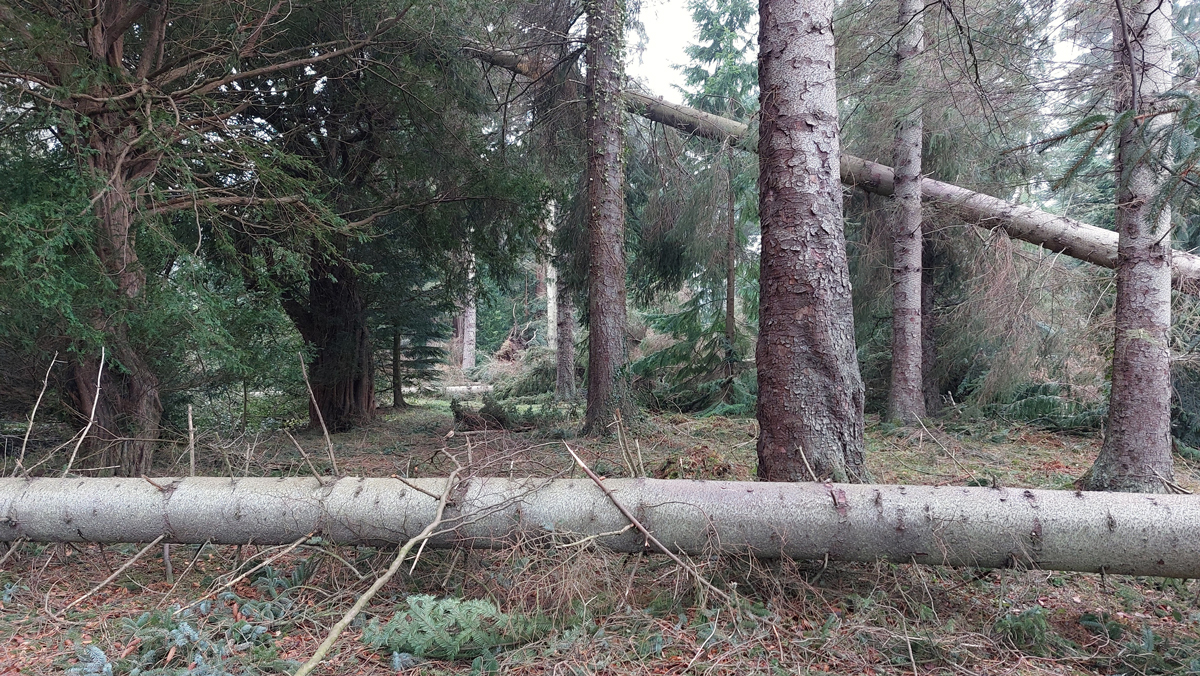
Further on, the damage caused by the Storm Arwen became very apparent with trees over the rides and, in some places, access totally blocked. The estate will want this cleared and made safe in time for public opening for the February snowdrops, but it will take a lot of work. Here are some images but they cannot portray what it really looks like in the field...


These pair of Beeches were just two of many huge trees lying like deceased beached whales. Those root plates were at least 10 feet in diameter.


Huge pines including a nice Wellingtonia blocked our route...