Showing posts with label rarities. Show all posts

Wednesday, January 15, 2025

A Feast before the famine....

 Happy New Year folks and thanks for the concerned comments. After my last sickly post it still took another week or 10 days to get back up to speed making the whole sickness thing last maybe 2 or 3 weeks.

Hence the only things in my notebook over Christmas week were 3 Primrose plants in flower on Christmas Eve and a Kingfisher was a semi resident on the Pond while the first Snowdrop clump was in flower on 31st. Despite our Estate being a nationally known Snowdrop collection with literally millions of plants, this is the first I've ever had before the New Year. So here goes with 2025....

 2025 came in like a lion with a strong W wind and rain in the afternoon of the 1st but since then Northumberland has been ‘the place to be’ nationally when it comes to some more unusual bird sightings.

 The famous Grey headed Lapwing, first seen in the county at Low Newton in May 2023 as a first British record, seemed to return when one arrived at East Chevington in December and remained for a month. Due to the incredible rarity of this species, this is likely a return of that first bird rather than being a second individual. Where has it been since May 2023 when it was last noted on the Isle of Lewis, Outer Hebrides is anyone’s guess.

 As already mentioned, due to one thing and another, I was late to this party, not calling in to pay my respects until 3rd January when the bird was frequenting some damp field corner and taking advantage of invertebrates thrown out by some industrious moles making their soil mounds. It hung around until the final sighting on 9th January. Will it resurface?

Figure 1: Grey headed Lapwing in Northumberland when it should be in SE Asia!


On the same day, another spot in Druridge Bay held no less than 5 Short eared Owls, male and female Hen Harriers, male and female Marsh Harriers, 3 Buzzards and 2 Kestrels. The same site saw the efforts of Northumbria Ringing Group, ring 9 Barn Owls along with 3 Short eareds and 2 Long eared Owls. 6 Barn Owls were ringed on one evening alone. Amazing!

Some proper wintry weather arrived on 5th that seemed to shuffle things up -  a lot! Some snow and a strong E wind resulted in the arrival of several very rare species.

 On 8th a juvenile White billed Diver showed well to all comers at Druridge Bay Country Park after first being seen on Cresswell Pond the day before. This, the largest of its tribe is rare here usually being seen flying past a headland, out to sea on its way back north. To get one on a fresh water body is an great record. Even more so as this same site ( exactly the same spot even) also hosted an ever rarer Pacific Diver on 21st January 2017! The White billed remained until the rough seas abated and the freezing temps on 11th almost completely froze the surface of the lake.  


Figure 2: Juvenile White billed Diver, DBCP.


Figure 3: White billed Diver, DBCP.

 On 8th while we watched the Diver a message came through that an adult Ross’s Gull had flown N close in past Whitburn. These small arctic waifs always cause excitement, more so for those of a certain age who remember when these pink gulls were basically a myth or a fairy tale even. The Unicorn amongst seagulls. With some chattering between birders the hoped for happened when the gull was relocated feeding in the Tyne Estuary off South Shields Pier.

 Work commitments prevented me from going for the first two days but on Friday 10th, as soon as an update was received I was off down to the Royal Quays Marina, North Shields where the bird was feeding in the river with about 30 Black headed Gulls. I was a bit lucky here as after 15 minutes of observation it flew with the flock away off up river towards Howdon and was not seen again from the North side. This is my 4th Ross’s Gull but every one is as gripping as the last, you cant get enough of them.


Figure 4: Ross's Gull, adult, River Tyne Estuary North Shields.

 During January so far, when it seems as if another rarity is just around the corner, on Saturday 11th a female Ring necked Duck arrived at DBCP with the Diver briefly before relocating to Widdrington Moor Lake as the country park froze over night. This little brown duck from America is only the second female of its kind to arrive in Northumberland though there have been more records of drakes.
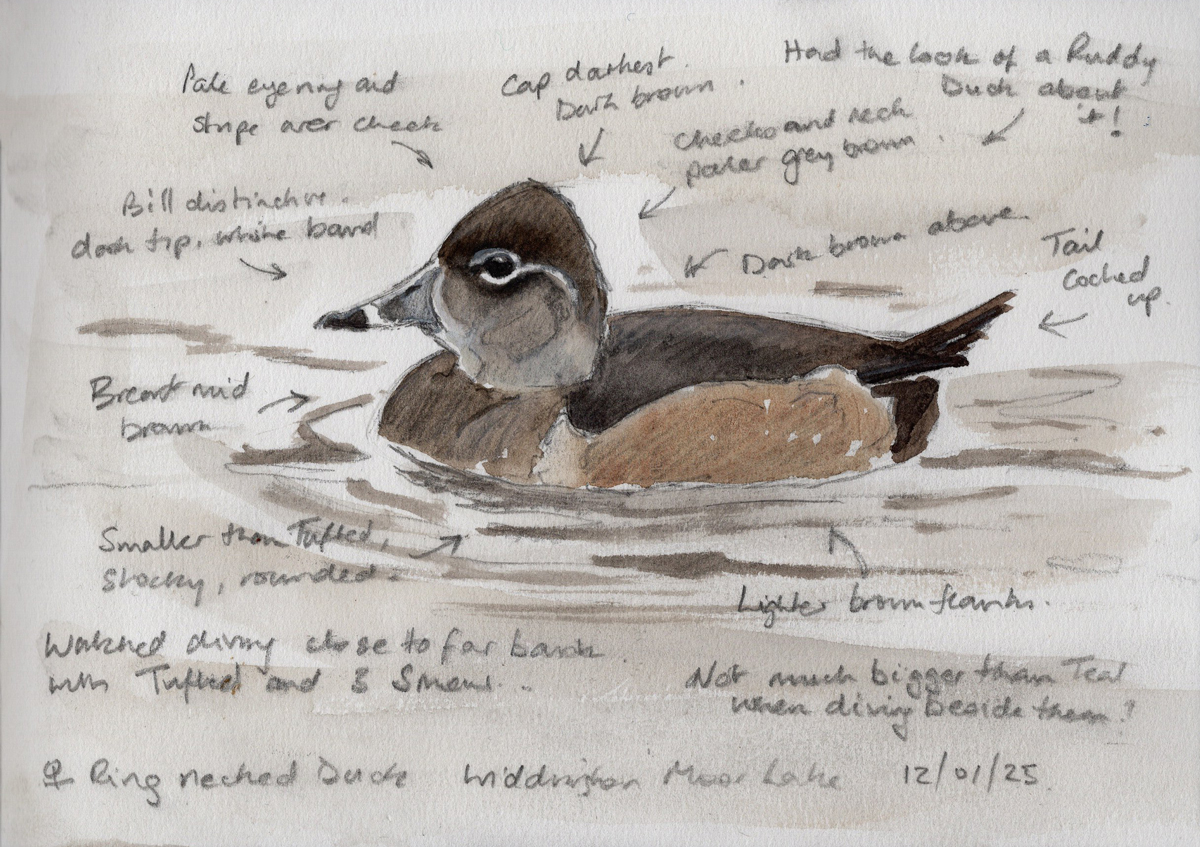


Figure 5: Female Ring necked Duck, a rare North American wildfowl, Widdrington Moor Lake

 As if in support, an American Buff bellied Pipit was also present at Ross back sands at the same time, an even rarer bird, being only the second record ever for the county.

 What a spell for birders this last two weeks has been. Above are the birds I managed to catch up with, there were also others – Black Scoter, American Wigeon, Green winged Teal, Iceland and Glaucous Gulls that I didn’t have time to see plus Snow Buntings, Scaup, 3 Smew etc. A veritable feast for anyone who has an interest in birds.

What has made Northumberland the centre of the birding universe I couldn’t really say but the going has been great. No doubt normal service will be resumed soon…



Sunday, April 03, 2022

The return of the Mollymawk...

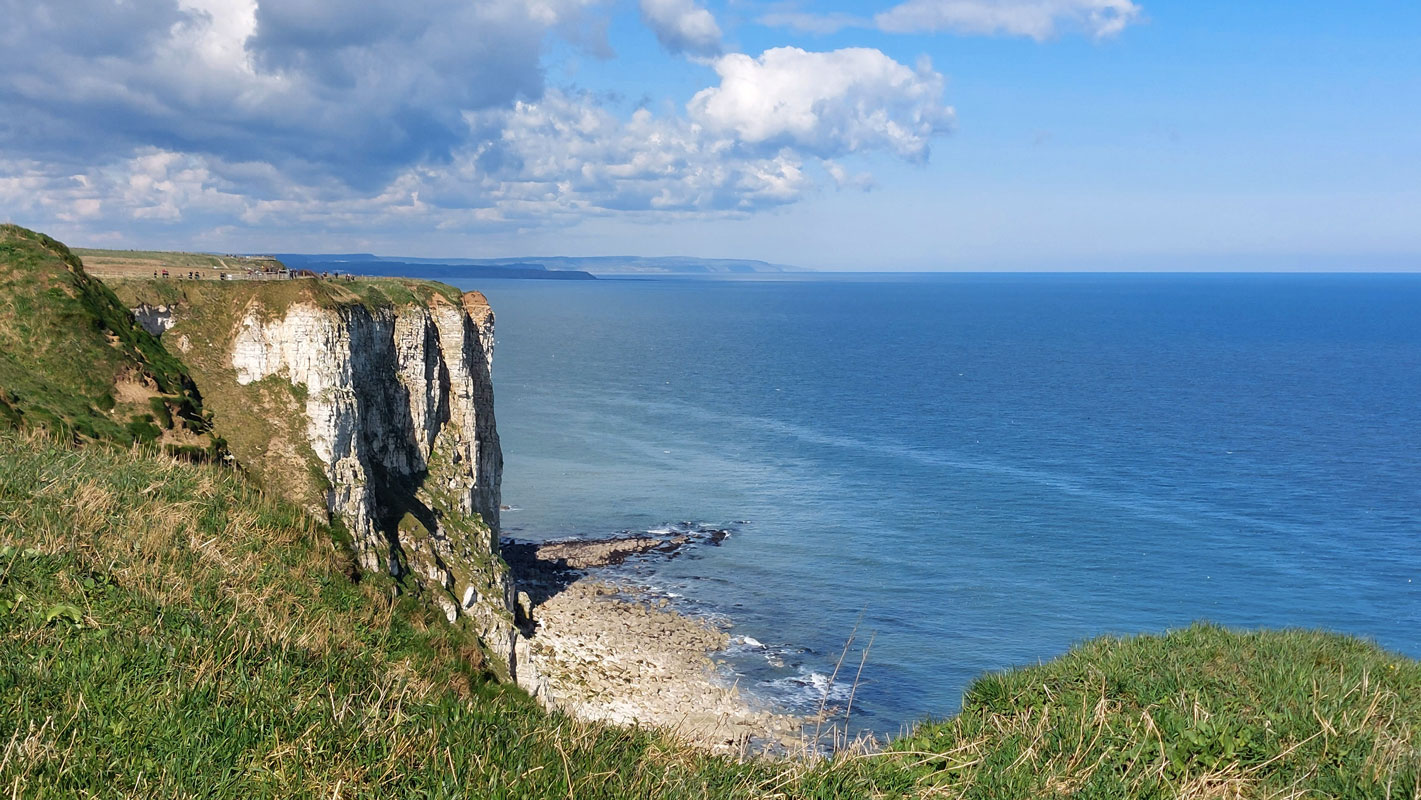
Dear reader, you might recall that last July we paid a visit to RSPB Bempton Cliffs near Filey to see the Black browed Albatross that spent the summer there. Unfortunately for us it was away that day leaving us to stand for 11 hours albatross-less. 

Being a reluctant twitcher at best, although the bird returned to the great white cape and lived there on and off til September, I couldn't face the thought of another journey ending in a blank. A bit like the bad luck that befell the Ancient Mariner in the Samuel Taylor Coleridge poem I was doomed to failure.

Still, that autumn I had hopes that it would return to its favoured face in 2022 when, if I had recovered from defeat, then I would pull out all stops to see it. 

Zip forward several months to earlier this week, much earlier than anticipated, the Albatross had returned to its cliff.

Time to get get back on the horse so to speak...

Bempton Cliffs RSPB. Thousands of seabirds nest here, but it was only one that brought us back today.

We arrived in the car park around 08.30 on a lovely bright, calm and cold morning. A short walk to the cliffs where some birders had gathered.
'Any news?' I asked. 'Its flown out to sea earlier' was the response.
You would think the clouds had closed above us. Gutted. Another long day lay ahead...

Or did it?

Heads down we strolled down to wards the view point. About half a mile offshore I could see some Gannets circling and landing on the sea so I thought Id scan with the bins. Straight away, there was the big stiff winged cross shape of the Black browed Albatross!  In a bit of a panic to get John on to it before it headed for the horizon some garbled directions such as 'There! There!' were given. It seemed to work as John quickly got on to it.

We need not have worried. The bird casually flew back in to the cliffs where it gave some great views flying around the Gannet colony for the next 45 minutes or so before retiring to rest on the cliff out of sight. We tried again after breakfast but it was a no show. A few birders arrived later and did not see it at all.  We knew how it felt.

Still, nothing could top the views we had. Our day was already made... 


Black browed Albatross.

[ PS. Mollymawk is the name for the group of medium sized albatrosses such as Black browed, an American term I think?]


Thursday, November 19, 2020

American Pipit...

 Yesterday Clive Saunders, a local birder, was pleased to find a Water Pipit near where he lives, on the beach. That was until he posted it on Twitter and comments said the bird was actually a Buff-bellied Pipit! You'll get a Water Pipit there one day Clive!

Unfortunately work Zoom meetings prevented me from leaving the back bedroom cell yesterday, but when the bird was relocated this morning I put my plan into action. It wasn't much of a plan really, clock off, drive 12 miles, see bird, drive back and clock on. Give or take, that just about sums it up. It was a bit like one of the Lord of the Rings trilogy except I wan't attacked on route and it went much more smoothly.

On the beach opposite Links Avenue, Amble a small crowd of independent visitors all happened to be exercising in one place whilst keeping a mostly socially acceptable distance apart. It just so happened that the Buff bellied Pipit was also present.

A first for Northumberland, it was not even on my radar, though with records on the rise, maybe it should have been. It was quite a subtly distinctive bird, being easily picked out from the neighbouring petrosus and littoralis Rock Pipits and one or two Meadow Pipits along the strand line. As with all pipits it was giving those to who field craft is an unknown entity, the run around. I was pleased with my scope views in nice sunshine and even managed a few record shots...  


Another excellent bird, only 12 miles from home, it was my 5th new Northumberland bird this year. 

Saturday, September 19, 2020

Busy...from Fungi to Buff breast!

 Although I have managed to get out and about this week after work, I have struggled to catch up with my notes, sketches, blog posts etc. I blame social media. It has to reduce. Is it any wonder it is only drugs and the internet that call their market 'users'!  

Last Sunday the weather was ok but with a clear night and a westerly wind, it didnt look good for birding so we took the opportunity to hunt for fungi a short way inland, still within our 10km square of course.

I find them incredibly difficult to id, but we managed a decent list and with the images, I got most identified from the field guide and some helped by the demon Facebook...

The list looks like this - 

Birch Polypore Piptoporus betulinus

Common Puffball Lycoperdon perlatum

Orange Grisette Amanita crocea

Suede Bolete Xerocomus subtomentus

Brown Birch Bolete Leccinum scabrum

Pearly Webcap Cortinarius alboviolaceus

Fly Agaric Amanita muscaria

The Blusher Amanita rubescens

Porcelain Fungus Oudemansiella mucida

Orange Peel Fungus Aleuria auranta

Yellow Stagshorn Calocera viscosa

Larch Bolete Suillus grevellei

Red cracked Bolete Xerocomellus chrysenteron

False Chanterelle Hygrophoropsis aurantiaca

Amethyst Deceiver Laccaria amethystina

Egghead Mottlegill Panaeolus semiovatus

Glistening Inkcap Coprinus micaceus

Primrose Brittlegill Russula sardonia

Ochre Brittlegill Russula ochroleuca

Beech Milkcap Lactarius blennius

Grisette Amanita vaginata

Cep Boletus edulis

A Webcap Cortinarius pseudosalor

23 species and good showing.

Amethyst Decievers with an unknown of which there were many.

Beech Milkcap

Larch Bolete

Orange Grisette

Pearly Webcap

  On Wednesday 16th, there was a window of opportunity to have a seawatch.

Two, 2 hours sessions from Cullernose Point had  - 

Manx Shearwater 48

Sooty Shearwater 4

Arctic Skua 6

Bonxie 14

Common Scoter 70

Velvet Scoter 2

Pochard 7, unprecendented. An absolute mega that would have been the highlight of the day had they not been overshadowed by a stunning, adult, summer plumaged Sabine's Gull that came past, quite close in, with 30 Kittiwakes on my last scan of the day!

Adult Sabine's Gull with Kittiwakes.


Knot 1

Shelduck 5

Wigeon 107

Teal 60

Red throated Diver 16 all S 

Bar tailed Godwit 2

Puffin 30

Tufted Duck 3

Scaup 1

Pintail 1

Pale bellied Brent Geese 54

Unless stated they all went north. Not a bad four hours on the patch.

And finally to end this scrambled post, Gary Woodburn found a Buff-breasted Sandpiper at Low Newton while we were seawatching. He went for his camera and when he came back it had gone. Later on, it reappeared 5 miles down the coast on the wader hotspot that is Boulmer beach. 

Having seen a few in the county over the years I didn't go for it the same day despite only being 3 miles away on me on my 2nd local patch. The next day was fine and sunny so after work I thought Id pay it a visit. It is new for Boulmer after all... 

What a lovely little American wader, no bigger than a Turnstone, feeding on the beach at high tide facing regular flushings by dog walkers. I managed a few pics and left it to its business ... 


Buff-breasted Sandpiper, Boulmer.

It seems Blogger has changed again, this time for the better? I click my 1200 pixel wide images to original size and blogger has fiited them in my column width without faffing with the HDML code? Mmm, nothing is that easy....


Saturday, June 20, 2020

The Oracle.

Almost a year on from our near unbelievable sighting of a Giant Petrel sp off Cullernose Point, the report out today from the BBRC ( British Birds Rarities Committee) shows that the record has been accepted. This is much sooner than I expected, but is it time for celebrations? Not just yet.

This means that the powers that be accept that our identification of the species or in this case species pair is correct, but as this would be a first for Britain, the record must go before another august body, the BOURC ( British Ornithologists Union Records Committee) to see if it warrants a place on the British List. I fear this might take a lot longer, but once the id has been accepted, what else could possibly happen? A Giant Petrel tanking it past an east coast headland is not going to be of captive origin I'm sure, so I am keeping all of my appendages crossed and hoping for the best.

I have found some good birds in the past, but I have never been involved in anything on this scale, a potential British 'first'.. The finding credit will rightly go to mark Newsome at Whitburn, after all we were just waiting for his bird, but as for a Northumberland fist, that would go to myself and Mark Eaton. I cant believe it! So with that in mind, hang back, don't put the flags out just yet, lets see what occurs....

While I am on about listing, the BBRC also rejected last years Baikal Teal as an escape so I have already removed if from my lists. Will others I wonder...
Original Field Notes done while bird still on show. Excuse the panicked writing!

An image from the internet, this shows how we couldnt see the bill at range and the ragged tipped wings and square tail. 


Tuesday, May 12, 2020

Patch Golden-en.

I've not posted since week 6 while my blogging peers are going all out with tremendous content. Gavin Haig, Dylan Wrathall, Steve Gale et al all have me eagerly awaiting the next instalment while I am just floundering.

I better fill the gap...

In my last post I 'nocmigged' a Moorhen. The very next day as I took the dog out late, a Coot was yelling its metallic call loudly over the house! Another garden tick on call...I must say, the nocmiggers recording on Xeno canto of birds calling at night are a great help which has just reminded me I had a funny one the night before last that I need to look up...I have suspicions...

On the same night as the Coot, a torchlight check in the village hall pond found a couple of newts on show. Not the expected Smooth Newts I usually see, but two male Palmate Newts. I didnt have a clue they were here being a more upland species usually. Next spring I will be prepared with an aquarium to get some photos.

On Sunday 3rd I got up early and went out birding! Well I got up and had a walk around our village and to the coast path. The only thing of note in a couple of hours was a single Lesser Whitethroat that only stopped briefly before flying off inland. A Wall Brown was in the garden.

In lovely weather, there was just usual expected stuff for a few days the highlight being an influx of Sedge Warblers, not too common in my patch, but 6 arrived on 8th, there was even one singing in the wood beside our garden, that was odd, clearly a newly arrived bird getting its bearings.

It was on Saturday 9th that the real prize lay in store.

Jane and myself took Peggy for a walk down to the pond on a lovely sunny warm morning. It was quiet but very pleasant.

We were about to wander back for breakfast when a call in the trees stopped me dead. This is the standard recovery position when you hear an call that needs to be heard again.

A few seconds passed and then it came. I don't know how to spell 'phweelloo weeloo' but it was as clear as a bell up in tall lime trees behind us. I said 'No! cant be' , Jane said... 'Golden Oriole?' She has never heard one before only hearing  me on about them in the past but she just knew what the caller was... 'weeleeoo woo' again and again...we turned to follow.

I gave her the dog lead and I went ahead. As we walked along the path the bird called again but further off. We headed to where it was. As we neared, the squawking nasal squeal call came a couple of times, lower down across the burn in thick cover. The first time I have heard this call from a migrant. We took a different route to get a better angle but, after a couple of more cat calls, it went silent. The trail was lost.

Such a shame, not to have seen my 4th Northumberland and 2nd patch Golden Oriole, but it gave a great vocal performance in daylight (not on a hard drive) so I am very pleased to have it. For my first one see HERE . Its 11 yrs since that one!

Photo by Gary Woodburn of a bird John and myself found at Newton Pool a few years back. I wish mine had shown as well as this. 

An older drawing of my first Northumberland Golden Oriole that sat about on bramble bushes right in the open.

I cant believe I've had two on my own patch...

Monday, December 16, 2019

Extra time Lifer

On Saturday, Paul Cassells found a Yellow Wagtail at Prestwick Carr near Newcastle. In December, this was always going to draw some interest, locally, if nothing else. Sure enough before the day was out several knowledgeable birders had seen, photographed and sound recorded the wagtail and proclaimed it as Eastern Yellow Wagtail Motacilla tschutschensis ( if that is spelled correctly I'll be surprised).

Now, knowing how complex the Yellow Wagtail races are I just milled about on Sunday thinking 'meh' its a Yellow Wagtail. I knew full well that these have recently been split and command specific status, but I just couldn't get motivated for a 70 miles round trip.

This is where things become shameful.

During Sunday I saw that more and more of my birding peers were paying homage to this little grey and white bird as it is new for the county and with only 15 or so UK records everyone I know's list was increasing by 1. Now I am not anywhere near the biggest county lister but the thought of those in the same league, leaving me back at base camp improved the lost motivation.

So, without ado, this morning, before work I began by visiting Prestwick Carr where the Eastern Yellow Wagtail, now with some heavy backing by Magnus Robb of The Sound Approach Team using some technical wizardry, was still puddling around on the flood eating bloodworms at close range.

The bird behaved impeccably being on close show the whole time I was there, even calling a few times and perching on a hedge only 5 feet from birders. So once I get Bubo working again I will add it as Northumberland List 347, life ? not sure, 417? ish.

Forgetting all the listing nonsense, it was a cracking bird and now the id features are being clarified  one to watch out for again in the future...


Tuesday, July 02, 2019

Giant Patch Tick!

What a bizarre evening that was.

I was driving home from work when I had a phone call from Gary Woodburn who said the incomprehensible news that Mark Newsome has just had a Giant Petrel fly north at Whitburn.

A what? Giant Petrel? Are they not the things that kill penguins on Blue Planet? In the North Sea?

It was a dark phased bird with a massive white bill.

Giant Petrel has two species, they are Southern and Northern and are incridibly difficult to identify let alone on a fly past at a kilometre range...

Gary was going to wait for news from seawatchers further south and then head to Newton Point. I had already considered a seawatch, as the high pressure out in the Atlantic looked good for a movement of shearwaters and there are a few terns I still haven't had on the patch year list so this news prompted me even more. Gardening would have to wait...

Straight home, changed, snacks and tea packed and out to Cullernose Point by 6.55pm. I was perched halfway down the cliff on a lovely summer evening. The sea was alive with auks, buzzing back and forth in small flocks, razorbills, guiilemots and many puffins. To a back drop of calling kittiwakes on the cliff, whats not to like.

Snacks eaten, tea drunk, and the first 50 Manx Shearwaters were logged. I was studying a winter plumaged diver on the sea that was very Black throated like but just too ar to confirm, when I was joined by Mark Eaton to look seaward. Seeing anyone here is unusual so company and in particular another set of birding eyes was welcome.

The diver was analysed,and I still think Black throated, complete with 'cobra-like' nape shape but its not inked into the notebook.

We commented on how good the visibilty was, Highish up with a flattish sea we could pick out puffins atalmost 2 kms, and at 1 km an 8 inch bird was easily identified, so a 3 foot long, black albatross should be no trouble to connect with, if only...

News came through that a good candidate was seen very distantly at the horizon from St Mary's Island. Ho hum, it was a nice night.

Then a slow motion, quiet, tenseness came as I scanned south from a distant oil tanker when all of a sudden, a huge, black apparition loomed up from the waves and I called to Mark ' There's your Petrel!' scarcely believeing my own words. A short 10 second panic ensued while I stammered out directions, but luckily the oil tanker came in handy as a marker and seen at three quarter distance Mark was on the bird.

The GIANT PETREL, flapped on elastic wing beats, giving the impression of one of those big Fruit Bats or Flying Foxes rather than a bird. It soared and glided seemed too heavy to shear in the calm conditions. This continued for 10 minutes and once it switchbacked south briefly before getting back on track North. We watched as it passed Gannets, Manxies and flocks of auks looking like nothing I've ever seen. The wing tips seemed a bit rounded or ragged maybe giving an 'eagley' look at times, then on down glides it vanished into wave troughs before towering back above the horizon line. it lookd darker than a Sooty Shear but it was the size and jizz that were unmistakeable.

What a bird. It slowly vanished from view. Word was put out by Mark as I had no signal at all and the enormity of the sighting sank in. I was trembling a little bit...

That was certainly some start to the seawatching season...

Oh and even though it cant be identified to a species, I'm having it on my lists!


Tuesday, June 25, 2019

What a week!

I'm going back a few weeks now to Monday 3rd June....I should have one of those wavy 70's special effects...

Sitting at work just having my lunch in front of a computer, I glanced at What'sApp on my phone. A message had just appeared - 'BAIKAL TEAL, East Chevington North Pool now'. This was not wholly unexpected as this bird has travelled around eastern England for a few weeks now, but yesterday it had gone past us and into Scotland. We thought we had missed out on its north bound itinerary. However, Scotland wasnt to its taste, and it was now loafing on the bankside here at East Chev.

I downed tools [keyboard] and headed off up the road for this genuinely wild, long distance vagrant, ***it has been to Spurn, so it must count*** arguably one of the finest looking of all the wildfowl. As its name suggests it should be breeding now somewhere east of the Siberian Yenisey on tundra pools, not hanging around the ex Northumberland coal field.

A few birders were already watching the bird when I arrived, and what a little stunner it was too, with the green and yellow harlequin face pattern of an adult drake. Although it was quite distant, good scope views could be had on the bank and out on open water. At the time of writing, it has moved down to Druridge Pools where it looks set to put the summer in.

Although some people are concerned that it is a species widely kept in captivity and it may have just hopped a fence, it was unringed and certainly behaved like a wild bird, being very uneasy and flighty even at range. Numbers have increased from a few hundred thousand birds in the 2000s up to a million birds now wintering in South Korea so why wouldnt it be the real deal?

We will have to wait until the powers that be decide on that one, but I've already added it to my list.
More importantly, it is in 345th position on my Northumberland List and is a great bump start to a slow year, arriving in the county with a few other good birds such as Broad billed Sandpiper, Red necked Phalarope and American Wigeon.

Northumberland's first Baikal Teal, East Chevington.
In June it pays northern birders not to rest on their laurels, and sure enough only two days later a visiting birder looking at a Garganey on Monks House Pool turned up Northumberlands second ever BAILLON'S CRAKE after one in 1942.

This small roadside pool,a  former local patch for the master, Eric Ennion, is a proper mass of thick impenetrable juncus, so I didnt hold out much hope of having a repeat performance of the 1989 Sunderland bird. I hung back awaiting news. I just sat down to my tea, when the message came, the bird was out scratching around the mud, in the open!

As with the Teal, the pause button was pressed, tea put in the oven, Springwatch recorded, and off I went, all of 15 miles north of home. I skidded to vehicle abandonment and jumped out. 20 birders were just gazing around as they do. 'Has it gone? I asked Ian Fisher. 'Its just gone behind those rushes a few minutes ago' was the response. Thats that then I thought and got the scope out as a token gesture. After 10 mins, Tariq Farooqi gave the call, 'There it is!' resulting an a 30 second panic until I could locate the tiny hunched scrap of feathers picking around in a tunnel of rush. Eventually it emerged into the open and had a bath and a preen for 10 minutes before skippng off out of sight where it was never seen again....  wow, what a bird. Not a full lifer, but one I never thought I'd see again, let alone in the home county.

These tiny marsh creepers are quite scarce and difficult to see anywhere in Europe even though they are widespread breeders. It is believed that some may breed in the UK after a survey found several calling birds on marshes in Wales, but in this kind of habitat, we could never be sure.

The county tick [346] was tinged with some ( very little) remorse that many of the top Northumberland Birders couldnt make it up north from Newcastle etc. A bitter sweet experience for sure...

Northumberland's second Baillon's Crake, Monk's House Pool.


Friday, May 12, 2017

Work birds...

Before I left home this morning I hesitated, then thought I had better take my birding kit in the car with me to work, just in case. After all it is mid May and the wind is swinging east...

Sitting at my desk, drinking tea, waiting for an 11 o'clock appointment to arrive ( they never did) and my phone vibrates twice... Citrine Wagtail, Lynemouth Flash!

Now, Lynemouth Flash is all of about 3 miles from my office, so, I necked my tea, made some lame excuses to work colleagues and dashed off on some, er, visits.

A line of cars indicated the spot, a scruffy looking flash pool on a field, liberally scattered, with piles of fly tipping and mongrel horses dotted around. The flash runs right next to the road, just north of a travellers site, hence its condition. As soon as I parked up, gathered the gear and wandered along to see the familiar faces, I was pleasantly surprised to find that the bird could hardly be feeding any closer. It was along the muddy fringe, just over the wall from the road, a nice female Citrine Wagtail.

Straight away it looked the part, showing dove grey upperparts, two broad white wing bars with coverts and tertials edged white. The yellow face bordered the greenish ear coverts, and face on, it sported a nice olive-coloured, spangled, gorget of a necklace.

As if to say have you got everything, it flew up onto some bushes and called a harsh sharp note, rougher and more hoarse than flava wagtails do.

It fed very actively right around the edge of the small pool, performing admirably for the small crowd.

Up until 2015 there had been 10 records from Northumberland, mostly in autumn.This is my third here, after an adult female in May 1991 at Hauxley and a juv at Alnmouth in September 2005, so it was about time for another.

A very nice bird to get, and I managed to get back to work scarcely half an hour after I left. I'm so pleased I put my stuff in the car...    


Sunday, October 30, 2016

The ultimate...

On our way shopping yesterday my phone rang and a voice came over the speaker in the car. Quiet at first, then in a trembling, hushed tone, we could hear 'Stewart? Stewart? I'm watching a Siberian Accentor...' Alan Tilmouth had struck gold by stumbling upon Northumberland's second Siberian Accentor of the month, during this amazing arrival of the species.

Unfortunately I was pre-booked and I couldn't get away, but this morning John and myself met under a fantastic sunrise at Amble, that may have been an omen of success.

Off we went down to Newbiggin by the Sea and after a bit of a debacle with a metal fence that I won't go into on here, we both managed excellent views of the bird. At one point it ran towards myself and Eric Barnes after being spooked by a weasel, stopping only 12 feet away to snack on a grub (leatherjacket I think). I suppose it had to happen sometime this autumn. After trekking down to Hull and back the other week, then dipping out at Holy Island, I cant tell you how pleased I am with this addition to my Northumberland List. What a beautiful bird. Thats me on 339. I wonder what 340 will be?


A great bird, studied and photographed to distraction, and, as you cant take them with you, off we headed further south to see another eastern wanderer, an Isabelline Shrike at South Shields. I've seen 4 or 5 of these pallid grim reapers before, but not an adult, so this female was a nice one to catch up with. Quite a dull bird, it was very active and popular with photographers too, so after a few ropey shots we left it to its business.  A fly over Jack Snipe was nice to pad things out a bit too...

Another great days birding this autumn, surely that's the finish now?

Wednesday, October 19, 2016

Better than White's Thrush?

Sitting at work two weeks ago watching the development of the twitch to Shetland for the UK's first Siberian Accentor, little did I know that before the month is out it would not only be on my list, it would have been seen in Northumberland too!

When one turned up at Easington, East Yorkshire, we just had to go. Due to commitments, John and myself were typical late to the ball, but a good day out on Sunday allowed us great views of the second British Siberian Accentor. Since its arrival, others have graced Saltburn, Sunderland and Holy Island ( I dipped that one this mornings) making the UK total now up to 5 birds.

Its great to be a part of this very strange and rare influx into western Europe. I wonder how it will all pan out...Maybe I'll catch up with a Northumberland bird eventually?

Until then, here is the one for Easington on Sunday...

The twitch has abated somewhat from hundreds on Saturday.

The skip of dreams. Home to siberian megas.