
This might be a longer blog post than most recently, as this week I've finally got something to write about, so please bear with me. There has even been some good signs of spring.
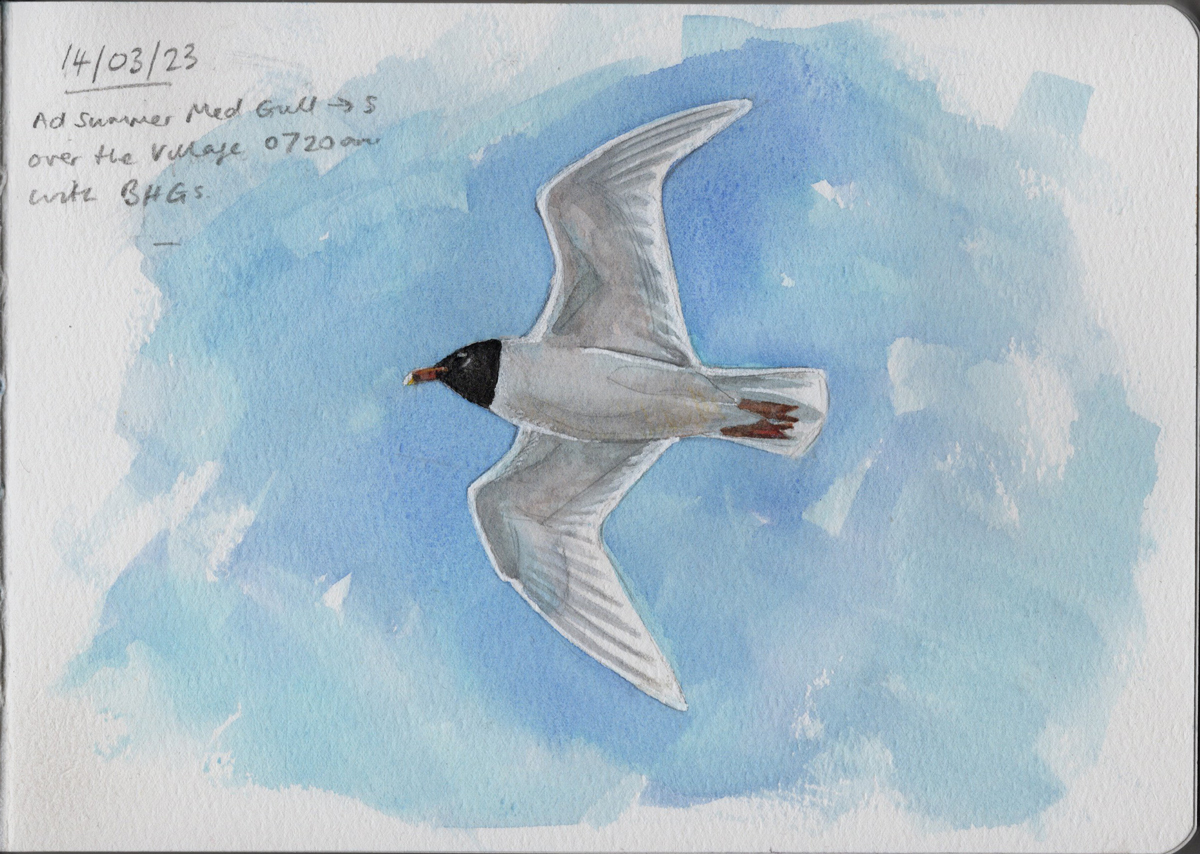
Before I come to the weekends events, on Tuesday mornings dog walk, a smart adult, summer plumaged, Mediterranean Gull flew low south over our village with a team of Black headed Gulls. My first of the year on patch. As far as gulls go they don't get much smarter than these, with backlit angels white wing tips and contrasty hood..
|
| Mediterranean Gull. |
The next few days were standard, with that treading water feel to it, until Friday.
I was office based on Friday morning when at 09.17am a WhatsApp message came
through -

Alpine Swift is a rare bird in Northumberland with only around 15
records and there hasn't been one 'gettable' for about 30 years. Not in my
time anyway.
Now, my office is 40 miles from Bamburgh Castle so it is not exactly a short
jaunt away. When that last message came through I felt some relief that it had
gone, but a short while later, it had returned. Had I been working from home,
Bamburgh is only 15 miles away, but not today.
After another hour and more updated grippage of 'showing well' and a frame
filling pic, it all became too much, I had to go. So, colleagues updated, I
was going to pop out and work from home in the afternoon...
After a sluggish tractor / tourist subdued drive up the A1 the car finally
came to a halt in the large car park over shadowed by the huge bulk of
Bamburgh Castle at 12 noon. A quick scan with the bins. Nothing. Just blue sky
and fluffy clouds.
Checked phone.

Bugger. No news for an hour. Its not looking good.
I pulled out of the car park and drove a few hundred yards to the south and
parked on the road side so I didn't need to pay and thought I'd give it half
an hour and see what happens. As I got out of the car I was joined by Alan
Hall who was buzzing having had great views of the bird. By now I had resigned
myself to having wasted my time, but you have to try or you'd never succeed.
Then, Alan became quite animated. Gesturing over the dunes - 'There it
is!'
And it was coming our way.
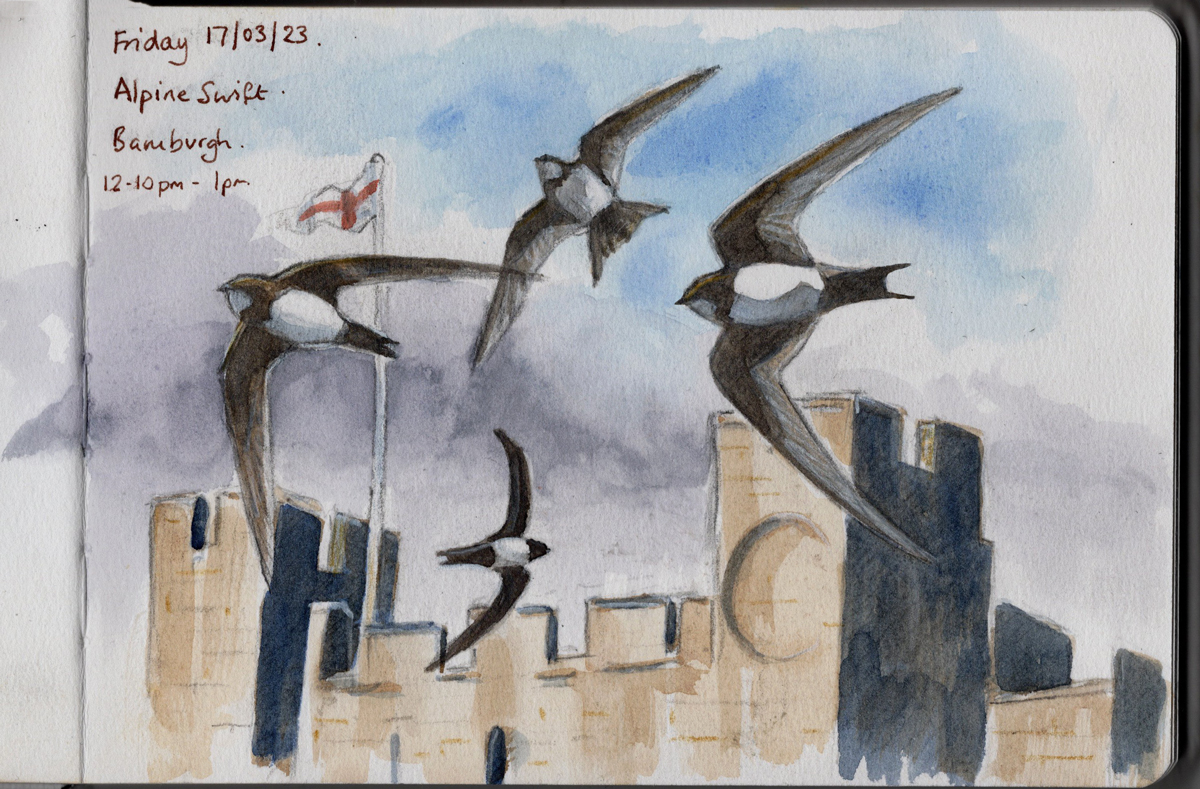
What a bird, Alpine Swift is a good deal bigger and bulkier than Common Swift,
appearing like a more stiff winged Merlin as it approached and went low,
straight over our heads then gone towards the village. This is only my 2nd UK
record after seeing one on this very same date in Scarborough 19 years ago.
Alan left for home but I went back to the car park where a few others were
watching the now very high Alpine Swift feeding. Sometimes it would drop lower
and strafe the castle walls and flag pole at great speed, rocking its wings
side to side. I wished for my camera that was lying at home, but no worries,
the lack of it meant I could just take it all in above us.
After about half an hour, the car park attendant came. This was cue for me to
head back home and work. What a day. The swift was present only for a short while after I left when a rain shower seemed to move it off and despite
some vague reports around 3pm it was not seen again.
Back to reality now. Yesterday was another pleasant day so I met John at
Seahouses Farm layby and after some car shuffling where we took one vehicle up
to Craster then drove back to Howick to walk the coast line looking for
migrants, we set off in clear blue skies for the walk north.
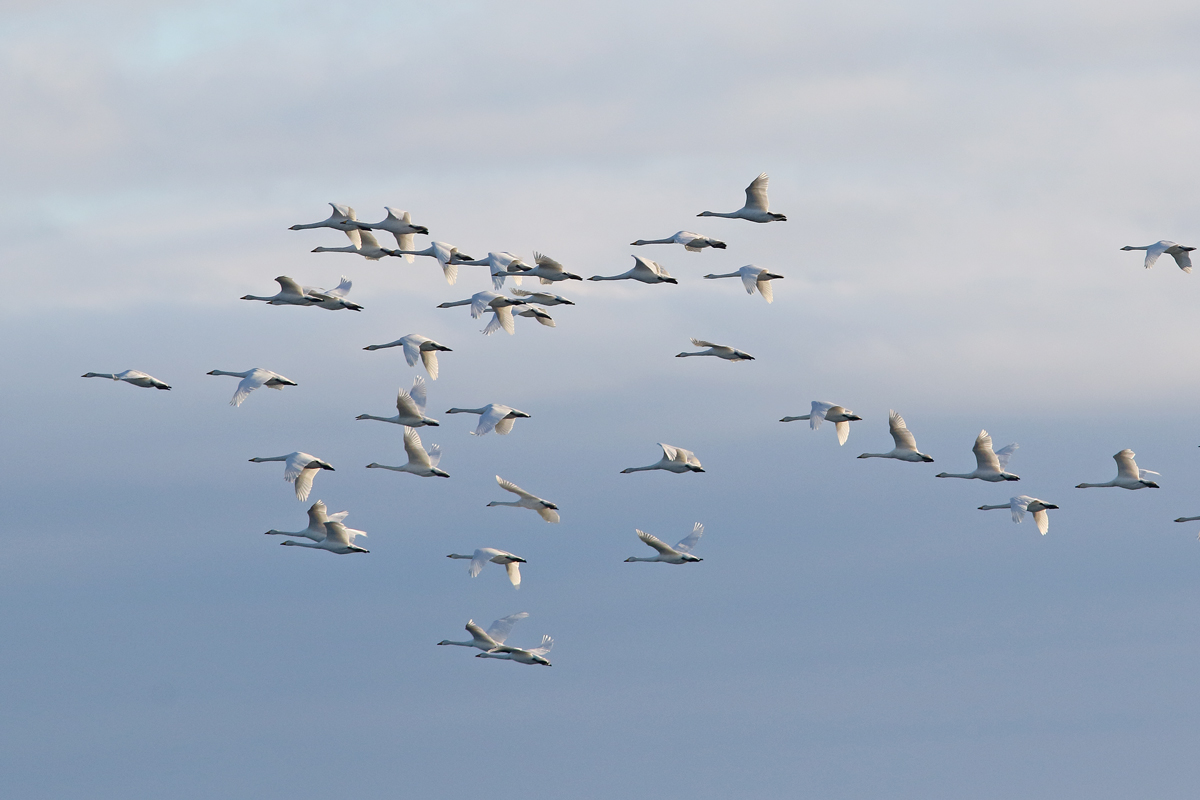
Soon the sound of trumpeting Whooper Swans was followed by the lovely
sight of a majestic flock of 47 slowly following the coast north. Another
party of 72 was seen later on at Craster as well as a big flock of 350+
Pink footed Geese following the same route back up to breeding
grounds.
|
| Whooper Swans |
As we approached the small Salters Gate layby an early Sand Martin flew
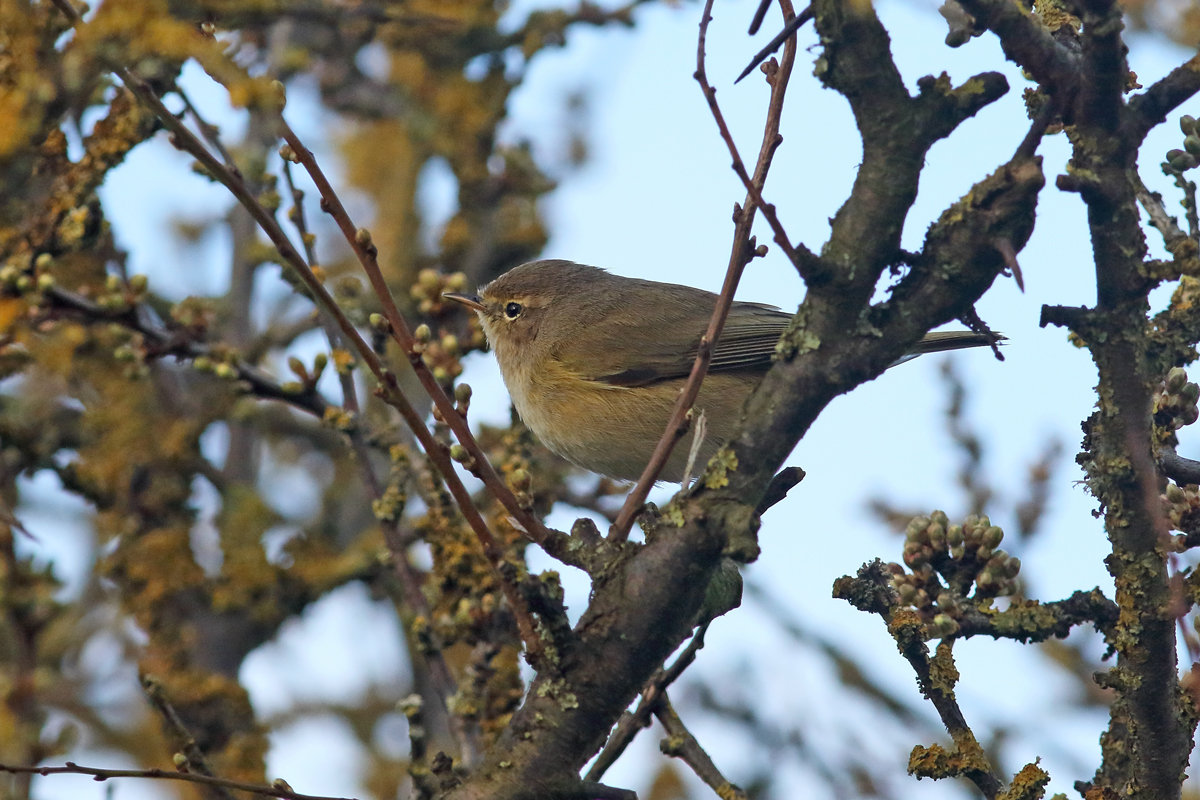
low west while a couple of Chiffchaffs could be heard singing.
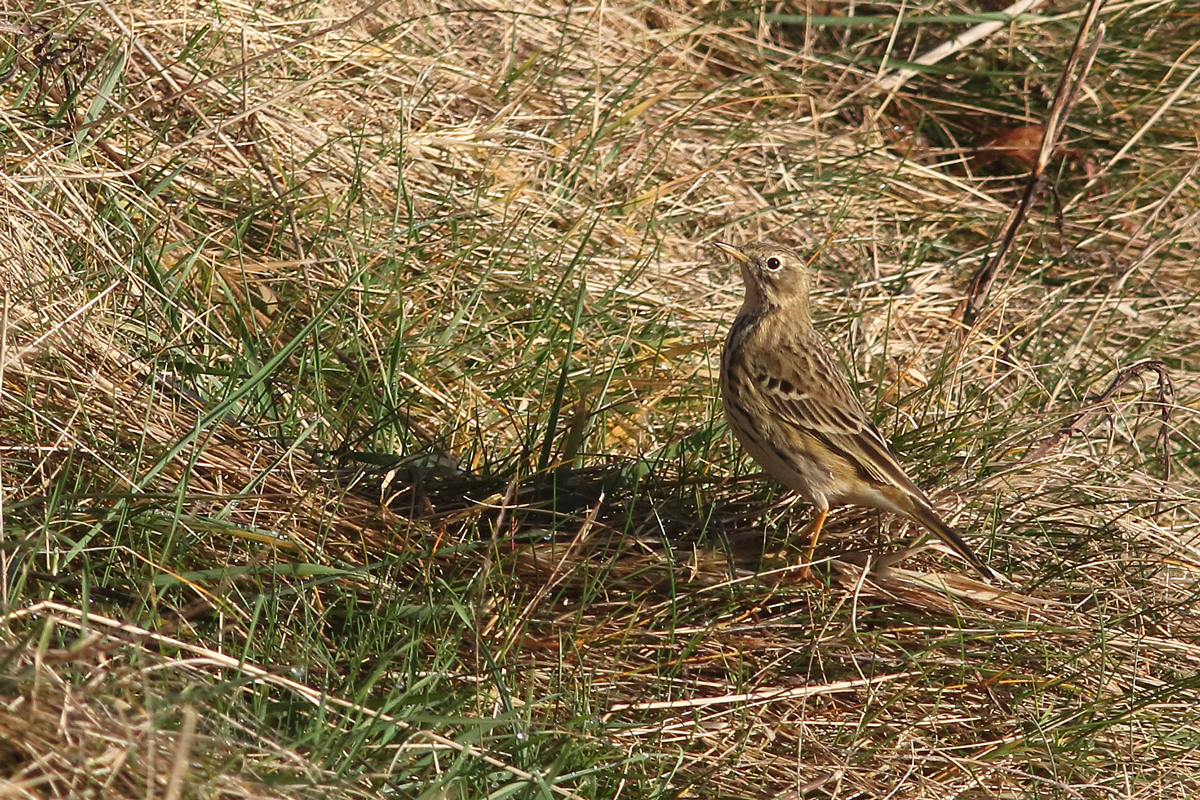
A few Skylarks, Meadow Pipits and Wagtails were also on the move north along
the coast path.
|
| Chiffchaff, Howick coast path. |
|
| Meadow Pipit |
The rocky shore between Cullernose and Craster is excellent for Wheatears or a
Black Redstart maybe but we didnt see any on this walk. New additions to my
Local Patch year list were welcome though with a drake
Red breasted Merganser and 3 Lesser Black Backed Gulls N. A few
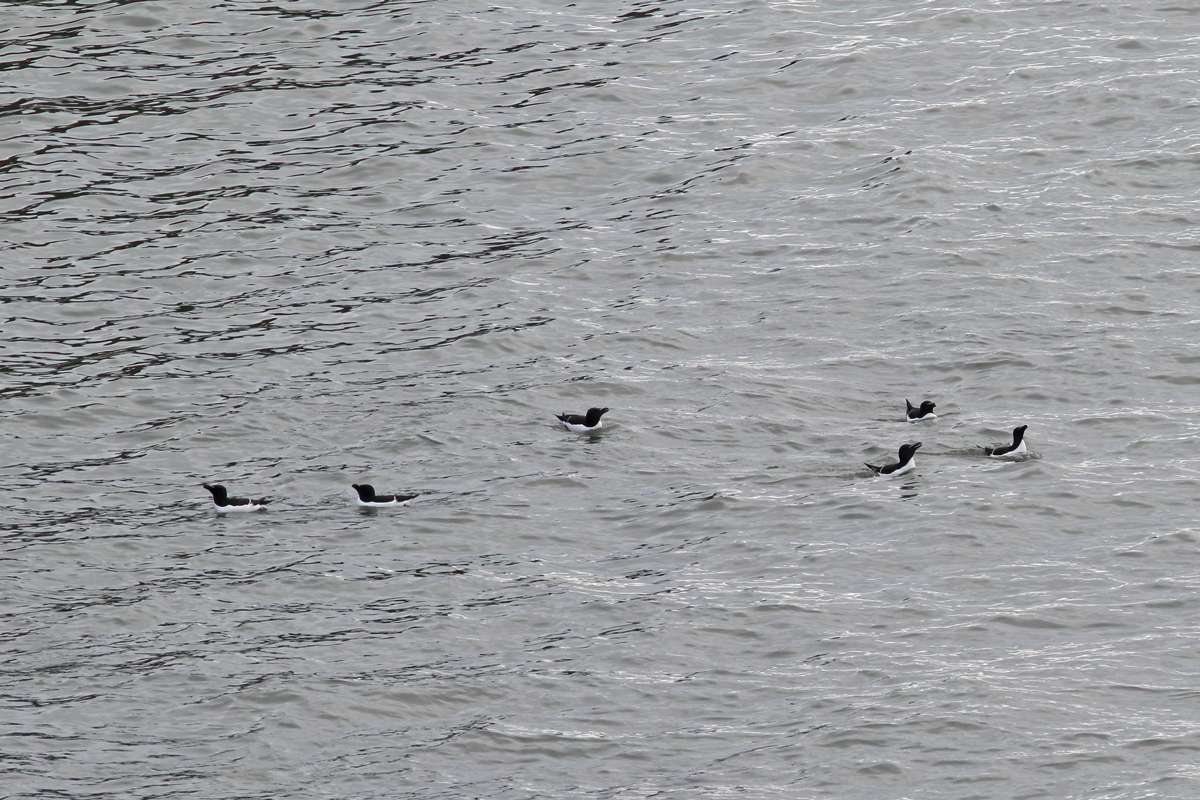
Razorbills were displaying on the sea below Cullernose cliffs and the
first Kittiwakes were back on the sea.
|
| Razorbills displaying. |
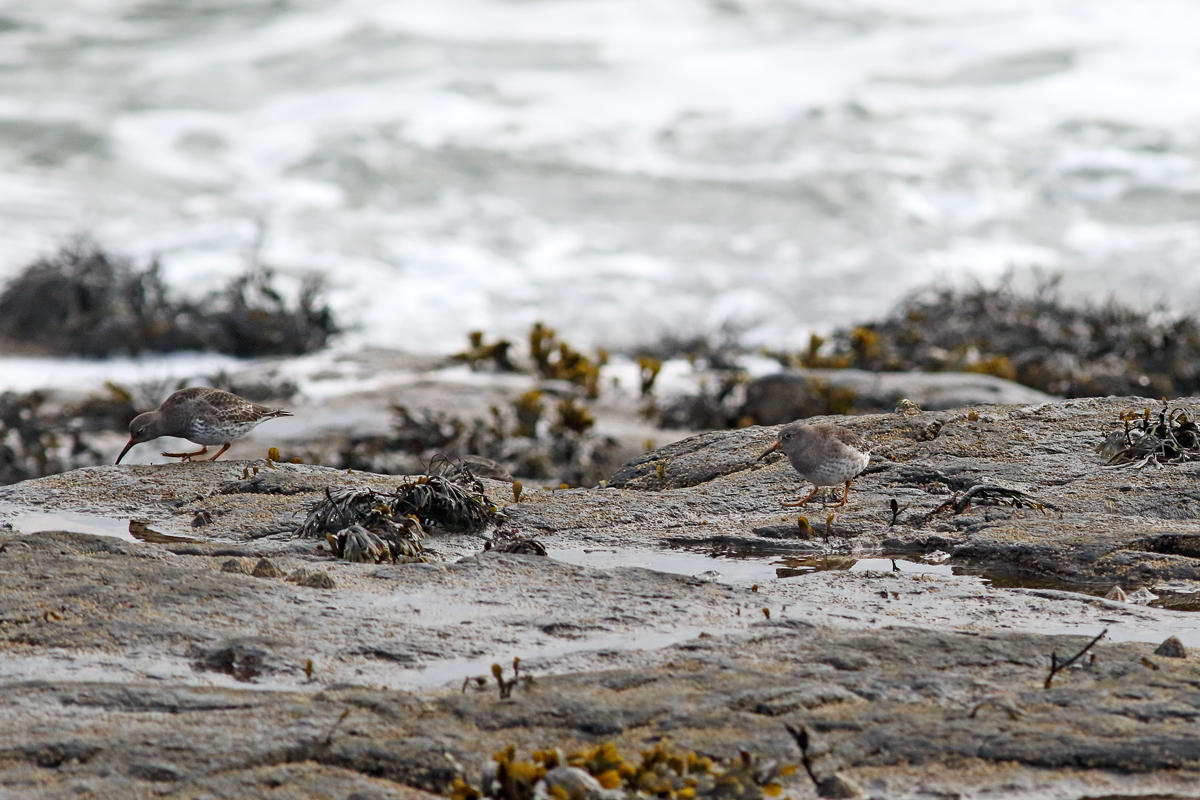
After a wander around Craster seeing only 9 Purple Sandpipers of note, we
arrived back at my car for tea and sausage rolls before moving back down the
coast for a short seawatch off Howick. At this time of year seawatching is
usually slow but we had things like wildfowl or maybe a Sandwich Tern newly
back in the county, in mind.
We had 8 Red throated Divers N, 12 Common Scoter N, 4 Dunlin ( another new
patch tick), a few Gannets and Kittiwakes, 1 Shelduck N, 2 Lesser black backed
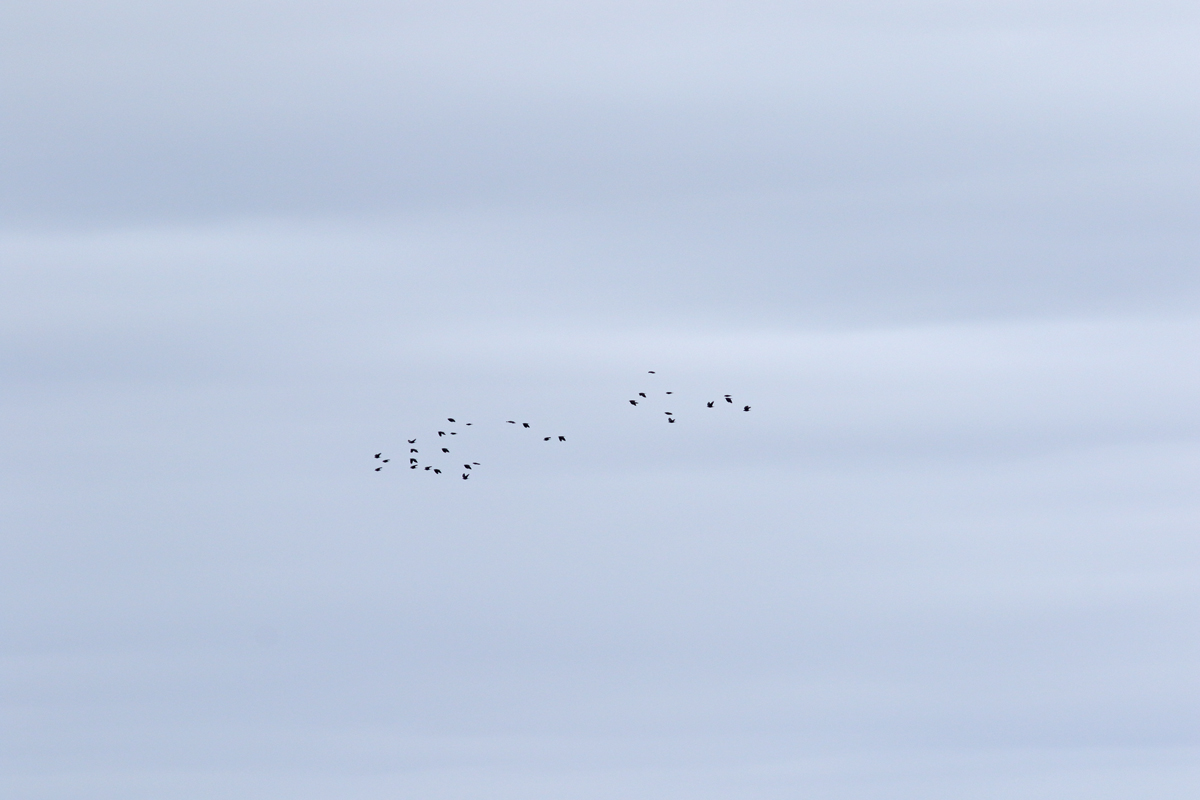
Gulls N and a Harbour Porpoise. More intriguing though, I picked up a flock of
tiny dots miles offshore towards the horizon that looked a bit like Lapwings
at that range. It was clear they were coming in off so I stayed with them to
confirm. When they finally came within reasonable range, I could see it was a group of 31
Jackdaws! What on earth were Jacks doing miles out to sea? That's a first for
me, migrating Jackdaws...
|
| Migrating Jackdaws out at sea. |
|
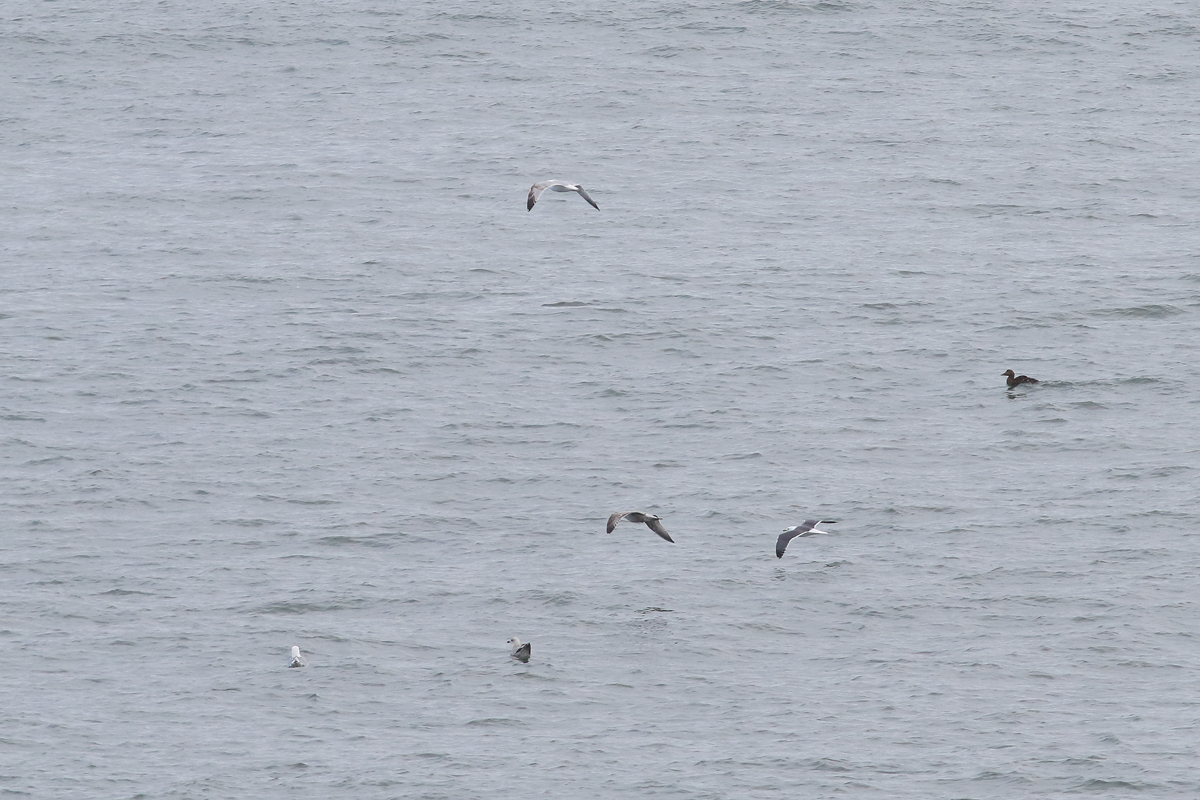
| Low right, adult Lesser black back. |
|
| 2 of 9 Purple Sandpipers |
So not a bad morning out, a good end to a good week. The moth trap has been
active too since Friday so here are a few of the moths caught -

|
| Acleris literana |

|
| March Moth |

|
| Oak Beauty |

|
| Red Chestnut |

|
| Twin spotted Quaker, orange spotted form. |

|
| Pine Beauty, |


