Saturday, November 09, 2019

Its not all birds...

This year the blog has had less posts than normal and most of those are birding related, so its time to diversify.

I have been moth trapping here now for just over 10 years, in all seasons and weathers. The main thing that I always find amazing is that even after this length of time, new species still arrive. And not just obscure dissected micros either, full on furry bodied, proper, macro moths. How can you trap for 10 years and never see a species only for one to turn up out of the blue? Even more interesting is when more than one individual is caught!

Now that November is upon us, it is unlikely that any further new additions will be made this year, though a Sprawler wouldn't go amiss. Here are the new garden additions for 2019.

35.032 Pexicopia malvella  Hollyhock Seed Moth 

One taken on the 9th August was not only a garden addition but a first for Northumberland too!


35.129 Caryocolum viscariella

One on 16th August was the 5th county record and the first since 2015.


37.108 Colephora salicorniae

 It was a surprise to find this large plain Coleophora in the trap on 2nd August when its nearest saltmarsh habitat is 4+ miles away. The first adult taken in the county, but the 2nd record due to several larval cases being found on one occasion in 2014.


49.195 Bactra furfurana

One on 29th June was the 15th county record.


49.298 Notocelia trimaculana 

A more expected addition with 185 county records of this hawthorn feeder. 2 caught.


49.359 Grapholita janthinana

With 38 records in the county, this one may be scarce but was likely to arrive at some stage. Mine came on 16th July.


62.005 Achroia grisella Lesser Wax Moth

Only 19 county records of this one that was never even on my radar. One on 22nd July.


70.211 Macaria notata Peacock Moth

The first new 'macro' moth in the list was on the 27th July. It was the 2nd for Northumberland after Martin Kitching caught one in Choppington 25 miles further south in 2017.
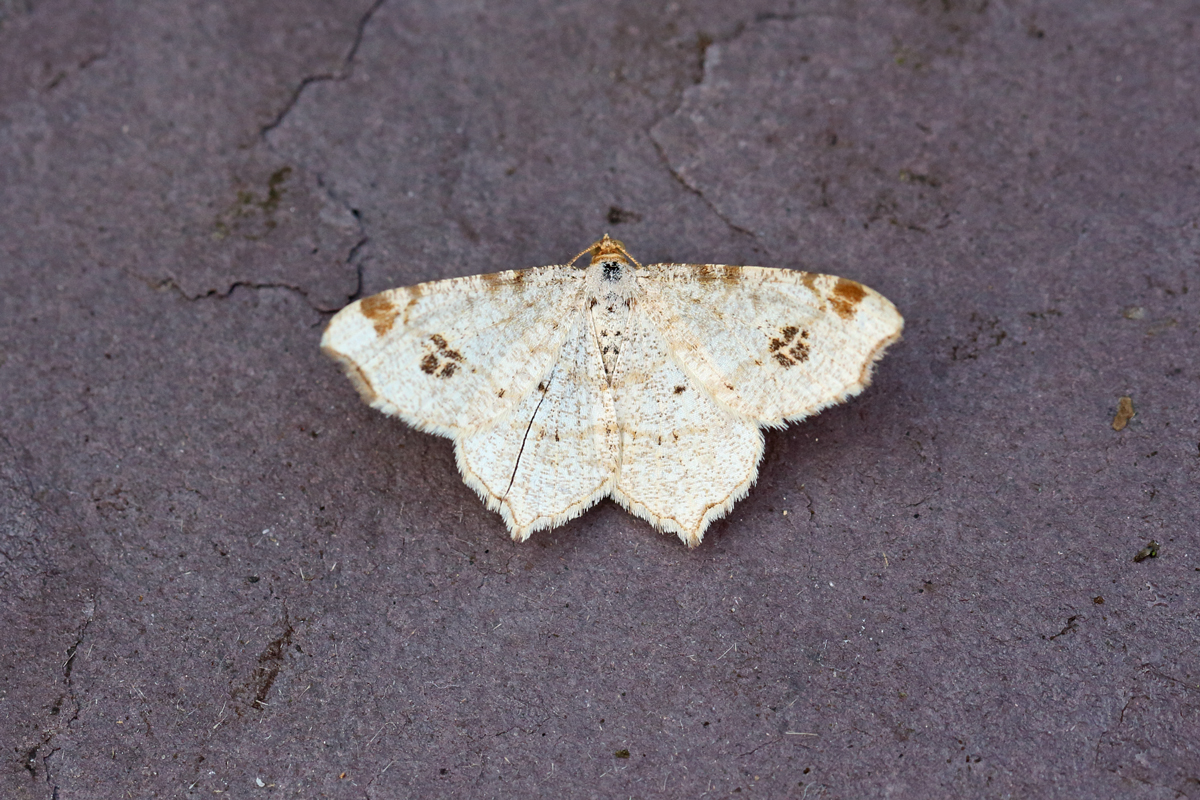


72.013 Euproctis similis Yellow-tail

A moth from further south really with 66 individuals in Northumberland. This one was a favourite a real litlle cracker! 27th July and 28th July. Two different individuals.


72.042 Atolmis rubricollis Red-necked Footman

Now a common species in our upland pine plantations with 3900 individuals recorded this is the first I have had on the coast since seeing one arrive over the sea in 2007 at Boulmer!  10th July 2019. It flew off before I could get a photo. Here is the 2007 individual...


72.063 Lygephila pastinum Blackneck.

A great year for these in the county. Of the 15 individuals in the county, 11 were this year. Mine was the first for VC68 and the furthest north to date. 22nd July.


73.222 Apterogenum ypsillon Dingy Shears.

One I should have had before now, but two different ones on consecutive nights was nice. With 140 individuals in the county only 5 are from the north VC68. 27th and 28th July. Both certainly different as the first was still in the fridge when I caught the second!


73.331 Diarsia dahlii Barred Chestnut

Another common species but more so further inland. I was pleased with this one on the 29th August.


These 14 new ones for 2019 take the garden list up to 603 including aggs etc. All of these above have been accepted by Tom Tams county recorder and where required gen dets were carried out by him.

The trap has hardly been out in November but if we get a mild spell I'll have a go over the winter...


Tuesday, November 05, 2019

First storm of winter or last one of autumn?

The view from my Craster seawatch spot.
The North East wind last night was a roaring animal, bending trees and stripping them clean of foliage. By the time I took Peggy for her first walk this morning, the rain had stopped and the wind, whilst still strong, had dropped slightly. The sea was enormous and roaring as the rollers smashed into the rocky shore. Balls of ivory foam were blowing along the coast road and over the fields.

This was too harsh for a Cullernose seawatch so I headed down to Craster where the view point is lower but has a bit of a wind break.

I watched from 09.15 - 10.30am. The passage was unremarkable, being so late in the season, but there was enough to keep the interest going. The list went like this with all birds going North unless otherwise stated.

Wigeon 8 N 9 S
Common Scoter 207
Velvet Scoter 1 fem
Long tailed Duck 3
Goldeneye 20
Red breasted Merganser 2
Goosander 1 adult drake 1
Red throated Diver 1 N 1 S
Great Northern Diver 1
Little Auk 3

All against a light movement of Gannets, Kittiwakes and larger Auks.


A female Velver Scoter moves N.
From here I decided to check the Craster Heughs for migrants before home for lunch.

First bird, not a migrant, but a bit of a patch mega these days was a Marsh Tit [161], calling and showing well, but I couldn't get a photo, it was too quick for me. This site is a Willow Tit hotspot with up to 6 birds present recently so where this lone Marsh has appeared from is anyones guess. A totally unexpected year list addition.

Real migrants were noticeable by their absence, but a few Blackbirds high in a hawthorn over the path were scrutinised. Then I saw that in the middle of them was a lone Waxwing! This will likely be the bird Ben had in the village on Sunday, but as it is a first for 2019 I was well pleased to get it. This makes Waxwing being added to every one of my patch year lists since I moved here in 2009 and this week is a prime time to get one.

Also here 500+ Pink footed Geese flew around to the west.


Above -  Waxwing, an adult male too. It never moved from this spot where every angle was obscured by twigs.
After lunch at home, I thought I had better just pop back out for an hour to Cullernose as the wind had dropped further and it had brightened up a bit.

From 1.10 - 2.10pm I had a nice selection even though most seabird passage had dried up.

Little Auk 6
Pomarine Skua 1 juv very close in, great views.
Common Scoter 7
Dark bellied Brent Geese 6
Long tailed Duck 6
Snow Bunting 1 imm male N then seemed to drop down onto the coast path further north, a good claw back after my off-patch birds on Sunday. [162]
Raven 1 over head.

So, not a bad day in the field really with 3 patch year ticks. At this late date, I'm sure my listing additions will be coming to a close...
Edit -I have just realised I am on 162, equalling my best year ever, 2010. Can it be, dare I say it... beaten?
Edit 2 - I have just updated my spreadsheet and it puts me on 163! After going through it species by species, I am confused... It looks like the record has been broken!!

The view south from Cullernose Point, the Howick Bathing House can be seen then Longhoughton Steel behind that.

Cullernose, the great whin sill cliff.

Goldeneyes and a Red breasted Merganser.


Monday, November 04, 2019

Sunday...

We are getting a lot of 'seawatching weather' recently. Some years we hardly get a day with a northerly. However, not all northerlies produce the goods and its a learning curve of experience to pick out good from bad.

I knew today would be a bad one. The wind was NE and gusty, and to the uninitiated seemed good, but, if you drill down a bit, it was coming off a low in the North Sea, not one that had tracked across the top of Scotland hence there was no pre-north westerly ( are you with me) to blow birds into the upper North Sea and then down further south so they can re-track North.

I know that sounds a bit garbled but I hope you get the gist.

We were on Cullernose from 07.30 until 0855.

It was slow.

Still, we managed 8 Little Auks, all nice and close, some landing in front of us, 1 Common Scoter, 2 Long tailed Duck, 1 Velvet Scoter, 2 Red throated Diver, 2 Goldeneye, 5 Fulmar inc a likely Blue phase going S but only see from its arse end as it disappeared, and 5 Eiders.  Gannets and Auks go without saying.

From here we headed along to Craster for some shelter and maybe some passerine action. We had the shelter.

There had been a reasonable fall of thrushes with 30+ Blackbirds, 8+ Redwing, 4+ Song Thrush, 3+ Fieldfare but no small stuff, not even a Chiff or Blackcap to be had.

Best of the walk were 3 Snow Buntings N, just about 300 mtrs out of patch boundary ( they flew from the patch but I was neither in it or saw them in it so they don't count. 6 Willow Tits are good by anyones standards these days and 7 Grey Partridge, 1 Treecreeper and 4+ Goldcrest added interest.

Time for home I stopped at Johns car back at Cullernose. A short scan of the flooded newly sown field had an adult and a 2nd winter Mediterranean Gull, then just before leaving the mega arrived! A Little Egret [160]no less flew low over the fields and off north! Thats patching for you, only my 4th sighting here in 10 years and one I didnt have any hope of adding to the 2019 year list...

Off work on Tuesday and the weather forecast looks dog rough.... wave watching likley...

Thursday, October 31, 2019

All at sea...

Seawatching, Cullernose Point, Northumberland
On Tuesday we were lucky enough to have another glitch in the weather making the charts look particularly conducive to some patch seawatching again. This month has produced some decent spells of weather for being perched on a cliff top looking east.

The morning was cool with a moderate NE to E 4. There were some cloudy spells and a few light showers just enough to irritate.

I was on my directors chair at Cullernose for 0815 and set up, in position by five minutes later. The sea looked good with decent visibility and no glare on the water that can be a pain for any east coast, first light, seawatching aficionado.

Birds were constantly on show as they dashed past in a northerly direction. The movement was mainly wildfowl but there were plenty of Gannets, Kittiwakes in tight bands and larger Auks. The notebook page soon began to fill up.

It was at about 0845 that I had a real premonition. I was comfortable in my seat. The rain had passed, the sky was grey as was the water but it had begun to brighten up. I began a pan with the scope. Seawatching for those who don't know consists of a pattern of scans with the telescope or bins sometimes when the glass is pointed around the North East line then is slowly moved south into the on coming birds until you get as far south as possible. This is then repeated for the duration.

Don't get seawatching confused with looking at the sea. Its not that. You can stand on a sand dune or pier with scope at full height just looking around the waves for birds on the water. Things such as seaduck, divers and grebes are located like this all year round.

No, seawatching is the long game. You are waiting for birds to come to you that were not there when you arrived. They were miles away, in flight. To do this you must be sat down in relative comfort for at least an hour, often much longer. I can remember being sat at Newbiggin, in August, back in the day with more clothes on than I could carry. Sitting still for hours in a northerly, even in summer, is a chilling affair. Three hours had flown past and some birders would arrive. They would be wearing trainers, shorts and a T shirt. Scopes at full height. In our books would be 100 Sooty Shearwaters, a few Poms or a Long tailed Skua maybe. glancing at the new company we just knew they would be there no more than 20 minutes and away because it was getting chilly. No birds seen.

Anyway, I digress, at 0845, during a slow pan south, the waves looked a lovely smooth grey colour and I thought, if I keep my observations to a reasonable range, this looks ideal to pick out a petrel passing. Petrels are rare birds here and it is a red letter day if you strike lucky. Leach's Petrel in particular is always my elusive goal. I'd only seen two in the last 30 years, and only one in Northumberland despite countless hours looking.

My scope was coming around to a SE direction when it appeared. A tiny flicker of black above the wave then nothing. Had I really seen something? Or was it an eye floater? Oh no, I paused and out it came, a delightfullly graceful LEACH'S PETREL!

It hung, momentarily, on horizontal wings, did a few flickering wing beats like a little tern, flipped sideways, sheared around flapped again, dancing over the waves. Occasionally I could glimpse a white rump, not as extensive as British Storm Petrel and overall the bird appeared sooty black. As the hazy sun popped out the upperwing seemed more grey with dark primaries, then in dull light it looked all black again. As it came to its closest, it was powered past by a Guillemot, and a few Gannets. It couldnt care less, and continued on its path north, watched all the way until at the last minute it dipped into a wave trough and I couldnt see it again.


Well, what a great little bird.  A real ocean wanderer and a first for me on the patch. It is the second record here after Ben Steele had one last autumn.

After this excitement I relaxed into more standard fare, the full list below...

All birds moving North.

Brent Geese, some pale, some dark. 66
Shelduck 3
Wigeon 319
Teal 18
Pintail 2 New for the year.
Mallard 1
Goldeneye 21
Scaup 3
Common Scoter 292
Velvet Scoter 6
Eider 8
Long tailed Duck 8
Red breasted Merganser 3
Red throated Diver 20
Red necked Grebe 2
Leach's Petrel 1
Pomarine Skua 1juv
Little Auk 44
Puffin 3

Common Scoter with a drake Scaup.
At 11.20, 3 hrs after starting, passage rapidly died off with only an odd auk passing.

This has me on 159 species or 78.71% of the full total.

Monday, October 21, 2019

Seawatching. In context.

As I indicated in my previous post I was keen to get out on Sunday morning as the weather looked good for some sea passage. Through the night the wind rattled the windows and the rain hammered down.

I met John just along the road at Cullernose but the storm was too great for watching this spot. At Cullernose you sit on an exposed cliff top with no shelter at all. In this north westerly gale and driving rain it would be impossible, so it was a move along the coast, all of 1 mile, to Craster village where there is some shelter behind a stone wall over hanging with garden shrubs. Even better, John had brought his large Fishing brolly purchased just for this type of occasion. What a life saver it was too, we were both tucked out of the rain, on deckchairs with a good view of the sea.

There were not as many birds as I would have expected in these conditions. Still, we watched from 07.45 until 12.00. In this filth what else could we have done?

So, what did we see?

Auks. Lots of auks. We have been Seawatching in Northumberland for the last 30 years so we dont record every bird passing. It would be just too much. Auks, Gannets, Kittiwakes, Fulmars and Shags are routinely ignored as we look for more tasty targets. Maybe thats harsh, not ignored but not counted.

There were thousands of auks heading north with fewer, but still a good number, of Gannets moving with them, the sea a constantly changing vista of bird movement. In with them were...

Whooper Swan 41 S
Wigeon 34 N there hasn't been a good movement of ducks yet this autumn.
Teal 17 N
Mallard 4 N
Goldeneye 17 N
Long tailed Duck 6 N inc some nice drakes very close in.
Common Scoter 7 N
Velvet Scoter 4 N
Red breasted Merganser 3 N
Red throated Diver 12 N plus a few on the sea, but too rough to get a count.
Ringed Plover  2 N
Sanderling 1 N checked for Grey Phalarope, but this is still a scarce bird on my patch with its all rocky shores. Not seen since 2015 [156]
Purple Sandpiper 4 N
Bonxie 1 S very close in milling around.

A second watch for a short time in the afternoon only had 3 Red breasted Merganser and 1 Bar tailed Godwit N

Only Sanderling was a new addition to the year list.

Today was better. The wind had gone right off leaving a pleasant morning with grey overcast skies giving good light for the morning watch.

Today I watched from Cullernose Point 0820 - 1120.

It was clear that more birds were reorientating North especially wildfowl.

Dark bellied Brent Geese 2 N
Shelduck 6 N
Wigeon 258 N
Teal 37 N
Mallard 16 N
Scaup 1 fem N with Common Scoter. [157]
Goldeneye 5 N
Long tailed Duck 4 N
Common Scoter 142 N
Velvet Scoter 3 N
Eider 5 N passage birds, not our harbour locals, they dont get counted loafing off the rocks.
Red breasted Merganser 6 N
Red throated Diver 9 N 1 S
Black throated Diver 2 N with a single Red throat very close in, for comparison.
Great Northern Diver 2 N
Fulmar 1 N at this quietest time for them.
Manx Shearwater 2 N
Sanderling 1 N with 4 Dunlin, two in 2 days is good.
Purple Sandpiper 2 N 1 on the rocks with 2 Golden Plover.
Dunlin 19 N an excellent count here, best for a long time.
Bar tailed Godwit 2 N
Bonxie 2 N
Kittiwake, good numbers, much more than yesterday.
Little Gull 17 N with adults and first winters seen.
Herring Gull ssp from mid morning many, almost all first winters moved N, not counted.
Auks sp less than yesterday but still a lot N.
Little Auk 8 N max 3 at one time.
Puffin 10 N of the auks identified.

Its in a Local Patch context some of these birds come into their own. For example, Ringed Plover, Sanderling, Dunlin and Bar tailed Godwit are all more tricky to see here than Velvet Scoter, Little Auk and Purple Sandpiper even though they are very common over most of the Northumberland coast north and south of me.

What was missing? Pintail are often in Wigeon flocks but not today. Grebes, all being very scarce here except Little. Pomarine Skuas. In these conditions I would expect a few at this time of year.

All of these give something to watch out for during the next northerly spell we have. Hopefully before mid November...

Patch list stands at a very respectable for here 157 species...77.72% of my all time total.


Sunday sewatching from under Johns umbrella, Craster.

Saturday, October 19, 2019

A long weekend using up some annual leave. Last night we went to the cinema to see The Joker, a bit of a trek for us with the Odeon being an 80 miles round trip, but it was agreat film and well worth it.. Before I left home though a nice dog walk to the coast path gave some great views of another Yellow browed Warbler flitting around a less foliaged sycamore on the cliff top. My 5th patch YBW this year, and probably my best year for this species locally.

Today has been a bit grim weather wise with rain most of the day and nothing of note seen, however the weather forecast looks promising. Tomorrow the wind is a good blowy 20mph NW erly swinging N and the same on Monday with less strength and no rain.

Should be some sea movement hopefully, watch this space...

NE England, that pink occluded front and isobars show wind from the North Atlantic and arctic circle.

Sunday, October 13, 2019

Blog rattling...

Occasionally it takes someone to speak out in order to get the wheels of reaction in motion.

Steve Gale at North Downs & Beyond posted the other day about the slow but steady decline in blogging output. This has prompted several long term writers out there to comment with their own take on things, so I might as well get it out there too.

Some of the bloggers I follow are good writers, being able to post regularly in an interesting, original, way on all matters linked to Natural History. I'm not so good at this, even this post is riding on the shoulders of giants, though I would like to be.

My blog has stood the test of time not because of my gripping content setting the world alight, no, it simply a diary type of thing, showing the stuff outside that I interact with. I can post some photos that I like, or ones that illustrate my sightings and I can show some originality with my notebooks and sketches.

I used to look forward to any comments from people and even an email or two from those interested enough to ask a question but now that mostly comes from other social media platforms.

This is where Blogger differs though. It is a much slower animal than say Facebook or Twitter ( I dont know how Instagram works). It allows reflection and roles out an actual timeline that the others don't. For me it is a source of genuine interest like a magazine or newsletter might be. Its free and you get a new one through your inbox every day to read...

I would never post something as long as this on Facebook. No one would ever read it. There might be no readers on here either but you never know, at least it remains out there, lying on the coffee table so to speak.

From my own selfish point of view, I hope the bloggers I like dont pack it in. If a regular poster misses a fortnight I am worrying about their health! 

So to all bloggers out there, never feel pressured into posting. Just relax and do what you fancy. You do have a fan out here...

[ Note -  maybe try a few lines at least monthly just to let us know you are still alive...]


Wednesday, October 02, 2019

Dangers of Seawatching II

Despite the confidence knocking Gull-billed Tern, seawatching continued apace this week.

On Monday 1 hr 15 mins over high tide had a lot less than conditions indicated.

Barnacle Geese 189N and 24 S
Common Scoter 13 N
Red throated Diver 4 N and 2 on the sea
Manx Shearwater 9 N
Arctic Skua 3 N
Mediterranean Gull 1 2w
Purple Sandpiper 2
Teal 15 N
Red breasted Merganser 2 fem N
Pinkfeet 2 in off
Kingfisher 1 fw male showed very well on the point and kept me company for the whole seawatch.
Rock Pipit 5
Wheatear 1 female

I hoped things would improve as the wind from the N increased.

Tuesday 1st October. Another day annual leave found me perched on the rocky outcrop again. Mostly I am alone here which can make spotting birds quite tricky. More  sets of eyes at places like Newbiggin assist observers, but I do like to make this spot my own.

Two seawatches today - 0900 - 10.30 and 15.30 - 17.00 3 hrs  in total. I must get more dedication...

Birds have picked up though still no classic there were birds in show constantly to keep the interest going.

Barnacle Geese 65 N
Bonxie 11 N
Arctic Skua 13 N
Manx Shearwater 13 N
Red throated Diver 17 S inc party of 12 close in, 8 N and 5 on the sea.
Teal 6 N
Common Scoter 26 N
Auks ( 1 minute count samples ) 6000 per hour N 90% Gullemots, the rest Razorbills and Puffins in that order.
Little Auk 1 N I hate early Little Auks! When they are claimed they are almost always puffins, but this one was typically very close in doing its side by side rolling flight along the breakers. Puffin seen nearby for comparison. 153
Long tailed Duck 1 fem N 154
Arctic Tern 4 N
Wigeon 5 N, where are all the wildfowl? In these conditions we should be getting hundreds of Wigeon.
Peregrine 1 imm glided alon the rock edges panicking everything.
Dunlin 1N my first patch sight record for the year.
The list above is in the order birds were added into the notebook.
Then, at 16.39 I was panning S and looked at two Kittiwakes going N. A few hundred metres behind was another bird low to the water. My thought process went like this...

'Whats that?' 'er' 'a Redshank? (I'd just been watching the Dunlin) No, another wader, Grey Plover? No.....errrr.....IT'S A SABINE'S! 155

A juvenile Sabine's Gull slowly patrolled N at about 1/3rd distance out. Instantly much smaller than Kittiwake, like a Black Tern or Little Gull. Mainly Brown with white secondary triangle in the wing and black primaries. Behind it the clouds were steel grey rain clouds so the bird was nicely lit in the sun over my shoulder. It was slow and graceful up and down as it headed N. I finally lost view at 16.44. What fantastic birds these are, they are nothing like a Kittiwake really, the jizz is totally different and much more tern like.   

As the Sabine's was lost to view, it was time to head home for tea. Not a bad day really...


Tuesday, October 01, 2019

The danger of seawatching...

Since the weekend in Northumberland we have been lucky enough to get a short spell of East and North Easterly winds. In the early hours of Sunday morning the wind here swung from solid west, to North. This came off a low moving straight across the middle of the UK, thus, the wind soon turned to the East on Monday then back North East today, increasing in the afternoon.

Despite the overnight rain, passerine migrants were in short supply probably due to the blocking low over Scandinavia, but at this time of year anything can happen.

On Sunday John and myself began by seawatching off my local headland, Cullernose Point ( see map in right hand side bar). This small whin sill headland is only 1km from my house, so its a good loocal patch place to add to my list.

From the start it was clear that we were not witnessing much pelagic passage. There were no Gannets for a start, well a few but I see more here on a sunny June day. A few Red throated Divers were moving plus single Bonxie and Manxie, 2 Arctic Skuas, a Puffin and a few other miscellaneous. Boredom set in.

It was now that we got our eye on a tern in the Howick Bay immediately to the south of us. It was quite close, certainly good views in the scope as it flew and hung in the wind above the rock edges and newly exposed kelp beds at low tide.

Before I go on, I must add that in Northumberland we see terns every day at the coast from May til October. They are bread and butter stuff and is something we scarcely give a second glance to after we have added one for the year. This lone tern immediately looked odd to both of us. I said it looked like a Gull-billed. Surely not, it will be a Sandwich after all you dont get Gull-billeds at sea? We stared hard. And stared again. In good scope views, this bird looked like an adult but it had a short stocky all black bill. Definitely no yellow tip. Only a very young Sandwich would show this, and there fore it would be reasonable to say it would have scalloping on the mantle and wing coverts. You follow?

This bird was plain grey. All over it had a very pale greyish pallor not like the white of a Sandwich Tern. We discussed various features as we watched it circle the bay with Black headed Gulls. There were both Arctic and Sandwich Terns offshore and a lone Common had gone north. This bird was not in their camp at all.

Some hastily scribbled notes were taken on site without access to references. By now I was convinced this bird was indeed a Gull-billed Tern.

As it drifted off south towards Boulmer, I decided to put the word out just in case someone else might pick it up.

Now here lies the danger. I am a cynic. If I had seen a message on WhatsApp saying Gull-billed Tern at sea in September, I would instantly have said 'Sandwich'. In fact I did this with my own sighting! I dont believe it myself. It cant possibly be a GBT, but it certainly looked the part....

Back home, I did some research.

Compared to our bird, I found the following -

Rump / Tail - Vinicombe states that this is the most crucial feature to seperate GBT from ST ( I'm sick of typing it). It should be grey and concolourous with the whole upper parts. This bird had an off white pale grey all over look to it, but the tail was certainly paler than the mantle. I percieved a greyish centre with white outer tail. John felt it was all whitish.

Primary pattern - Bird had greyish wedges up prmaries on upper and undersides. Apparently OK for September but should still be pale, which it was. There was a darker trailing edge line, quite defined.

Cap - By late Sept, ST shows a large white forehead up ro central crown almost. GBT has uniform white speckling all over the cap. This bird has a very restricted white forehead upper bill. No Crest could be seen at all. The rest of cap appeared all black.

Bill- Short, black and stocky / thick set. see above.

Behaviour - Our bird dropped to the surface of the sea and caught a tiny fish. It didnt dive, more belly flopped. I did not know if GBT did this at all. BWP Text states 'very occasionally'. I wondered if a migrant out of habitat would do this for food more freely?

So this seems to be a bird that creates more questions than answers. I will write up the sighting...


Friday, September 27, 2019

Dirty dozen....

Apologies for the delay in posting ( if there is still anyone out there that is). When I left the blog, a nice Whinchat had nudged the local patch list up to 140 species.

A lot of water has gone under the bridge since then, so here is an update...

Birds first.

September kicked in with a glaring list ommission - a Redpoll flew south over the village, species 141. About time too.

On 4th, an unusual sighting came during a totally dead seawatch with a Green Sandpiper,  142, off the rocks circling around calling. A rare bird here due to a lack of suitable habitat, I have since seen this or others on a further 3 occasions around the patch.

Only the next day, calling Kingfishers, 143, at the back of the pond were late arrivals to the party. Three ticks in 5 days can't be bad. Well done September.

On the 6th our annual autumn visit to Suffolk for the week began. We returned on Friday the 13th.

Despite the date, this return date wasnt unlucky for the patch as only the next day, the growing list continued apace when a Lapland Bunting flew south along the coast path, calling its dry 'tickety pew' as it went. Another good bird for here and part of a national influx this week. 144.

All these new additions are great but Sunday the 17th surpassed itself with the first proper seawatching conditions of autumn. This was always going to add some quality so 2.5hrs in the evening on Cullernose point had - the first 13 Wigeon of autumn, 3 Sooty Shearwaters, 2 adult spooned Pomarine Skuas, 5 Pale bellied Brent Geese and a Shoveler on the back of a Teal flock. Species 145 - 149 inclusive.

As if these weren't good enough, other local patch goodies were 21 Manx Shearwaters, 1 Bar tailed Godwit 2 Greenland Wheatear and an adult Mediterranean Gull made for a good evening along the road.

Another seawatch on 22nd had great views of an adult winter Black throated Diver close in to the point. Annual target achieved with 150 species and another 3 months still to go.

Bang on cue, the first Sibes began to arrive and I was lucky to get in on it with a lovely little Yellow browed Warbler 151 in our village willows on 24th.

To round up this stage, on Wednesday morning the first 80 Barnacle Geese flew N along the coast path. 152.

So, 12 new species in the first 24 days of September is an excellent day average for the month.

This makes 75.24% of my all time total.

Black throated Diver in the style of the Loch Ness Monster.
Yellow browed Warbler


Wednesday, August 21, 2019

August...

August can be a good month in Northumberland, and especially in a local patch context where its not just rare birds that get the pulse going. At this time there is a post breeding dispersal of commoner species that might not occur on a given patch or in a bit of habitat.  So, get out there as often as possible and watch the daily changing tide of birds as they head out to pastures new...

On 24th July, a hint of autumn was already happening. A Grey Plover flew S over our house calling strongly, a garden first. Nearby were an adult and a 2nd summer Mediterranean Gull but, on the patch the best bird was commoner than both of these, a Dunlin [135] flew over calling twice in the darkness. My fully rocky coast doesnt get mud puddlers like this so fly by's are the best I can hope for...

On 28th July warblers were on the move with Whitethroats, Blackcaps, Willow Warblers and Chiffchaffs all showing in tall hogweed and bushes on the coast. The now famous influx of Painted Lady butterflies had begun when we had 70 in and around our garden alone.

On 1st August a short seawatch from Cullernose Point had an adult Little Gull and more expected at this time, 1 ad and 1 juv Roseate Tern [136]. These are rare birds on most patches and well sought after but in Northumberland they are found all along the coast in August as the young fledge and roam widely.


With perfect timing, a Hobby [137] flashed past our garden on 4th only a day later than the 2018 sighting. Still rare in Northumberland but sightings are increasing...


A few days later on 8th, a blue, male, Merlin [138] flew over the village mobbed by swallows. In contrast to the previous raptor, Merlin sightings on the coast are decreasing. 20 years ago they were a day bird anywhere on the coast from late July to December, but now I only get one or two sightings per year.

Most days at the beginning of August had showers or even heavy downpours, but even this failed to ground any scarce migrants.

A party of 4 juv Knot [139] on 17th were my first here since 2011, and only my second record ever. This is the value of patch birding as Knot is not scarce along the muddier reaches of the Northumberland coast and even on the rocky skeers, the fingers that jut out into the sea. Unfortunately here, our rocks are more 'bunched up' so most waders give them a miss.

And finally, last night a nice walk down the Teepee track to Howick Burn mouth turned up 5 Wheatears and a juv Whinchat [140], both good sightings here.

First thing in the mornings now, hirundines are moving south in tight flocks and Golden Plovers gather on the shore...It'll soon be real autumn. Lets hope the weather changes from this bland southerly pattern...

Monday, July 29, 2019

The Biggest Catch here...

 A quick summary of catch at Howick 28/07/19

I went out at midnight and the whole place was leaping with moths with a 'landing pattern' circling in the light beam above the trap high into the night.
Despite the massive numbers ( a total record smashing catch for my 125w Robinson in the 10 years operating) there were no big surprises.
Anyway the numbers are 1209 moths of 121 records. There must have been thousands hiding in surrounding vegetation because spuggies are still catching moths this evening.
Highlights.
A massive 214 Common Footman.
3 Dingy Footman
1 Blood Vein
My second Dingy Shears ( the other was still in the fridge)
My 3rd and 8th county Othotelia sparganella that flew as I was potting it.
The 20th county record of Endothena quadrimaculana.
8 Painted Ladies quietly roosting in the egg trays.
I'll be leaving the light off tonight and must wash the trap before I next put it on...
Taxa
Coleophora species (Coleophora sp.) 1
Common Rustic agg. (Mesapamea secalis agg.) 91
Marbled Minor agg. (Oligia strigilis agg.) 4
Yponomeuta malinellus/cagnagella sp. (Yponomeuta malinellus/cagnagella) 2
15.015 a moth (Aspilapteryx tringipennella) 1
16.001 Bird-cherry Ermine (Yponomeuta evonymella) 2
18.001 Diamond-back Moth (Plutella xylostella) 56
19.001 a moth (Orthotelia sparganella) 1
28.010 Brown House-moth (Hofmannophila pseudospretella) 1
32.032 a moth (Agonopterix angelicella) 2
39.001 a moth (Blastodacna hellerella) 1
40.004 a moth (Mompha propinquella) 1
41.002 a moth (Blastobasis adustella) 33
41.003 a moth (Blastobasis lacticolella) 1
44.001 Many-plumed Moth (Alucita hexadactyla) 1
49.025 Barred Fruit-tree Tortrix (Pandemis cerasana) 1
49.026 Dark Fruit-tree Tortrix (Pandemis heparana) 3
49.109 a moth (Agapeta hamana) 5
49.127 a moth (Aethes cnicana) 1
49.156 Marbled Orchard Tortrix (Hedya nubiferana) 1
49.161 a moth (Celypha striana) 1
49.166 a moth (Celypha lacunana) 2
49.193 a moth (Endothenia quadrimaculana) 1
49.252 a moth (Epinotia tedella) 1
49.265 a moth (Eucosma cana) 1
49.341 a moth (Cydia splendana) 2
59.024 Painted Lady (Vanessa cardui) 8
62.058 a moth (Phycitodes binaevella) 2
63.005 a moth (Pyrausta despicata) 1
63.033 a moth (Udea lutealis) 4
63.037 a moth (Udea olivalis) 1
63.038 Mother of Pearl (Pleuroptya ruralis) 24
63.057 Garden Pebble (Evergestis forficalis) 1
63.064 a moth (Scoparia ambigualis) 5
63.066 a moth (Scoparia pyralella) 1
63.067 a moth (Eudonia lacustrata) 8
63.080 Garden Grass-veneer (Chrysoteuchia culmella) 18
63.089 a moth (Agriphila tristella) 67
63.093 a moth (Agriphila straminella) 20
63.100 a moth (Catoptria margaritella) 1
63.102 a moth (Catoptria falsella) 8
65.009 Buff Arches (Habrosyne pyritoides) 2
66.010 Drinker (Euthrix potatoria) 2
69.003 Poplar Hawk-moth (Laothoe populi) 2
70.011 Single-dotted Wave (Idaea dimidiata) 2
70.013 Small Fan-footed Wave (Idaea biselata) 26
70.016 Riband Wave (Idaea aversata) 2
70.016 Riband Wave [non-banded form] (Idaea aversata ab. remutata) 3
70.029 Blood-Vein (Timandra comae) 1
70.045 Shaded Broad-bar (Scotopteryx chenopodiata) 1
70.059 Yellow Shell (Camptogramma bilineata) 1
70.061 Common Carpet (Epirrhoe alternata) 1
70.069 Dark Spinach (Pelurga comitata) 1
70.074 July Highflier (Hydriomena furcata) 2
70.093 Barred Straw (Gandaritis pyraliata) 5
70.131 Twin-spot Carpet (Mesotype didymata) 1
70.132 Rivulet (Perizoma affinitata) 4
70.133 Small Rivulet (Perizoma alchemillata) 2
70.138 Sandy Carpet (Perizoma flavofasciata) 2
70.141 Double-striped Pug (Gymnoscelis rufifasciata) 1
70.160 White-spotted Pug (Eupithecia tripunctaria) 1
70.173 Lime-speck Pug (Eupithecia centaureata) 3
70.190 Grey Pug (Eupithecia subfuscata) 2
70.205 Magpie Moth (Abraxas grossulariata) 1
70.207 Clouded Border (Lomaspilis marginata) 1
70.226 Brimstone Moth (Opisthograptis luteolata) 1
70.237 Early Thorn (Selenia dentaria) 4
70.241 Scalloped Oak (Crocallis elinguaria) 3
70.243 Swallow-tailed Moth (Ourapteryx sambucaria) 1
70.258 Willow Beauty (Peribatodes rhomboidaria) 1
70.264 Satin Beauty (Deileptenia ribeata) 1
70.265 Mottled Beauty (Alcis repandata) 3
70.278 Common Wave (Cabera exanthemata) 1
70.283 Light Emerald (Campaea margaritaria) 1
71.012 Iron Prominent (Notodonta dromedarius) 1
71.013 Pebble Prominent (Notodonta ziczac) 2
71.017 Swallow Prominent (Pheosia tremula) 1
72.002 Straw Dot (Rivula sericealis) 6
72.003 Snout (Hypena proboscidalis) 6
72.013 Yellow-tail (Euproctis similis) 1
72.024 Ruby Tiger (Phragmatobia fuliginosa) 5
72.026 Garden Tiger (Arctia caja) 11
72.044 Dingy Footman (Eilema griseola) 3
72.045 Common Footman (Eilema lurideola) 214
72.053 Fan-foot (Herminia tarsipennalis) 1
73.001 Spectacle (Abrostola tripartita) 1
73.002 Dark Spectacle (Abrostola triplasia) 2
73.012 Burnished Brass (Diachrysia chrysitis) 4
73.015 Silver Y (Autographa gamma) 8
73.017 Plain Golden Y (Autographa jota) 5
73.084 Marbled Beauty (Bryophila domestica) 2
73.092 Mottled Rustic (Caradrina morpheus) 1
73.096 Uncertain (Hoplodrina octogenaria) 2
73.097 Rustic (Hoplodrina blanda) 5
73.107 Old Lady (Mormo maura) 1
73.123 Rosy Rustic (Hydraecia micacea) 2
73.131 Flounced Rustic (Luperina testacea) 1
73.147 Small Dotted Buff (Photedes minima) 3
73.155 Clouded Brindle (Apamea epomidion) 1
73.160 Slender Brindle (Apamea scolopacina) 2
73.162 Dark Arches (Apamea monoglypha) 134
73.163 Light Arches (Apamea lithoxylaea) 15
73.171 Rosy Minor (Litoligia literosa) 2
73.222 Dingy Shears (Apterogenum ypsillon) 1
73.254 Antler Moth (Cerapteryx graminis) 12
73.267 Bright-line Brown-eye (Lacanobia oleracea) 5
73.290 Brown-line Bright-eye (Mythimna conigera) 1
73.291 Common Wainscot (Mythimna pallens) 30
73.293 Smoky Wainscot (Mythimna impura) 86
73.298 Clay (Mythimna ferrago) 6
73.313 White-line Dart (Euxoa tritici) 3
73.317 Heart and Dart (Agrotis exclamationis) 1
73.325 Shuttle-shaped Dart (Agrotis puta) 3
73.334 Small Square-spot (Diarsia rubi) 4
73.342 Large Yellow Underwing (Noctua pronuba) 98
73.345 Lesser Yellow Underwing (Noctua comes) 4
73.348 Lesser Broad-bordered Yellow Underwing (Noctua janthe) 3
73.353 Dotted Clay (Xestia baja) 16
73.358 Six-striped Rustic (Xestia sexstrigata) 15
73.359 Setaceous Hebrew Character (Xestia c-nigrum) 1
73.361 Double Square-spot (Xestia triangulum) 7

Sunday, July 21, 2019

Patch List Catch up...

I haven't done a patch birding update since May, so here goes so far...

After the excitement of Baikal Teal and Baillons Crake in the county, it was back to patch watching in earnest. We always start the year full of vim and vigour but this often deteriorates as the summer arrivals peter out. On a North east coastal patch however, as mid summer beds in, things are only just starting to warm up. We are full of hopes and aspirations of what the return migrations season will be like. Willw e get any fall conditions? Will there be any rare birds? Will the sea watching be classic year? Or, will it all just be a damp squib...that remains to be seen, but a few decent species have been added to the local list since spring...

126. Quail. On 9th June as I stepped out onto our drive, the distinctive 'Whit, whit whit' call sounded only 30 yards into the field but could easily have been in the next field such is the skill in voice throwing that these birds exhibit. It remained until 22nd June when we came back from our Suffolk holiday.

127. In the quiet doldrums of mid summer living near the coast can have its advantages...see here for details on what happened next.

128. On the same crazy seawatch Arctic Tern was added...

129...and Common Sandpipers had already began moving to the coast on 2nd July after breeding.

130. Arctic Skua. After packing up on another seawatch on 7th July a dark phase adult came so close it was almost touchable just over our heads and away north.

131. Later in the afternoon on 7th July, I walked down to the coast patch just to scan for terns and waders and was pleased to see two birds not far out moving north. As I locked on to them one was a Whimbrel and the other, scarcer here, a Bar-tailed Godwit....

132 / 133. The sea is the way to lift the flagging list from now onwards and the hour spent on the 14th July was no different with Little Gull and Common Tern added. The Little Gulls were two birds, one a lovely sooty underwinged adult and a more typical first summer.

134. The most difficult of the breeding terns here, 4 Little Terns flew south just offshore this afternoon as I walked Peggy...

So, 9 year ticks and one a lifer who says mid summer is quiet for birding! With real autumn just around the corner, I am sure there is time to slot in a few more missing common species...a Dunlin or Sanderling wouldnt go amiss...


Tuesday, July 02, 2019

Giant Patch Tick!

What a bizarre evening that was.

I was driving home from work when I had a phone call from Gary Woodburn who said the incomprehensible news that Mark Newsome has just had a Giant Petrel fly north at Whitburn.

A what? Giant Petrel? Are they not the things that kill penguins on Blue Planet? In the North Sea?

It was a dark phased bird with a massive white bill.

Giant Petrel has two species, they are Southern and Northern and are incridibly difficult to identify let alone on a fly past at a kilometre range...

Gary was going to wait for news from seawatchers further south and then head to Newton Point. I had already considered a seawatch, as the high pressure out in the Atlantic looked good for a movement of shearwaters and there are a few terns I still haven't had on the patch year list so this news prompted me even more. Gardening would have to wait...

Straight home, changed, snacks and tea packed and out to Cullernose Point by 6.55pm. I was perched halfway down the cliff on a lovely summer evening. The sea was alive with auks, buzzing back and forth in small flocks, razorbills, guiilemots and many puffins. To a back drop of calling kittiwakes on the cliff, whats not to like.

Snacks eaten, tea drunk, and the first 50 Manx Shearwaters were logged. I was studying a winter plumaged diver on the sea that was very Black throated like but just too ar to confirm, when I was joined by Mark Eaton to look seaward. Seeing anyone here is unusual so company and in particular another set of birding eyes was welcome.

The diver was analysed,and I still think Black throated, complete with 'cobra-like' nape shape but its not inked into the notebook.

We commented on how good the visibilty was, Highish up with a flattish sea we could pick out puffins atalmost 2 kms, and at 1 km an 8 inch bird was easily identified, so a 3 foot long, black albatross should be no trouble to connect with, if only...

News came through that a good candidate was seen very distantly at the horizon from St Mary's Island. Ho hum, it was a nice night.

Then a slow motion, quiet, tenseness came as I scanned south from a distant oil tanker when all of a sudden, a huge, black apparition loomed up from the waves and I called to Mark ' There's your Petrel!' scarcely believeing my own words. A short 10 second panic ensued while I stammered out directions, but luckily the oil tanker came in handy as a marker and seen at three quarter distance Mark was on the bird.

The GIANT PETREL, flapped on elastic wing beats, giving the impression of one of those big Fruit Bats or Flying Foxes rather than a bird. It soared and glided seemed too heavy to shear in the calm conditions. This continued for 10 minutes and once it switchbacked south briefly before getting back on track North. We watched as it passed Gannets, Manxies and flocks of auks looking like nothing I've ever seen. The wing tips seemed a bit rounded or ragged maybe giving an 'eagley' look at times, then on down glides it vanished into wave troughs before towering back above the horizon line. it lookd darker than a Sooty Shear but it was the size and jizz that were unmistakeable.

What a bird. It slowly vanished from view. Word was put out by Mark as I had no signal at all and the enormity of the sighting sank in. I was trembling a little bit...

That was certainly some start to the seawatching season...

Oh and even though it cant be identified to a species, I'm having it on my lists!