Showing posts with label Curlew. Show all posts

Thursday, April 20, 2023

Catch up...

 A quick catch up of April so far .

Since the last general post a few more migrants have appeared locally. On 6th a very early Willow Warbler sang in our garden at first light but was gone by 7am. There arent many here yet but we did have 5 singing at Brizlee at the weekend.

A pair of Greenfinches at our feeders were the first to do this, this year and Hairy footed Flower Bees were out in good numbers when the sun was shining.

One good (?) bird was seen briefly on the coast path on the 8th. An Egyptian Goose flew north past the Bathing House followed by 11 Whooper Swans. The Goose is only the second record here after one last year. They'll be breeding on the pond soon no doubt. Our first Swallow was over our house on the 8th but they are still not here in any numbers.

On 9th, John and me walked up the Hulne Parks south wall to Brizlee. It was cool and damp with little to show other than 2 Red Grouse, a few Curlew, a singing Willow Tit and best of all a close, but unseen, Green Woodpecker yaffling loudly. 

Willow Tit singing at me.

  Near by 2 Adders were our first of the season.

Adder

Over Easter weekend an in house spider hunt revealed not only the Uloborus plumipes already posted, but Pisaura miribalis, Pardosa sp, Woodlouse Spider, Zygiella x-notata and an Oonops in the bathroom.

The local Blackcaps were late to the party on the 14th with 3 singing in our village wood.

When driving back from Alnwick on 15th we were over flown by a Red Kite at Denwick heading south. One day I'll get one on the patch but this was about 4 miles too far west.

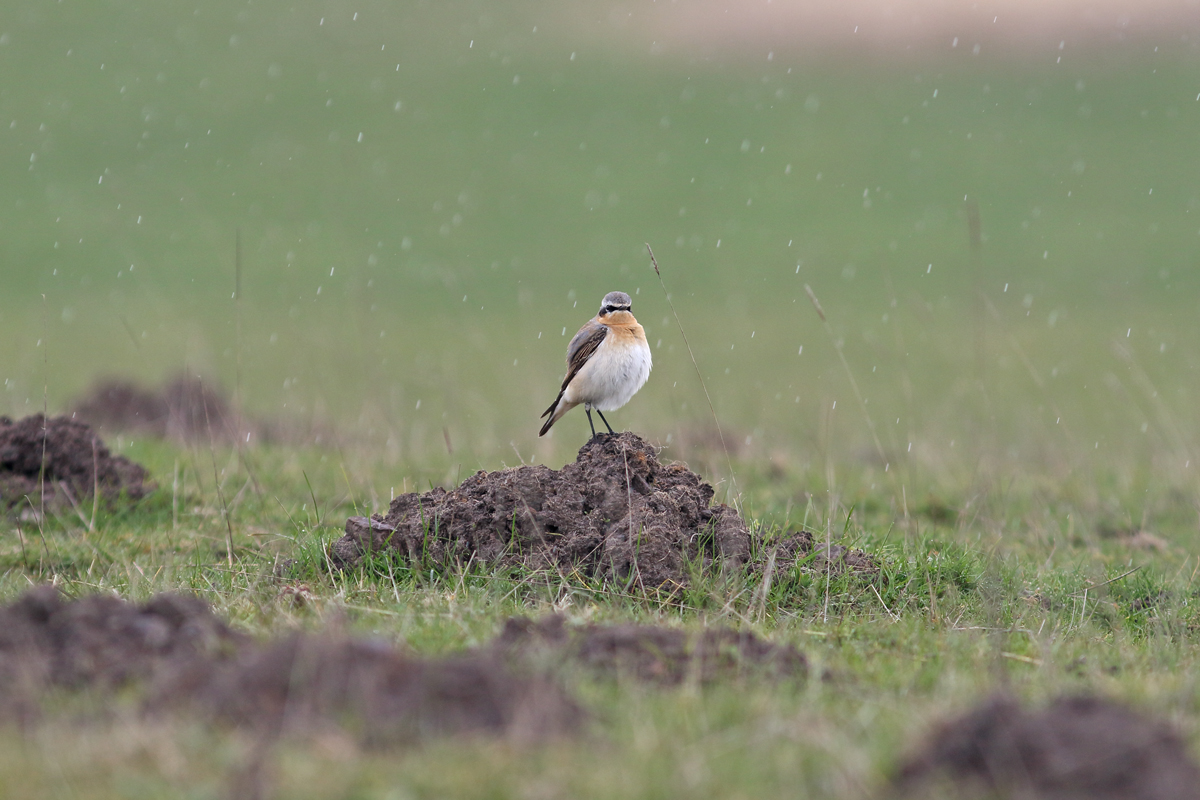
Edit - Not sure how I missd this out? But anyway, Sunday 16th saw me and John up at Brizlee again. It was bright and sunny but cold. 5 male Wheatears in 2 places showed well, even in a rain shower, several displaying Redpolls chased and buzzed around the car and a Bilberry Bumblebee was on a sallow beside the road.

Displaying Curlew


Wheatear in the rain.


On the 18th another poor patch year tick materialised on the coast path when we flushed a pair of Red legged Partridges. I didnt see one here last year so they were sort of welcome.

Holly Blue has shown well in the garden this week with 1 on the 15th and 3 on the 20th. Seems like a good start to the year for them...


One worn and one fresh Holly Blue in the garden...

As usual the wind is swinging North for the weekend so it will be baltic while the rest of the country is basking in 18 degrees. 

Dark edged Bee Fly.


Tuesday, January 18, 2022

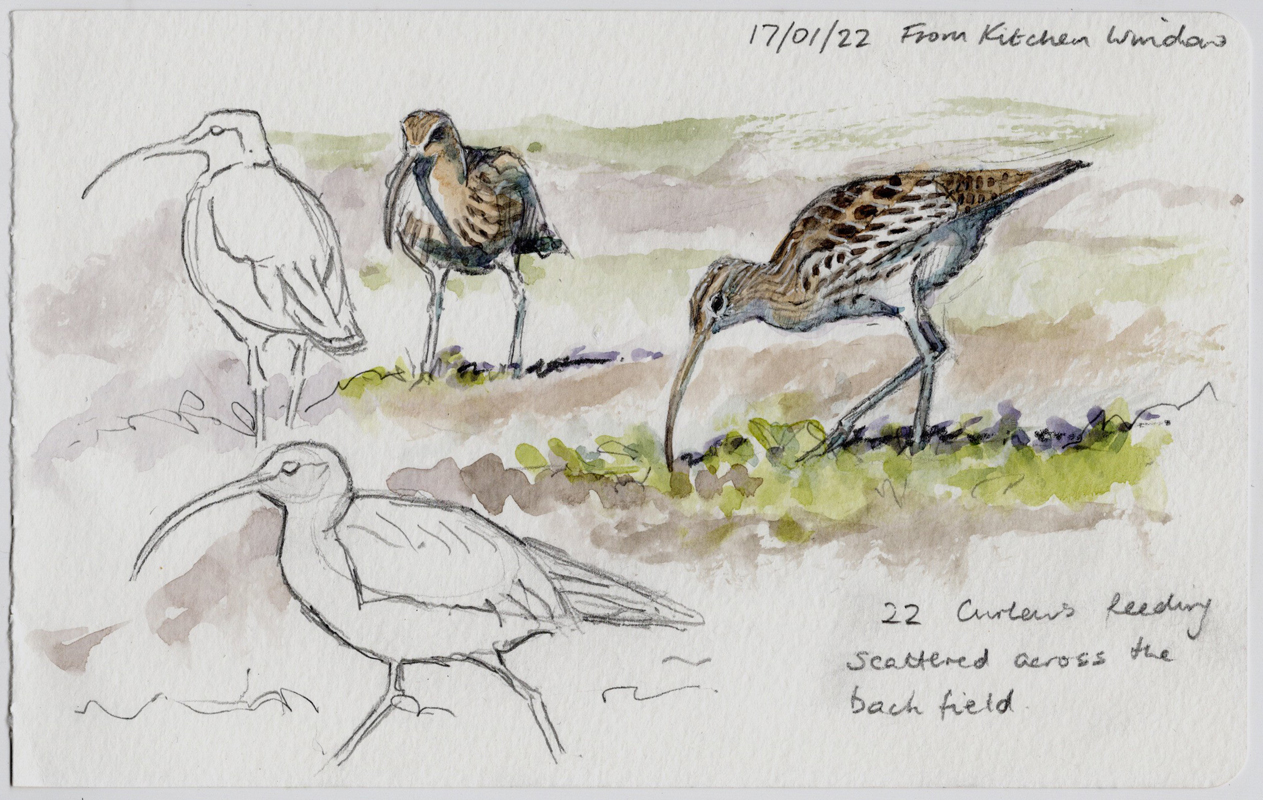
Curlews 'n' that .


 As John was under lock and key with Covid, I was out, at a loose end, on Sunday morning. 

Without any plans, I just decided to stay around home trying to fill in some of the blanks in my New Year local patch list. Last week I had jotted down some of the common species I would expect or have had in January in previous years that were playing hard to get. 

There were two strands to look for. Those birds that could be had along the shore and those from the woodland areas a short way inland. From the former, I was missing most of the common wintering waders, some wildfowl or seabirds and from the latter the likes of  Treecreeper, Redpoll, Brambling and Tawny owl could all be added. I expected to get maybe 4 or 5 to add, more if lucky.

The day was dry and fine but cool with a light westerly breeze. At dawn, I was standing on the Rumbling Kern, a good high rock feature overlooking the sea and a small area of rocky shore, scanning with the scope. The sea was dormant, with very few birds. 3 Red throated Divers were about it with not even a Razorbill to add. Scanning into the bay at the south 3 Goldeneye, a few Wigeon and 50 Lapwing were all new so it seemed there might be more if I headed that way. Sure enough a nice pair of Stonechats were added but that was it. I couldn't even get a Meadow Pipit.

A change of plans had me heading along to Craster with nailed on Purple Sandpiper and a good chance of Willow Tit or Greenfinch(!). An hours walk around coastal scrub and the village turned up exactly zero. Four Bullfinches looking smart in the bright sunshine were the highlight.

Every night since the New Year I take Peggy for her last late stroll around 11pm hoping for Tawny Owl calling. This is a common bird here, but I only heard my first last night, 17 days in, despite excellent weather conditions. Barn Owl is even worse. Last year they were on show at any time of day, every day, right until the summer. This year zilch. I do now think that those storms have had some serious knock on effect. Only time will tell, to see if there are any breeding successes locally later on.   

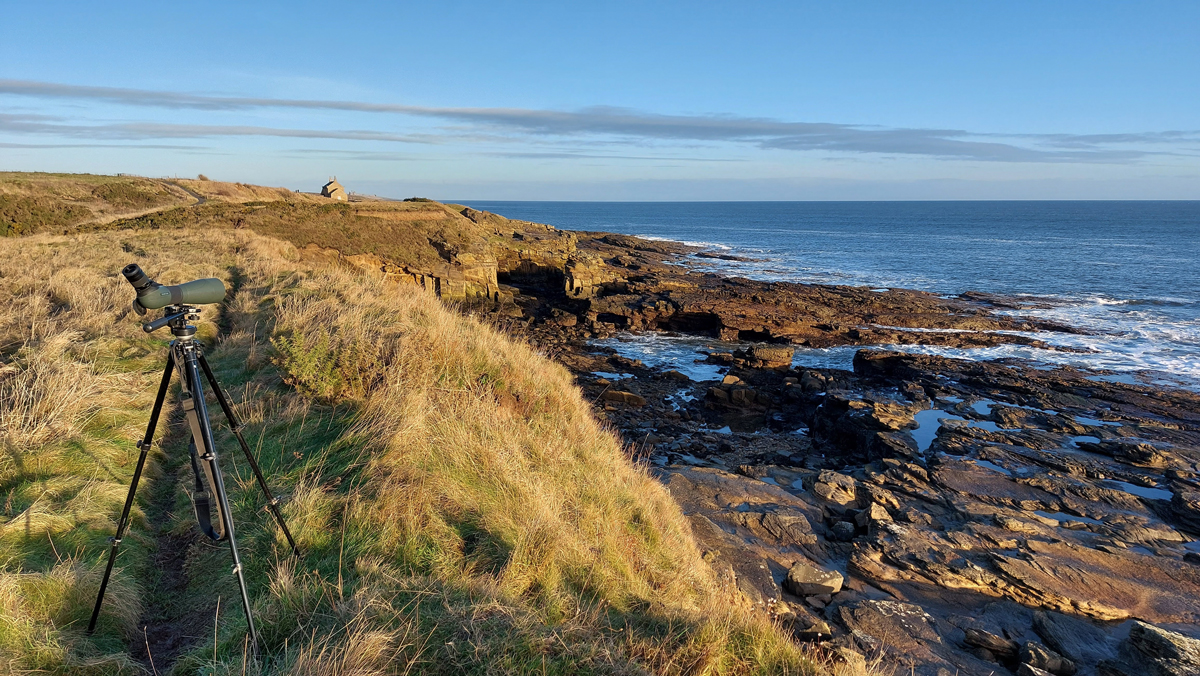
A bird free Rumbling Kern with the Bathing House and Dunstanburgh Castle in the distance.


Sunday, July 05, 2020

Since the COVID lockdown has been slackened, there is a definite change in vibe across the social media platforms when it comes to birding attitudes.

The new order seems to be low carbon all the way, and God forbid you should stray across the line. 

It reminds me of the early eighties when Richard Millington's book, A Twitchers Diary' was published. At that time, twitching was frowned upon by the more 'serious' birder as being frivolous and of little scientific value. The RSPB magazine even censored pictures of the book cover by blackening out the title as if it was a photo on the cover of a seedy top shelf magazine ( ask your older mates). 

Now the twitcher bashing has started again though for a very different reason. Those who don the hair shirt of local patch birding, while off setting their carbon footprint, look down upon those mile munchers who dash off at the wink of an albatross, seeing them as planet destroyers of no less stature than Thanos himself ! Apparently these 'dinosaurs' have had their day...

We will see.

Where am I going with this? I'm rambling a bit so lets get back on track. The majority of my birding time is spent in a local context, with the odd twitch and day out thrown in to spice things up a bit. Most of my ventures are within Northumberland, but that's because it is a good county for birding. I have been thinking of my last time across the county border after a bird? White winged Scoter at Musselburgh I think? This got me thinking about Steve Gale's 'uber patch'. An area that is bigger than what is deemed managable as one patch but still an area that he spends most of his time.

For me my 'Uber Patch' would be a zone stretching 10 miles North to South and 14 miles East to West with the town of Alnwick more or less in the middle - 


This is not a deliberate area, it just happens to be where most of my time is spent. To be fair  most the area is not even given a look at but it encompasses places I visit for wildlife regularly. Although it is a big area of land, I don't think I am destroying the planets resources as much as some, especially as even in this area most of my birding is done between Boulmer (the square headland to the right of Longhoughton)and Craster .

This morning was spent 3 miles from home at Boulmer. The strong winds made us choose the coast rather than inland today. It was typically 'July quiet', but enjoyable all the same. First off we walked south from the car park along the shore to get some shelter from the westerlies, to Seaton Point. Highlight here was the Cuckoo on the beach, first seen last weekend by John but still present and flighty today. 1 Bar tailed Godwit, 4 Dunlin, 23 Golden Plovers, 32+ Curlews were the start of wader passage here. Or maybe the end?
12 Swifts flew south. 3 Grey Partridges were in the fields while a Shelduck lead a creche of over 30 ducklings on foot past a roost of Herring Gulls, on to the sea. A pair of Stonechats did their best to stay upright in the wind.


Him and her Stonechats.

Curlew


Back at the car for a tea stop then we walked North to view Longhoughton Steel. Here we had 2 Red throated Divers in summer plumage, many Sandwich Terns, 1 Common Tern, 1 juv Yellow Wagtail and 1 Canada Goose South. A summer plumaged adult Mediterranean Gull flew north along the shore. On the sea loads of Gannets and Auks but nothing on the move.

Dunstanburgh Castle and on the left, the Bathing House.

The North End of Boulmer facing Low Steads.

The North End at Boulmer facing due North. 


This wind might swing into the north tomorrow, if so I'll have a seawatch. This time even closer to home...

Saturday, March 07, 2015

Curlew.


Above, this Curlew has been wandering around over our garden wall for over a week now. It doesn't look very well, but seems to be feeding on worms ok and it can fly, with some effort. Lets hope it pulls through.

Below, while taking a pic of the poorly Curlew over the wall, a few other healthier specimens flew in including this one with an absolutely massive bill. Its almost the length of the rest of it!


Sunday, June 22, 2014

More bees...


This morning JWR and myself took an unseasonable trip up to the Harthope Valley in the Cheviots.
The weather was warm, but remained stubbornly overcast all morning, not ideal for photography, so bear with me.

On arrival a little flurry of lanky looking critters ran over the road, looking like tiny emus. Three, I think, Curlew chicks, and their parent forced a scrabble for the camera, but they didnt linger long...


First stop at the cattle grids for a cuppa seemed very quiet. Redpolls were feeding young as were Willow Warblers and Whinchat, while a Treecreeper showed briefly. Common Sandpipers and Grey Wagtails were display flighting and a Snipe was heard drumming high over the river.  A few plants noted included Climbing Corydalis, Wood Cranesbill, Heath Bedstraw, Thyme, Eyebright sp and Bell Heather. The small meadows here look lovely at this time with a host of wild flowers on display. its not Upper Teesdale or the Machair by a long way, but nice all the same. 


As it warmed up, insects became more active, so we checked patches of flowers for a couple of new species. The vast majority seemed to be Buff tailed Bumblebee, but we soon located target number one - Bombus monticola the Mountain Bumblebee. 4+ very small ones were quite elusive, keeping close into the flowers. Look a the pics closely and you can see almost every bloom has been pierced by bumblers seeking nectar through the sides. The other bee looked for was Bombus jonellus, Heath Bumbler, but there was no sign. Maybe they dont occur here?

The Mountain Bumblebee is identified in these shots by the russet red covering almost all of the abdomen rather than just the tail.
   

Mountain Bumblebee