Showing posts with label Beetles. Show all posts

Tuesday, August 30, 2022

Sunrises and Sunsets a varied week...


Top - A Cullernose sunrise, and a quick Sooty Shearwater sketch.


Over the last week or so as summer begins to ebb away there have been no great wildlife highlights but there has been some variety that's for sure . Please bear with me as this post might drift off a bit...

Last week there was a window of seawatching opportunity as the wind swung into the North briefly.

Manx Shearwaters were a feature with 500+ N on one day but other pickings were slim. 7 Sooty Shearwaters, a few Arctic Skuas a couple of Bonxies were to be expected but a watch on the 17th had a few oddities too with Merlin harassing Kittiwakes a mile offshore, 1 Little Gull and a Greenshank that flew N close in. The following day a juv Marsh Harrier came low overhead as I walked the dog along the coast path first thing.

On 22nd my, so far, last 2 Swifts were with hirundines over our village and the first singing Robin of autumn woke us up in the morning. 

Little Stint with Dunlin, centre.


This weekend, visits to Boulmer on Sunday and Monday, early on the former, later on the latter to avoid Bank Holiday visitors was quite nice.  A single Little Stint was with 300+ Dunlin in front of the pub while a Peregrine tried its best to thin the flock out a bit.

Dan found a nice juvenile Dotterel in the wintering Golden Plover flock that seems to be hanging on a while. On Sunday we had reasonable views but distant. I went back yesterday evening for a better look when it was closer but still not quite close enough...


Dotterel juv, Longhoughton Steel, Boulmer


Top, Field sketches of the Dotterel distant on seaweed covered rocks, and last night in the sheep field.  

While watching the Dotterel on Sunday  we had 4 Raven, 1 Wheatear, 1 Roseate Tern, 100+ other Terns ( three species) 6 Wigeon in-off, the first of autumn, 16 Whimbrel, 100+ Curlew, 8 Arctic Skua, 1 Pintail N, 10 Teal N.

Yesterday's early evening visit was quiet though we did have 80+ Manx Shearwaters, 6+ Arctic Skuas, 1 very distant high flying Pom that dropped down on to the sea, but we couldn't nail it.

Boulmer sunrise.


To round off, here are some Invertebrates that have kept me busy mid week - 

Palloptera muliebris a Picture winged Fly, scarce up here apparently, maybe be the first record for VC68.


Feathered Gothic

Totally knackered but this Oblique Carpet is new for me. Scarce in Northumberland.

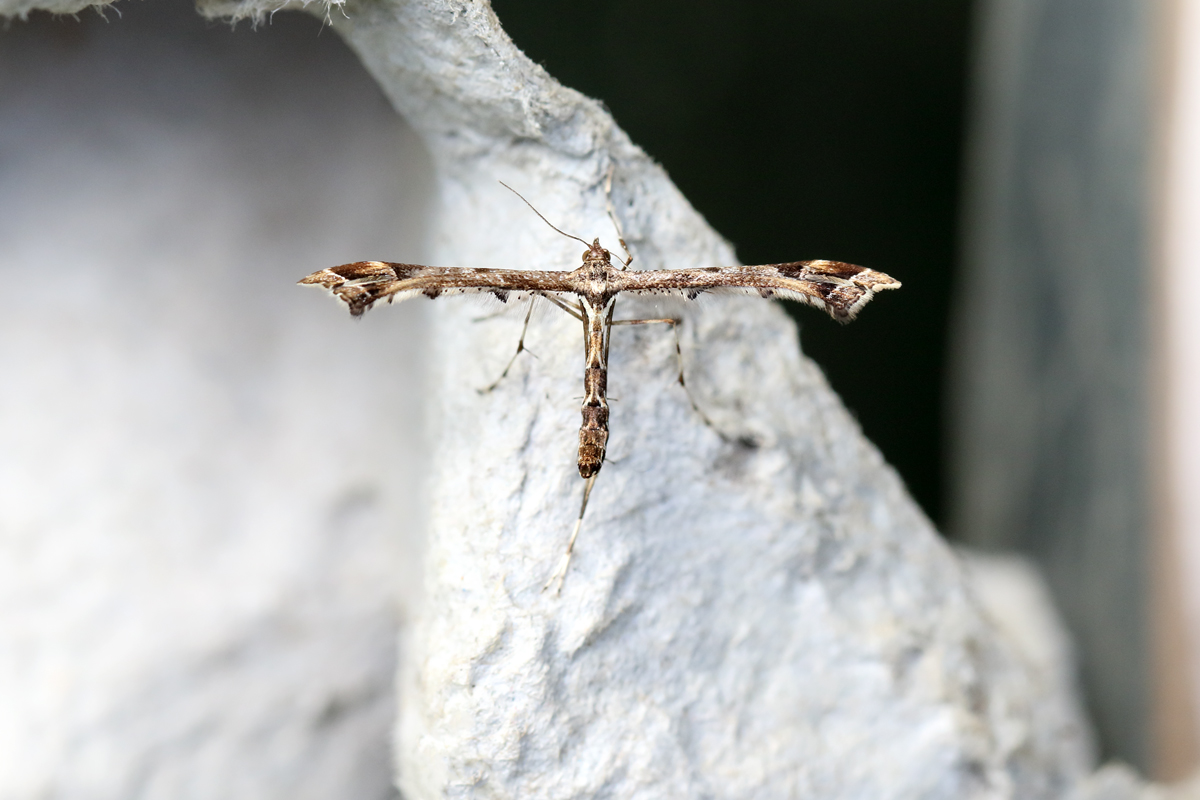
Platyptilia gonodactyla

A Mirid Bug, Stenoderma calcarata

Sitona obsoletus

Phycitodes binaevella

Sallow

Another new moth for me and rare up here is Small Mottled Willow, first for VC68. 


Moving into the dark art of Diptera we have Dolichopus griseipennis displaying around our drain.

Barred Chestnut

Beautiful Plume Amblyptilia acanthadactyla

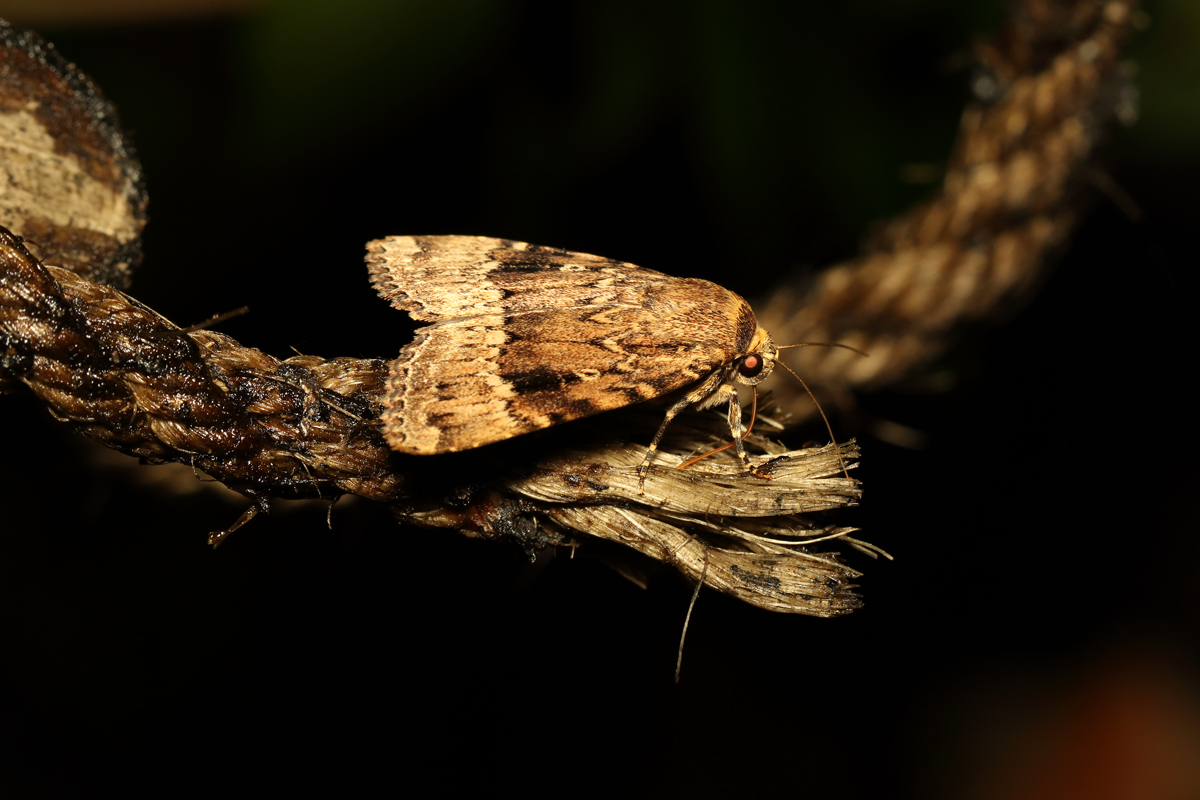
Copper Underwing on sugar ropes.

Another Grey Chi 

This was a right pain. I thought it was a Gem, but it wouldnt open its wings other than to fly around like a nutter for the first 12 hours. Finally it sat out for this shot then I lost it in the kitchen! It has yet to emerge... oh yes its another first for me Red Twin Spot Carpet.


Sunset from the kitchen.

Thursday, September 23, 2021

Suffolk Part 2.

 As I have said in the previous post, while pottering around the Suffolk Sandlings area doing the tourist thing, visiting Southwold, Walberswick, Aldeburgh etc a few other creatures of interest to a Northern Naturalist were discovered. In no particular order here are a few..


Many of us who use a moth trap are familiar with a wide range of Ophions or Ichneumon species. They range from orangy yellow to black and white things and are generally tricky to id. Some just stand out from the crowd. This Enicospilus inflexus is one such specimen. Looking at the photo you might shrug and think you've had loads like that, but in life I had never seen anything like it that was quite so big. It was huge. You can almost make out that it was bigger than a cranefly and in flight was like a Common Darter. Apparently it is a parasite of the large Eggar / Drinker type moths. I wish I had taken its photo with a good size comparison now. On Google, sites show it to be quite sparsely distributed, but that is maybe due to a lack of recorders rather than it being a rare insect. Impressive.


Above, another parasitoid, Ichneumon sarcitorius was contrastingly, very common with up to half a dozen in the trap every night. I dont see these in the trap at home. Smart little things, unless you are a moth.


Finally for the hymenoptera were the Hornets around the garden. I like to catch up with them when we are here and they did enjoy the moth sugar. They were quite defensive towards trespassers such as Red Admirals who would be chased off by a short wing flicking open jawed charge from the Hornet. They're like terriers....


This large, blackcurrant Fruit Gum lookalike beetle Chrysolina banksii was quite a good record too. I dont really do beetles as they mostly need a microscope but this one was id'd from the Facebook beetle page. 


Dark Bush Crickets are common and can be heard stridulating from bushes under street lights and in gardens etc. There are no Bush Crickets in Northumberland.


Oak Bush Cricket was new to me found on the kitchen window attracted to the light. This one is a male. Smart.


A special visit to Carlton Marshes was required to see this one, the rare Fen Raft Spider, Dolomedes plantarius. We found three in a nicely vegetated ditch near the visitor centre. It is only found in 3 UK locations. This one can be seen with its feet on the water surface feeling for the vibrations of insect prey using it a bit like a web.

While we were here Wasp Spider was seen along with Brown Hawkers and Chinese Water Deer.

Chinese Water Deer looking more like a dog than most deer.


Then we come to some odds and sods - Bugs. True Bugs, not that Americanised slang for insects. 

Ant Damsel Bug.

Dock Bug final instar nymph.

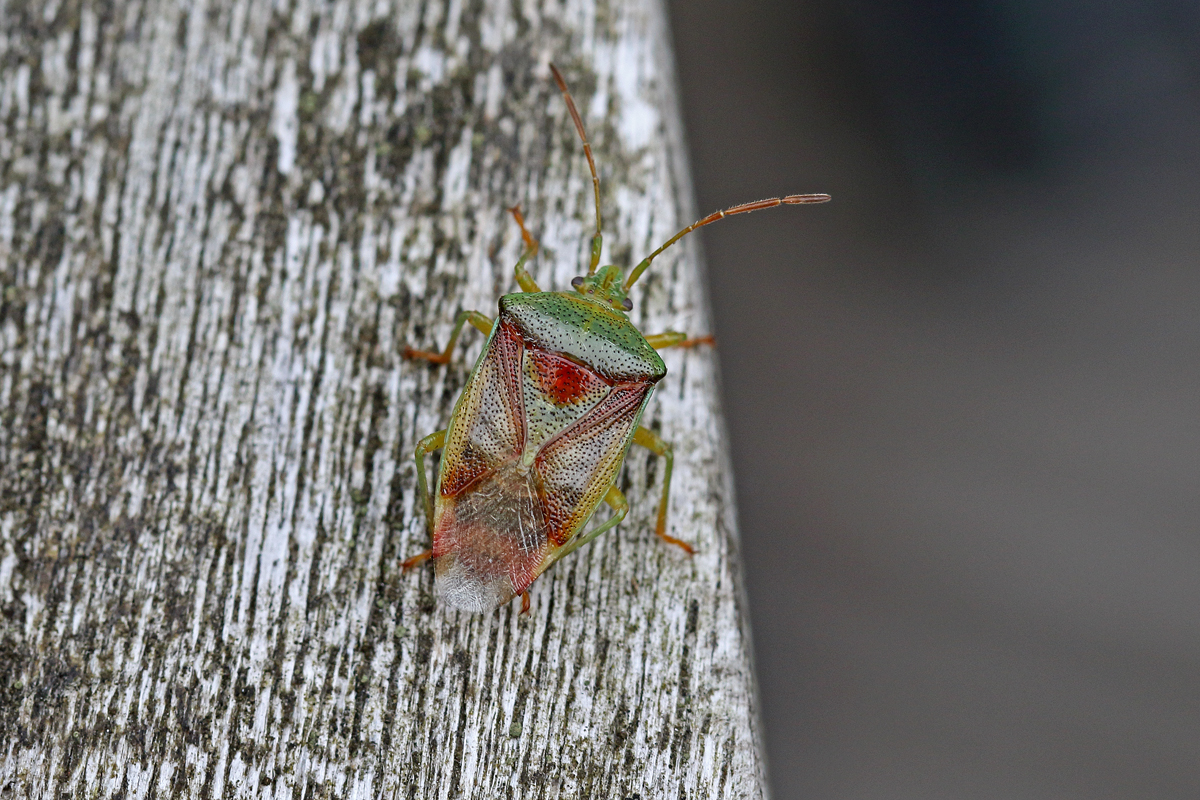
Hawthorn Shieldbug 

To end with, although there wasn't much birding to be had, a morning on the heath with a flock of 8 calling Stone Curlews and a dozen Dartford Warblers is always appreciated.


A ringed Dartford Warbler, Dunwich.