Showing posts with label Low Newton. Show all posts

Monday, May 01, 2023

Northumberland scores the big one!

 At a risk of slipping into full blown twitching vernacular, but, some birds deserve it!

This morning, Gary Woodburn was on patch counting an arrival of Hooded Crows. He had passed the Low Newton scrapes in one direction and was on his way back up on the return walk when he struck not only Patch Gold, but also County, UK and Western Palearctic Gold too with the most preposterous of  MEGAs. Britain's first GREY-HEADED LAPWING non the less.
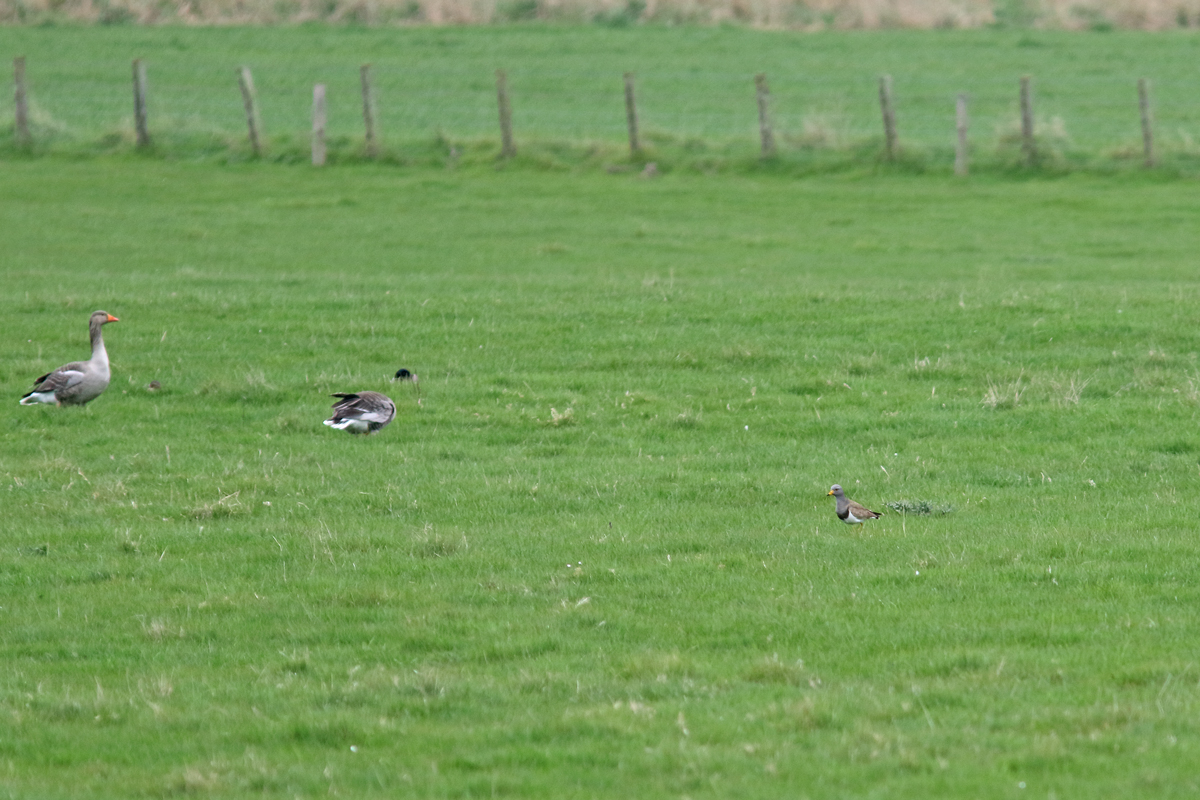
Grey-headed Lapwing, Low Newton, Northumberland.

When the first message arrived in our WhatsApp group, time seemed to pause briefly. I could almost hear the rest of the Northumberland WhatsApp Group members thinking, 'A what?' 

This is not a species we have ever seen on the bird info services or in our magazines, so whilst I had heard of them, I had no idea of the range or likelihood of vagrancy so did a quick bit of Googling.

The oracle 'Wiki' gave me  - 

'The grey-headed lapwing (Vanellus cinereus) is a lapwing species which breeds in northeast China and Japan. The mainland population winters in northern Southeast Asia from northeastern India to Cambodia. The Japanese population winters, at least partially, in southern HonshÅ«.

This species has occurred as a vagrant in Russia, the PhilippinesIndonesiaNew South WalesAustralia and Sri Lanka.[1]'

Then, in a more European context, birds were seen in Turkey in 2018, Norway and Sweden in 2019 and it has been mooted a potential vagrant to the UK.

Dutch Birding magazine reported, when discussing the 2019 bird, that there were none or very few  birds in captivity to make escape potential an issue.

As is the way on Bank Holidays, there are always family commitments to fulfill so it wasn't until mid afternoon before I could dash the six miles from home where I was relieved to find the bird quite comfortable, feeding and wandering around the meadow as if it had been born there. Good scope views were had but it was always a bit distant for my photography.
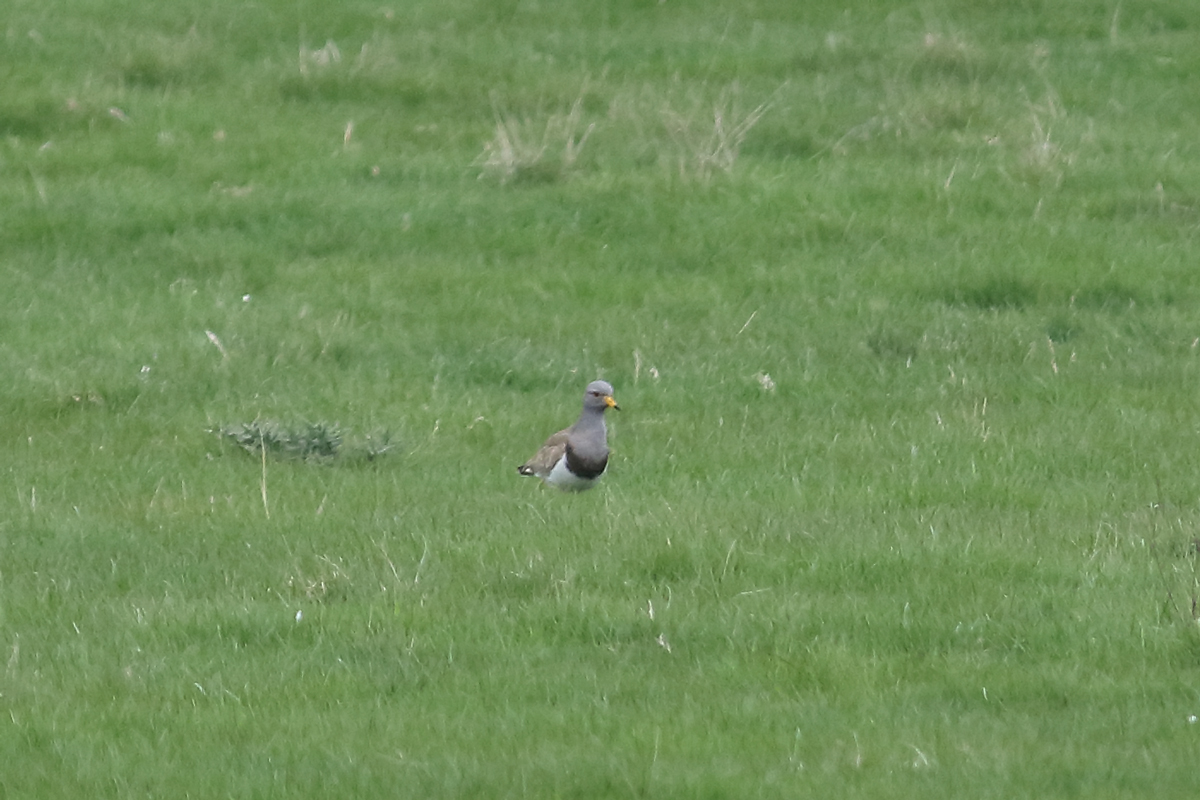
Grey headed Lapwing all the way from  the Orient arrives at Low Newton, Northumberland.

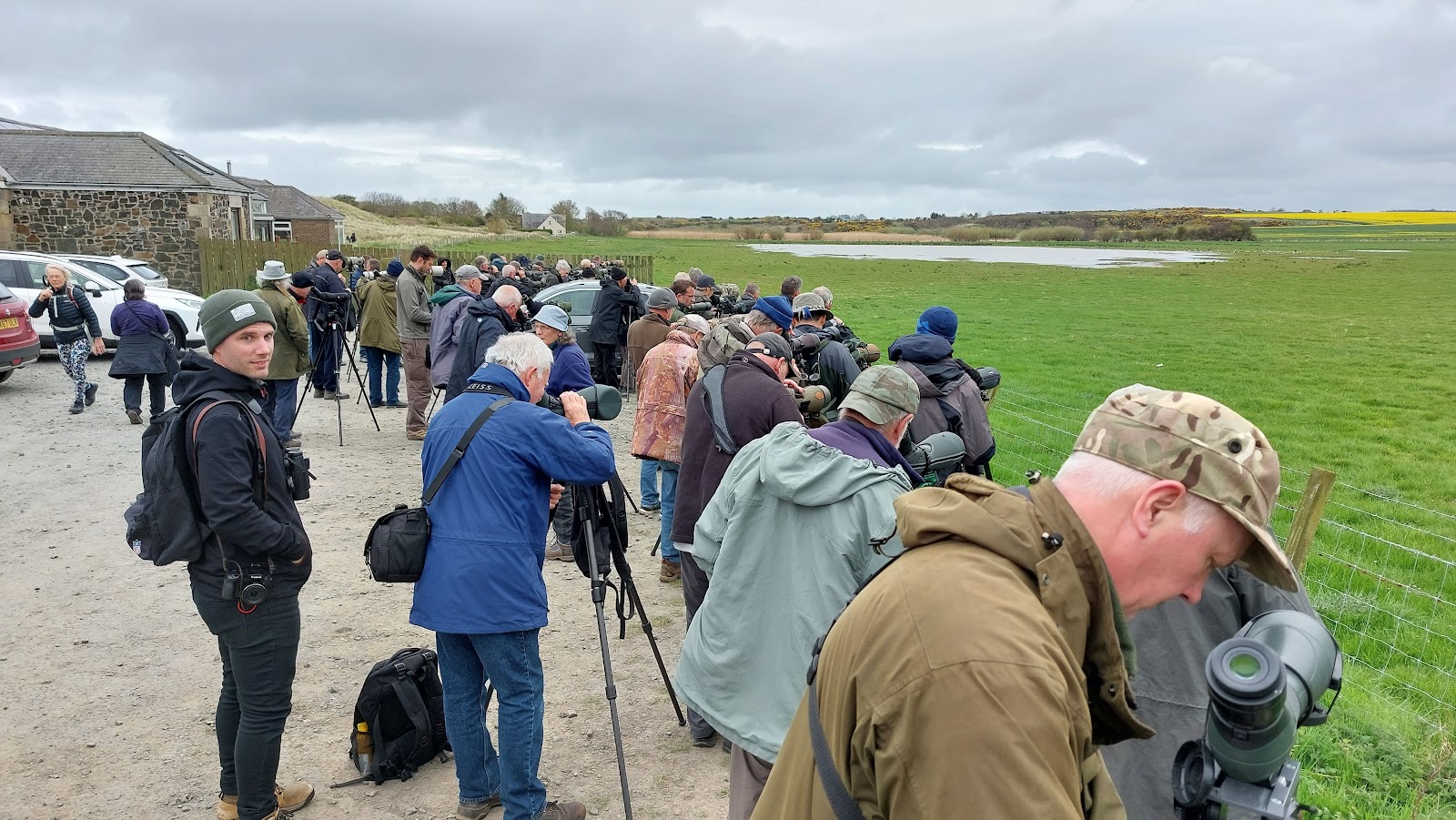
It appeared as if the whole of the UK birding community was descending on Low Newton and as time went on those from further ranges began to arrive. Somerset, Wales, Norfolk, Herts, Staffs, Scotland etc all converged in this small village for a view of this Eastern Peewit, hopefully a British 'First'.


I manged a few in the field scribbles to get some shapes and feeling down, so will colour them up and elaborate them soon. In the meantime, here's a little shaky video...


Monday, December 05, 2022

Its not quite over!

Hume's Warbler on a cardboard box...

After my last blog where I thought surely the end of autumn had come, we had a flurry of Sibe activity. Autumn lasts longer these days.

Not far from home, a couple of Hume's Warblers had taken up temporary residence at Low Newton village. I don't recall Northumberland having a multiple of this species before but stand to be corrected.

The spots favoured by these birds were not the best for viewing, the first being a site where you need to look over a high wall into even higher spruce trees for a distant glimpse. The second area, just about 50 mtrs behind the walled garden is a small stand of spruce at the end of a private cul-de-sac. I am not a fan of this type of site as it always looks suspicious to residents, but, saying that, not many 'residents' live here anyway, so a lot were empty second homes or holiday lets at the end of the season.

Last Wednesday was a day off work and with a couple of hours spare I popped along to try my luck. Knowing the walled garden is a pain, I stationed myself nonchalantly at the end of the cul-de-sac over looking both the small spruces and the taller walled garden trees. The whole place was very quiet in thick wet mist. No birds were in the close trees but I thought I'd give it half an hour to see if the birds moved around.

Soon after, I heard a single, fine wagtail like 'tiss-wick' across the paddock? Was it the bird or had I just misheard something? I scanned the distant trees with my bins and soon saw a pale small bird fitting about the upper branches, yes it was the Hume's Warbler. Distant, I thought, but at least I had seen it, when it only up and flew right across the field into the trees beside me where it fed low down in the dark damp branches of the spruce.

With some manoeuvring, decent views were possible at times but photography was a non starter. Once the warbler had a short burst of calls, repeating the two syllable wagtail note 4 or 5 times before falling silent again.

Its a long time since I've seen a Hume's Warbler so this one was most welcome. Unfortunately there was no sign of the second individual.

Surely its winter now!

A foggy soggy Hume's Warbler. The best I could manage in the dark conditions.


Saturday, March 31, 2018

Holy Land.


Today I joined Alan Tilmouth as his guiding assistant at Holy Island to show some visitors to the Pilgrimage to the Islands Festival some birds.

The weather was diabolical and not conducive to trailing non birders around east coast headlands looking for migrants, so we adopted the stand and wait approach. Before heading off towards the location, we met up at the Crossman Hall. As I stood at the door, a quiet call caught my attention and a bird dropped into a small tree across the road. I gazed bemused at a wet silhouette before lifting the bins, to see a Hawfinch! At that point if flew up and east, then doubled back to drop somewhere in the village near the school. Alan didnt even get on to it as he was doing the meet and greet bit!

From here was stood on the shore near the Vicars Garden, in the shelter of an old building seeing 3 Slavonian Grebes, inc 1 summer plumaged bird, 2 Red breasted Mergansers, 2 Long tailed Duck, 10 Bar tailed Godwits, 2 Grey Plover. A few migrants dropped out of the murk, 2 Song Thrushes a few Blackbirds and a Goldcrest.

After leaving the island, I called in the Low Newton Scrapes that has played host to a Grey Phalarope for the last 4 days. Today it was looking settled, feeding on the water, head into the wind bobbing up and down. These little wisps of feather winter out in the Atlantic and are as tough as old boots. We get a few in Northumberland but not often on freshwater so it was a pleasure to see this one before it continues northwards...

Sunday, October 22, 2017

The Little B.......

Despite the seemingly adverse weather conditions for migrants, I have done alright this week and seen a few interesting birds.

On Wednesday, I was amazed to see that a Bee-eater had turned up at Druridge. Likely one of our pair seen on Sunday, so at lunchtime I popped along to get a better view. Unfortunately it had gone north and did not return before I had to get back. Old school Northumberland birders have waited for ever to see Bee-eater in the county, so after 35 years, I thought I finally had a 'blocker' on my list. That lasted three days.... Still, it is good when everyone can catch up with such a precious find.

While scanning for the Bee-eater, a Water Pipit just in front of the Budge Screen made the trip a worthwhile one.

On Thursday there was a short deviation in the long term westerlies we have been suffering with a short SE breeze. Immediately large numbers of thrushes were arriving. At home, Redwings, Blackbirds, Brambling and a nice sat-out Woodcock started proceedings before work. At lunchtime I had a walk along the disused railway lines at Cambois. The highlight here was a male Ring Ouzel, a belated year tick, with 150+ Redwings, 20+ Blckbirds, 50+ Song Thrushes and 6 Bullfinch.

I called in to Druridge again on Friday before work. The Bee-eater was still in residence, this time watched briefly say on a barbed wire fence preening before making off towards Chevington again. A distant Swallow will probably be my last, a Little Egret flew south. I returned at lunchtime but missed the Bee-eater again ( its giving me the run around this bird) where the best on offer was a nice Little Owl perched on a chimney at the farm.

No frame filling insect snapping shots for me, but I'll take it.
     Later on Friday, Gary Woodburn found a Little Bunting on his patch at Low Newton. He sent some tempting photos of this tiny emberiza so Saturday morning found me loitering along the path to Newton Point hoping to catch up with only my second Little Bunt after one on Holy Island in the mid 90s. I have dipped a few since.

At first things didnt look promising with a seemingly birdless tree and too much cover to hide a small brown streaky bird but Gary soon refound it and called us over. What performer too. This lethargic bunting slowly clambered around its chosen sycamore gleaning aphids from the leaves. It often sat motionless for several minutes making it tricky to find but in all, half an hours viewing in good sunshine was enough and the bird just evaporated into cover.

Two close Yellow-browed Warblers together padded things out abit, plus Brambling, Chiffchaff, Blackcap and Mealy Redpoll added to the variety.


Saturday Little Bunting views.
 Sunday dawned in a different fashion with Storm Brian having just passed over through the night leaving us with a gusty NW wind that was quite chilling. Not great prospects for John seeing the Little Bunting. I thought it might still be there, but did not expect to find it in this wind.

Luckily John had other ideas and the first bird he looked at was the bunting. In the early morning light it skulked amongst the same sycamore branched for a few minutes then we lost it. A further two and a half hours passed before it appeared in the open from nowhere. This time it showed even better than yesterday picking tiny aphids off the leaves, and for one great moment it shared a binocular view witha lovely Yellow-browed Warbler! I am tempted to say 'stunning'.

While scanning for the bunting I had a heart stopper when for all of a millisecond, bright grass green apparition with white wing bars appeared in my bins that could only have been a firecrest but its head was obscured by leaves and I did not see it again.  Frustrating.

We ended the morning with a glance at the sea off Football hole where the only birds of note were 3 Red throated Divers and John had a Woodcock in-off.

Not too shabby a week on the westerlies....


Above - Little Bunting. What a great bird.

Sunday, May 07, 2017

Join the Dots...

Before I get on to this weekend, a little catch up from midweek. On Wednesday as I came back home from Bunty's walk before work, I noticed a large bird slowly heading towards us along the lane, coming from the direction of the pond field. At first, heron springs to mind, but the bowed wing shape just wasnt there even though the wing span was quite similar. Its angular appearance rang bells and I could see it was heading low across our village where a neighbour was waiting with her son for the school bus. I shouted, 'Lynsey!' 'OSPREY!' and pointed above her as it languidly travelled straight over her head. Although I have never heard her talk about natural history, she did seem interested in the large raptor continuing its migration...This is the 4th I have had in the area since 2009 and its my second garden record.

Right, back to this weekend.

Saturday started very early at 4am, when I got up to go and lead a Dawn Chorus walk at Howick Hall, just up the road. At first it seemed quiet outside then a Blackbird began proceedings, followed from our garden by Skylark, Grasshopper Warbler and Wren, while a Barn Owl carried prey over the back field to a nearby nest.

The walk started at 5am continuing until 7am. It was ticket 'do' with breakfast included for the 30 or so attendees. The walk was sold out I'm glad to say, as we limit it to this number. Any more would detract from the very reason people turn up at that time in the morning. 44 sp were recorded during the time and guests even managed a bonus Red Squirrel from feeders at the tea room as they ate breakfast. Bird highlights included Lesser Whitethroat, Gadwall and Tawny owl, all new for these, now annual, early wanders.

I spent the day in tired daze despite having a couple of hours dozing when I got home.

At 7pm, I was just about to leave home to collect Jane from the train station, when news came through of three Dotterel just down the road at Boulmer, so I carried out my taxi duty and off we went to see if these harlequin plovers were still there.

Luckily they were, in the same field as those Shorelarks from the other week, and we were well pleased to see that all three were lovely bright females. Dotterels carry out role and plumage reversal during breeding. Like phalaropes, it is the male who is dull and carries out all domestic duties while the female is brightly flamboyant. Unfortunately they were too distant for anything other than a record photo, but they really brightened up the field as they periodically ran around, punctuated by prolonged rests down in the barley. I dont think I have seen adult Dotterel in the county before but have seen several juveniles. Its a long while since my last one...


Dotterel in the gloom...
Today the North wind strength has increased making it more like March than May ( we say that every year) resulting in the need for two coats early on.

A return to Boulmer this morning for better pics of the Dotterel failed as they had departed overnight. Some compensation was had by the presence of a male Whinchat and 4 Wheatears, while 145 and 70 Barnacle Geese flew N along the shore. One male Wheatear struggled with a beetle, possibly a vine weevil, that had become entangles in some sheep wool...


Wheatear with beetle seen here in the sheeps wool...


Some of the migrating Barnacle Geese today.
After being frozen on exposed Boulmer Steel. we headed off to Low Newton to see if there were any more migrants there.

Really the wind had us defeated, but we tried, coming up with Grasshopper, Sedge and Willow Warblers, Chiffchaff Whitethroat and Lesser Whitethroat. A female Wheatear was on the pond edge while a female Brambling was held up on her way north by this awful wind.

A fw fem Brambling, looking tired near the Long Nanny car park.

And while northern birds are still migrating, this juvenile Song Thrush shows an already successful breeding season for its parents...

Monday, January 02, 2017

Hello 2017.

First post of the New Year.

Last year at this time, the weather was dreadful until about the 8th, with wind and rain on a daily basis. This year cold breezy sunshine has been the order of the day since Christmas so long may it continue.

This morning John picked me up and we were at Low Newton for 8am, to add to the year list. As I have already mentioned, this isn't an all out go-for-everything list, it's more of a chance to add variety not only of birds but of locations too, with visits to sites not usually seen by us in a long while, but before all of that, we decided to stick to somewhere we do come to on occasion.

The view south from Low Newton beach towards Dunstanburgh Castle. There aren't many better views than this in England...
 The pool and scrapes were a bit disconcerting as there were 4 men shooting just behind the nature reserve, taking pot shots at geese far to high to drop. Some of these poor birds will get pricked by shot and die slowly of lead poisoning I'm sure. One Greylag on the pond didn't look to clever to start with, with some primaries sticking out at a jaunty angle...

Velvet Scoter, female.
Highlight on the wetlands were 13 Whooper Swans and a Shoveler with a good number of Wigeon. A Water Rail squealed in the phragmites.

A walk along the shore added Purple Sandpiper with commoner waders, Rock Pipits and Stonechats before a tea stop back at the car. From here we headed out to the point to check Football Hole, a small sea cove that is good for seafowl.

Today it was excellent with a cracking female Velvet Scoter showing well in bright sunshine, having a hint of Harlequin about it with the bright white ear spot. It made me wish I'd brought the camera, but I hadn't so the notebook came out. I felt I had to take something of it home with me. Also in the hole were 10 Long tailed Ducks, all female types, 13 Goldeneye, 4 Common Scoter, 2 Red throated Diver and a Guillemot. Offshore, a few birds passed including Gannets, Kittiwakes and another 4+ Red throated Divers.

On our way back, a seed crop next to the point had a nice flock of 25+ Skylarks and a few Yellowhammers and Reed Buntings.

Only one day of holiday left before work on Wednesday...


Wednesday, September 17, 2014

A bird in the bush is worth two in the hand...


Greenish Warbler, Chare Ends, Holy Island.
I took a flexi day on Tuesday after the rain, fog and easterlies yesterday to try and catch up with or, better still find, some of the scarce migrants that have littered our coastline. St Mary's fared well yesterday, and Holy Island had some good birds, so what was in between?

I started off at 7.30 this morning at Craster. I yomped over the heughs and the Arnold Reserve. It all started well with a good scattering of Blackcaps, Whitethroats and Chiffchaffs with a single Willow Warbler, but scarceties remained just that. Scarce.  Two Redwings were very early and were probably the highlight here.

So, off up to Low Newton, where I met Gary who was ringing on site. Migrants were very thin on the ground here, so a check of the Tin Church area and the Pool Willows was largely fruitless.

Next stop Holy Island. I got on to the island at about 12 noon and have never seen so many tourists here. Robson Green has a lot to answer for... 11 coaches were in the top car park and the main car park was almost over flowing. The village was like the Metro Centre!   

Despite this, plenty of migrants were on offer, and with the sun beginning to shine the day was looking up. The very first bird I came across was a Barred Warbler in a willow at the Chare Ends watched by a small gathering of Greenish twitchers, it was typically shy, but could be followed as it thrashed the thin branches around. A lovely bird, but too distant and flighty to get a single pic.

The Vicars Garden had Pied Flycatchers, a Spotted Flycatcher, loads of Willow Warblers ( some singing) and Chiffchaffs. I missed a Yellow browed Warbler present here earlier. On route I also had Wheatear, Redstarts and Tree Pipit.

Back at the Chare Ends and the Greenish Warbler, now in its third day, was showing beautifully in the afternoon sunshine to only two or three birders.

After the long day I was on my way home when Gary rang to say he had caught the two Red breasted Flycatchers together. I had a bit of time while he cleared nets and processed birds so arrived just in time to assist him with a photo, after all you cant hold two rarities and take the photo, can you!

What an end to a great day away from work...  


Me posing two Red breasted Flycatchers for a photo. They flew off strongly non the worse for their brief interruption.

And another of a Red breatsed Flycatcher. Both pics thanks to Gary Woodburn.

Sunday, April 27, 2014

A soft day...

Above - False Oxlip, top, with its parents Primrose x Cowslip
Two visits to Low Newton today as the weather was promising for some migrants. A light easterly with drizzle means you don't want to be far from the coast in Northumberland. As it happens, we had an enjoyable morning but there were no scarcities.

Passerines in the scrub at the Tin Church included 4+ Blackcaps, 4+ Willow Warblers, 4+ Chiffchaffs, 1 Grasshoper Warbler and 2 Lesser Whitethroats. Down at the point, a Tree Pipit was near the compound along with 3+ Wheatears and a Whimbrel flew South. A nice show of Primrose and Cowslips in the dunes resulted in a False Oxlip, a hybrid between the former two species.

As the drizzle became steady, we headed down to the pool and hide for some shelter. Here, a party of 5 Arctic  Terns flew low over the water and out to sea, my first House Martins were with other hirundines. 5+ Sedge Warblers were new in, singing all over the pond margins, while a party of 6 Black tailed Godwits dropped in for a rest to join the now semi-resident 2 Ruff. One of these birds is coming into breeding plumage. On the damp scrape, 15 Dunlin, 1 Yellow and 1 Pied Wagtail added to the interest.

Chiffchaff
Reed Bunting that looks like Uncle Fester! 


Sunday, April 20, 2014

Isn't spring brilliant!

Chiffchaff
Redstart - Longframlington
Yesterday, we found a sickly Hedgehog on our drive so I quickly gathered it up and delivered it to a rescue centre at Longframlington ( donating £20 for its upkeep too). On the return journey, a wooded roadside near a bridge over a burn looked tempting so I gave it 10 minutes. A lovely male Redstart was singing from the tree tops, my first of the year and always nice to see.

Today we started off at Newton Pool, but only gave it an hour so we could be off before the bank holiday hoards arrived. Swallows are much in evidence here now with a few singing on territory. The two Ruff were still on the scrapes as was a White Wagtail briefly, but there was no sign of the Avocet that dropped in last night.

Over near the golfcourse, a Lesser Whitethroat played hard to get in the thorn scrub as it rattled its song out, and a Grasshopper Warbler was reeling near the pay car park. While checking the dune cover a nice female Marsh Harrier dropped in for a short visit before gaining hight and flying off south west. Also noted were 1 male Blackcap, several Chiffchaffs and Willow Warblers.

Swallow - Low Newton
Marsh Harrier - Newton Pool
From the coast we headed up inland a short way to Ros Castle where the scenery was outstanding. From one spot we could see the Cheviot and Hedgehope, then looking right, Lindisfarne and Ross Back Sands! It was quiet on the bird front, but some Green Tiger Beetles showed well, if a little flighty ( are there any other beetles that fly as readily as these!) and a few wasps on bilberry caught my attention. They have turned out to be Norwegian Wasp Dolichovespula norwegica. I think I'll be looking a wasps a bit closer in the future.

View North West from Ros Castle.
Green Tiger Beetle
Norwegian Wasp

Sunday, April 13, 2014

Spleens, Garlic, Stinking Hellebore and the Gyppo...

Sea Spleenwort
A varied morning began with a  brief visit to the sea cliff bottom just a couple of hundred yards from home to photograph a new plant for me - Sea Spleenwort Asplenium marinum.  Not having heard of it before, I only stumbled upon it by accident on the internet this week, then found that it could be seen on my doorstep. It is found on rocks and buildings within the range of salty sea spray, so it is quite easy to locate. This fern has a more westerly distribution generally and is scarce in Northumberland.

While taking some pics, a Yellow Wagtail flew in-off, calling, and a Sand Martin flew overhead.  

Next stop Newton Pool for some migrants. As Gary noted, I have been visiting his patch most weekends recently. The main reason being, that I have a hankering for some wetlands again. For years, Druridge and Cresswell were my weekend haunt, but now those places are busy constantly, and are quite a drive south, so Newton has it all, only 6 miles from home. My home patch now, is still very nice, but the habitat is more designed for pheasants, than waders and wildfowl.

Egyptian Goose, front, with Greylag.
 The first thing I noticed down on the scrapes was Gary standing on the track, phone to his ear. Mmm, was he ringing out news of some overshot vagrant? A quick glance at the marsh revealed the object of the excitement - Egyptian Goose!

Only my second in the county, so it would be rude not to get some snaps. Gary had the nerve to suggest that he didn't want a Greylag in shot as it made the gyppo look 'plastic'! Birders eh.... ;) We were soon joined by Mr Steele, who, despite protestations, came especially to twitch the goose. Yes he did. Dont let him tell you different.

Also here were 2 Ruff, a steady passage of Sand Martins, my first Swallow of 2014, Willow Warbler and Chiffchaff. Out on the point, a Whimbrel and a few Sandwich Terns were new year list additions, but Skylarks and Meadow Pipits the only passerines.

Ruff
    
Skylark.
After leaving Newton, with a little time to spare, I called in briefly at Embleton Quarry. This overgrown scrubby corner has a pool too, though it looks polluted, there were a few ducks present, 2 Goldeneye, 2 Shelduck, Mallard.

Another couple of plants new to me were nice to see. Although naturalised escapes, in the world of botany (new to me), I think they are still ok to add to the list.  Good numbers of 7 Spot Ladybirds and a Peacock butterfly were noted.

Stinking Hellebore
 
Few flowered Garlic
7 spot Ladybird