Showing posts with label Cullernose. Show all posts

Monday, August 14, 2023

August

 I'm being neglectful again. 14th August and no blog posts this month!

So, whats been going on over the past fortnight?

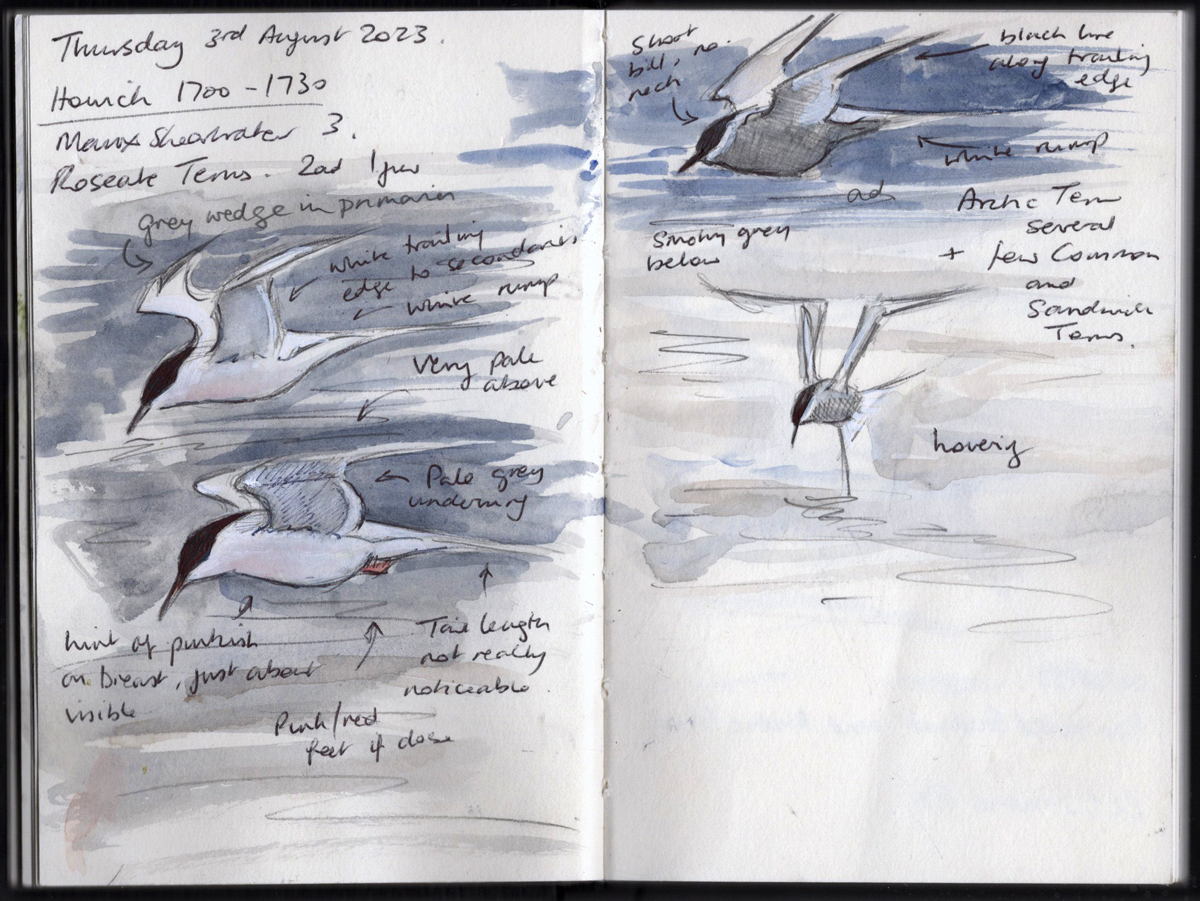
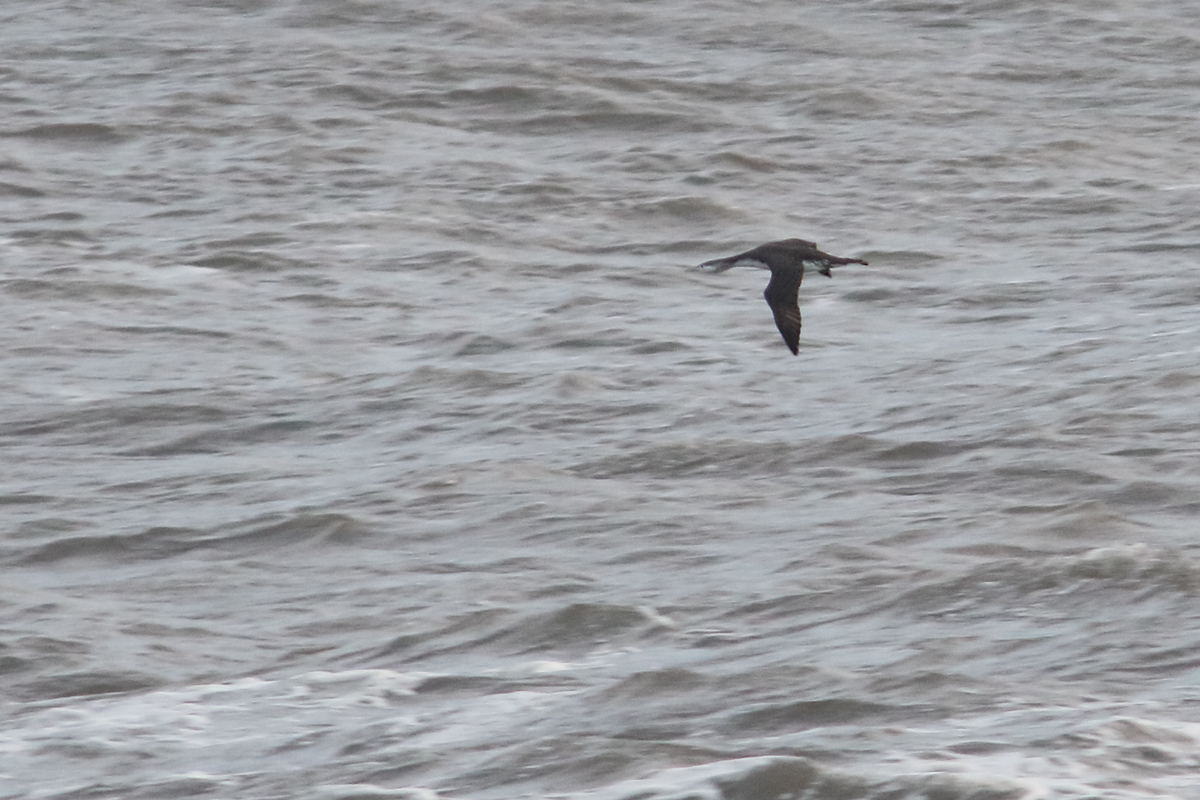
The month began with a bit more seawatching. Despite reasonable conditions it remained a bit underwhelming really for example, on 3rd an early hour had 3 Manx, 2 Arctic Skuas, 5 Roseate Terns, 13 Common Scoter and a Bonxie. The hundreds of Gannets and Kittiwakes gave a false impression.

Later that day, another afternoon hour was pretty much the same.

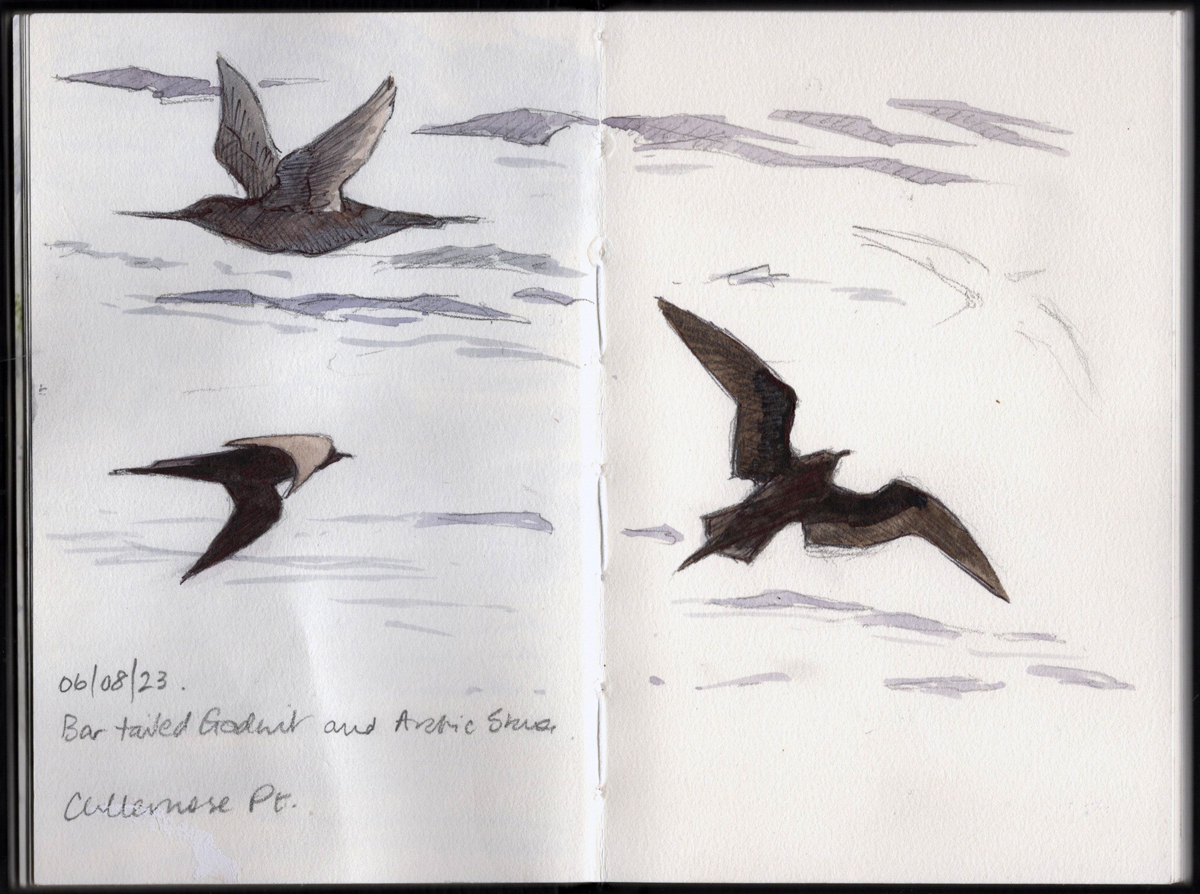
On the 6th another two watches , one for 2hrs from 6.40am had 6 Roseates, 2 Common, 6+ Arctic and 8+ Sandwich Terns, 1 Arctic Skua, 1, yes 1 Manx, 3 Puffin, 10 Common Scoter and the watch saviour a year tick when 3 summer plumaged Bar tailed Godwits flew N.  

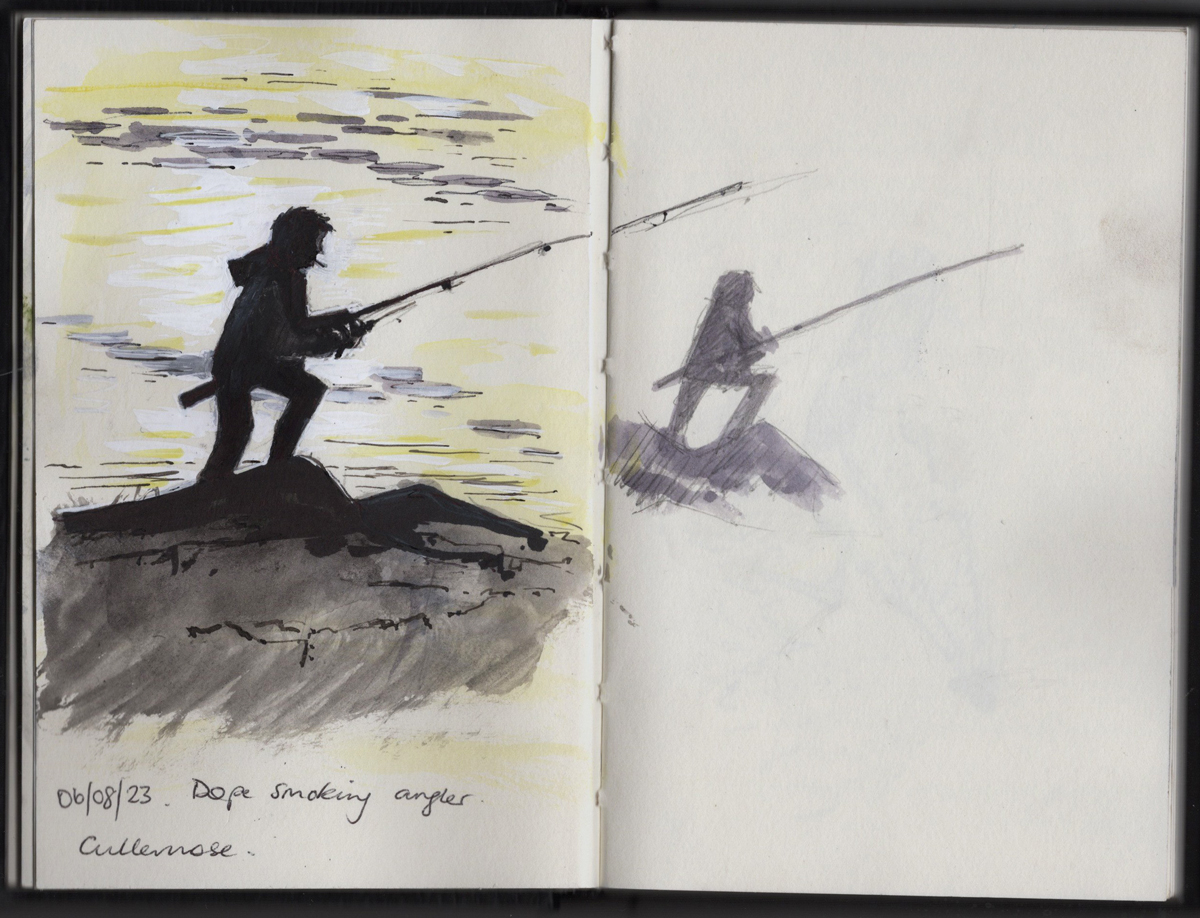
This watch was accompanied by an influx of weed smoking, chav, mackerel anglers. Nice.


An hour after work on Wednesday 9th was a bit better with 124 Manx N , 5 Sooty Shearwaters N, 3 Arctic Skuas N, 1 Bonxie N, 4 Common Scoter N, 3+ Puffins N and a Whimbrel.

 Other than the seawatches, not much has been happening. A trickle of yellow Willow Warblers through the village and a lone Peregrine just offshore one morning were about it.

On the moth sugar table, nightly, up to 3 Old Lady have been feeding with a few Yellow Underwings, Dark Arches and Rustics. Interestingly I've found Old Lady twice last week on buddleia flowers after dark, not something I've seen before. Holly Blues are going strong in the garden alongside another 9 species in reasonable numbers. 

In the trap a few early autumn species kicking in - 
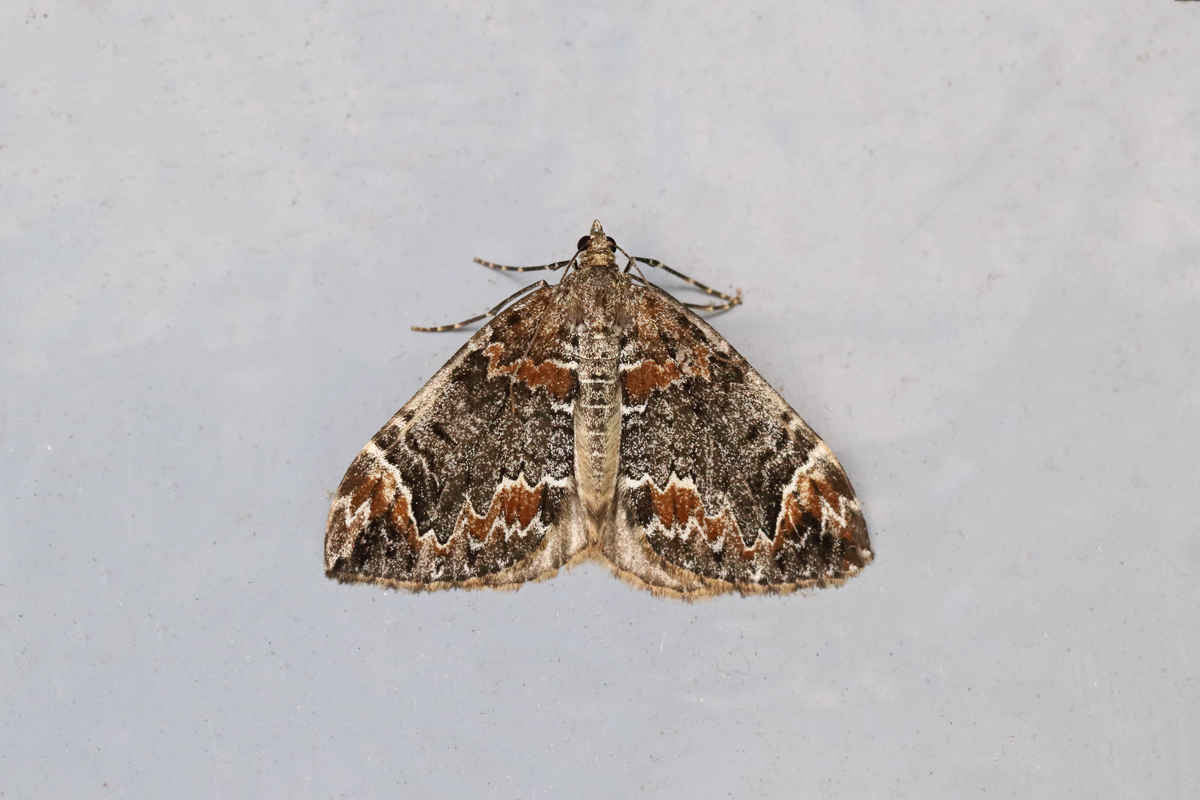
Dark Marbled Carpet

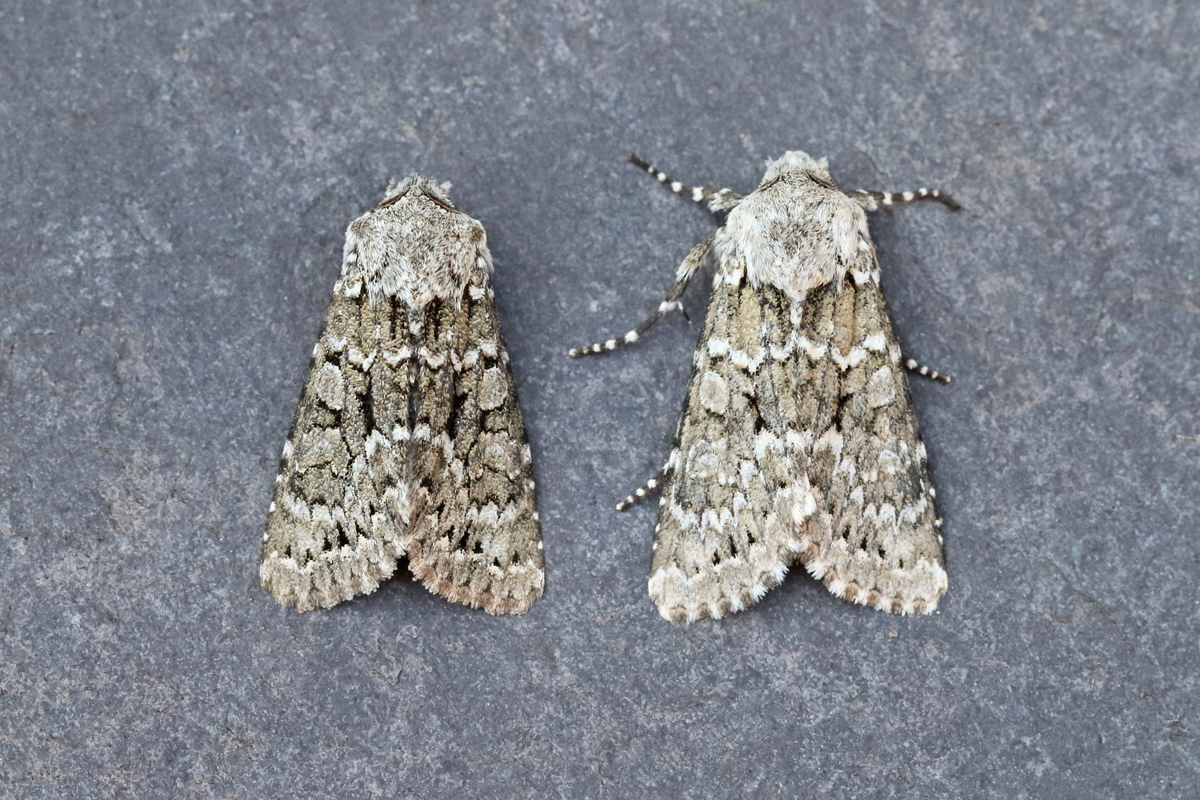
Grey Chi x 2

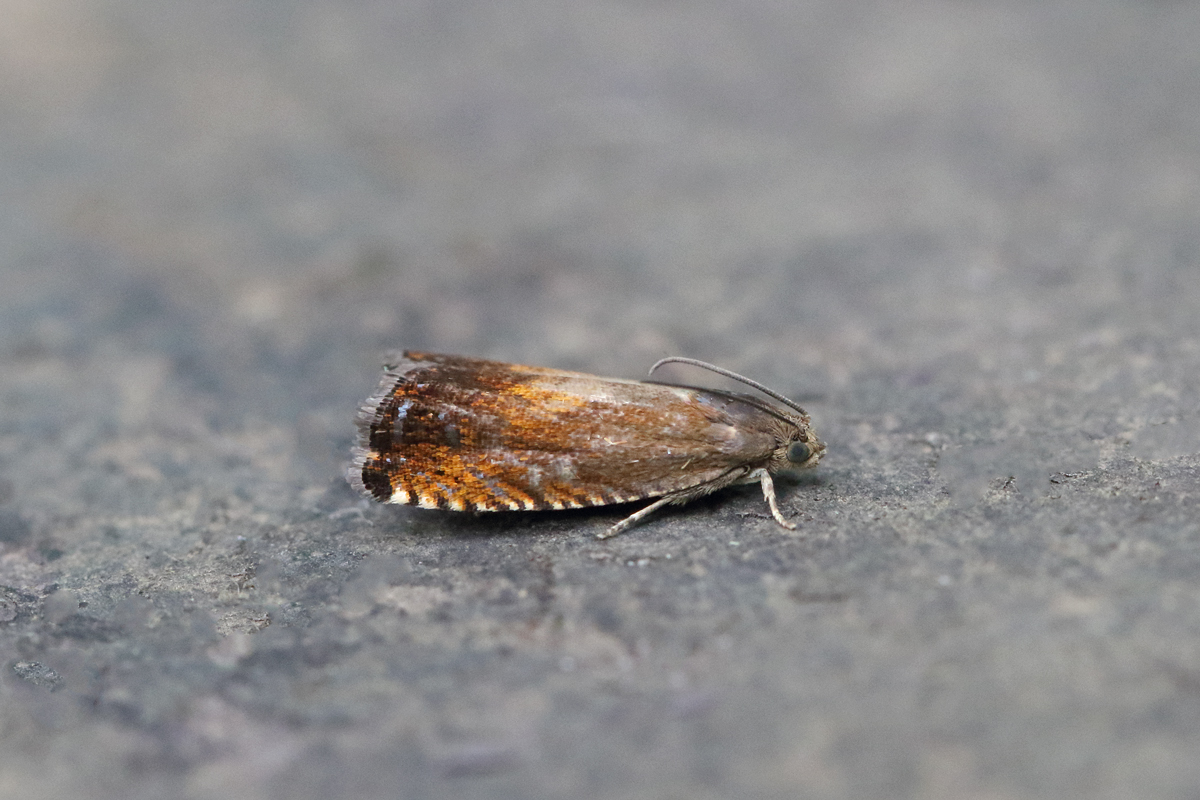
Pammene aurita, only my 2nd after one last year.

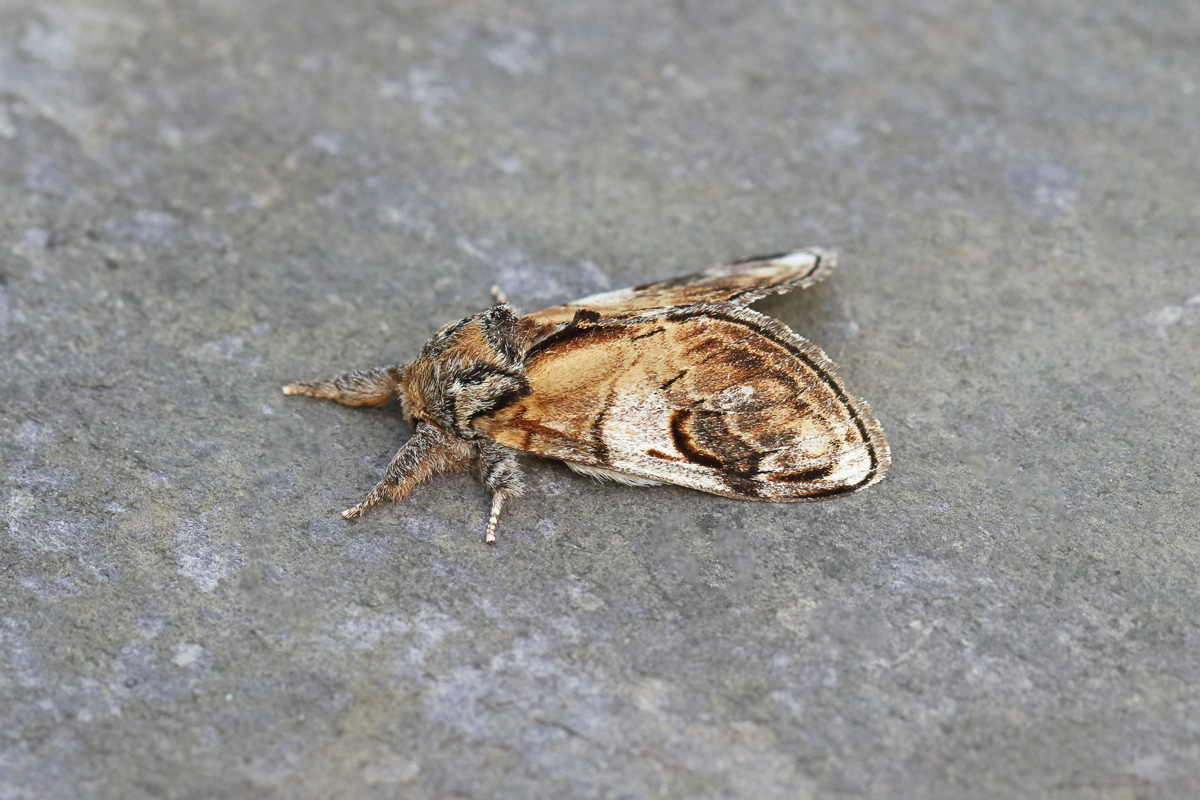
Pebble Prominent, well you have to...

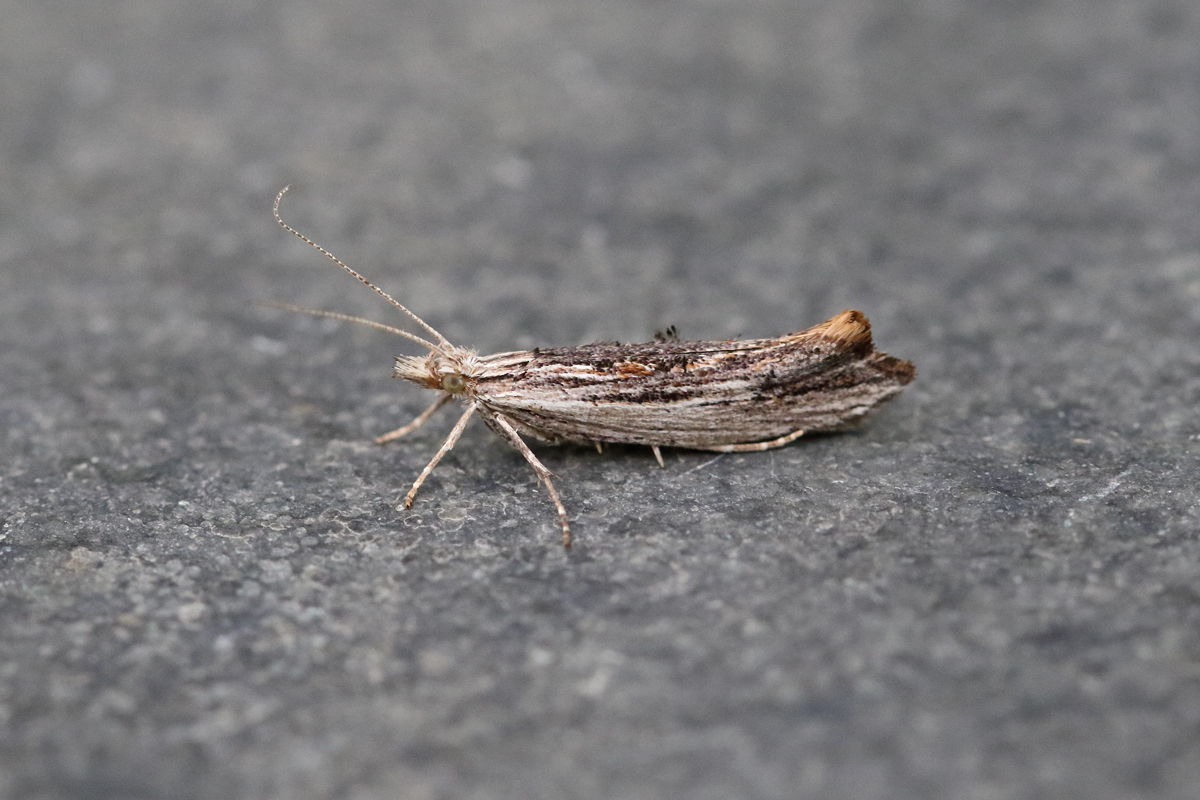
Ypsolopha scabrella, not a common or even regular moth in my garden.


Monday, December 12, 2022

Winter Blues.


 Its been a busy week what with Christmas preparations, visits, socialising and what not. So busy that I didn't really have time to get out on Sunday morning, but, when you live in  the middle of your patch even looking out of the window is birding.

It was one of these non-birding dog walks that caught me a bit unawares. 

On Sunday around 11am I took Peggy for her walk along the coast path just before we were due to leave home to visit relatives for lunch at Berwick. 

One day I will finally learn the lesson, never leave home unarmed! Remember the Pallid Swifts day when I was on a quick stop looking for fungi so I didn't even have my bins? Well this was a hurried stride out dog walk, so, again, no bins, camera or even phone. After all I was only going to be gone for 20 mins and its December.

As we dropped on to the coast path a few local Fulmars were celebrating being back on the cliffs by enjoying the updraft and racing past walkers at eye level. They are very inquisitive birds, I remember once being on the beach when a Fulmar made repeated very close, low, fly pasts of our dog, even turning its head to get a closer look. 

On the coast path, our birds regularly do this, hanging on an updraught making eye contact with passers by. This time there were around 8 birds back and forth, up and down, when one stopped me in my tracks. It stalled for a second then stooped and was gone. What was that? Too short a view to make anything then I saw a bird going away from me along the cliff, even with the naked eye it seemed odd but I couldn't place why so I waited on the view point, I knew it would be back, they can't help themselves.

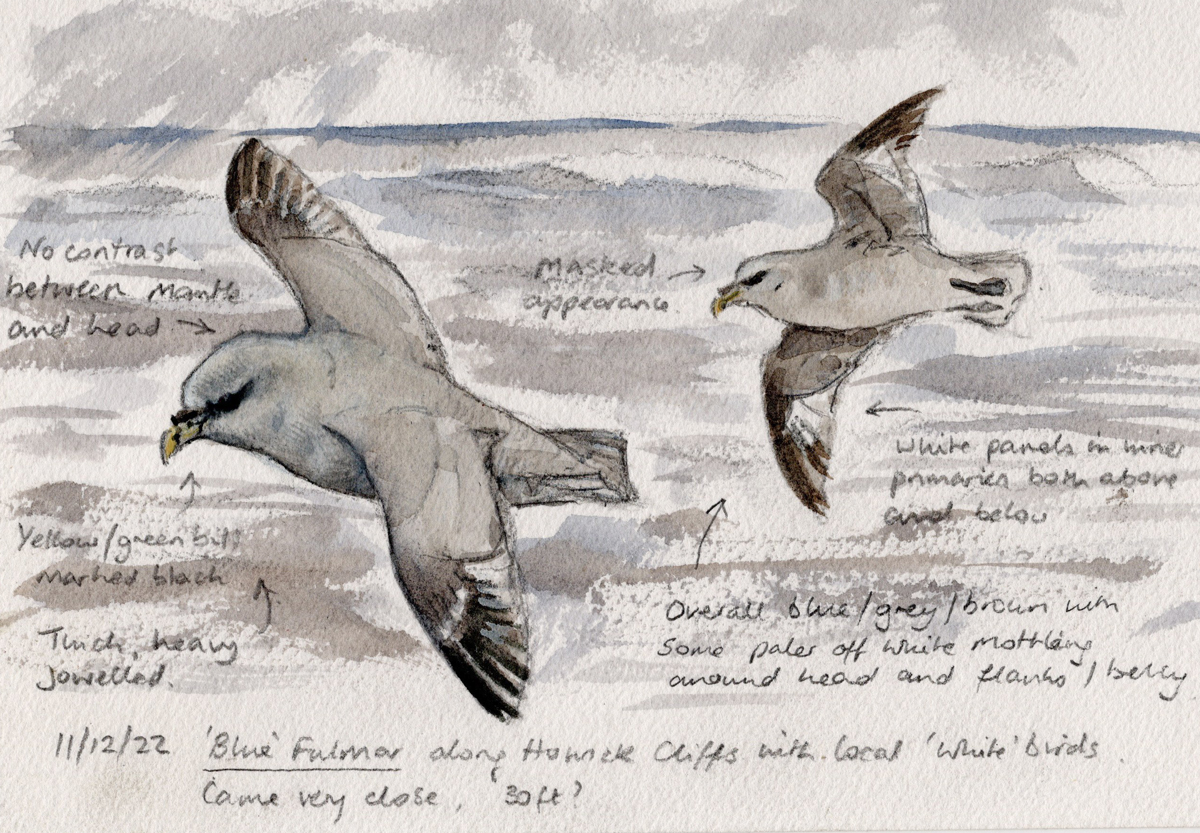
Sure enough, I couldn't believe it when up popped the bird less than 30 feet from my face, a beautiful smokey grey 'Blue' Fulmar! I've only ever seen a few on seawatches at distance and never like this with local birds. A grey apparition from the high arctic looking even wilder than its white headed cousins.

I stood and watched for five minutes but was conscious of the time and I needed to go. I could have had frame filler photos.  I've been back today at 11am but there are only a couple of Fulmars flying with a dozen on ledges and no dusky guest with them. I might try again later...

Although 'just a colour form' I do like races and forms of birds so was over the moon to see it. Lets hope it comes back...it is more than just a tick...


Thursday, July 28, 2022

Three Shears.

 Mid July signifies the start of one of my favourite pastimes on the coast - seawatching. 

In recent years we have had some great birds from the sea on the local patch in July. In 2019 it was the surreal appearance of a Giant Petrel from Southern Oceans, followed in 2020 by a more twitchable mega, a Sooty Tern for a day or two and as if that duo wasn't enough, 2021 was not going to be outdone as another UK first opened July with a close, nicely breast banded Soft-plumaged Petrel moving North offshore.

Is it any wonder I like the hypnotic draw of the waves?

Last week we had the first light north winds of the season, so an hour intro on Wednesday was quiet but pleasant with Little Tern, a dozen Manx Shearwaters, a handful of Puffins with ever present Sandwich and Arctic Terns making up the tally. That was until a very close pod of Bottle nosed Dolphins slashed into the bay, soon followed by a Minke Whale that dived just in time to avoid the Life Boat bombing over its head. An adult summer Mediterranean Gull  passed North as I was preparing to leave. Not a bad start.

On Monday as a large high pressure system moved in to the west of Ireland bringing with it masses of Cory's Shearwaters into the western approaches, hopes were high that we might get in on the action. Cory's is a very difficult bird to catch up with in Northumberland, Ive only seen one, at Newbiggin around 1999 I think.

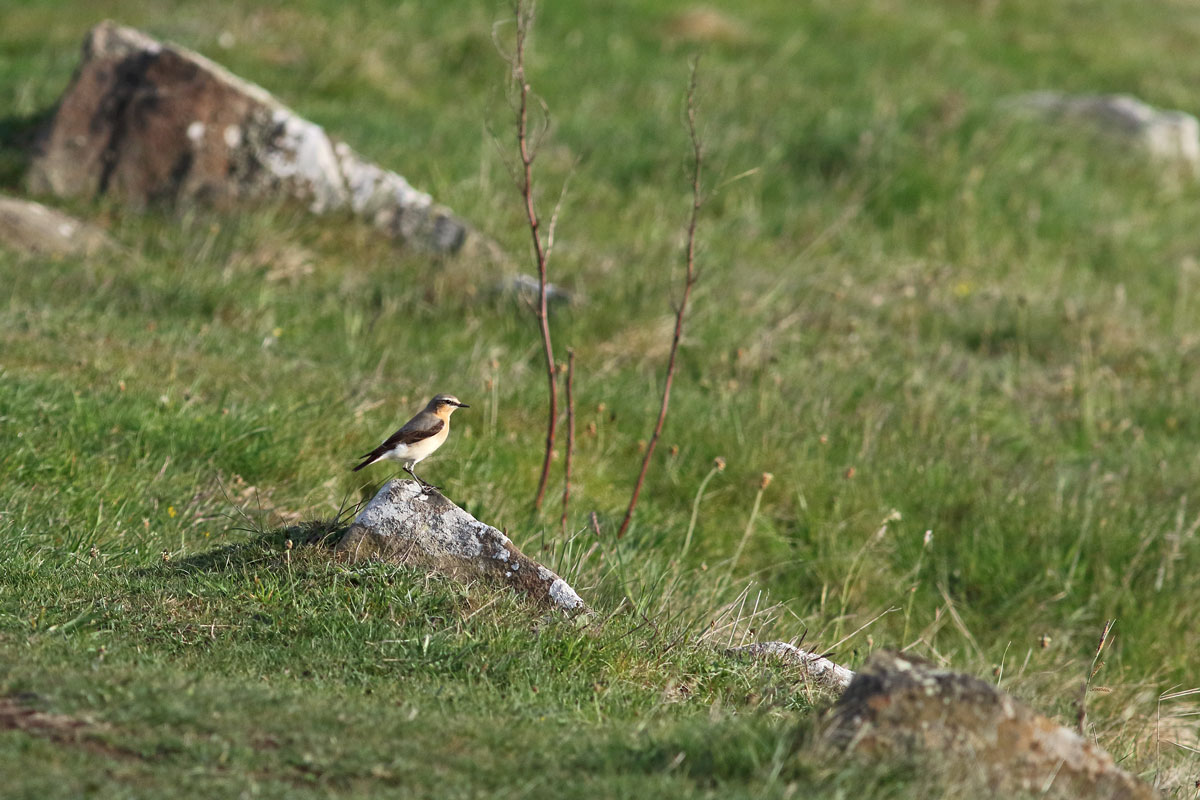
On Monday I was out on Cullernose alone from 16.45 - 18.00. Although there was a fresh breeze from the North, few birds were moving. 86 Arctic Terns, 21 Sandwich Terns, 4 Whimbrel, 3 Manx, 9 Puffins a few waders and an in off juvvy Med Gull were all I could muster. A single Wheatear was quick off the marks here, a taste of what is to come hopefully.

Tuesday turned out to be a different kettle of fish. Early doors, Dan Langston had a Cory's slowly past our village and sitting on the sea while I was walking the dog within viewing distance if Id had my scope. I dashed back down with the scope after dropping the dog off at home but the light was dreadful and nothing of note was seen. Gutted, a great patch tick gets away.

After work saw me keen to get back on to the point, and by 16:30 I was in position.

Manx Shearwaters were the main passage birds on show with 583 N in 3 hrs, a good total for here. 5 Goosanders flew south as did a distant Bonxie, while an Arctic Skua chased terns overhead. 2 Little Terns were good to get too.

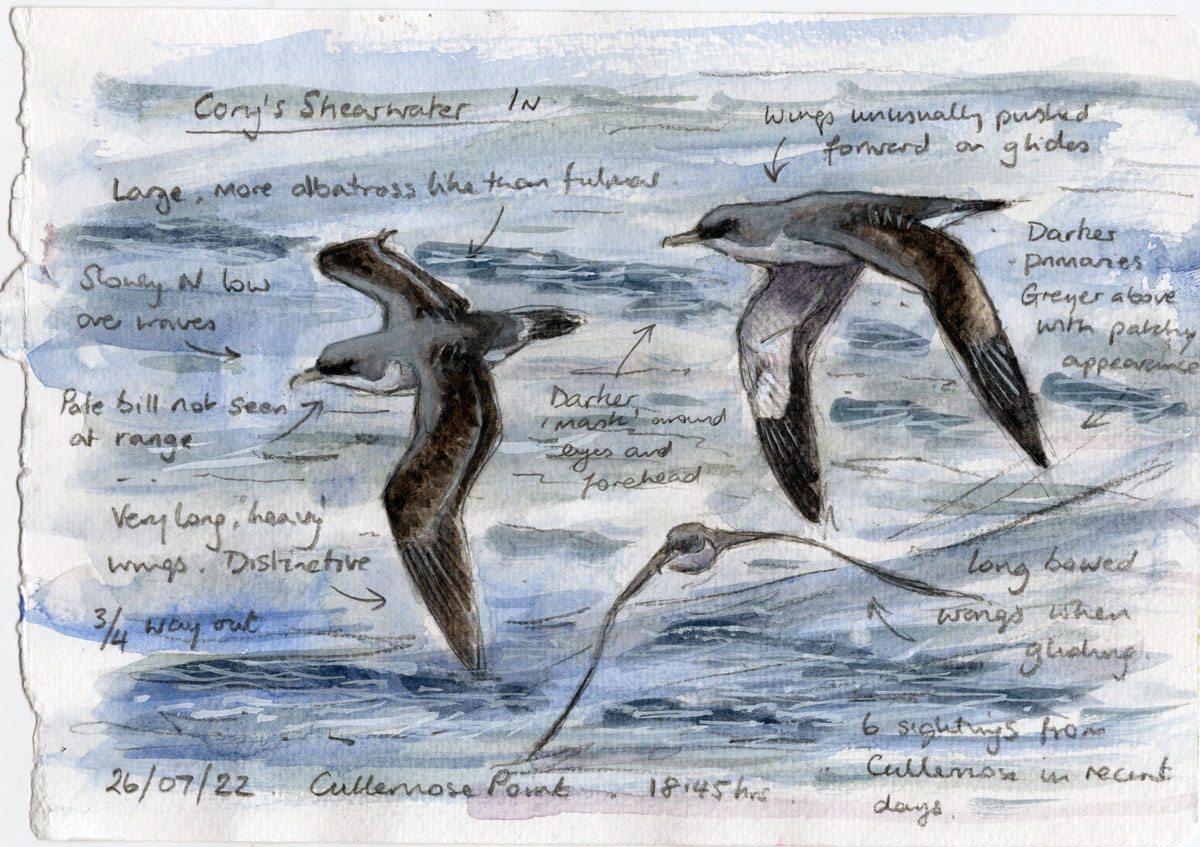
Soon, I was joined by Dan, Alan, Ian and Keith ( and a bit later by Mark). After about half an hour Dan called the bird. CORY'S! It was way to the south and distant but as it progressed the distance shortened and it gave reasonable views hugging the surface with long bowed wings occasionally tipping over to reveal the underside. It took around 8 minutes to get past us, but even though we called directions, pot flags and range, Ian and Keith just couldn't get on to it. Whilst three of us were elated, it still takes the edge off things.

We sat another hour hoping for another chance, but only 3 Sooty Shearwaters were added to the total before most of us left*.

Cory's Shearwater, a great addition to the patch list for me and a full new species for the site.

Cory's Shearwater, Cullernose Point 26/07/22. 


*Mark Eaton stayed on after we left. As dusk came, Ben Steel at home in Longhoughton a mile inland, was looking at the sea from his bedroom when he picked out another Cory's coming past Longhoughton Steel [ garden tick!]. Mark managed to get it close in as it passed Cullernose . Finally last night Tom Cadwallender was on the point alone not seeing much at all until a group of 4 Sooties passed, followed a minute later by the 5th Cory's of the week. Unprecedented.


Thursday, May 26, 2022

Green days....

 Sunday was a bit quiet so I got up early for a walk north along the coast to Craster. It was bright and cool with  a light S breeze. Its great to be out early at this time of year, I didn't see another person for the first two hours.

A slow wander north along the coast path was very pleasant. A few Yellowhammers, 3 Grey Partridges and 2 Greenland Wheatear were about the only things of note but the soundscape of singing birds, noisy Kittiwakes and gently rolling waves was relaxing.

The Bathing House with Longhoughton Steel, Boulmer in the background.

Craster Farm

This view south shows the majority of my local patch. We live in the village you can see in the trees. 

Kittiwake watching me.

Razorbill below my feet.

The view from Cullernose Point

Thrift and the marzipan smell of gorse.

Greenland Wheatear

Whitethroat

Yellowhammer ( do you think!)

A few other things were noted, a single Painted Lady in off, 3 Wall Brown, masses of Spring Squill in large patches all along the short turf. 

Painted Lady

Spring Squill

A carpet of Spring Squill with Dunstanburgh Castle in the distance.

This post is a bit photo heavy so I'll keep the text down a bit. On the way back, I noticed a bird flying south across the field behind Cullernose Point. It looked odd, but familiar? Green Woodpecker! Another patch mega. Not new here, but I've only had two others, winter 2009 /10 and spring 2017. I tried to take a record shot but the camera would not lock on. I must get the settings for viz mig worked out soon. I saw the bird well enough to believe it was a female...

Green Woodpecker south at Cullernose


Friday, January 21, 2022

Keep it Real...


Another home working week of fine cold days at least meant I could get a walk in at lunchtime with Peggy.

The video, if it works, above was taken on yesterdays lunchtime walk where it shows the bay beside our village and Cullernose point at the back. The sea is coming off a stiff northerly breeze making for some nice rollers coming in. At night they were banging at the base of the cliffs making a huge thunderous noise.

Without enough time to have a seawatch yesterday I fancied that today might have some birds re-orientating back north . Its never very good in mid winter but there can be a few birds moving with a chance of Little Auk or maybe a white winged gull for those prepared to get frozen., so I clocked off mid morning for an hour and sat out on the point. So much for possibilities. There were no birds. This is not quite literally, but there were very very few birds at all though I managed a single Gannet and 4 Kittiwakes that were new for the year, but there wasn't even a sniff of an auk or a diver. No worries, they will come.

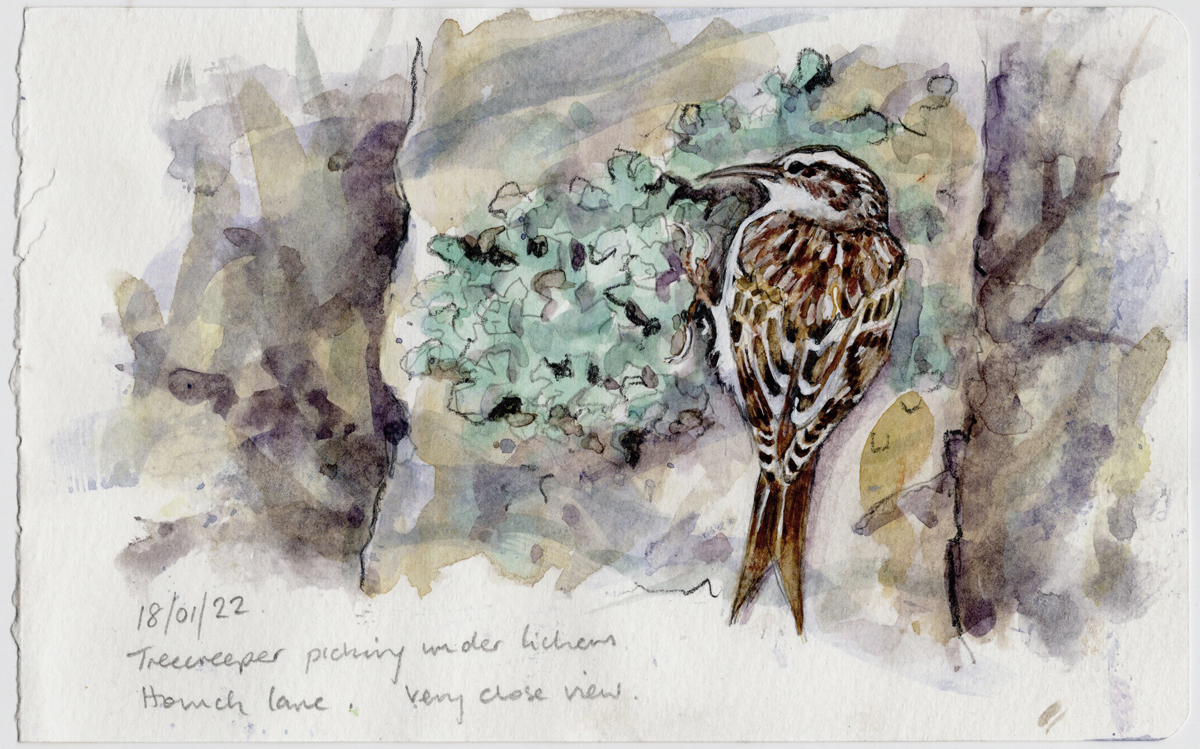
Around the village lane and pond field another few new additions made every days walk worthwhile. Apart from Shoveler, Gadwall and Treecreeper, 2 Woodcock did a dusk flight out from the woods across the lane to the coast fields to feed.

A site record count of 7, yes 7 Gadwall along with 3 drake Shoveler were good.


So that's not too bad. Before the months end I might still have another  8 or 9 good possibilities with the likes of Meadow Pipit and Reed Bunting still to be located. 

With my expectations being kept to an ultra realistic level, its good to appreciate the very common birds we take for granted. Hopefully I will get to draw a few more of those too over the year and not just the big arrivals....  


Wednesday, January 05, 2022

Opening seawatch.

 A smart North westerly breeze this morning that seemed to rise from the arctic circle prompted a short visit to Cullernose for the first time this year. It certainly felt arctic too soon numbing fingers at the scope.

We have a cold climate in Northumberland. Often it can be one of the coldest parts of the UK on the forecast and in keeping, this mornings Beeb weather map showed us to be milder only than Speyside. It is also quite a dry place so that balances it out a little bit.

I gave it an hour this morning, just long enough to turn blue.

Red throated Diver 36N

Great Northern Diver 1N

Guillemot 20N

Common Scoter 3S

Eider 1 N 2 S

plus a scatter of Fulmar, Shag and gulls but little else.

A huge Raven sat in the field just behind me and some Twite flew N overhead as I was watching the Great Northern so I only heard them.  

Had a nice chat with a couple from Teddington ( London) who were here on holiday this week. They asked what the black and white birds with long red beaks were and they looked even colder than me...  


Red throat in typical pose.


Tuesday, August 17, 2021

Blue in August...

Yesterday, for a brief spell the direction of the wind turned to the NW dragging me, Siren like, down to the sea. 

By the time I had finished work and got all of the 1 km down to Cullernose Point the sun was warm, the sky blue and the sea even blue-er if that's a word. Hardly stereotypical seawatching conditions, granted, but a high pressure to the west of Ireland was creating enough of a trough to direct seabirds over Scotland and into the North Sea and a light NN Westerly might just be enough.

We began at 5pm, the stroll down the track to the point was busy with at least 14 Wall Brown butterflies, another sight not so indicative of good pelagic watching conditions, but, no sooner had we plonked ourselves on the rock, a Sooty Shearwater strolled by at a range close enough to see its eye. Worth coming down already, good.

Reading about seawatching recently from the English Channel coast, it seems a very different prospect to our East facing coast. Here Gaving Haig gives it an hour for 1 Gannet. To compare, that is a prospect here maybe on New Years Day, but from June to November they are ever present, never making it into a seawatch list. There are just too many to keep an eye on. The same goes for Fulmars, Kittiwakes, Auks and Terns. A constant back and forward where if you can be bothered you might do a five minute sample count but then realise you might be missing better fare. Last night Gannets numbered about 20 or 30 per minute N with a  scattering going S and sitting on the sea or feeding.

Terns and Kittis were blurred objects in the foreground of the scope view. Occasionally a very pale blur forced a quick refocus to confirm an adult Roseate off the rock edge. 

We gave it 2.5 hours waiting for Dave Dack's Long tailed Skua to arrive from Newbiggin, 20 miles to the south, but it never did.

In the mean time we had 13 Sooties Shearwaters N, 23 Manx N and a few S, 9 Bonxie N, 1 pale ad Arctic Skua N and 1 S, 1 Tufted Duck N, 1 Red throated Diver S, 3 Roseate Terns, 1 Bar tailed Godwit in with 6 Curlews and 2 Mute Swans N.

As the light changed and even the Gannet tap had been turned down, it wasn't only the sky and sea that was blue, my hands were beginning to match. Autumn is well and truly in...


Friday, July 02, 2021

Gannin' soft...

 Back in September 1993 the late Andy Booth found Northumberland's first Gadfly Petrel off Hauxley. In 1996 it was accepted by BBRC as a Soft-plumaged Petrel of the race 'feae' or Fea's Petrel. Back then this was a mythical sighting, a once in a lifetime event never to be repeated. If we fast forward to the present day, how things have changed.

It is usually understood that these Fea's or to give them a proper term Fea's/Zino's/Destertas Petrels are actually rare but annual visitors to UK waters. The difficulty in identifying them at a seawatch has resulted in a lot of controversy over what can and what can't be ticked by birders so they are usually referred to as Fea's Petrels and are, quite rightly, very much sought after. To see one, you must either do a lot of hours seawatching or have some excellent communications in place so when one is reported coming your way along the coast you can get out to head it off.

Yesterday a Fea's type Petrel flew north at Flamborough Head around 9.30am. When it was seen along the coast at Long Nab, birders to the north mustered themselves, made plans to leave work early, put off pre organised plans and headed for the nearest headland.

This particular petrel was due to arrive in Northumberland at around 5pm so, having only ever seen one back in 2014  I fancied having a go for a local patch bird and was out at Cullernose Point at 5.30pm. Shortly after sitting down reports came through that it had gone past Newbiggin, 24 miles to the south and was on its way.

By now, a crowd of 7 of us had gathered expectantly on the cliff. The atmosphere was tense as we all screwed eyes into scopes and waited. A distant oil tanker was to be our spotting sight should one of us pick it up, to get others a bearing.

At 6.15pm Mark Eaton gave the 'Thar she blows' ( not literally) and there was the typical panicking until we got on it. Distant and way to the SE at first, I saw it then lost it just as quickly. The sea was flat calm so I just kept breathing and scanning and in a minute it was back on show. It came to a very reasonable 800mtrs - 1km off and we all had it in view until around 6.23pm, a duration of 7 or 8 minutes before it was lost to view.

Celebrations were made as Northumberland's 15th Gadfly was added to the record and more to the point, added to my patch list.

A short while later, back home, a scan of social media found a Tweet by Paul French of BBRC who had seen some photos taken at Newbiggin of our bird. Did it really show a breast band? 

Yes it really did? When we watched it, Mark Eaton I think, commented on it. I also commented on the fully dark underwings that my last Feas did not have, it had white axilliary spikes up to the leading edge. Still, we never suspected a thing.

Then experts began saying this bird was actually a Soft Plumaged Petrel Pterodroma mollis and not Fea's at all. This was a different prospect. Soft plumaged Petrel would be a first for Britain and only the 3rd for the Western Palearctic. 

So now there has been much discussion, the bird looks fine for Soft plumaged and even world experts agree on it, all from images taken by a few birders at Newbiggin. Well done lads. What a bird for the patch after July 2019's Giant Petrel and July 2020's Sooty Tern. It seems Northumberland is the place to be for a summer southern oceans seabird...


Saturday, December 05, 2020

Looking Good.

 Its a few weeks now since I last had a seawatch, so with yesterdays low pressure settled over southern England giving us blustery, SE winds and rain, I thought I would try an hour today while Jane visited the hairdresser. December isn't renowned for good movements of birds at sea, but there's always a chance of something interesting like Grebe or White winged Gull to bolster the now flagging Local Patch year list.

I sat out at the usual spot on Cullernose Point. It isn't so good here late in the season being so exposed, so if the weather had been really bad, I would have sought shelter along at Craster, but the wind had dropped off to an E2 making Cullernose bearable.

After half an hour, I had added 3 Red throated Divers N, 2 Great Northern Divers S, 2 Goldeneye and a Common Scoter N but that was about it. Distantly a few tardy Gannets lingered.

What could I do to improve my lot? Cullernose Point has a short fast tide race only about 50 mtrs out with foam and pulled up seaweed flotsam that I have always thought looked good for a Phalarope. I moved to the point with my binoculars only and scanned down the cliff and into the bubbly water offshore...Although there is rarely a phone signal here, I pulled my phone from my pocket and hopelessly checked it. Interesting, a WhatsApp message had made it through. It was Ben down at Low Steads near Boulmer where he had seen a Grey Phalarope offshore that had then flown north towards Howick and was lost from view.

Great minds thank alike as I was already scanning for these little pelagic waders. With renewed effort I began another scan, and Bingo! There it was, a small Grey Phalarope bobbing and spinning like a cork in exactly the spot I have thought for years should attract a phalarope! Its not often a plan like that comes together but here I was watching a new patch bird for me, taking me to a record breaking patch total of 166 for the year.

Although a little distant for a photo, it was giving great views in the scope as it spun around icking at plankton from the surface, oblivious of the gulls hanging around and the big waves rolling in.

Fortunately the little bird lingered for over an hour allowing county year listers Dave Dack and Graham Sorrie to catch up with it having come 25 miles from Morpeth...

During a heavy hail and sleet squall, the phalarope looked even more tiny and vulnerable at sea, but it lust lay flatter and pointed its bill upwards into the deluge until it passed.


Monday, September 28, 2020

End of the Northerlies...

 Yesterday morning was spent in our usual positions eyes screwed into the scope, facing east.

From the left - Sam the dog, the nicest, most well behaved seawatching company you could have, Sam's dad, Mark Eaton and John Rutter. My scope is in the middle...In the background you can see the Sooty Tern cliffs...

 Cullernose is getting a bit of a reputation these days, at one point there were six observers looking at the sea. That is a record number of birders here when there has been nothing to twitch ( the Sooty Tern will never be beaten on that score).

The wind had dropped significantly to a NW4 from the last two days making watching much more comfortable. We watched from 7am - 12 noon with the following results.

Sooty Shearwaters again took pride of place with 407+ N you could never get an accurate number as they are passing all the time often at long range. 

Manx Shearwater 6 N

Storm Petrel 1 N close in, a great bird for here and my first since the 2011 influx.

Bonxie 6 N

Arctic Skua 1 N

Barnacle Geese 254 N inc a strikingly leucistic individual.


Barnacle Geese with the leucistic 'snow' goose with them...

Pale bellied Brent Geese 18 N
Wigeon 236 N
Teal 24 N
Common Scoter 70 N
Velvet Scoter 4 males N
Goldeneye 5 N 
Eider 6 N
Great Northern Diver 4 N
Red throated Diver 10 N 13 S
Purple Sandpiper 1
Bar tailed Godwit 4 
Knot 2
Puffin 3
Sandwich Tern 3 N
Mediterranean Gull 1 ad w 

By the time we left the sea was calming off and the sky was brightening up. 


Adult summer (top) and juv Great Northern Divers.


Back home and the sun was shining so I needed to cut the grass. It is quite warm after being stuck on the cliff all morning, very pleasant. I had just finished and was putting the mower in the shed when I heard a single call in the large sycamore at our gable - 'tisswsp'. A Yellow browed Warbler. I dashed for my bins and camera and waited. A Chiffchaff and 2 Goldcrests showed but no sibe. I still get excited about these little birds and see them as rare but younger birders must just see them as common migrants these days. In fact they are the most reliable of our autumn passage birds, being easier to catch up with than Garden Warbler or Tree Pipit these days.

After about 20 mins or so a small bird flitted from the sallow I had planted just for this occasion, into the taller sycamore I was watching. That was it. Although tricky to see in the browning wilted leaves it gave short views for about 5 mins before it vanished. I managed a few shots...


A tiny Yellow browed Warbler graces our garden. It really is autumn...


Now that October is rapidly approaching fingers crossed for some easterlies...


Saturday, September 26, 2020

Sooties sweep the board...


The wind swung North West on Thursday evening so I popped down to Craster in the car to check it out. It was raining heavily but I wanted to see if any birds were moving. As I've said here before, we are often spoiled by having a lot of seabirds to look at, so much so that we routinely ignore Gannets, Kittiwakes, Fulmars and Auks in the hope that 'proper' seabirds are out there.  

As I scanned the grey lumpy sea, it was like the moon, but liquid. There were no birds. I don't mean no shearwaters and skuas, I mean NO birds at all. Not a Gannet or Fulmar in sight. It is as difficult NOT seeing Gannets at this time of year as it is seeing a Sabine's Gull here. It happens, but rarely. I have no idea where the birds were but I planned to try again at first light on Friday. Experience tells me, they won't be gone for long.

I was out on Cullernose Point at 7am and could instantly see a few Gannets moving through. I sat down and set up the scope. On looking at about three quarters range I was confused. The sea was alive with birds. Auks and Gannets in lines, but also dark looking shearwaters. The problem with early seawatches on the east coast is that if there is a sun rise instead of thick cloud the birds are just silhouettes on blinding water. The sun wasnt bright this morning but the sky was glowing making a lot of loose shadowy bird images. I could see dozens of stiff winged tubenoses but until I got my eye in some looked like Manx Shearwaters, some like Fulmars but most looked like Sooty Shearwaters. In their dozens.

Were my eyes deceiving me here? I took a breath and whilst being buffeted on the left side by a strong northerly, I could see these really were all Sooty Shearwaters. Then I had company, Mark Eaton arrived with Sam the Retriever. I suggested he had a look out there at all the Sooties. I had counted 40+ in only a few minutes. They were never off show. A North -South scan with the scope went, 1, 2, 3, 4-5, 6-7-8, 9, 10... it was never ending. I had not seen a Sooty movement like this since 2002 when we had 1700 North in a day at Newbiggin. If only we could sit all day, that county record would surely fall but I only had til 09.30 so I got counting.

By the time I had to leave, I had counted 463 Sooties N. Mark stayed on for a while upping the total to over 750.

The thing is, there was little else of note moving through the turmoil. I had 9 Manx Shearwaters, 19 Sandwich Terns, 2 Arctic Skuas, 1 juv Pomarine Skua, 3 Bonxies, 3 Red throated Divers, 2 Pale bellied Brents and a likely Long tailed Skua that was a bit too far off.

After work I popped back down for an hour seeing only 12 Sooties and by now the sea was too rough with birds just being blasted south.

The interesting thing about this movement was that at the southern Northumberland seawatching stations like Seaton Sluice and Newbiggin, Sooties scarcely made it into double figures? The mysteries of birds eh?


Friday, August 14, 2020

Seawatching


Manx Shearwaters N 

Since Sunday the Pacific Golden Plover has attracted a steady stream of visitors. As a result I've not been back. Hopefully it will depart soon and things can get back to normal.

All week the weather has had some North Easterly in the very light breeze providing some drift migrants along the coastal hotspots. It doesn't really work like that on my patch though where solid rain is needed to ground birds. There may be an Icterine or Barred somewhere but its an absolute lottery to find it.

On Monday a short 90 minute seawatch from Cullernose had the paltry sum of 14 Manx Shearwaters, 5 Common Scoters, 1 Bonxie juv and 1 Little Tern N with 4 Whimbrel S.

On Tuesday our Barn Owl put in an appearance at dusk along the drive and on Wednesday it was joined there by 2 Kestrels. While doing the moth trap first thing, I did some fog migging in the garden, ie unlike noc migging it was during the day , but like noc migging I couldnt see any birds. Still, 2 separate Dunlins flew North over the garden, calling. A good garden record.

Thursday was a foggy day but the wind had increased slightly from the north. At lunchtime, a walk with Peggy had a nice close juvenile Peregrine scaring the bejesus out of the kittiwake colony and 4 Yellow Wagtails were in the area.   Dan had a brief moulting adult White winged Black Tern at Boulmer that is now at East Chevington as I write this.

Another seawatch for two hours after work had improved slightly with 57 Manx, 1 Puffin  1 Sooty Shearwater and 2 sum plum Grey Plover N and a juv Little Gull S into the kittiwakes.  

I might see what an hour after work this afternoon brings... 


A couple of moth trap guests this week, an early Frosted Orange and a migrant Rush Veneer, hardly the stuff of dreams taken by Matthew Deans at Bawdsey this week...

Friday, July 10, 2020

A seawatching twitch...


In recent years a new phenomena has occurred in line with new technology and new methods of communication. That is twitching seawatch birds.

Gone are the days of Millington's idea that seawatching was the only way to get a 'non suppressive grip-off' on your mates. By that he meant that you could justifiably get a rare species and when your mates missed it, as they invariably did, unless they were sat next to you at the time, you could gloat. No need to keep a cheeky one under that hat, no, you could get a Cory's Shearwater, run to the phone box, ring the grapevine and by the time you got back the bird was two miles further along the coast with zero chance of anyone else seeing it.

Nowadays, with the invent of What'sApp groups these birds are as twitchable as any scrub hugging warbler. All you need to do is get the news, work out some flight speeds and times of arrival, in fact there is even a bird timetable going around our group now so that you can see in an instant expected arrivals times of everything from White billed Diver to Black browed Albatross according to the headland you watch from. Then get to your spot and wait. In some places with 20 other people. Many gazing at their phones to see whether the next person along the coast has seen the bird.

It doesn't always work out well though. Seabirds can't read a WhatsApp timetable and are probably not inclined to follow its guidance if they could. On many occasions I have sat it out waiting for Little or Great Shearwaters for very little in return, but on occasion it does go well, look at last years Giant Petrel for example and before that my only Fea's Petrel was more punctual than our local Arriva buses.

Yesterday we got a message that not one but two Cory's Shearwaters had passed North Yorkshire, two hours apart and were heading our way. ETA for me was about 5.30pm as the Cory's flies on a tail wind. This instruction saw me on my local headland, Cullernose Point, at 4pm already beaten to it by one other observer , our County Recorder no less, dressed like he had just gotten off the plane from Malaga. Myself and John, carried our kit along and got comfortable. I was only wearing one light fleece under my thick coat. You can tell its summer.

As a regular seawatcher, from the off, I could see that this wasn't going to be a 'notebook' event.

For a start it was sunny with blue sky. This makes a deep blue sea where it is difficult to pick up distant birds with it as a backdrop. Plus, there were only the local Auks, Kittiwakes and Terns moving around with very few Gannets and Fulmars.

This lack of action means reduced concentration all round as we were constantly distracted by anglers drinking Monster, kids with 'beans on toast' lockdown hair cuts and day trippers wondering what we were doing. Still, we did our best. An hour in, the first of 7 Manx Shearwaters passed by, closely followed by a Whimbrel. Meanwhile the Lesser black backed Gull sat sentinel hoping one of the kids with the Harpo Marx do would slip to their demise and provide more carrion than that dished out by the anglers.

After that it turned cooler and even local birds dissipated. It was the arrival of a few new ASBO anglers carrying drink, that broke the camels back for me.

On the plus side, both Cory's didn't even make it beyond Cleveland, so we didn't dip alone. I have only seen one Cory's Shearwater in the UK, on 22nd July 1999 close in past Newbiggin.

I hope the next one is self found...

A Newbiggin Cory's, 21 years ago...

Saturday, June 20, 2020

The Oracle.

Almost a year on from our near unbelievable sighting of a Giant Petrel sp off Cullernose Point, the report out today from the BBRC ( British Birds Rarities Committee) shows that the record has been accepted. This is much sooner than I expected, but is it time for celebrations? Not just yet.

This means that the powers that be accept that our identification of the species or in this case species pair is correct, but as this would be a first for Britain, the record must go before another august body, the BOURC ( British Ornithologists Union Records Committee) to see if it warrants a place on the British List. I fear this might take a lot longer, but once the id has been accepted, what else could possibly happen? A Giant Petrel tanking it past an east coast headland is not going to be of captive origin I'm sure, so I am keeping all of my appendages crossed and hoping for the best.

I have found some good birds in the past, but I have never been involved in anything on this scale, a potential British 'first'.. The finding credit will rightly go to mark Newsome at Whitburn, after all we were just waiting for his bird, but as for a Northumberland fist, that would go to myself and Mark Eaton. I cant believe it! So with that in mind, hang back, don't put the flags out just yet, lets see what occurs....

While I am on about listing, the BBRC also rejected last years Baikal Teal as an escape so I have already removed if from my lists. Will others I wonder...
Original Field Notes done while bird still on show. Excuse the panicked writing!

An image from the internet, this shows how we couldnt see the bill at range and the ragged tipped wings and square tail. 


Tuesday, November 05, 2019

First storm of winter or last one of autumn?

The view from my Craster seawatch spot.
The North East wind last night was a roaring animal, bending trees and stripping them clean of foliage. By the time I took Peggy for her first walk this morning, the rain had stopped and the wind, whilst still strong, had dropped slightly. The sea was enormous and roaring as the rollers smashed into the rocky shore. Balls of ivory foam were blowing along the coast road and over the fields.

This was too harsh for a Cullernose seawatch so I headed down to Craster where the view point is lower but has a bit of a wind break.

I watched from 09.15 - 10.30am. The passage was unremarkable, being so late in the season, but there was enough to keep the interest going. The list went like this with all birds going North unless otherwise stated.

Wigeon 8 N 9 S
Common Scoter 207
Velvet Scoter 1 fem
Long tailed Duck 3
Goldeneye 20
Red breasted Merganser 2
Goosander 1 adult drake 1
Red throated Diver 1 N 1 S
Great Northern Diver 1
Little Auk 3

All against a light movement of Gannets, Kittiwakes and larger Auks.


A female Velver Scoter moves N.
From here I decided to check the Craster Heughs for migrants before home for lunch.

First bird, not a migrant, but a bit of a patch mega these days was a Marsh Tit [161], calling and showing well, but I couldn't get a photo, it was too quick for me. This site is a Willow Tit hotspot with up to 6 birds present recently so where this lone Marsh has appeared from is anyones guess. A totally unexpected year list addition.

Real migrants were noticeable by their absence, but a few Blackbirds high in a hawthorn over the path were scrutinised. Then I saw that in the middle of them was a lone Waxwing! This will likely be the bird Ben had in the village on Sunday, but as it is a first for 2019 I was well pleased to get it. This makes Waxwing being added to every one of my patch year lists since I moved here in 2009 and this week is a prime time to get one.

Also here 500+ Pink footed Geese flew around to the west.


Above -  Waxwing, an adult male too. It never moved from this spot where every angle was obscured by twigs.
After lunch at home, I thought I had better just pop back out for an hour to Cullernose as the wind had dropped further and it had brightened up a bit.

From 1.10 - 2.10pm I had a nice selection even though most seabird passage had dried up.

Little Auk 6
Pomarine Skua 1 juv very close in, great views.
Common Scoter 7
Dark bellied Brent Geese 6
Long tailed Duck 6
Snow Bunting 1 imm male N then seemed to drop down onto the coast path further north, a good claw back after my off-patch birds on Sunday. [162]
Raven 1 over head.

So, not a bad day in the field really with 3 patch year ticks. At this late date, I'm sure my listing additions will be coming to a close...
Edit -I have just realised I am on 162, equalling my best year ever, 2010. Can it be, dare I say it... beaten?
Edit 2 - I have just updated my spreadsheet and it puts me on 163! After going through it species by species, I am confused... It looks like the record has been broken!!

The view south from Cullernose Point, the Howick Bathing House can be seen then Longhoughton Steel behind that.

Cullernose, the great whin sill cliff.

Goldeneyes and a Red breasted Merganser.