Showing posts with label sooty shearwater. Show all posts

Monday, August 30, 2021

Bank Holiday

 In a cliched Bank Holiday fashion today began quite miserably. It was fully over cast with regular showers of mizzle, for just long enough to affect the optics.

There had not been too many seabirds yesterday, but the North wind continued so we headed down to Boulmer where we can combine a seawatch with waders and anything else passing. In short, we spent from 6.15am - 11am on a park bench style seat positioned on eight 2ft sq paving slabs (4 x 2 set up) over looking the sea and muddy shoreline. 

The Obs...

There were decent numbers of birds constantly on show with Gannets still streaming past as they have done since last Thursday. It makes you wonder how many thousands of birds have been involved and how many are duplicates going around in huge circles. A few tern and Kittiwake frenzies close inshore were worth perusing as they included Arctic, Common, Sandwich and Roseate Terns and at least 3 first winter Little Gulls pause on the way north.

True 'seabirds' were fewer with 'only' 10 Sooty and 2 Manx Shearwaters, 9 Bonxie and 2 Arctic Skuas. There were divers with 1 Great Northern the first of autumn heading north as well as Red throats with 4 N and 3 S. Wildfowl included 39 Pale bellied Brent Geese, 32 Wigeon, and 45 Teal all north.

Pale phase adult Arctic Skua

Pale bellied Brents.

Around the shore were 129+ Dunlin, 2 Knot, 3 Sanderling, 6 Bar tailed Godwits, a Pergrine seen three times and 2 Yellow Wagtails on the beach.

All in all not a bad morning. Another Fea's slash Desertas ( who actually uses this combined name?) Petrel was eagerly awaited in sea stations along the county coast but it had drifted further offshore at Whitburn.

I remember a time when seawatching was the last bastion of birding that held surprise and intrigue. You never knew what you might see until it loomed up from the waves. Now, a newer version of seawatching means you can sit in the house, wait for a report of rare bird passing Flamborough, Filey, Scarborough or Cowbar, consult your handy smartphone timetable to predict a local arrival time then head out half an hour before and expect the bird to be nailed on. 

I am so pleased birding is not that predictable and that at least this Feas Petrel did the right thing and didn't conform. I like a bird report from the south as much as the next man but I also like to put in the hours without waiting for one individual over the vastness of the sea. 

If you want good seabirds, put some work in, face the elements head on and feel the buzz when a global wanderer pops up...

Joe Pender eat your heart out, 3 Sooties passing...


Tuesday, August 17, 2021

Blue in August...

Yesterday, for a brief spell the direction of the wind turned to the NW dragging me, Siren like, down to the sea. 

By the time I had finished work and got all of the 1 km down to Cullernose Point the sun was warm, the sky blue and the sea even blue-er if that's a word. Hardly stereotypical seawatching conditions, granted, but a high pressure to the west of Ireland was creating enough of a trough to direct seabirds over Scotland and into the North Sea and a light NN Westerly might just be enough.

We began at 5pm, the stroll down the track to the point was busy with at least 14 Wall Brown butterflies, another sight not so indicative of good pelagic watching conditions, but, no sooner had we plonked ourselves on the rock, a Sooty Shearwater strolled by at a range close enough to see its eye. Worth coming down already, good.

Reading about seawatching recently from the English Channel coast, it seems a very different prospect to our East facing coast. Here Gaving Haig gives it an hour for 1 Gannet. To compare, that is a prospect here maybe on New Years Day, but from June to November they are ever present, never making it into a seawatch list. There are just too many to keep an eye on. The same goes for Fulmars, Kittiwakes, Auks and Terns. A constant back and forward where if you can be bothered you might do a five minute sample count but then realise you might be missing better fare. Last night Gannets numbered about 20 or 30 per minute N with a  scattering going S and sitting on the sea or feeding.

Terns and Kittis were blurred objects in the foreground of the scope view. Occasionally a very pale blur forced a quick refocus to confirm an adult Roseate off the rock edge. 

We gave it 2.5 hours waiting for Dave Dack's Long tailed Skua to arrive from Newbiggin, 20 miles to the south, but it never did.

In the mean time we had 13 Sooties Shearwaters N, 23 Manx N and a few S, 9 Bonxie N, 1 pale ad Arctic Skua N and 1 S, 1 Tufted Duck N, 1 Red throated Diver S, 3 Roseate Terns, 1 Bar tailed Godwit in with 6 Curlews and 2 Mute Swans N.

As the light changed and even the Gannet tap had been turned down, it wasn't only the sky and sea that was blue, my hands were beginning to match. Autumn is well and truly in...


Saturday, September 26, 2020

Sooties sweep the board...


The wind swung North West on Thursday evening so I popped down to Craster in the car to check it out. It was raining heavily but I wanted to see if any birds were moving. As I've said here before, we are often spoiled by having a lot of seabirds to look at, so much so that we routinely ignore Gannets, Kittiwakes, Fulmars and Auks in the hope that 'proper' seabirds are out there.  

As I scanned the grey lumpy sea, it was like the moon, but liquid. There were no birds. I don't mean no shearwaters and skuas, I mean NO birds at all. Not a Gannet or Fulmar in sight. It is as difficult NOT seeing Gannets at this time of year as it is seeing a Sabine's Gull here. It happens, but rarely. I have no idea where the birds were but I planned to try again at first light on Friday. Experience tells me, they won't be gone for long.

I was out on Cullernose Point at 7am and could instantly see a few Gannets moving through. I sat down and set up the scope. On looking at about three quarters range I was confused. The sea was alive with birds. Auks and Gannets in lines, but also dark looking shearwaters. The problem with early seawatches on the east coast is that if there is a sun rise instead of thick cloud the birds are just silhouettes on blinding water. The sun wasnt bright this morning but the sky was glowing making a lot of loose shadowy bird images. I could see dozens of stiff winged tubenoses but until I got my eye in some looked like Manx Shearwaters, some like Fulmars but most looked like Sooty Shearwaters. In their dozens.

Were my eyes deceiving me here? I took a breath and whilst being buffeted on the left side by a strong northerly, I could see these really were all Sooty Shearwaters. Then I had company, Mark Eaton arrived with Sam the Retriever. I suggested he had a look out there at all the Sooties. I had counted 40+ in only a few minutes. They were never off show. A North -South scan with the scope went, 1, 2, 3, 4-5, 6-7-8, 9, 10... it was never ending. I had not seen a Sooty movement like this since 2002 when we had 1700 North in a day at Newbiggin. If only we could sit all day, that county record would surely fall but I only had til 09.30 so I got counting.

By the time I had to leave, I had counted 463 Sooties N. Mark stayed on for a while upping the total to over 750.

The thing is, there was little else of note moving through the turmoil. I had 9 Manx Shearwaters, 19 Sandwich Terns, 2 Arctic Skuas, 1 juv Pomarine Skua, 3 Bonxies, 3 Red throated Divers, 2 Pale bellied Brents and a likely Long tailed Skua that was a bit too far off.

After work I popped back down for an hour seeing only 12 Sooties and by now the sea was too rough with birds just being blasted south.

The interesting thing about this movement was that at the southern Northumberland seawatching stations like Seaton Sluice and Newbiggin, Sooties scarcely made it into double figures? The mysteries of birds eh?


Monday, August 31, 2020

Northerlies ongoing...

 Can only mean one thing - more seawatching.

On a patch like mine with no good fresh water bodies to attract wildfowl and waders, seawatching is the single best way to boost a year list. There are always new species to be had and not necessarily ocean wanderers either.

This bank holiday period looked set to be a classic with a steady north air flow right through the weekend, so each day ( except today, Monday) had me sat out on Cullernose Point, waiting...


 Unusually for 'my' site, other birders made an appearance. This helps immensely having several sharp pairs of eyes to pick up and guide to stuff I've missed. On the point up to 4 of us and one time from a pool of 6 were John, Mick, Mark, Ian, Keith and myself, with Ben in the mix at a different spot only half a mile away. 

The bird list per day goes like this - 

Friday 28th August 06.30 - 08.30am all moving North unless stated.

Sooty Shearwater 13
 Manx Shearwater 24
Bonxie 15
Whimbrel 4 S 1 N
Scaup 1 female 
Arctic Skua 3 S
Pomarine Skua 1 S
Skua sp 4 S
Grey Plover 1 sum plum
Common Scoter 4
Teal 1
Wheatear 1 on the rocks.

I had only been home 15 mins when Ben had a Leach's Petrel N. I was a bit gutted at this, Leach's is a rare bird in Northumberland.


Saturday 29th August 06.30 - 10.30am

Bonxie 8
Arctic Skua 9 S
Great Shearwater 1 N called by Mark Eaton at 07.05 and on view for 5 mins. It was distant but nicely lit against a grey sea and sky. Only my 2nd patch record.
Sooty Shearwater 18
Wigeon 38
Mallard 2
Teal 72
Common Scoter 5
Velvet Scoter 2 drakes 
Goosander 1
Pale bellied Brent Geese 10
Red throated Diver 1 S
Sanderling 10
Knot 10
Dunlin 10 

Whilst Great Shearwater is an excellent patch record, the Wigeon and Sanderling were year ticks too.


Sunday 30th August 06.30 - 08.50am

More wildfowl today.

Red throated Diver 2 S 1 N
Wigeon 25
Teal 72
Common Scoter 29
Common Sandpiper 1
Bar tailed Godwit 1
Sooty Shearwater 12 
Manx Shearwater 16
Pale bellied Brent Geese 4
Canada Geese 35
Peregrine 1 juv
Dunlin 1
Puffin 1

On all days there were good numbers of Gannets, Kittiwakes, Fulmars, Arctic, Common and Sandwich Terns, all uncounted. Too many! 

After the seawatch today we walked down the arboretum and back by the coast path. It was very quiet with Sparrowhawk 1, Nuthatch 2, Willow Warbler 2, Mediterranean Gull 1ad, Kingfisher 2 chasing around the shore at Rumbling Kern.

Eight hours seawatchingcompleted with a good few year ticks of varying qualities in the list.

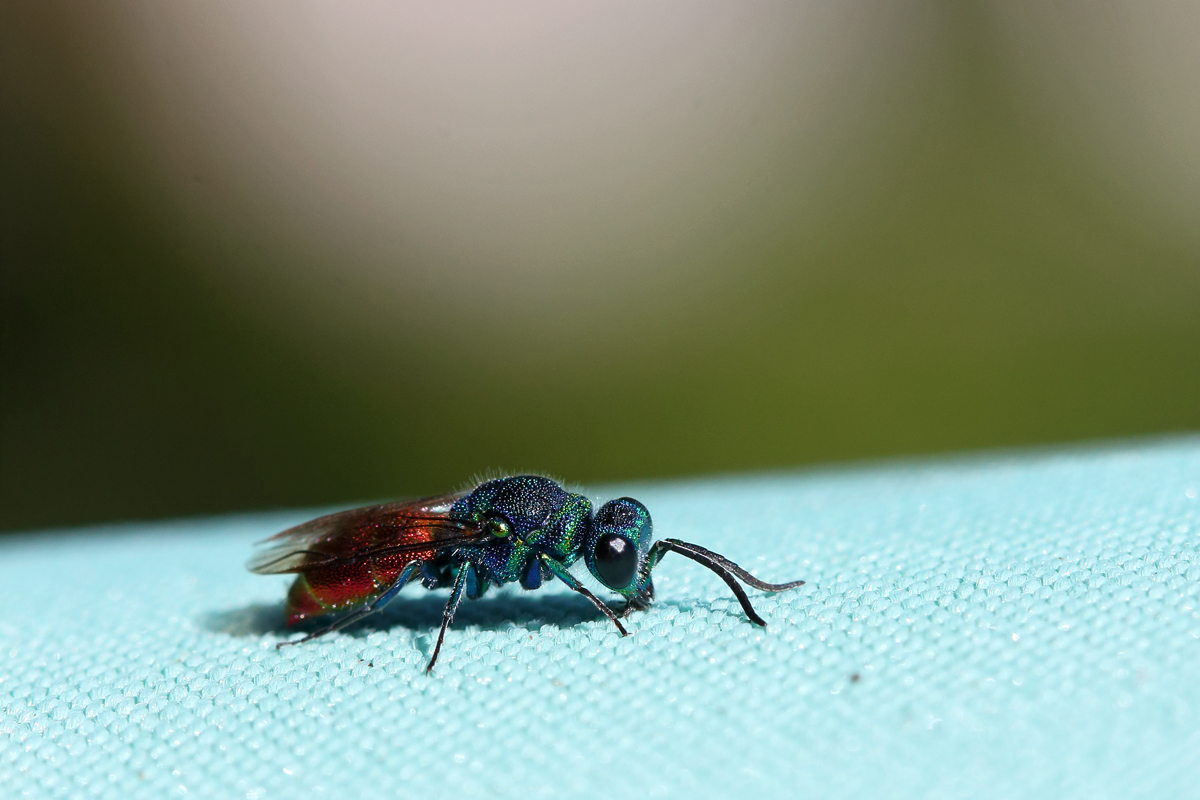
Today was spent catching up on some gardening jobs and watching the insects. There were 1 Peacock, 1 Red Admiral, 1 Wall, 1 Small Copper and 2 Large Whites. 2 lovely Ruby tailed Wasp species ran around on our patio umbrella cover. 50+ Meadow Pipits moved south over head.