Where does the time go? Here we are almost a month since the last blog
post on the summer solstice, the longest day of the year. Soon we will be
Christmas shopping!
Anyway there are plenty of long days to enjoy before then so here I'll say a
bit about our week in Scotland from 10th June.
Allt Beithe, Arivegaig, Acharacle and the track leading to the house in
the trees.
We were staying, for the 7th time, in our usual house at Arivegaig, Acharacle.
This may be our last time as it has been sold which is quite sad, we've
enjoyed good times here, but it might still remain a holiday let. To be
honest, it hasn't changed much in the 16 years we have been going so it could
do with some upgrading, just not too much. If it were me, I would cater more
for naturalists and wildlife observers as its an excellent spot, especially
for its specialty, the Pine Martens. There is a poor, triangle bird
table that the martens love, but Id make a bigger more open one, as you will
see soon, and install an outside light on the wall above the window to
illuminate the scene in the dark. It would be great. As it happens, it barely
gets dark in June, so back to the post.
I made a schoolboy error in forgetting my notebook ( what!) so I've relied on
photos, sketchbooks and memory for all except the moths that were scribbled on
scraps until we got home.
As for our week, I'm not sure the area has seen a spell of weather like it in
a while being hot, sunny and calm all week and for the previous three weeks
before ours too. The blanket bog surrounding the house, Kentra Moss, was very
dry. This resulted in a dearth in the usual flora with not a single Heath
Spotted Orchid, Sundew or Butterwort when in most years these are all
plentiful.
On a few days we made the mistake in going for walk somewhere not arriving
until mid morning. By then it was already too warm for Peggy so it was quite
frustrating. All week the temperatures were between 23 and 28 degrees
averaging at 25 - 26 most of the daylight hours. Insects were quite
plentiful, mainly those that bite, with millions of midgies and clegs, of
which my cleg list is now at 3 species...
So, to the stars of the show. When we visit here we always manage some
sightings of Pine Martens. If you saw last Septembers blog post, we had them
nightly with Badgers and a Fox too. This week, there were no Badgers or Fox,
but the Pine Marten had nested in the garden and was coming everyday with four
of the finest kittens you could imagine. Providing we were indoors they had no
fear of us at the window or talking. As it was hot, I kept water topped up so
they could come and drink when they were too warm. In the evening I fed a
muesli type of mix with soaked hedgehog biscuits, chopped soft dog meat,
damped bread and jam, peanuts and sunflower hearts sometimes with some chopped
fruit like apple strawberry or raspberry, what ever we had available. The
family ate the lot with relish.
During the day it would be quiet. The female would sneak a meal and a drink
alone, but by 5pm we would hear the kits were out and about. What a commotion.
scrapping and squeaking like jazz band kazoos then the lot would appear. You
could never get sick of them. What a holiday highlight they were. Here we go
with some pics and a video -
If you can turn up the sound you'll hear kits calling for mum, and maybe a
quiet profanity from Jane as one baby launches itself off the table onto the
lawn!
To say I am pleased with the photos is an understatement. All taken
through glass. The Arivegaig Pine Marten family.
They are a difficult act to follow to be honest so here are a few other
odds and sods of wildlife interest and scenery from the week.
Top - Ardtoe, with Rum and Eigg in the background bottom, Kentra.
May as well begin with these two bitey bastards. Top is a rare
Golden Horsefly recovered from a spiders web, A very local species
found in only a handful of locations in the UK. Bottom is the ever present and
abundant Two lobed Deer Fly. There were also Notch horn Clegs all over
too I can highly recommend using 'Smidge' repellant, I am very prone to all
insect bites and only had about 20 small bites all week.
Butterflies were around but in the heat wouldn't settle for a shot. Around
the house were a few Large Heath, in wooded areas and the moss were a
few Small Pearl bordered Fritillaries and Peacocks, but
although there were still a few Orange Tips on the wing, we didn't see any
Chequered Skippers. They must have had an early season in the good weather.
We had a similar problem with Dragonflies. They just wouldn't rest other
than one Gold ringed Dragon. We had lots of Four spotted Chasers too
but dipped out on the Northern Emeralds that had been seen nearby a week
earlier.
Gold ringed Dragonfly were common.
Above, Sanna on the Ardnamurchan.
Birds were few and far between, though we did have an
imm White tailed Eagle at Fascadale and a nest with the female and a
large youngster . One correctly dressed Rock Dove came into the house
garden on one morning but no others were seen. At Ariundle 3
Wood Warblers were trilling while Tree Pipits parachuted over
head.
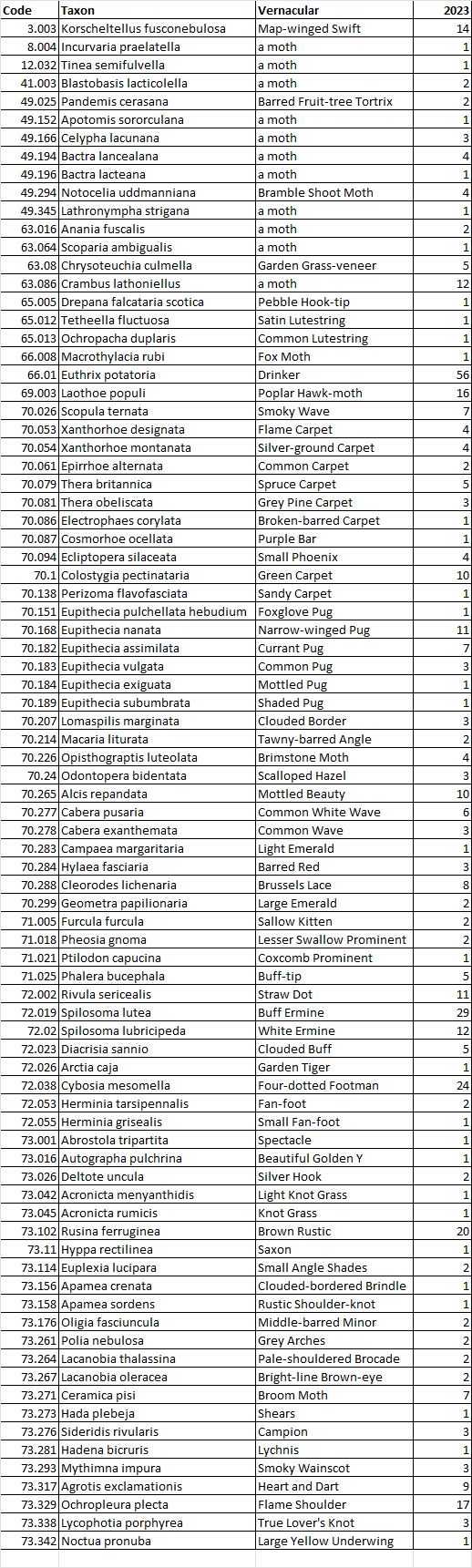
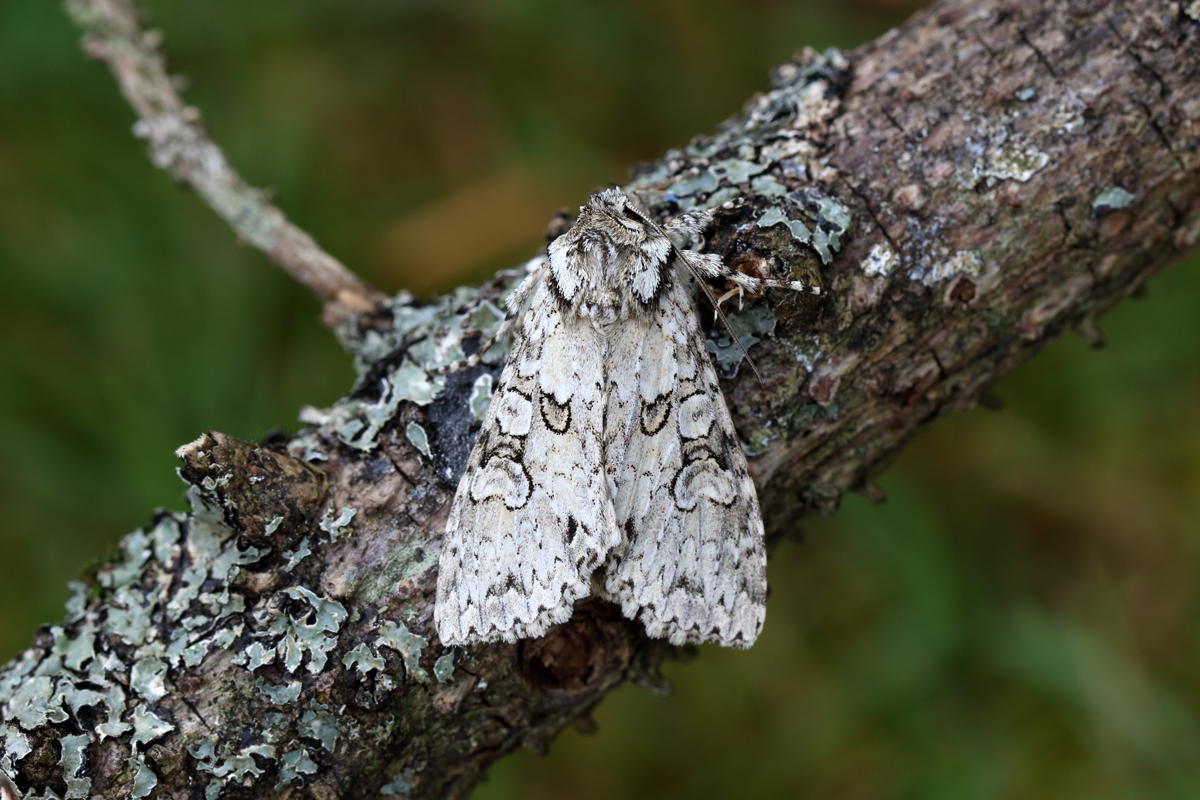
I ran the moth trap in the garden on 5 nights. There were two new
species for me plus a nice showing of highland specials that I will put in a
separate post to stop this one dragging on...
Physocephala nigra a rare large Conopid Fly almost an inch long.
Its almost two weeks since my last blog post. That's the thing about blogging, as the days lengthen and get warmer there is often more wildlife to look out for. Whilst I have more to write about, I have less time to write it!
Here are a few of the more interesting things that have crossed our paths since the Red backed Shrike graced Boulmer....
Holly Blues continue their fantastic season here at the Howick Obs with daily observations of up to three individuals squabbling over the garden.
In the bottom photo if you click on it you will see the mating pair plus another male in waiting to the right.
A nice walk around Craster with Jane and Peggy on the 11th pruduced views of 6+ Bottle nosed Dolphins and a new plant for me, a small Rustyback Fern on the wall. I had been told of its presence here as it is a scarce plant in the county.
Rustyback Fern Craster
Sunday 14th May, JWR and myself headed up to Alnwick Moors but again the weather, although mild enough, was quite dull so few insects seen. Up to 6 Cuckoos were seen and heard back on territory, a singing and seen Garden Warbler was quite unusual for here and 3 Crossbill flew over. Of the few insects there were a reasonable showing of displaying Green Longhorn Moth Adela reamurella. At Oxen Woods, Chickweed Wintergreen was in flower not a plant Ive seen much of.
Green Longhorn Moth display in a dancing flight over the gorse.
Chickweed Wintergreen a lovely flower.
A hugely cropped digiscoped Cuckoo for drawing reference!
Cuckoo field sketches.
On Friday at work in our new, very sterile, office I noticed an unusually shaped 'thing' low down on the wall near the back doors. Closer inspection found it to be a spider, and not something I'd seen before. It reminded me of the Garden Centre Spider from a few weeks ago ( still present in our porch). I potted this spider up for a better look. It turns out not only to be new for me, but likely new for Northumberland too, though spiders are very tricky to get onto the record as they always want a specimen or microscope images that I either cant be bother with or am unable to do. see pics below for details.
Spider Episinus angulatus, a scarce species not found in the NE until now.
This past weekend added a couple of new local patch species with a calling Cuckoo in Howick and a Redpoll N along the coast path.
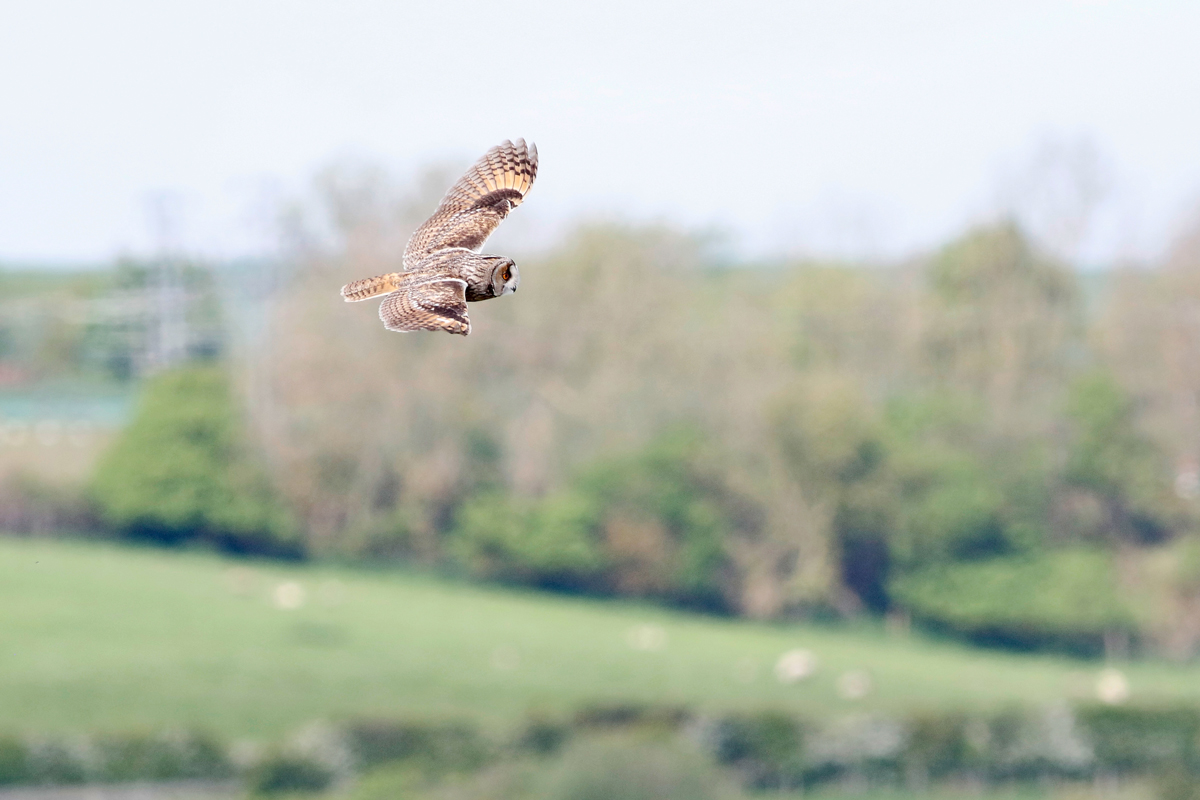
On Sunday we missed the Spoonbill at Alnmouth but did see a nice male Marsh Harrier near Foxton and, while looking for plants and spiders, I flushed a Long eared Owl from a small hawthorn in the dunes. Luckily John was quick enough to get some great photos. I was too slow off the mark and it was too distant for me.
Above, Long eared Owl, Alnmouth Dunes courtesy of John Rutter.
The dunes at Alnmouth a great for plants and insects, but thats another post in itself, so I'll end with another spider. This one is a one Ive hoped to find here as it occurs commonly in sandy areas. Next time I'll take the macro lens for a better shot. This is Arctosa perita a well camouflaged wold spider..
Arctosa perita a relative of the larger and rarer Grey Wolf spider we found in the river valleys.