Monday, October 31, 2022

Swifts

 While the southern half of the country is awash with rare subtropical migrant moths things are more sedate up in the far north east of England. Still, I have had a Scarce Bordered Straw and a Pearly Underwing so cant complain. I had hopes of a Crimson Speckled but now I see that not only are they very rare ( still) they are even rarer in a moth trap, with most sightings being out in the field. At Dungeness, moth-ers have taken to dragging a washing line between two of them, lightly over short vegetation in an attempt to lift one up. Ah well...

Back in the real world, on Saturday afternoon I had arranged to meet Sally, a mycologist ( fungi observer) on our estate where I hoped she could identify some of the tricky ones for me. As it turned out our wires became crossed and the meeting didn't happen, but while I was sauntering around the cricket pitch, eyes to the deck looking for fungi, I was aware of thrushes flushing ahead of me.

The bushes here are decked with berries and good numbers of Blackbirds, Redwings and Song Thrushes were stocking up. While I watched a good sized party of Redwings head skywards, my eye rested on some other birds low down just above shrub height . SWIFTS!

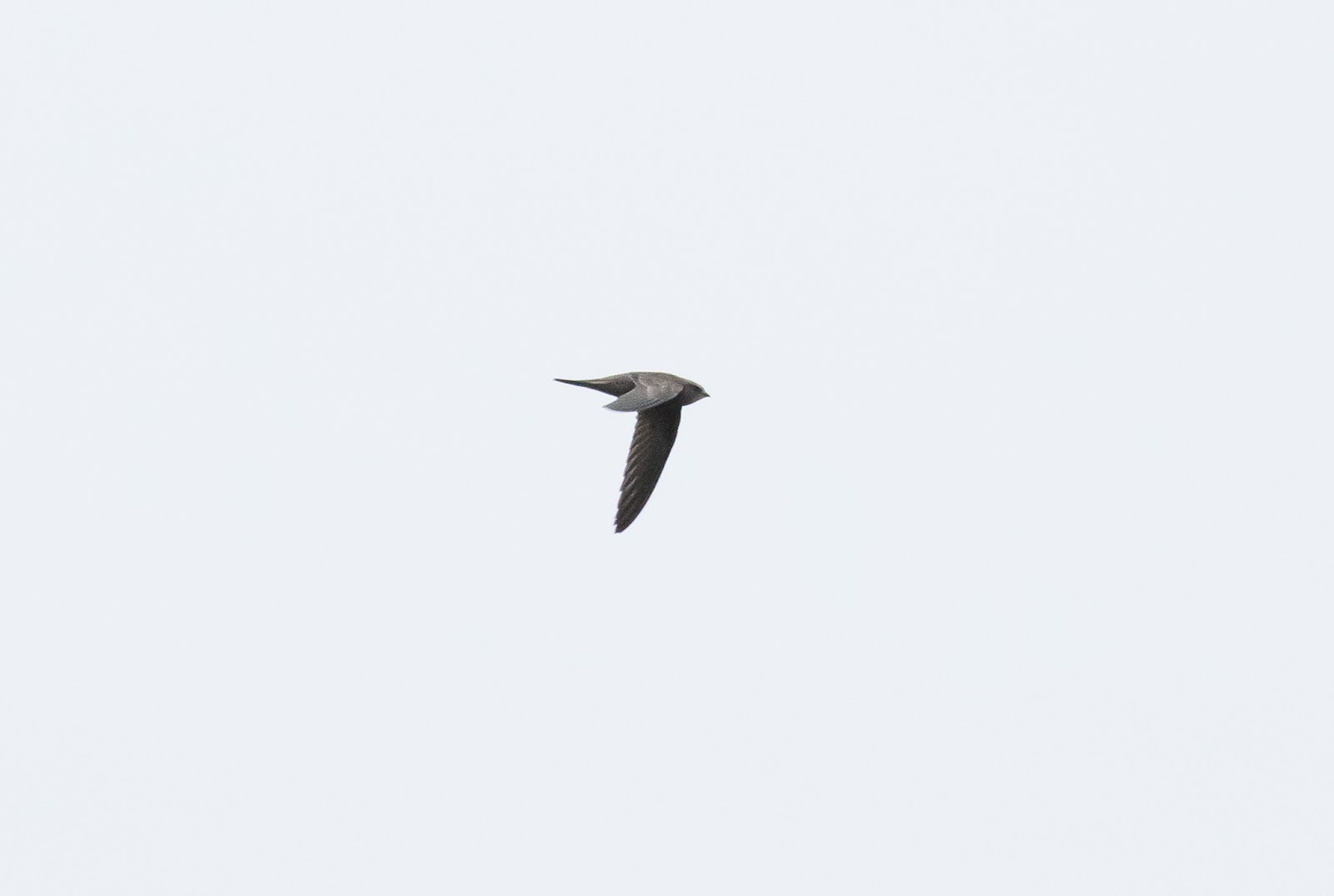
Swifts? three of them to be precise. Now I've not even seen a hirundine here since September and not a Swift since late August, so this was a bit of a shock. I was also aware that NW Europe was having a Pallid Swift invasion.

 As I watched these birds with the naked eye ( I had left my bins at home, you don't need them for mushrooms! What a muppet). The birds seemed to be feeding and not just passing through, so I put the word out on WhatsApp of 3 Swift sp present. 

Straight away Dan Langston replied, 'On my way'. Thank goodness, Dan only lives a mile or so away and is well up on these things having already found two Pallids earlier this year. Better still he would be bearing optical gear.

Within minutes Dan arrived and we had the next half an hour watching the birds drifting back and forward across the sky over the pitch.  At some angles they remained dark 'Swifts' as in sp, but when closer, in better light, it could be seen these were all Pallid Swifts. I've only ever seen two before, some years ago, so to have a multiple occurrence on patch was nothing short of amazing.

Dan rattled off some images, that showed enough to be sure, and at that, they slowly drifted north and out of sight.

Later Gary Woodburn had a single at Embleton Quarry that could have been one of ours and next morning three birds were over Amble and Warkworth for most of the day. With 4 up at St Abbs and dear knows how many in Yorkshire, its still worth keeping an eye on the sky.

 Just make sure to have bins and camera with you!


Wednesday, October 26, 2022

A bit of a rush...

 All seems to have gone into a bit of an anti-climax after all of the excitement of last week. Last Thursday seems to have vanished on the easterlies that dropped some good birds in locally.

I'll start with Wednesday 19th. This was the beginning of a spell of winds from the east. In Northumberland it was not a  '2016 style' classic, but it was quite good and for the hotspots like Spurn and Fair Isle it was a very big deal.

Although I was working from home, one eye was being kept alternatively on the WhatsApp messages and then on the kitchen window. It soon became apparent that all along our coast it was raining Owls!  At least 21+ Short eared Owls were reported arriving along with half a dozen Long eared, so at lunchtime I took Peggy along the coast path. All seemed quiet until I heard a gull and crows mobbing something.

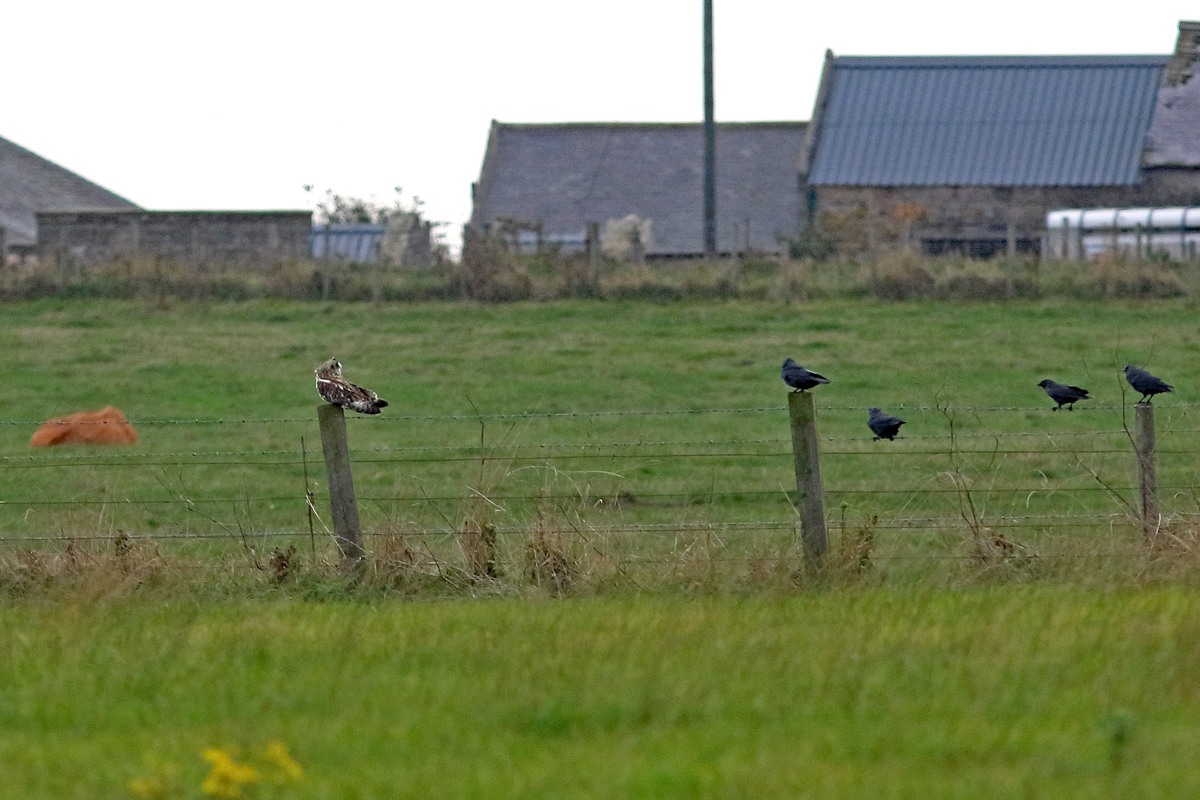
There, opposite our village entrance was a new-in Short eared owl on the fence, flanked by a Jackdaw paparazzi. Asio owls are scarce on my patch so I was very pleased with this one.


The Owl soon got tired of the Jacks and flew off high to the south.  By now, a few thrushes were arriving, mainly Redwings with a few Song Thrushes. Back home a male Brambling had dropped in with the sparrows on the feeders but was not present a short while later.


A kitchen window shot of the Brambling.

I decided to finish work a bit early and try half an hour on Cullernose Point. The wind here was uncomfortable and buffeting, but 11 Puffins, 9 Red throated Divers, 9 Common Scoter, 2 Little Gull, 1 Brent Goose, 1 Manx Shearwater made in into the notebook. As an oddity, a lone Barnacle Goose was in the sheep field beside the path where it was being chased around by inquisitive sheep, like a Benny Hill sketch!

Barnacle Goose in a moment of respite from sheep torment.

With the forecast looking good, I took Thursday off. At Seaton Point, the rain was steady off a blustery SE wind. Small numbers of migrants were clearly arriving, with 2 Fieldfare, 50+ Redwing, 12+ Blackbirds, a Woodcock, possibly 2,   and a Brambling. At sea with bins only, a nice group consisting of a fem Velvet Scoter, 2 Red breasted Mergansers and 2 Goldeneye flew N along the beach almost over my head. More wildfowl offshore included 7 Pintail, 13 Red throated Divers, 1 Black throated Diver, 3 Little Gulls and an Arctic Tern

The big mistake here was me going back to Howick to seawatch from my home patch. News came through of a drake Surf Scoter coming North with 30 Commons, so I hunkered down to wait. After 25 mins, I picked up the Scoter flock almost straight out from me at half distance. How I missed them further south I don't know. I screwed my eye into the scope and checked every one, They were quite bunched up and doing 30 mph. I thought I saw a white dot in the party but they were going too fast and away from me so, I dipped the Surf Scoter! On checking my phone I saw that Dan had not only seen the Surf close in at Seaton Point, he even managed a photo. Bugger, this is becoming a theme.

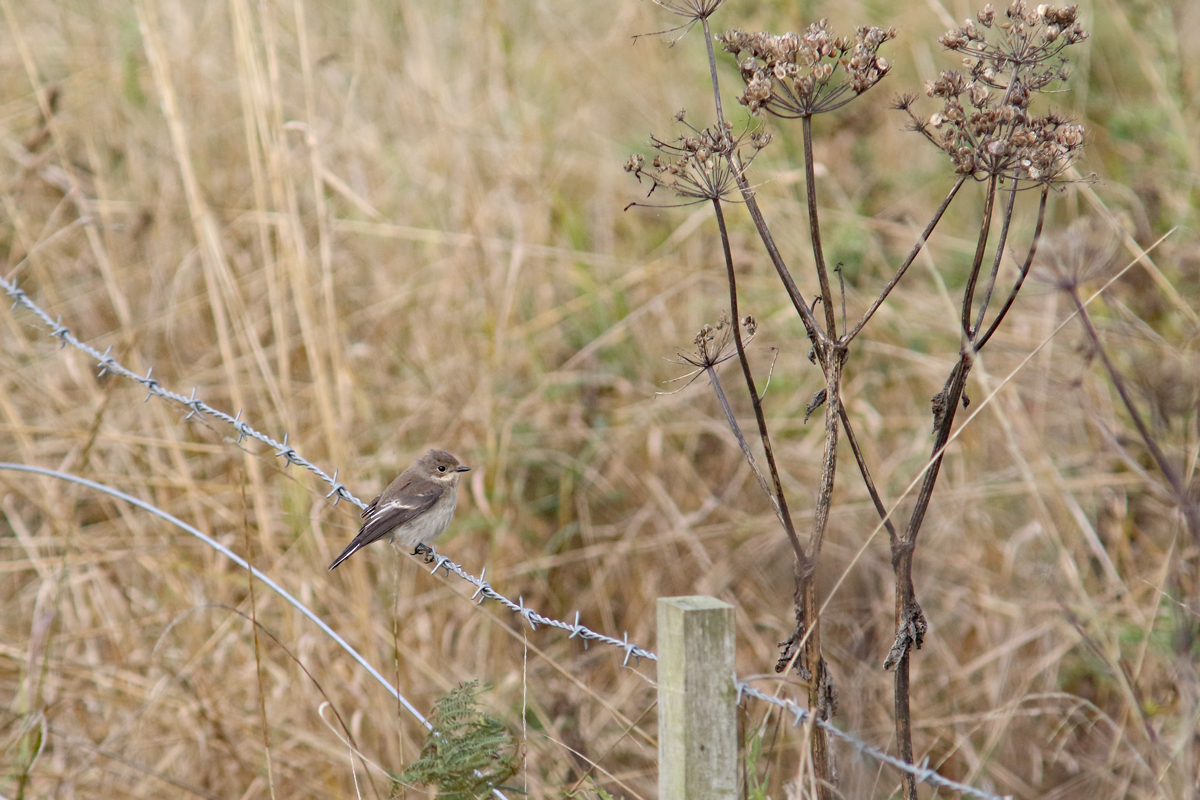
Back home for lunch and to dry off. Around 2pm Ben had found a Firecrest at Seaton Point golf course laybye so off I went. Ben, Dan, Mark and myself ( John was working) made up 80% of the Boulmer team getting good views of the bright male Firecrest, Lovely. We checked other areas but apart from thrushes not much was seen. One very late Spotted Flycatcher at the small caravan site was unexpected.

Firecrest, Seaton Point

 On Friday 21st I was working from the office down in Ashington. This location meant I was halfway closer to Whitley Bay where a Red flanked Bluetail and a Pallas's Warbler had taken up temporary residence. At lunch time, the sun was shining and the wind had eased to I went for a look.

A small gathering of 8 or 10 birders made finding the Bluetail quite easy, though viewing was not so comfortable. The other Bluetails Ive seen have been all below head height but this one decided it preferred the tree canopy. Still it was almost constantly on show, so worth the trip. I didn't see the Pallas's but did hear a Yellow browed Warbler briefly in a Long tailed Tit flock but it remained unseen. 

Red flanked Bluetail, Whitley Bay Cemetary.


Red flanked Bluetail from below.
On Sunday 23rd, the fall had largely tapered off.

At Seaton Point a Treecreeper, 2 Brambling, 6 Redwings, 12 Blackbirds, 12 Redpolls and 10 Twite were the only things of interest, so I went twitching again. This time all of 6 miles to Low Newton to try and see a Radde's Warbler found by Gary Woodburn in the wood beside the Tin Church. It was typically skulking but with some patience some brief decent views were had as it flicked around in dead grass and nettles. It called softly a fe times and once it popped up less than a metre from me but quickly dropped again before I could get a shot. This is my 7th county record I think?


Radde's Warbler, Low Newton

As I write this the sun is shining and its mild with a SW breeze. Dan has just found a Pallid Swift at Boulmer but I am working from home. Hopefully this autumn as a few more surprises in store...

Monday, October 17, 2022

Pished Off...

 How badly does missing out on seeing a rare bird affect you? Some 'casual' ( ehherm) birders recently on social media have lamented that they don't know how they will cope if they miss the next big thing, having missed out on some mega rare birds recently on various islands around our coastline. Really?

For goodness sake get a grip, if it is troubling you that much maybe you need to get some mental health advice. Most of us, I think, are in the 'bugger' camp where we would like to catch up with something that we then dip out on leaving a little fed up for a spell then we move on. That's life or as some local old timers would phrase it 'That's birding son'.

This weekend, I've had a little taste of this. On Saturday late afternoon around 5.20pm, a message came through from our local insatiable bird finder, Dan, that he had found a Red -eyed Vireo at Boulmer! To be precise, the bird was in a few scattered hawthorns on Seaton Point. 

Seaton Point, pic taken Oct 2020...


The timing couldn't have been worse for me as I had to be at Alnmouth Station at 6pm to pick Jane up from a trip to Newcastle. By then it would be dark anyway so it was a non starter. Wandering around the station 35 mins later, thick clouds gathered, not only in my head, but real ones and the rain started. Darkness brought relief in that my dilemma was now over, it would wait until tomorrow.

Overnight and the wind got up to a near gale from the south west. Seaton Point isn't a good bird holder in decent conditions being so exposed but in this weather I was not hopeful that our East coast yank would still be there.

I met John there at 7am, before first light. John had been quick enough out of the blocks that he saw the bird while Dan was still with it last night so he had the most up to date idea where it was at dusk.

We covered the area until lunchtime along with another good few birders but, as expected, the Vireo was no more. Missing a bird of this magnitude on our local patch does smart a little, but at least I saw the Holy Island bird last autumn so its not too bad. 

What did we see? The answer is, not a lot really. A Peregrine soared over the point in a blustery dawn, 22 Barnacle Geese flew W, about 20 Redwings were in the point bushes and bracken and a couple of Siskins and Grey Wagtail flew S. 

Here's to the next time...


If only....things might have been much different...


Friday, October 14, 2022

Mint.


For a change a post about a moth. And what a moth it is too. This is the Merveille du Jour Griposia aprilina, with two individuals posted above, the top one being slightly fresher and darker than the bottom. 

When flipping through the field guide, the bright sharp cool mint green and black patterning jumps off the page, making you filled with desire. I remember catching my first in 2009. I couldnt believe it. What a panic to pot it up as it flew around the light on an October night. Since then I have caught it on 34 occasions, mainly singletons but occasionally up to 4 at a time.

It is specifically an moth of cooler autumn nights and tends to associate around oak trees of which we have a young one in the garden.

This year I am very pleased to meet with Merv, as these are my first since the 11th Oct 19. Two blank years in succession is unprecentented here though 2016 was also a miss. The best year here was 11 caught in 2018.

I'm not sure if some autumn species are cyclical as I've also checked Frosted Orange and Flounced Chestnut for garden stats. In 2010 I had 93 and 39 respectively but in 2022 I have 2 and 0 !   Lets hope things improve next year...

Monday, October 10, 2022

Keeping it Real.

Popped down to Boulmer yesterday morning for a few hours, but before that I must have a comment. 

If any readers followed the threads on Twitter last week, about the furore surrounding the flushing of a Lanceolated Warbler and a Pechora Pipit on Shetland by birders, you may have seen some of the comments made by people with pitchforks and burning torches demanding the head of such heinous criminals. The resulting twitcher bashing was very much like the flushing of the rare birds themselves with everyone and their dog jumping in to have a go.

Compare these incidents with things that occur daily to our birds. For example, on Saturday I stepped outside with the dog for her walk to a barrage of shotgun blasts lifting 2000 Pinkfeet to the skies as the gunmen drove them from farmers crops. Every bird in our village, from Wagtails to Woodpigeons was spooked off to the horizon. Then, yesterday at Boulmer this spaniel below absolutely hammered every square inch of shore and rock edges actively chasing wading birds for fun while its owner strolled off along the track. Above the dog you can see waders in the air unable to feed.

Springer having a right good time flushing waders.Owner not interested.

  I think this puts things into context a bit. What is worse, a lone bird lifted across a road or from an iris bed a few times or this? You can argue that both are unacceptable, but those single passerines could have flown half a mile to similar habitat and would never have been relocated. These waders had nowhere to land and the geese, well, how many injuries resulted?

My own little theory is that some twitcher bashing is linked more to jealousy than bird protection. Its getting more common and I have been sucked in too, when there have been pictures of Mr and Mrs and a labrador ignoring reserve signs and throwing a ball for the dog into the protected area.

One observer went to the Lancy twitch and was so disgusted, forked out for the next flight home! What the hell did he expect? He went to Shetland looking for rare birds. He could have seen news of said Lancy and thought sod that, I'm going the opposite way to find my own, but no, he joined the throng. Then bubbled on about it! Did he think there would be 4 people sitting quietly waiting for a bird that behaves like a vole, to emerge from the grass? Kind of naive. If he did maybe he wasn't ready for Shetland?

One person asked if there was a warden to stop this behaviour. Shetland is a massive county. Does your county have a warden to stop 50 birders watching a bird on a verge? In Northumberland we cant stop people blasting a thousand migrating wildfowl or a dog quartering the feeding areas of hundreds of waders let alone this.

I do think its time people maybe vented their spleen on more serious offences, like the Badger cull for example...where a protected much loved British native mammal is trapped then shot for nothing. Thousands of them. Or Fox Hunting. Its been illegal for years but a load of people on horse back with a pack of hounds systematically quarter the countryside. How much disturbance does that cause to wildlife? Or Fireworks? I could probably go on...

Back on your low-carbon local patch, you wander around in the mist and a little bird flits into the small bush in the dunes. Do you say, ahh, I'll go the opposite way in case I flush it? No, you go for a better look in case its a rarity, and it flushes again but its just a Robin. Oh well. Does that differ from the Lancy twitch because there weren't 50 birders watching? Probably not, the result is exactly the same, its just people hate the thought of frivolous twitchers.

Back to Boulmer. Yesterday we walked the shore from the car park around to Seaton Point and back. We had 20+ Rock Pipits and a few Pied and Grey Wagtails but not much else. As we walked, we pushed them along the beach allowing a count... see what we did there. Maybe we should have just stayed at home? More seriously, I hope we can all demonstrate some moderation in our birding and consider the birds welfare for sure, but lets keep it real?

As the tide began to come in there were 20+ Bar tailed Godwits, 3 Grey Plover, 10+ Sanderling, 30+ Dunlin, 22+ Ringed Plover, 20+ Turnstone. A Sandwich tern flew S and 2 Red throated Divers moved N.

Along at the north end of the village about 3,000 Golden Plovers avoided the spaniel and a Swallow went S. A couple of Chiffchaffs and 7 Stonechats plus 30 Skylarks were about the only other things of note on a busy morning for visitors on the site. 


Monday, October 03, 2022

Ardnamurchan

 Hi, apologies for the dearth of blog posts over the last few weeks. I began one about 2 weeks ago and never got it finished due to one thing or another.

Last week we were away on holiday up to the Ardnamurchan, our 7th visit to this area and the 6th in the same house.

As can be expected on the west coast of Scotland at this time of year, the weather was mixed, but overall I'd say it erred on the better side. Only Friday was a write off with torrential rain and strong winds, but Weds and Thurs were beautiful calm, clear autumn days. The rest were a bit of a mix.

On the wildlife front, birding took a back seat really and it was too cool for the moth trap though I did try it on one night to justify carting it up here. A few moths were caught but it was all stuff I can get at home anyway.   This visit was mainly dominated by the garden mammals for nature interest.

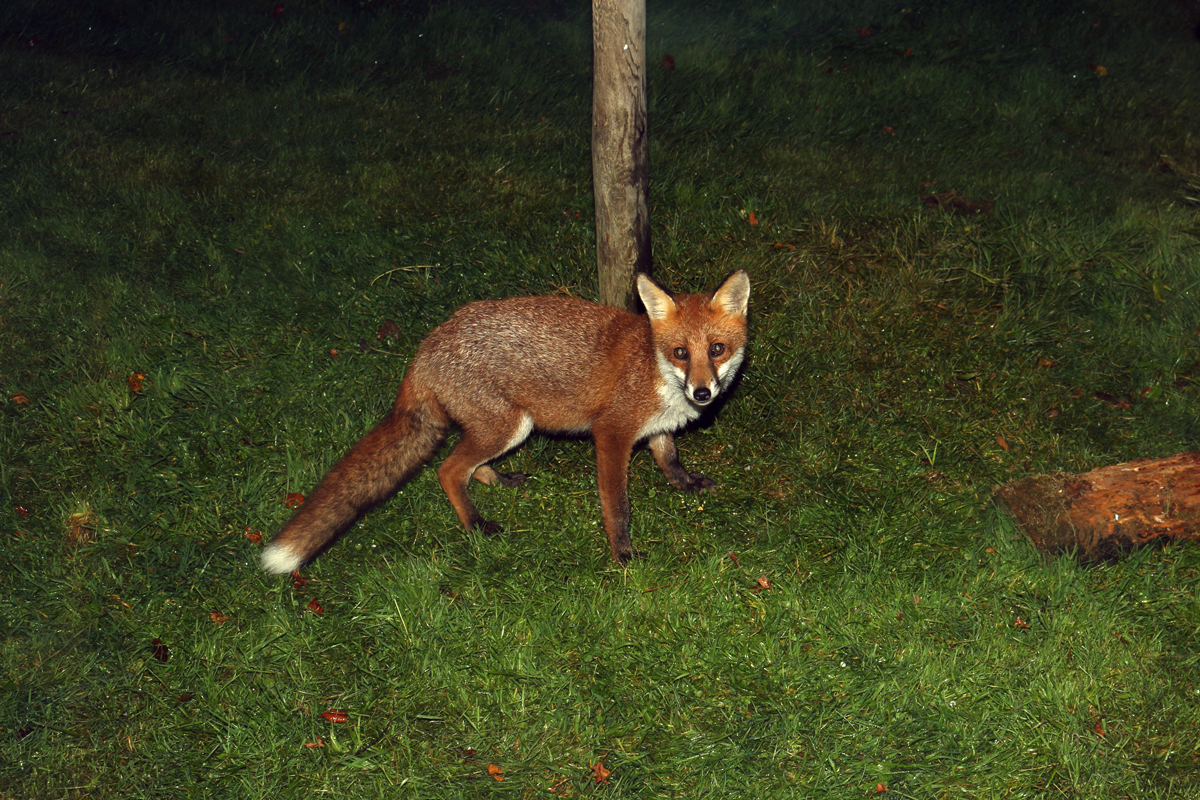
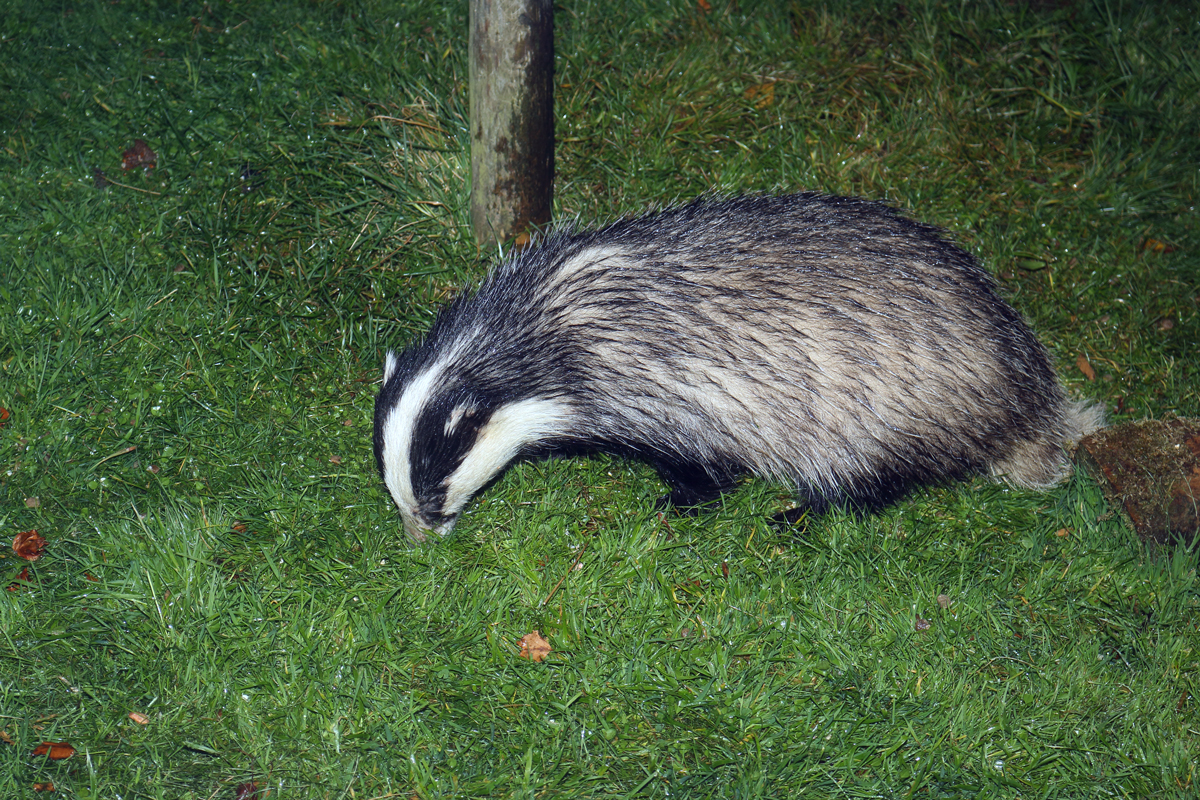
Out of 7 nights we were visited by Fox on 6 nights, Badger, up to 3, on 6 nights and Pine Marten possibly 2 on 4 nights. It was unprecedented for us to see all three predators on view at one time. There was a pecking order however with a large male Badger on top of the pile, then the smaller 2 Badgers and the Fox with the smaller Pine Marten wary of them all.


The only problem at this house is that there are no outside lights and the windows are quite small, so I hunted around and found a small LED reading lamp that could be balanced on the kitchen window to light the bird table. Using a bit of stiff card to prevent back glare off the glass we managed some great views of the animals, probably our closest ever of Badger and Fox, though Pine Martens can often peer in at windows.

It was important to keep the main kitchen light off so we remained hidden in the darkness, this made cooking the tea 'interesting'. If we go back I will be taking a better lighting set up. One to think about.

Not exactly floodlit but it did the job.

Before dusk each night, we put out a mix of food. A muesli of cat biscuits, sunflower hearts, chopped peanuts, chopped apple and grapes and a small amount of jam and bread cut into centimetre cubes. A spoonful of honey was drizzled over the lot. On some nights we put out a whole egg on the table that the Pine Marten took before anything else.

Feeling a bit sorry for the Fox, we cracked an egg on to a saucer one night for him. He stalked up in the darkness to see what this oddity was and attacked. He stole the saucer, tipping the egg on to the grass! He ran off into the wooded garden with the crockery that I had to recover the next day. You might guess who got the egg. Badgers are forensic when they comb the grass for tit bits....


Pine Marten 


Fox, in dark and in daylight. Pine Marten very scared of him and was off like a rocket when he appeared....


The Badger Family


The Animals of Farthing Wood...

As if this nightly spectacle wasn't safari enough, just beyond the gate were lots of bellowing Red Deer stags with small parties of hinds and calves on the moss too...


Red Deer


Another fab week away from it all. There must be Wildcats here too surely...

Thursday, September 15, 2022

Seawatching

 Thursday 15th September.

Before starting work I had an hour seawatch with Dan near the Bathing House. A mod NW 4 was blowing but it was generally fine with an odd shower.

At 06.42 a distant Great Shearwater came in to view, we both got on it at exactly the same time. It hugged the swell shearing back and forth over the waves.


Along with the Great were 58 Manx Shearwater, 9 Sooty Shearwater, 11 Red throated Divers, 2 Arctic Skua, 12 Wigeon, 70 Pink footed Geese and a close Merlin past the point.

After work a short stint at Cullernose had - 

3 Red throated Divers, 2 Brent Geese, 11 Lesser black backed Gulls, 2 Arctic Skuas, 50 Sandwich Tern, 18 Teal, 2 Puffin, 10 Sooty Shearwaters, 12 Manx Shearwaters, 1 ad Roseate Tern, 1 fs Little Gull, 1 sum plum Grey Plover.


Monday, September 12, 2022

Migration.

 Before the post, apologies for no further mentions of the loss of the Queen. At 96 it shouldn't be such a shock, but it was to a lot of us. Still, I dont think my thoughts on it will add to this blog, so we will continue as normal.

Over the weekend we've had a good bit of rain, backed by light north easterlies since Friday, all looking good for some passerine action along the coast. 

As per usual over recent years, I am too long in the tooth to be suckered in to high mainland expectations these days, all of the action in Northumberland was focused on Holy Island, and then some.

Try this lot on Saturday...

Red necked Phalarope, Dotterel, 3 - 4 Rosefinch ( inc a photo of 3 together), 4 Wryneck, Red breasted Flycatcher, Red backed Shrike, Barred Warbler, Black Redstart, 2 Wood Warbler, Lapland Bunt, Hen Harrier, Osprey with good counts of common migrants too such as 65 Wheatear, 30 Spotted Fly, 35 Redstart, 16 Tree Pipit, 23 Garden Warbler, 28 Pied Fly, 24 Whinchat ...

Those stats match up with the likes of Spurn or Flamborough . 

So what was I to do on Sunday? I asked the oracle that is Twitter, for a laugh. Should I get up to the Island, a half an hour drive from me, or should I stick local and go to Boulmer as per. The results were eerily familiar as you might expect with a referendum. Out of 280 votes, 52% were for Holy Island and 48% for Boulmer . Interestingly, the battle scarred premiership bird finders, to a man, said stay with it at home.


So, just as with the last referendum that had an effect on me, I backed the 48%ers and drove 3 miles to Boulmer. Who needs a barrow load of scarce anyway...

Before I get on to what we found, I can mention my home village patch was quite pleasing this week with my first Black Tern here since 2011 feeding close in off Rumbling Kern and on Friday a male Redstart and a weak looking Pied Fly at Cullernose, again good records for here. Viz migging has been active each morning during Peggy's walk with lots of Hirundines , Meadow Pipits and a few Yellow Wagtails and Tree Sparrows.

Back to Sunday.  We arrived at 6.30am, first light and spent the whole morning covering to south side as far up as the village. We weren't wading through a magic carpet of birds but we had a few to keep us going in these impoverished times.

We began at Seaton Point golf course layby as Meadow Pipits streamed overhead. 4 Siskins put in an appearance arriving from the east as did a lone, very high Song Thrush. Roadside scrub held a nice Pied Flycatcher, a Whitethroat, 7 Chiffchaffs ( no willows I could see). A Yellow Wagtail moved south over head.

A new route along the replacement coast path across the golf course looked interesting. Here were had 4 Wheatears but little else.

Dropping down on to the beach, a Spotted Flycatcher looked damp as it perched on the sand and seaweed where there were flies aplenty.

Next, we headed along to Seaton Point. It was nice to see more Private signs erected. You cant get enough Private signs in Boulmer, the most unfriendly village.

Near one of them, a second Spotted Flycatcher preened from a fence. Another dozen Phylloscs here included at least two Willow Warblers, while another Whitethroat moved around the brambles. It was while standing here, the loud 'peeez' of a Tree Pipit called overhead. in a flock of 6 or 8 Meadow Pipits.


Spotted Flycatchers above.

Once we arrived at the eastern end, the sparse hedge that runs north had another Pied Flycatcher, flicking from bush to fence and to Hogweed stems and a female Redstart flushed and flew off into thick cover. A Wheatear was on the plough with more pipits.


Pied Flycatcher.


The return journey covered more of the same with a new Blackcap and a male Redstart as additions .

Poor shot but its a Redstart.

We weren't too disappointed that we couldn't unearth anything rarer as this scatter of drift migrants is a lot better than we usually get. Should we have gone to Holy Island? No chance. There had been a big clear out up there anyway so it was much better to find our own stuff down here.

The weather looks like it might give some tasty seawatching conditions from Thursday this week so watch this space...


Thursday, September 08, 2022

Rare moths...

 As I am writing about something as trivial as moths, an ill old lady has the eyes of the world trained on her health up in Scotland. Will this be the end of an era? Time will tell...

It feels like I shouldn't be doing this at the minute but without any disrespect, the world turns.

Back to garden insects.

The other day I posted some pics of a lovely Convolvulous Hawk-moth I'd found on the road verge. Well, almost daily since then, rare and scarce migrant moths have been found in my moth trap. Its a novelty here as we are a long way north for moth migration.

Here they are - 

4th Sept
I've been looking for Beet Moth (Scrobipalpa ocellatella) this week without luck until this morning. I saw Tom and Ian both had first and second Northumberland records respectively so I was pleased to come in bronze position when I saw the target on the second tray from the trap.

This is where things go belly up... I got a pot and was about to pot the moth when I noticed another, larger micro near it. A pyralid.
My hesitation cost dearly as the Beet Moth flew off and away up the drive! Bugger.
Now, getting back to the cause of my distraction, the pyralid was duly potted. I knew I had not seen this species before so was keen to get on with identifying.

Imagine the shock when I find the moth in the Manley Guide and double check it on various moth sites etc and see it is very unexpected indeed. This time a gold medal winner, a first for Northumberland and a 'very local' species nationally.

Here it is -

1. Ancylosis oblitella Saltmarsh Knot-horn
Ancylosis oblitella


Knowing the invasive Beet Moths were out there, the trap was deployed again the next night. Sure enough, my 2nd and 3rd Beet Moths were secured this time. Firsts for vc68, 5th and 6th for Northumberland.

2. Beet Moth (Scrobipalpa ocellatella)

Beet Moth (Scrobipalpa ocellatella)

Accompanied by a few Rush Veneers as support.

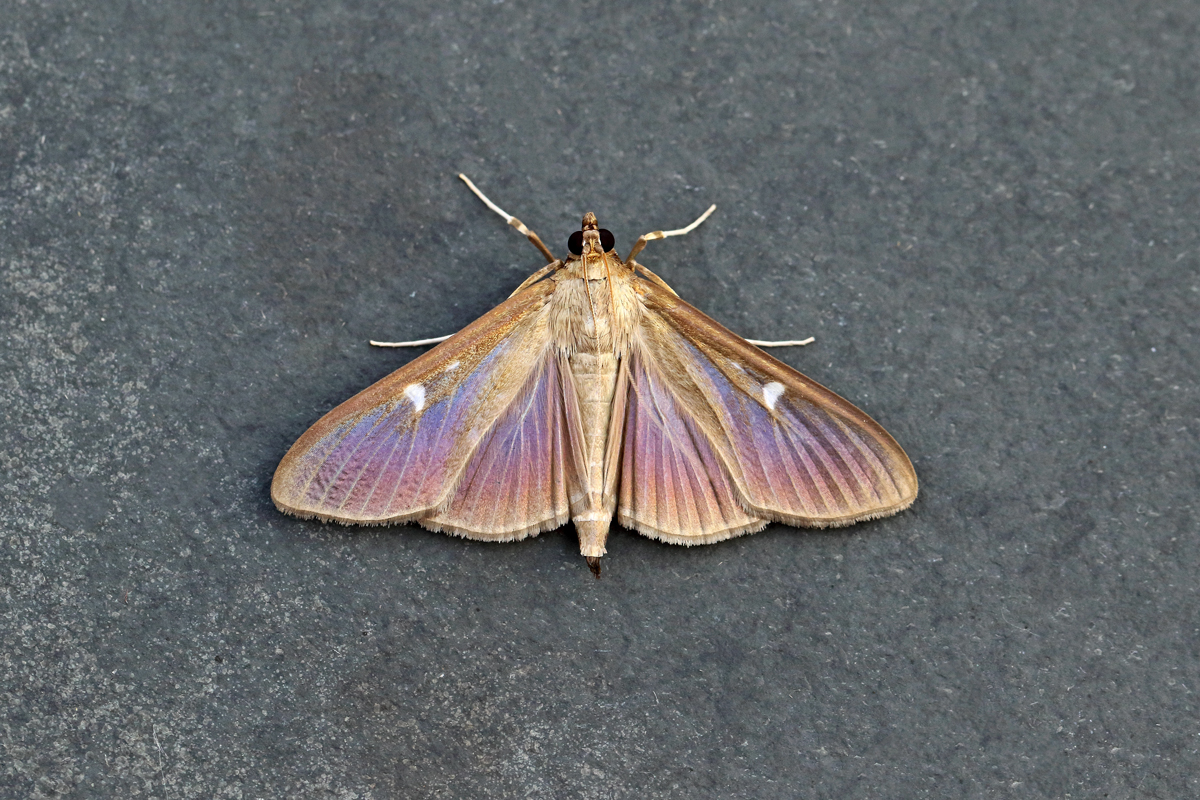
Then as if to top it off on 6th the first moth I saw in the trap was this belter, a dark form of Box Tree Moth, another first for vc68 ( are you keeping up, 3 vc firsts in 3 nights!) but around the 16th for Northumberland as a whole ( vc67 and 68). It was accompanied by another 2 Beet Moths, my 4th and 5th.

3. Box Tree Moth

Box Tree Moth

Finally, last night I left the magic light on again. No tales of Oleanders or Beautiful Marbleds but another good migrant, a Scarce Bordered Straw, only my 3rd  ever and again with a Beet Moth. My 6th. 

4. Scarce Bordered Straw

Scarce Bordered Straw

So what a good mothing week its been, maybe my best. I wonder if there is anything else to catch out there?