Wednesday, April 26, 2023

Spring. Its all a myth....


Its easy to get disillusioned with a local patch when you see reports going    on all around you of spring migrants teaming through. From our place, I see tales of waders, passerines and raptors popping up in all manner of parks, reservoirs and suchlike so when I step out into a stiff icy cold Northerly with no birds I am reminded that 'spring' on the          Northumberland coast is almost a myth. Its like those Christmas Cards of  Dickensian scenes when we look out on Christmas day to 10 degrees and    rain...

 But, there are some things that the weather cant hold up forever. Birds   that  winter in Africa and breed in the northern hemisphere will eventually battle through regardless, its just that Northumberland is one of the final places to see any.

On Sunday we headed out hoping that today would see some arrivals, and for once we were lucky. 

The route was from Cullernose Point to Craster in the hope of a Ring Ouzel or at least a Wheatear.

The view south along the coast from Cullernose.

As it happens, the first of 5 new patch birds for the year came before I had left the car park. A Willow Tit buzzed briefly from the blackthorn scrub then promptly vanished.

We moved one vehicle along to Craster then the other back to Cullernose for the walk north. At Craster a pair of House Martins were new and were looking a potential breeding site in the waterworks. 

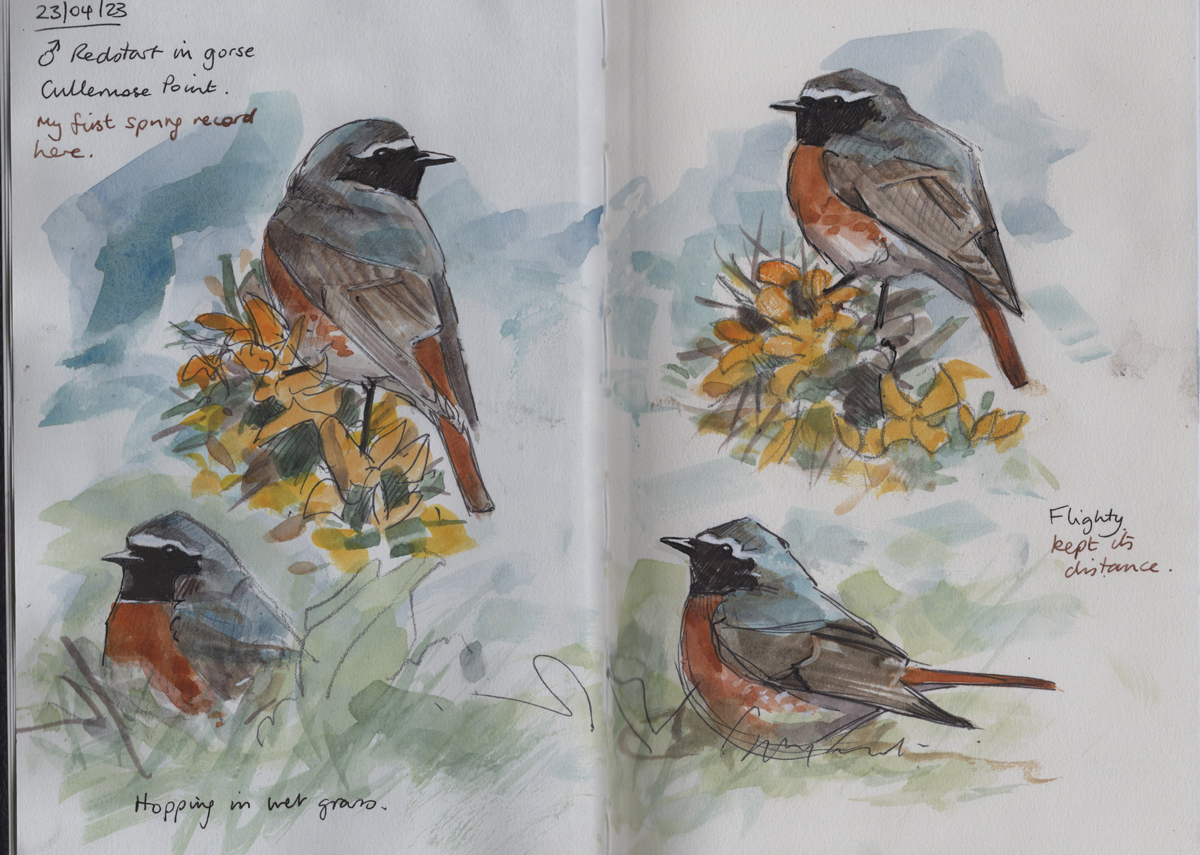
In these cliff hugging gorse bushes, above, is a short but sheltered farm access track that sometimes holds a few new arrivals. As we ventured in, a small bird flicked up off the grass -  a belter of a male Redstart! This is spring tame fare along the south coast but here it was my first spring Redstart in 14 years. Result. Further along a pair of Wheatears bobbed around on a pile of sand in the field, patch tick 4 in the first half an hour. Nearby a female Shelduck emerged from an open hay barn to meet her mate. No doubt she will have a nest behind the bales.

Redstart


The rest of the way to Craster held no more surprises, but the cover held good numebrs of Chiffchaffs, a few Willow Warblers and Blackcaps . The scrub here looks excellent and rarely sees a birder, including me, so I must make more of an effort.


This is the view just to the left of the top image. Dunstan to the left and Craster Heughs to the top right.

We walked around by the harbour and up into the Heughs where a rattling Lesser Whitethroat was the final addition to the year list. Roe Deer flushed and a Sparrowhawk flew overhead. All along, there was asteady but light northerly passage of mostly Swallows with an odd Sand Martin with them. 

As we drank tea and ate biscuits at the car, a report came through of a Crane flying N at Tynemouth and Whitley Bay. In the unlikely hope it might track another 30 miles we headed off back to Cullernose to wait it out. As expected, there were no further reports..

At midday, it was time for home, its seems spring has finally sprung after all... 

Eristalis intricaria Hoverfly on Blackthorn.

Razorbills loafing on Cullernose.

Roe Doe


Thursday, April 20, 2023

Catch up...

 A quick catch up of April so far .

Since the last general post a few more migrants have appeared locally. On 6th a very early Willow Warbler sang in our garden at first light but was gone by 7am. There arent many here yet but we did have 5 singing at Brizlee at the weekend.

A pair of Greenfinches at our feeders were the first to do this, this year and Hairy footed Flower Bees were out in good numbers when the sun was shining.

One good (?) bird was seen briefly on the coast path on the 8th. An Egyptian Goose flew north past the Bathing House followed by 11 Whooper Swans. The Goose is only the second record here after one last year. They'll be breeding on the pond soon no doubt. Our first Swallow was over our house on the 8th but they are still not here in any numbers.

On 9th, John and me walked up the Hulne Parks south wall to Brizlee. It was cool and damp with little to show other than 2 Red Grouse, a few Curlew, a singing Willow Tit and best of all a close, but unseen, Green Woodpecker yaffling loudly. 

Willow Tit singing at me.

  Near by 2 Adders were our first of the season.

Adder

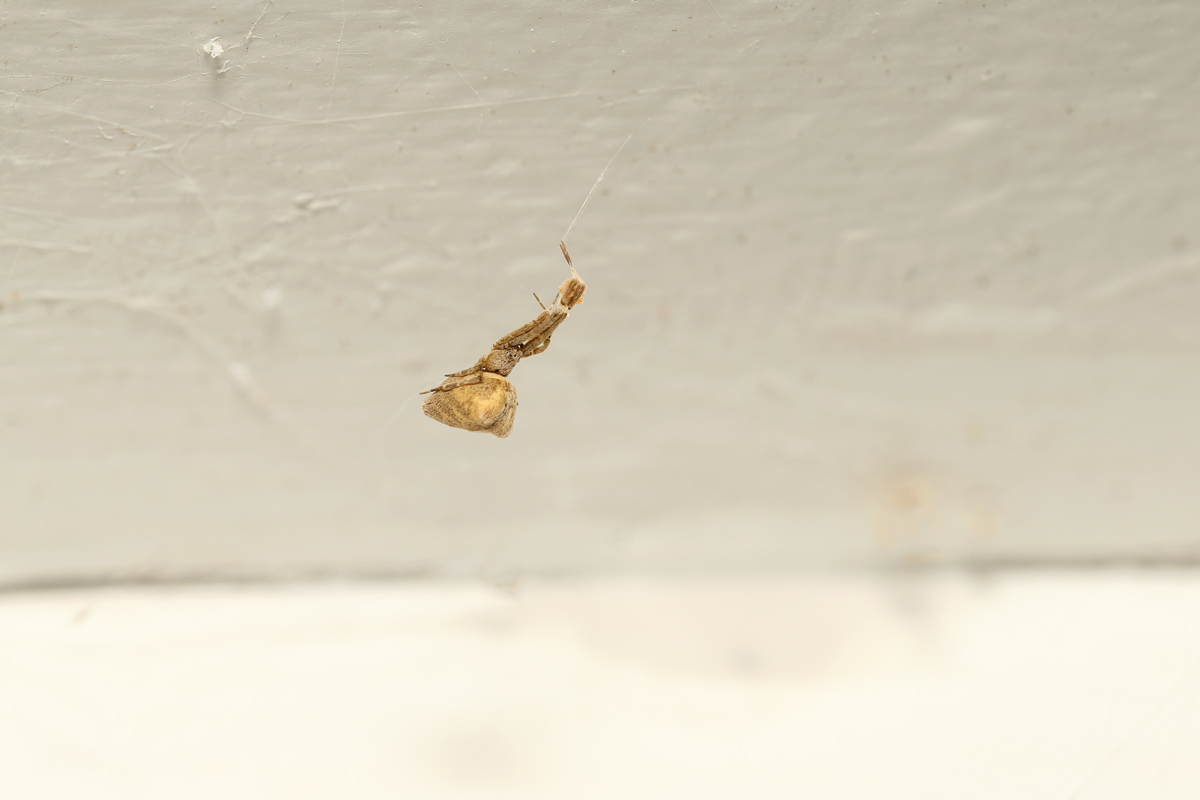
Over Easter weekend an in house spider hunt revealed not only the Uloborus plumipes already posted, but Pisaura miribalis, Pardosa sp, Woodlouse Spider, Zygiella x-notata and an Oonops in the bathroom.

The local Blackcaps were late to the party on the 14th with 3 singing in our village wood.

When driving back from Alnwick on 15th we were over flown by a Red Kite at Denwick heading south. One day I'll get one on the patch but this was about 4 miles too far west.

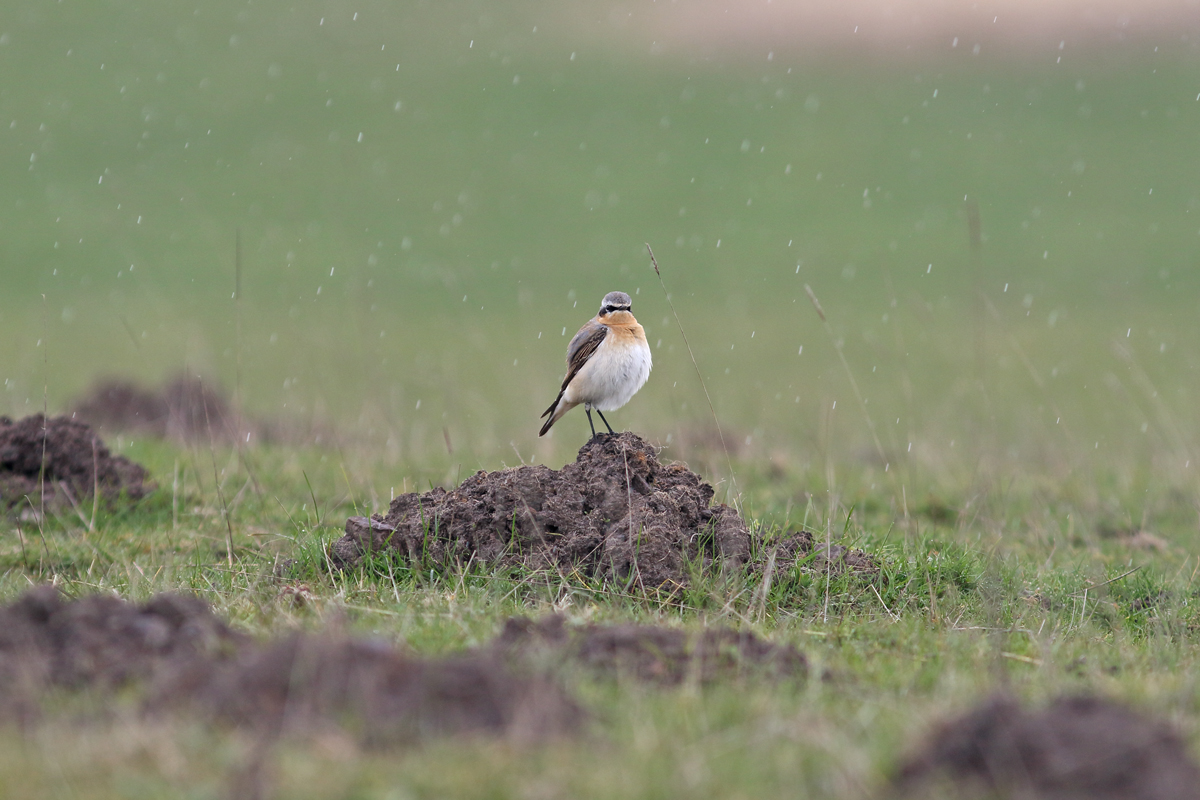
Edit - Not sure how I missd this out? But anyway, Sunday 16th saw me and John up at Brizlee again. It was bright and sunny but cold. 5 male Wheatears in 2 places showed well, even in a rain shower, several displaying Redpolls chased and buzzed around the car and a Bilberry Bumblebee was on a sallow beside the road.

Displaying Curlew


Wheatear in the rain.


On the 18th another poor patch year tick materialised on the coast path when we flushed a pair of Red legged Partridges. I didnt see one here last year so they were sort of welcome.

Holly Blue has shown well in the garden this week with 1 on the 15th and 3 on the 20th. Seems like a good start to the year for them...


One worn and one fresh Holly Blue in the garden...

As usual the wind is swinging North for the weekend so it will be baltic while the rest of the country is basking in 18 degrees. 

Dark edged Bee Fly.


Tuesday, April 11, 2023

Garden Centre Endemic.

 Periodically on here I mention some of my dabbles in Spider hunting. That's maybe too proactive. Mostly the spiders just leap out in front of me for attention so a photo is taken and I try to identify it. Some reckon that there are only about 10 species that can be done from images but whilst there are only a small percentage that can be identified in this way its certainly more than ten. Even with my amateurish attempts I have still managed about 50 on the list. Fair enough, they are 50 of the most distinctive species, but surely I've not mis-id'd 40 of them.

When they first caught my attention a couple of years back I bought the 'Wildguides' Spider book. A few pages were more memorable than others including this one - 


You can see in the observation tips, this unusually shaped arachnid 'appears to be restricted to Hothouses and Garden Centres'. Bizarre that some wildlife can be 'endemic' to Garden Centres I thought.

The Spider Recording Scheme website notes - Not formally included on the British checklist although recorded in England in the early 1990s in three widely separated localities - Liverpool, Southampton and Reading. The species is now extremely common in greenhouses in the Reading area and is increasingly being recorded further afield. The spider has been found in every garden centre searched in Cambridgeshire, Huntingdonshire, Bedfordshire, Suffolk, Hertfordshire and Kent and it has recently been found in a Leicester garden centre where it was fairly common within several of their heated glass houses .

With this in mind, it was a species to keep in my back pocket for those often banal visits to the local garden centre where I might find one in among the conservatory cane chairs and padded knee trays. The distribution map shows they have been found either side of us so there was an outside chance.

Then I promptly forgot about it. Until Sunday.

I took Peggy out for her last bedtime stroll around 11.30pm. When we came in I dried her feet and unclipped her harness in the porch. The ceiling is low in here, and I had been followed in by a moth so I scanned around for it possibly settled. There were a couple of resident small spiders ( Zygiella x-notata) around the windows but on the top was a faint web with something stuck in it. I couldn't make it out, but it was tiny and was maybe a bird seed husk blown in or a shed skin of one of the Zygiellas?I gently touched it. 

It moved. 

As I watched it illuminated by head torch its identity soon dawned on me. It was a Garden Centre Spider Uloborus plumipes!

Wow, well I never. The camera and flash were hurriedly sought and images taken. I cant be sure how a hothouse endemic came to live in our bitterly cold porch but suspect last week's visit to Stanton Nurseries for some garden plants might be the source.


Garden Centre Spider Uloborus plumipes  

 It seems that this could be the first for VC68 if not Northumberland so it has been iRecorded. Its amazing how we can travel all over looking for various rarities and a smart, unusual lifer is living at home with us...

The moth took a back seat but after the spider photo shoot was over, a nice Early Thorn was caught on the kitchen wall and released...


Friday, April 07, 2023

Them!

This will be a brief post but I didn't want to miss this one out of the blog. 

In recent years, if you are interested in natural history there is no doubt you will have seen some hysterical information regarding the arrival of Asian Hornets into the UK. If you saw some of the tabloid pieces, these killer aliens are just about everywhere taking over and destroying our natural ecosystems, a bit like the invasions of giant killer spiders every autumn.. You would be forgiven for having an image of the old 50s film 'Them!' in mind when seeing such nonsense.

The worst thing about the dodgy publicity is that now, every summer, someone sees and reports an invasion of Asian Hornets into their garden when in reality the insect they have just seen, flattened with the newspaper or drowned in fly killer is a harmless native Wasp or worse, a declining European Hornet. Asian Hornets, despite what the Mirror or Mail would have you believe are still very rare in the UK with only a few sightings per year ( 23 in total since 2016) almost all confined to the south of England..

With this in mind, experience tells me, it pays to treat any wildlife reports from Joe Public with a massive pinch of salt until it has been confirmed by someone reliable.

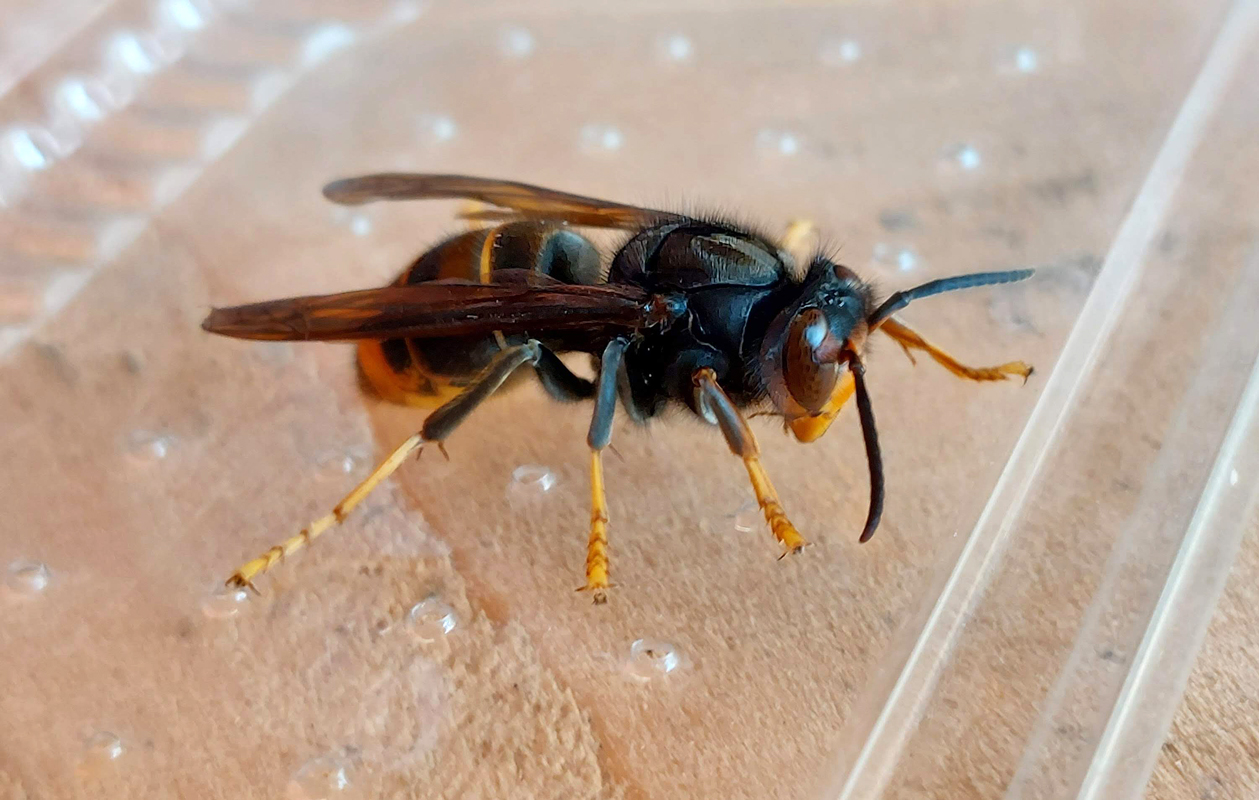
This brings me to events of last Tuesday. I was at work when Jane rang from her work place to tell me they had captured an Asian Hornet from a box of cauliflowers delivered from France and she had sent me a photo. While there are better insect pics, the specimen on show in an empty clear plastic strawberry container was indeed an Asian Hornet Vespa velutina.

In the last 20 years, numbers of this insect have ballooned on the near continent so it is expected that eventually they will get established in the UK but, hopefully, we can keep them out by being vigilant. After all they originate from the far east and southern Asia and have no place in western Europe where they can have a big effect on the numbers of native bees and other insects.

It seemed like this one in the container was the first for the north of England, so I had to pop along for a look. The invader was now in the chiller to keep it calm while awaiting its fate ( freezer). It was carefully extracted for no more than a minute so I could take a record shot. I was surprised to see not some vile deadly beast but a really smart hymonopteran, Slightly smaller than our native Hornets, but still quite a unit, it adopted a go-faster racing pose and was decked out in mostly black with yellow socks and some orange on the stinging end. Very nice.

After it was frozen the next day a chap drove all the way up from Wakefield to collect the specimen for 'verification'. He said the vegetable company would be contacted and given advice on measures to prevent the importation of non native pest species into the country. 

I confess to feeling a bit sorry for it...

Asian Hornet Vespa velutina


Monday, April 03, 2023

It feels like spring.


Alnmouth with Coquet Island in the distance.

Sunday was a calm and pleasant day, getting brighter as it wore on and for once spring was in the air. What breeze there was, came from an ENE direction building hopes that we might come across something out of the ordinary. Unfortunately we didnt turn up anything rare but we still had a good morning seeing a few migrants.  

I met John at Alnmouth Cricket Club at 7am. A stroll down to the water works and flood meadows was filled with bird sounds. Lapwings and Redshanks displaying, Geese clattering around, a Water Rail squealed from a dense patch of phragmites and the sound of Chiffchaffs rang from every tree tall enough. 

A field near the track held some Mad March Hares, in April, with 8 or more chasing and boxing around.


Brown Hares mating.

 While watching these, a pair of Shoveler flushed from the small pond to settle again on a flash near the river.

Next we took the car down to the estuary. From here we covered the rest of the patch including the shore, bracken hill, and the estuary itself.

At this time there is an odd mix of birds of both summer and winter. There was a lone Barnacle Goose swimming up river beside a drake Red breasted Merganser, 25+ Wigeon, 20 Teal, 153 Curlew, a Goosander and 80+ Pinkfeet North while newly arrived birds included a female Wheatear, 4 Sand Martins, many Chiffchaffs, a Little Egret and 15+ Shelduck . There was no sign of the Avocet John had here mid week.

Little Egret

Incoming Sand Martin.

Stonechat on shed in the dunes.


Teal looking very smart in the sunshine.

Wheatear flew from beach and relocated in paddock on top of bracken hill.

 Later in the morning the warm sun brought out a few insects - 2 Small Tortoiseshells and a scatter of Hairy footed Flower Bees.

A small solitary bee, I'll need advice from specialists for this one...Andrena scotica. 

A male Hairy footed Flower Bee showing is feathered legs and the white blaze...

Small Tortoiseshell, the first butterfly of the year for me.

Back home at lunchtime, I was pleased to give the lawn its first cut after a wet March. Now I can let the meadow kick in. In the garden were more Hairy feet and 2 Peacock butterflies...

Peacock in the garden.


Sunday, March 26, 2023

Guided Walk


This weekend Jane has been away on a jolly with her friends so that leaves me in charge. After the dog that is. 

Yesterday I was leading a guided walk for Alnwick Wildlife Group on a 3 miles circular route from our Village, taking in local woods, farmland and the coast path. When committing to a guided walk, I always try to have an idea of what to look for and where so people can get the most out of it, but that rarely works out as you'd expect. The other week I added a short note to the AWG newsletter describing the route and what to expect.  

Largely flat walking with some muddy paths so suitable footwear required. 3 miles. Village Hall available for an hour on return for loos or people to catch up, eat their lunch, have tea or whatever? The route will start off inland with fields, woodland etc. Then down to the coast and south back to Howick.

Weather permitting, I’ll put a battery moth trap in the Village Wood to check on the way through. 

There should be some spring flowers with the likes of Marsh Marigold, Lungwort, Primrose, etc. Maybe some early Bees, with Hairy Footed Flower Bee as well as Bumblers. Chance of an early hoverfly too. Woodland birds singing, Woodpecker drumming, Buzzard, Jay, Nuthatch. Chiffchaffs often back by then. Raven possible. Roe Deer, Brown Hare maybe.

Down to the coast with Fulmars and Kittiwakes back at the cliffs.

What I cant predict, a month in advance, is the weather. After a week of generally mild and fair days, it was all change on Saturday with a fresh, cold NW breeze and some short sharp showers to spice things up.

So, how did it go....

Well, the previous night was quite mild and only a light shower was on the menu so the battery bucket trap was deployed into the wood while the Robinson was on our drive for the Garden Moth Survey as usual. The walk was due to start at 9am so at 8.15 I gathered both traps in and took them to the hall. It was dull and cold with rain until 10am, so my plan was, if anyone turns up,  to go through the trap in the hall until the rain eases then we can head off. If no one turns up, at least I am about 100 mtrs from home.

I need not have worried. Regardless of the return to winter, 21 hardy souls filled up our small car park and were ready to be shown local wildlife. 21 is quite a few, and maybe a few too many but at least we will get a walk out of it. The observer experience in the group varied from seasoned experts in botany, environmental, ecological surveys and birders all the way to beginners looking at nature with all levels between.

Now I look at my advert, its wasn't too far off the mark really except for the invertebrates that were never going to be out and about in this weather.

To begin with, there was a nice selection of regular early spring moth species to show. Everyone seemed to enjoy this part and it was a great way to start the walk, now at least most people had seen some new stuff!

The combined two trap catch - 

Taxa

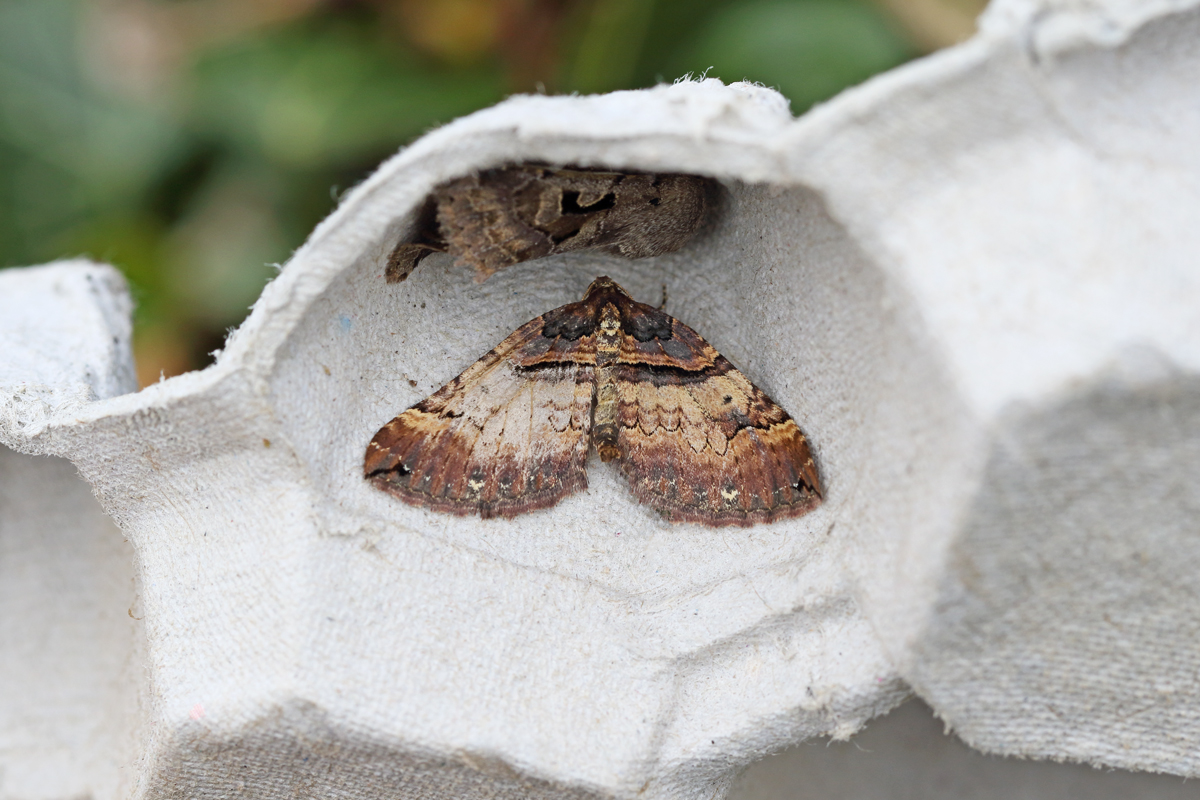
70.066  Shoulder Stripe (Earophila badiata)  1

70.101  Mottled Grey (Colostygia multistrigaria)  1

70.103  Water Carpet (Lampropteryx suffumata)  1

70.156  Brindled Pug (Eupithecia abbreviata)  7

73.069  Early Grey (Xylocampa areola)  8

73.194  Chestnut (Conistra vaccinii)  6

73.241  Pine Beauty (Panolis flammea)  1

73.242  Clouded Drab (Orthosia incerta)  2

73.244  Common Quaker (Orthosia cerasi)  11

73.245  Small Quaker (Orthosia cruda)  4

73.249  Hebrew Character (Orthosia gothica)  46

73.250  Twin-spotted Quaker (Anorthoa munda)  3

73.336  Red Chestnut (Cerastis rubricosa)  6
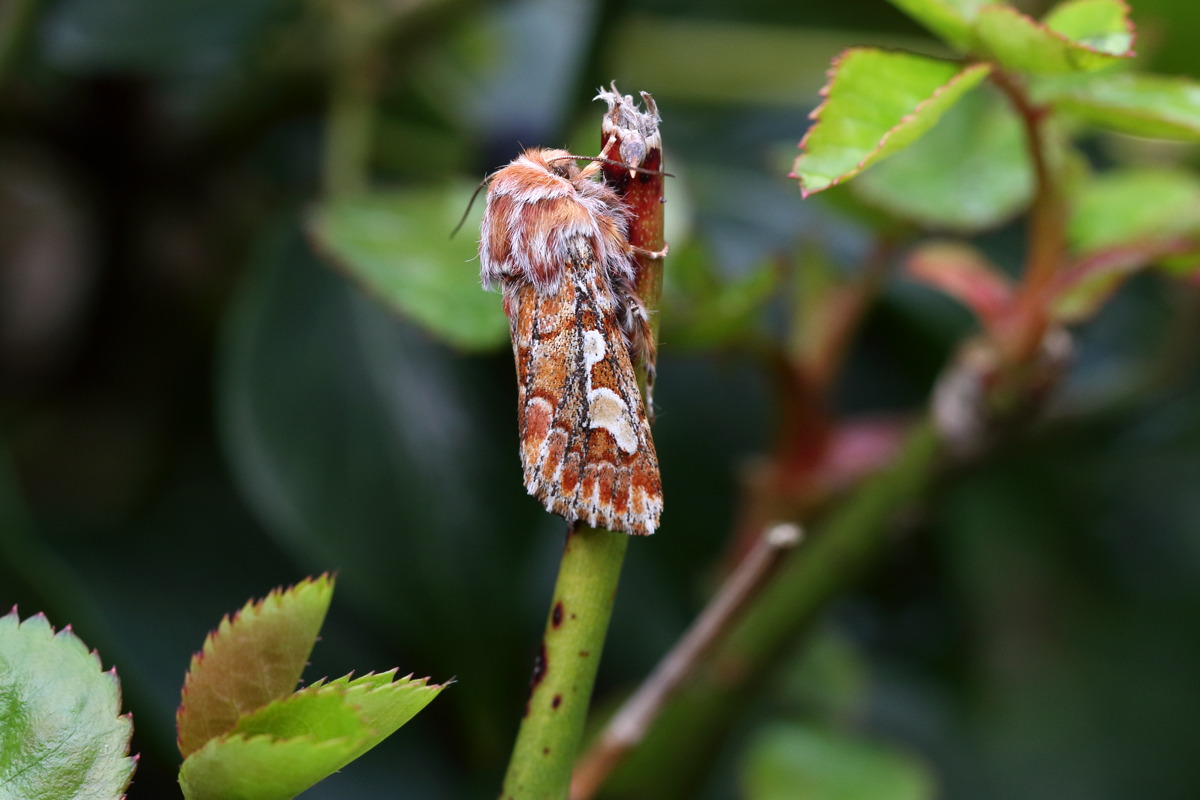
Pine Beauty

Shoulder Stripe with a Hebrew Character hidden above.

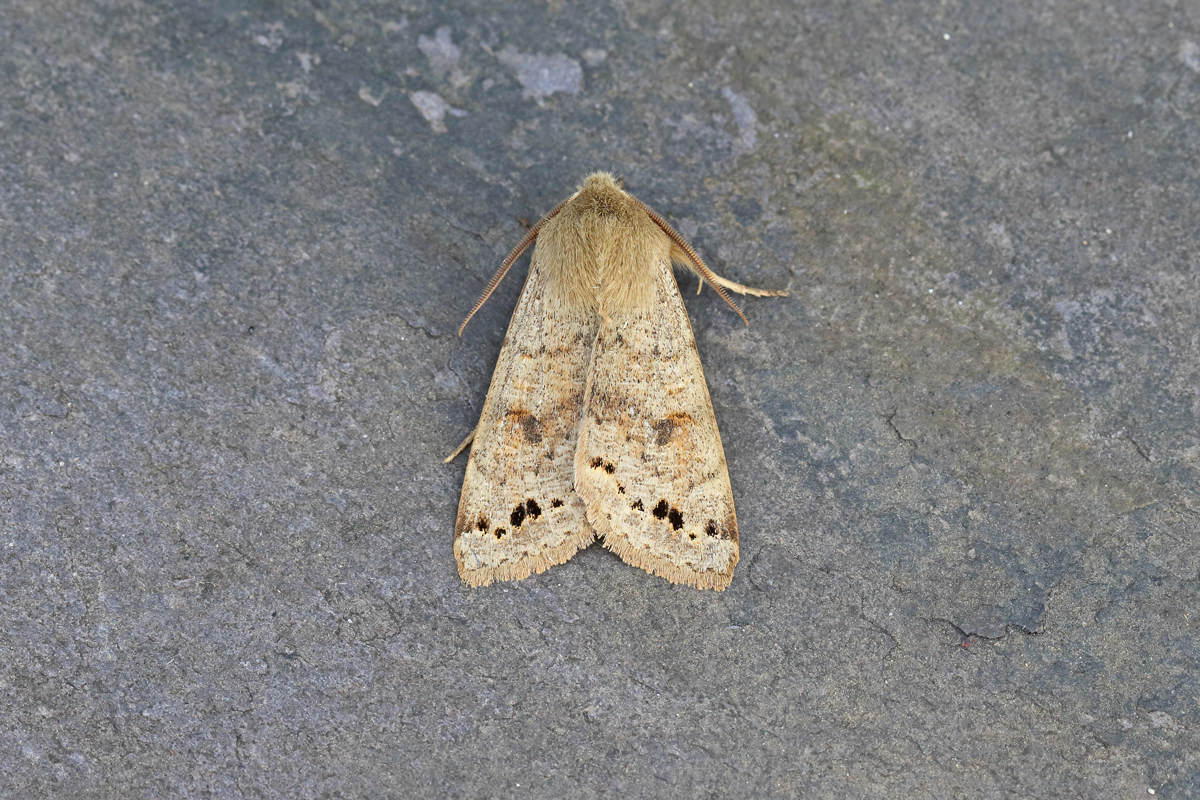
Twin spotted Quaker

The muddy route wound our way up through Village Wood where the first Marsh Marigolds were in flower, 4 Chiffchaffs had been singing earlier but not a peep when the guests were here, the Badger set was inspected as were a few of the introduced trees.

Out at the top we optimistically checked a flowering patch of Lungwort for bees, but that was never an option today. The flowers were nice...
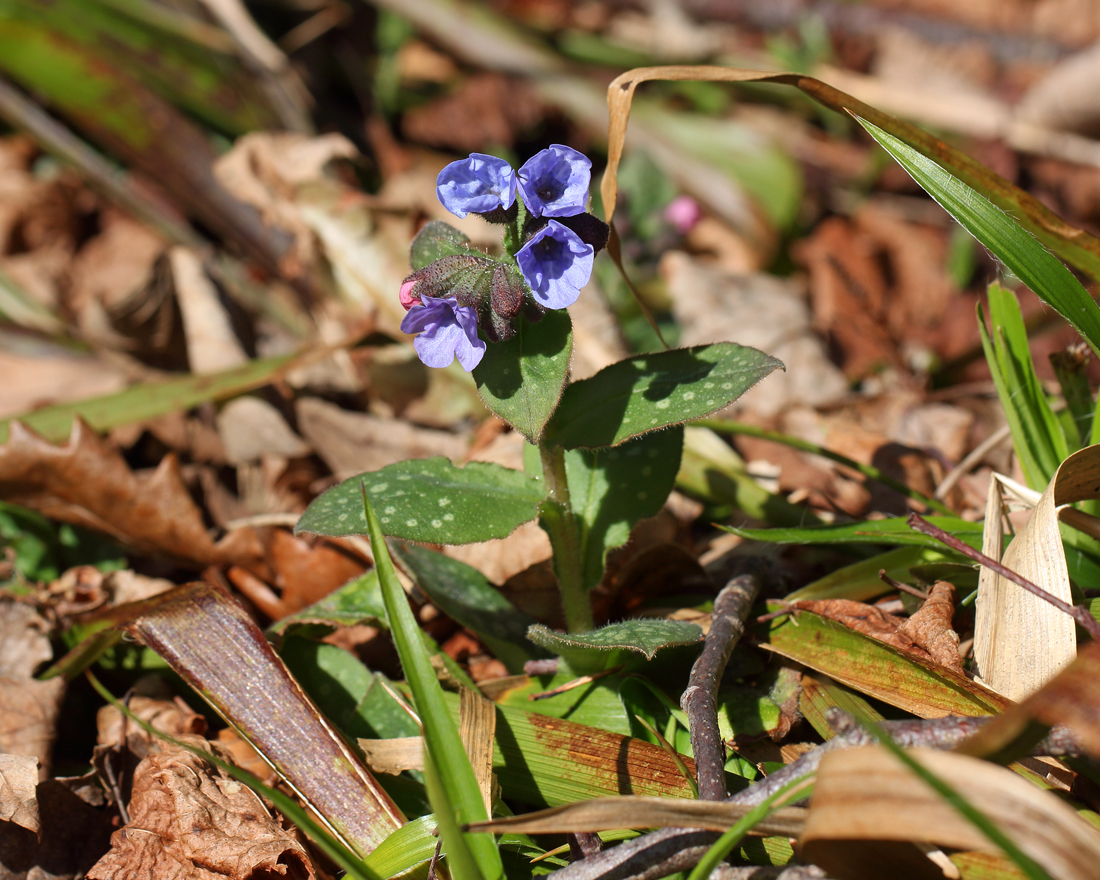
An older Lungwort shot in better weather.

Walking the track north, Butterbur were just beginning to flower, whilst a Roe buck watched us as carefully as we watched him. Other plants such as Opposite leaved Golden Saxifrage and Holm Oaks were given the once over too.

Here the track takes us back east to the coast over exposed farmland. A few Skylarks remained in full song defying the weather.

We reached the coast just south of Craster. From here a party of 8 or more Bottle nosed Dolphins gave prolonged views, the group included a few juveniles too that everyone  was pleased to see. A few birds were noted now, with a bathing Purple Sandpiper, 1 Red throated Diver and a few Shag S, strings of Gannet N, a few Eiders, 2 Canada Geese S ( a patch year tick for me) and a flock of 15+ Sanderling N ( also a new one for the year and often tricky to get on our rocky bit of coast. 

The strappy leaves of Spring Squill hinted of flowers to come, but there were no Wheatears waiting. Along to Cullernose cliffs a few Kittiwakes were out on the ledges along with Fulmars. The walk back to the village along the road only gave us a newly arrived Chiffchaff and a Curlew.

I didnt bother taking a shot of the walking group mainly due to the weather.

As you can imagine, later in the afternoon the sun came out... 


Monday, March 20, 2023

Storming the Castle.

 This might be a longer blog post than most recently, as this week I've finally got something to write about, so please bear with me. There has even been some good signs of spring.

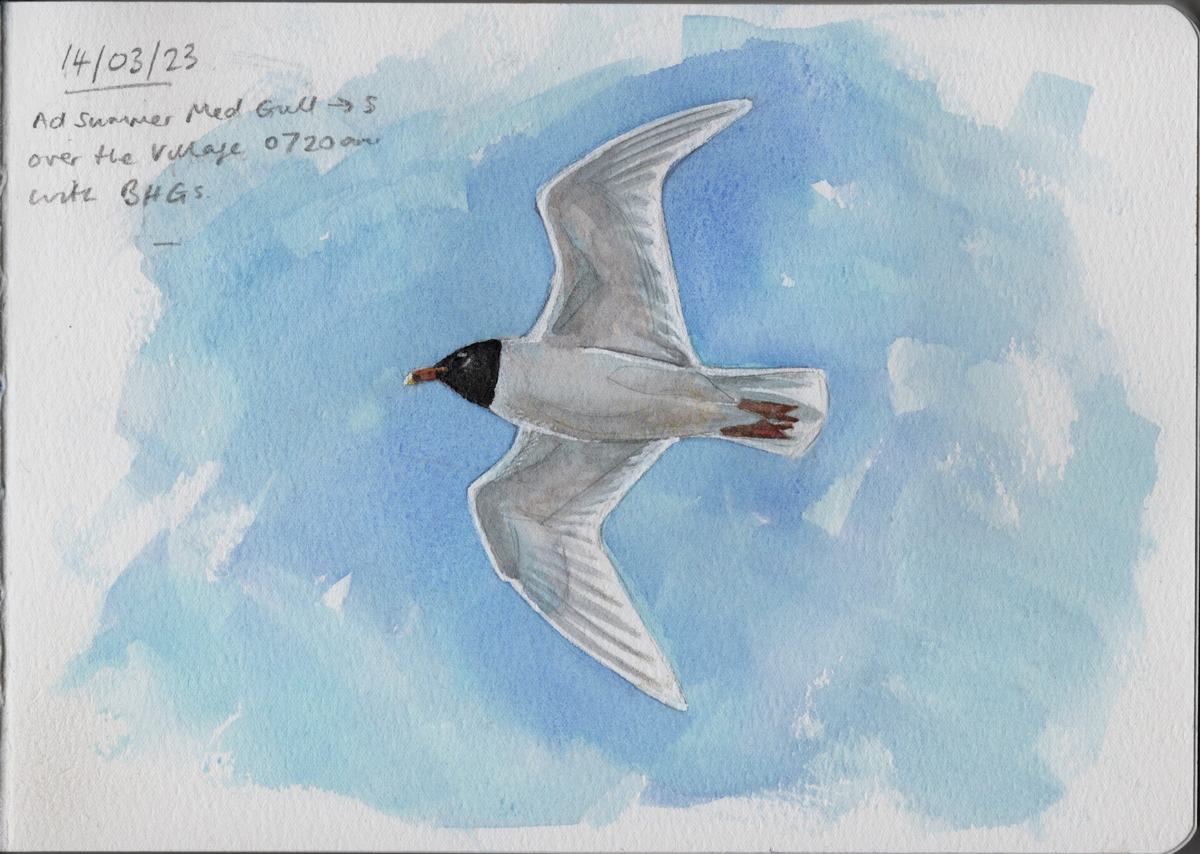
Before I come to the weekends events, on Tuesday mornings dog walk, a smart adult, summer plumaged, Mediterranean Gull flew low south over our village with a team of Black headed Gulls. My first of the year on patch. As far as gulls go they don't get much smarter than these, with backlit angels white wing tips and contrasty hood..

Mediterranean Gull.

The next few days were standard, with that treading water feel to it, until Friday.

I was office based on Friday morning when at 09.17am a WhatsApp message came through - 


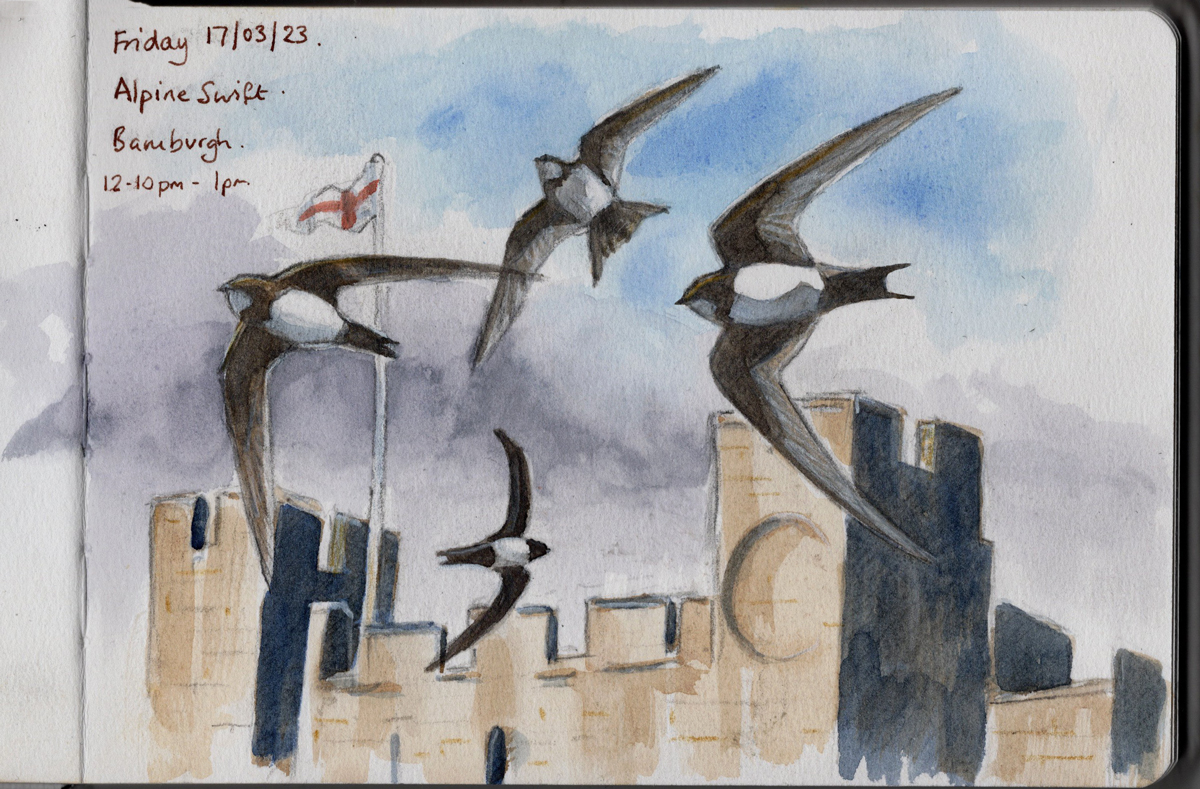
Alpine Swift is a rare bird in Northumberland with only around 15 records and there hasn't been one 'gettable' for about 30 years. Not in my time anyway. 

Now, my office is 40 miles from Bamburgh Castle so it is not exactly a short jaunt away. When that last message came through I felt some relief that it had gone, but a short while later, it had returned. Had I been working from home, Bamburgh is only 15 miles away, but not today. 

After another hour and more updated grippage of 'showing well' and a frame filling pic, it all became too much, I had to go. So, colleagues updated, I was going to pop out and work from home in the afternoon...

After a sluggish tractor / tourist subdued drive up the A1 the car finally came to a halt in the large car park over shadowed by the huge bulk of Bamburgh Castle at 12 noon. A quick scan with the bins. Nothing. Just blue sky and fluffy clouds.

Checked phone. 


Bugger. No news for an hour. Its not looking good.

I pulled out of the car park and drove a few hundred yards to the south and parked on the road side so I didn't need to pay and thought I'd give it half an hour and see what happens. As I got out of the car I was joined by Alan Hall who was buzzing having had great views of the bird. By now I had resigned myself to having wasted my time, but you have to try or you'd never succeed.

Then, Alan became quite animated. Gesturing over the dunes  - 'There it is!'

And it was coming our way.

What a bird, Alpine Swift is a good deal bigger and bulkier than Common Swift, appearing like a more stiff winged Merlin as it approached and went low, straight over our heads then gone towards the village. This is only my 2nd UK record after seeing one on this very same date in Scarborough 19 years ago. Alan left for home but I went back to the car park where a few others were watching the now very high Alpine Swift feeding. Sometimes it would drop lower and strafe the castle walls and flag pole at great speed, rocking its wings side to side. I wished for my camera that was lying at home, but no worries, the lack of it meant I could just take it all in above us.

After about half an hour, the car park attendant came. This was cue for me to head back home and work. What a day. The swift was present only for a short while after I left when a rain shower seemed to move it off and despite some vague reports around 3pm it was not seen again. 


Back to reality now. Yesterday was another pleasant day so I met John at Seahouses Farm layby and after some car shuffling where we took one vehicle up to Craster then drove back to Howick to walk the coast line looking for migrants, we set off in clear blue skies for the walk north.

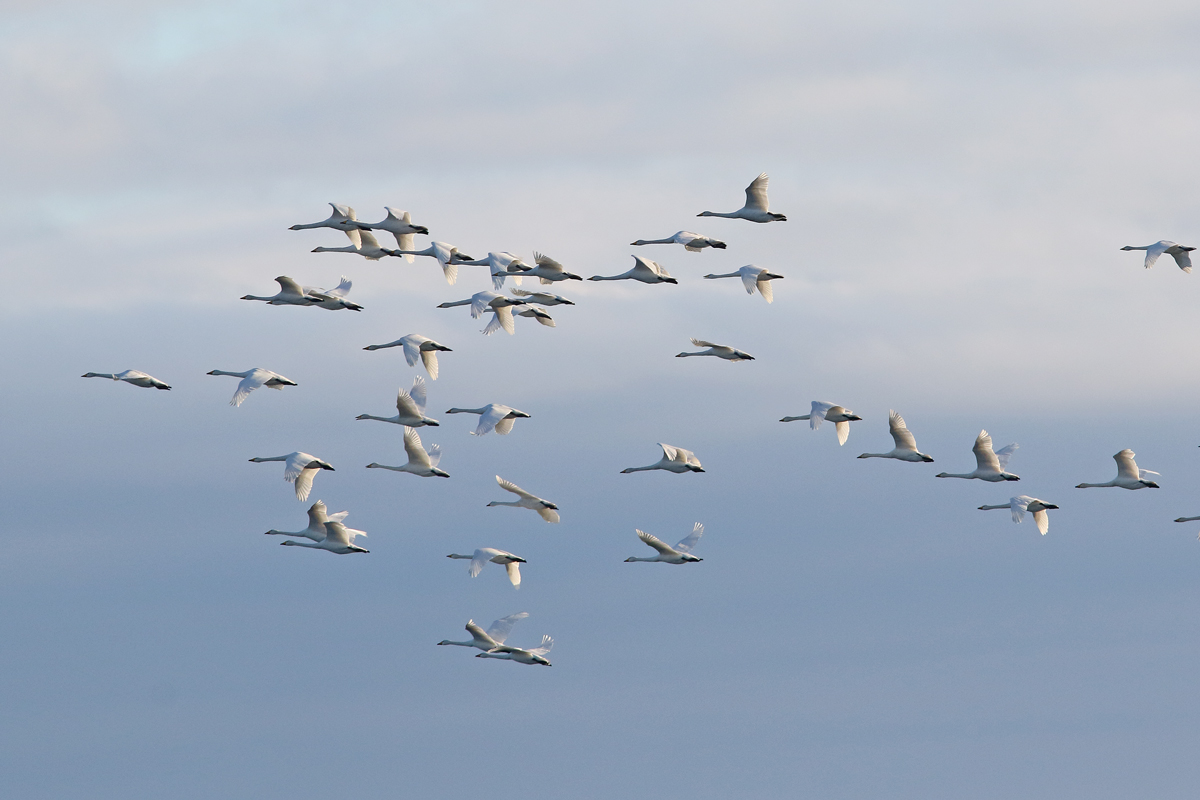
Soon the sound of trumpeting Whooper Swans was followed by the lovely sight of a majestic flock of 47 slowly following the coast north. Another party of 72 was seen later on at Craster as well as a big flock of 350+ Pink footed Geese following the same route back up to breeding grounds. 

Whooper Swans

As we approached the small Salters Gate layby an early Sand Martin flew low west while a couple of Chiffchaffs could be heard singing.

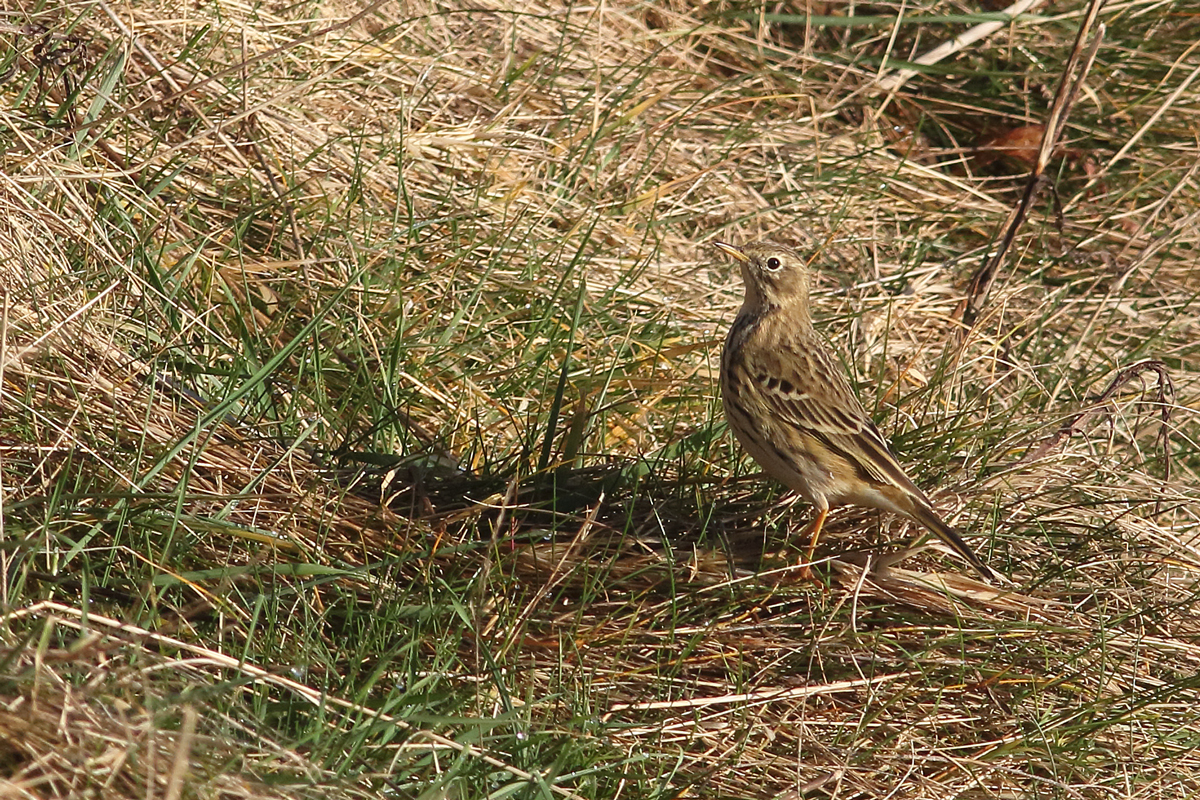
A few Skylarks, Meadow Pipits and Wagtails were also on the move north along the coast path.

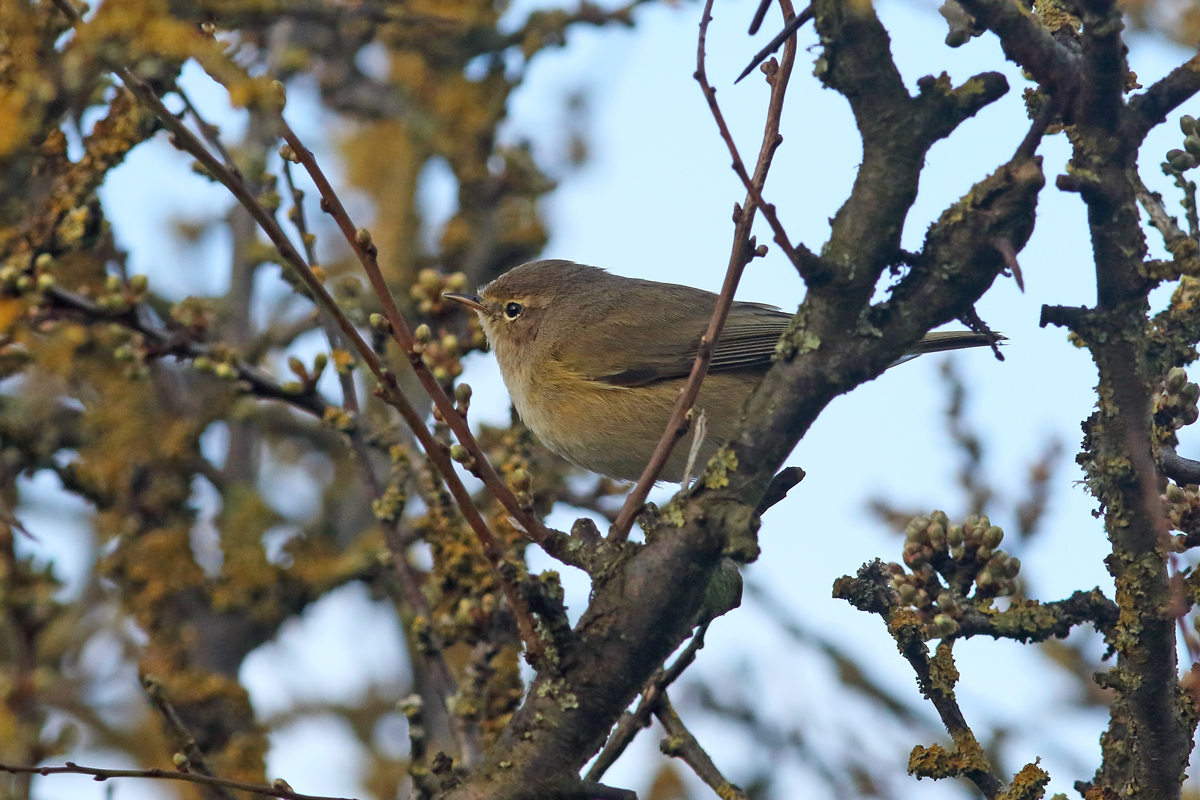
Chiffchaff, Howick coast path.

Meadow Pipit

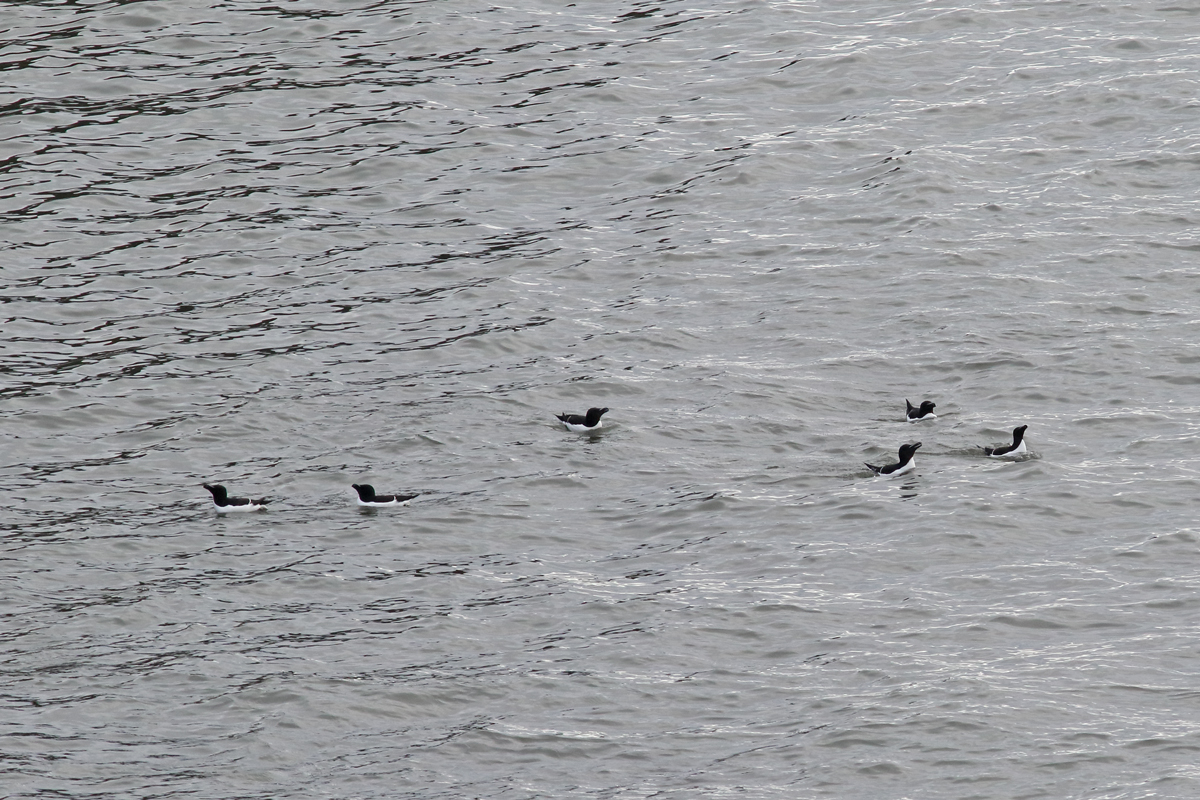
The rocky shore between Cullernose and Craster is excellent for Wheatears or a Black Redstart maybe but we didnt see any on this walk. New additions to my Local Patch year list were welcome though with a drake Red breasted Merganser and 3 Lesser Black Backed Gulls N. A few Razorbills were displaying on the sea below Cullernose cliffs and the first Kittiwakes were back on the sea.

Razorbills displaying.

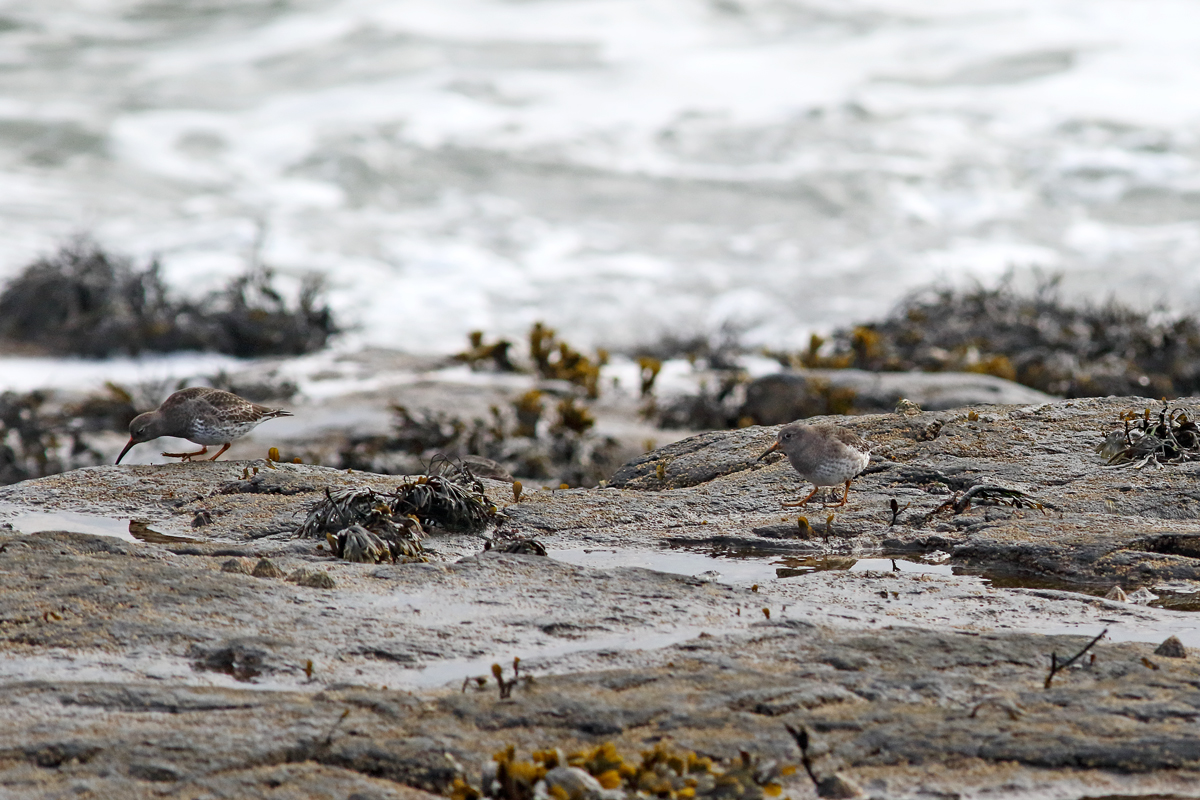
After a wander around Craster seeing only 9 Purple Sandpipers of note, we arrived back at my car for tea and sausage rolls before moving back down the coast for a short seawatch off Howick. At this time of year seawatching is usually slow but we had things like wildfowl or maybe a Sandwich Tern newly back in the county, in mind.

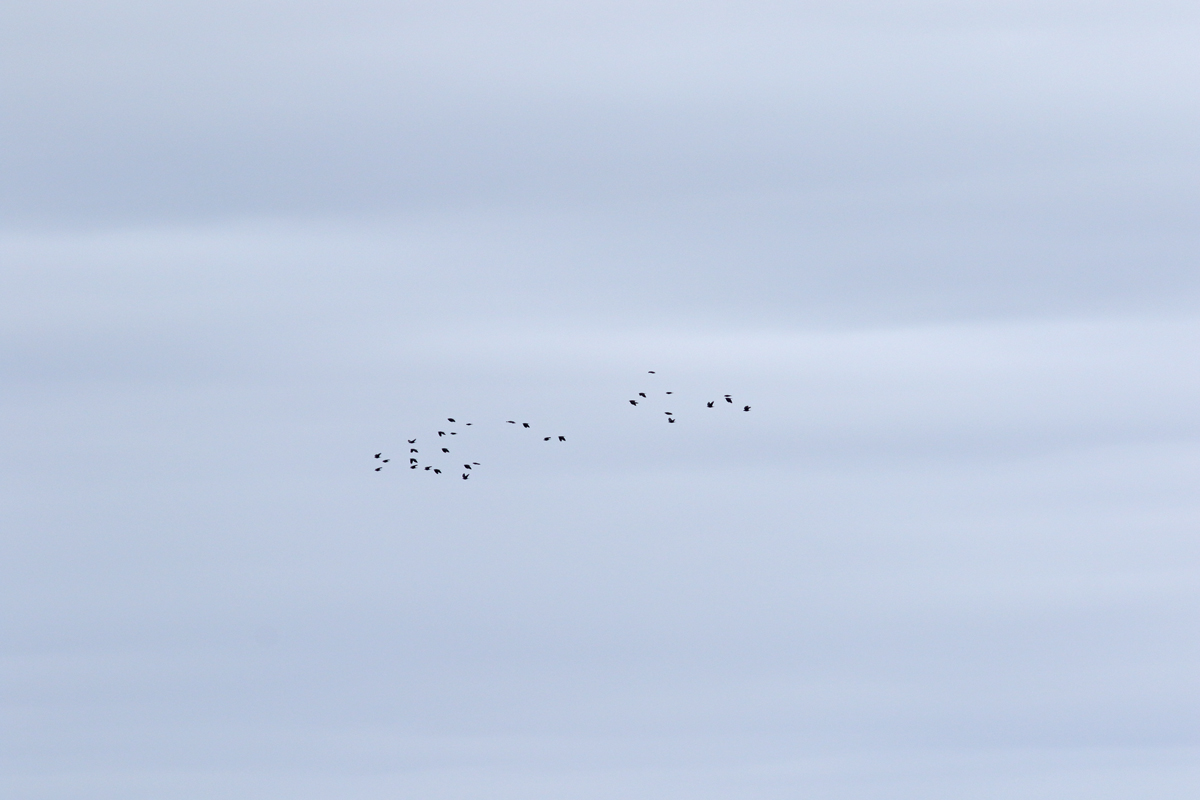
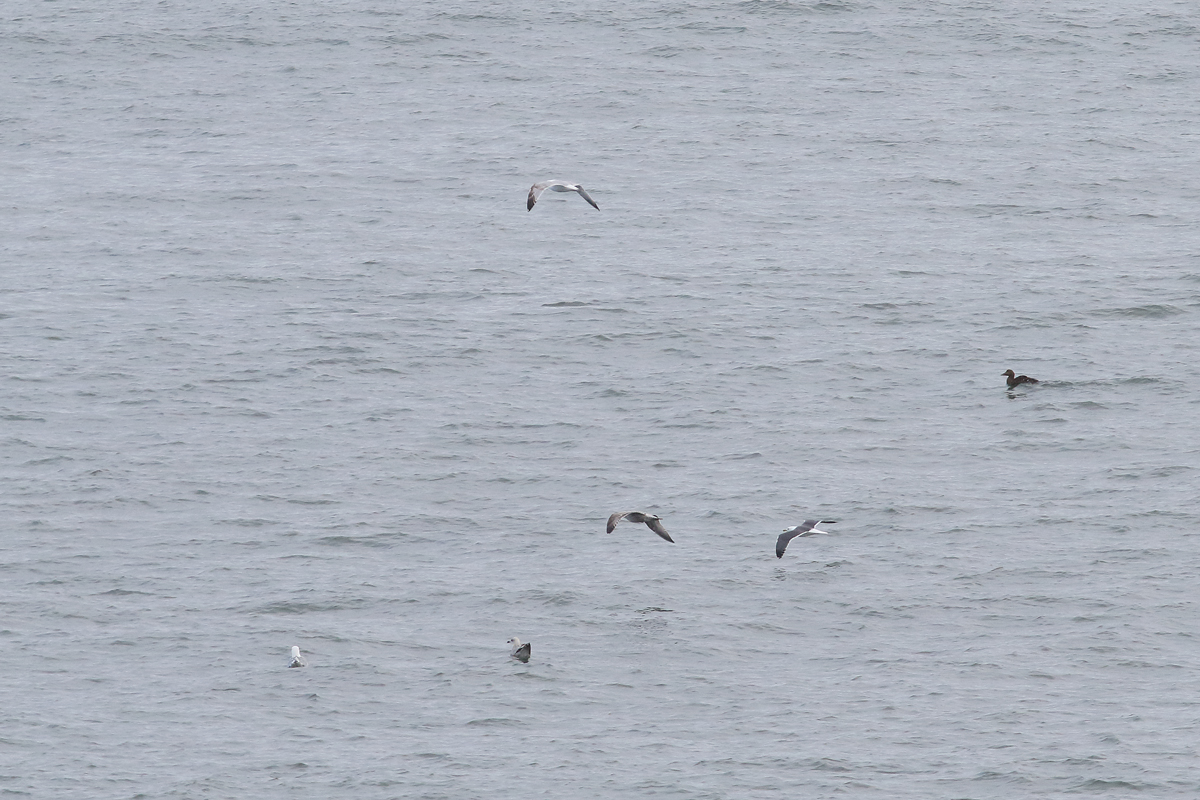
We had 8 Red throated Divers N, 12 Common Scoter N, 4 Dunlin ( another new patch tick), a few Gannets and Kittiwakes, 1 Shelduck N, 2 Lesser black backed Gulls N and a Harbour Porpoise. More intriguing though, I picked up a flock of tiny dots miles offshore towards the horizon that looked a bit like Lapwings at that range. It was clear they were coming in off so I stayed with them to confirm. When they finally came within reasonable range, I could see it was a group of 31 Jackdaws! What on earth were Jacks doing miles out to sea? That's a first for me, migrating Jackdaws... 

Migrating Jackdaws out at sea.

Low right, adult Lesser black back.

2 of 9 Purple Sandpipers

So not a bad morning out, a good end to a good week. The moth trap has been active too since Friday so here are a few of the moths caught -

Acleris literana

March Moth

Oak Beauty 

Red Chestnut

Twin spotted Quaker, orange spotted form.

Pine Beauty,