A belter of a day today, with the temp at 16 degrees at lunchtime.
This morning was spent at Branton doing the WeBs count with John. Before we started, a casual stroll checking a sunny hedge bottom produced
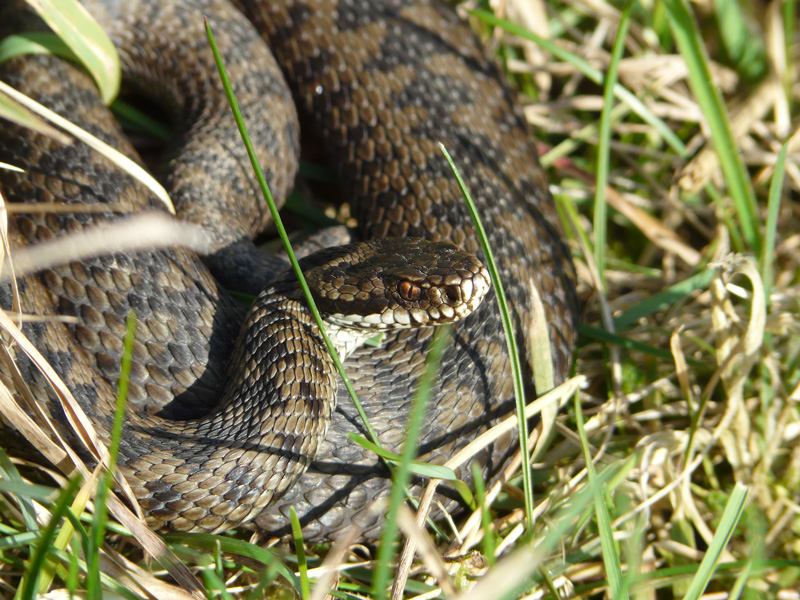
8 Adders basking in the early morning sun. All seemed to be females (They are males, see comment below). A selection of individuals are above, with one pic containing a pile of three!(Count the heads).
[
See note below. Thanks the Greenie for his comment on the Adders. I found it a good help, so maybe it will come in handy for you too...
Stewart ,
Males are very variable in colour and when first out of hibernation as they are now , and can be very dull having spent several months under ground . When they 'slough' their skin , they will be much brighter . They also emerge 2/3weeks before females , and can be found lying around in numbers just outside their hibernacular , as your 3 were . In the past I have found up to ten animals lying together . Females tend to have a light brown/ginger ground colour with darker brown zig zag marking , which is less defined at the edges than the black , more defined zig zag of the male . The 'silver' colouration you mention occurs when a female in season , just every other year for them , is found , then hormones in the male go to work to produce that silver and black phase . Of interest , on all four occassions that I have witnessed 'the dance of the Adders' the combatants have always been silver/black males .]
Lots of
Coltsfoot was in flower (top) and on the Sallows -
 |
| Peacock |
 |
| Small Tortoiseshell |
Of the birds, a darvic ringed Mediterranean Gull ( ring was Red PJJ1), 3 Great crested Grebes and lots of returning upland breeders such as Oystercatchers, Redshank, Curlew, Lapwing and Lesser black backed Gulls were the highlight.
Back home, it was warm enough for the first grass cut of the year. Time in the garden produced Small Tortoiseshell, Red tailed Bumblebee and Buff tailed Bumblebee and the resident Tree Sparrows.