Showing posts with label Adder. Show all posts

Thursday, April 20, 2023

Catch up...

 A quick catch up of April so far .

Since the last general post a few more migrants have appeared locally. On 6th a very early Willow Warbler sang in our garden at first light but was gone by 7am. There arent many here yet but we did have 5 singing at Brizlee at the weekend.

A pair of Greenfinches at our feeders were the first to do this, this year and Hairy footed Flower Bees were out in good numbers when the sun was shining.

One good (?) bird was seen briefly on the coast path on the 8th. An Egyptian Goose flew north past the Bathing House followed by 11 Whooper Swans. The Goose is only the second record here after one last year. They'll be breeding on the pond soon no doubt. Our first Swallow was over our house on the 8th but they are still not here in any numbers.

On 9th, John and me walked up the Hulne Parks south wall to Brizlee. It was cool and damp with little to show other than 2 Red Grouse, a few Curlew, a singing Willow Tit and best of all a close, but unseen, Green Woodpecker yaffling loudly. 

Willow Tit singing at me.

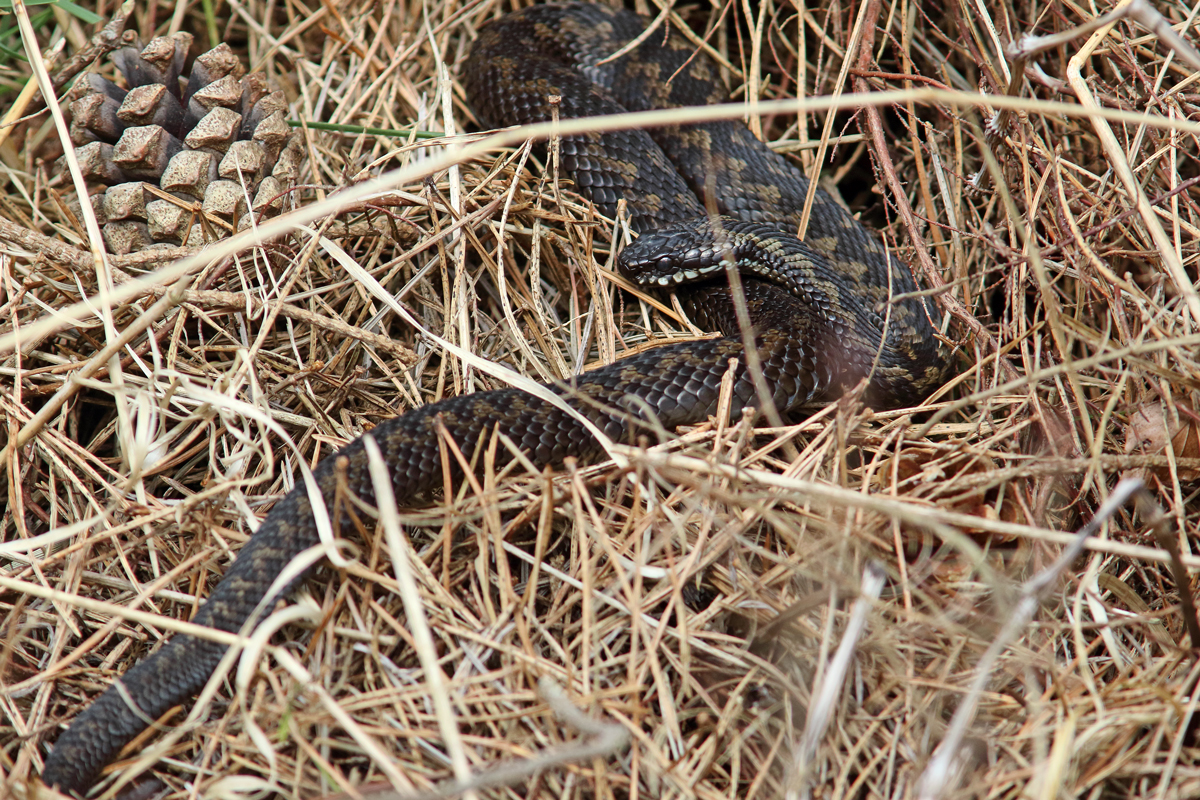
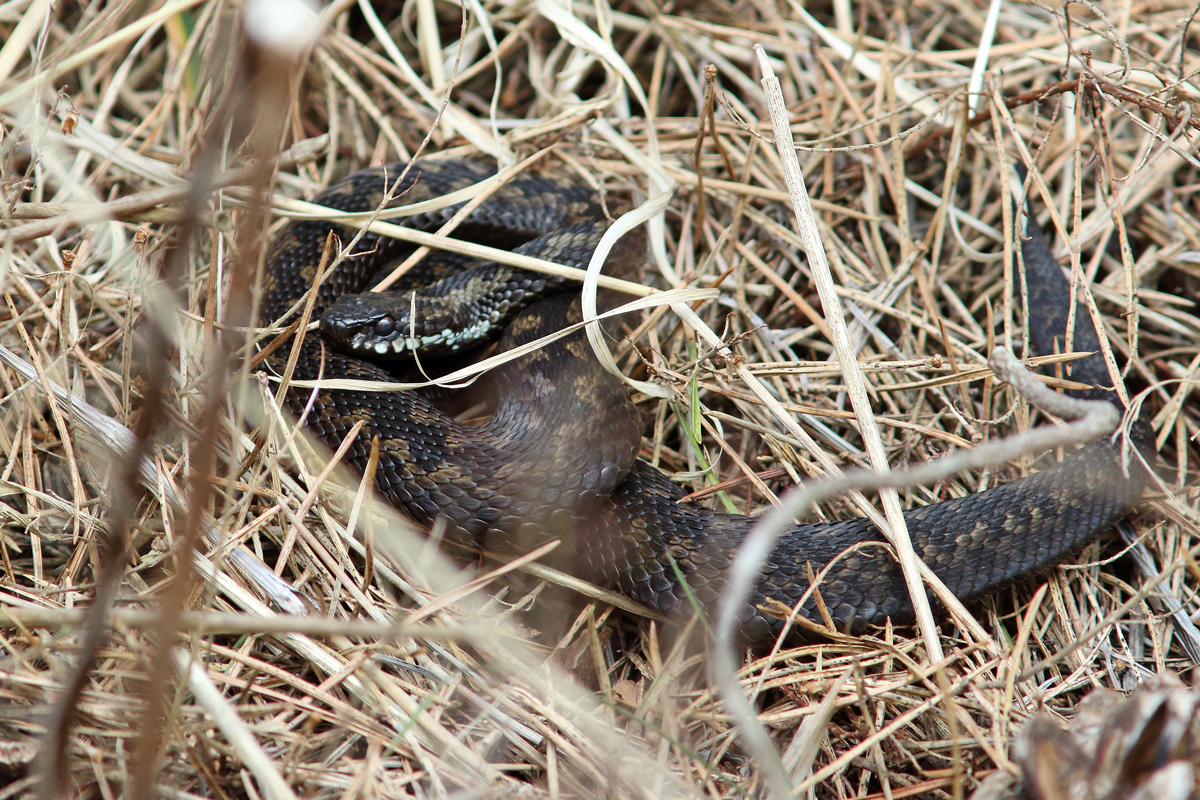
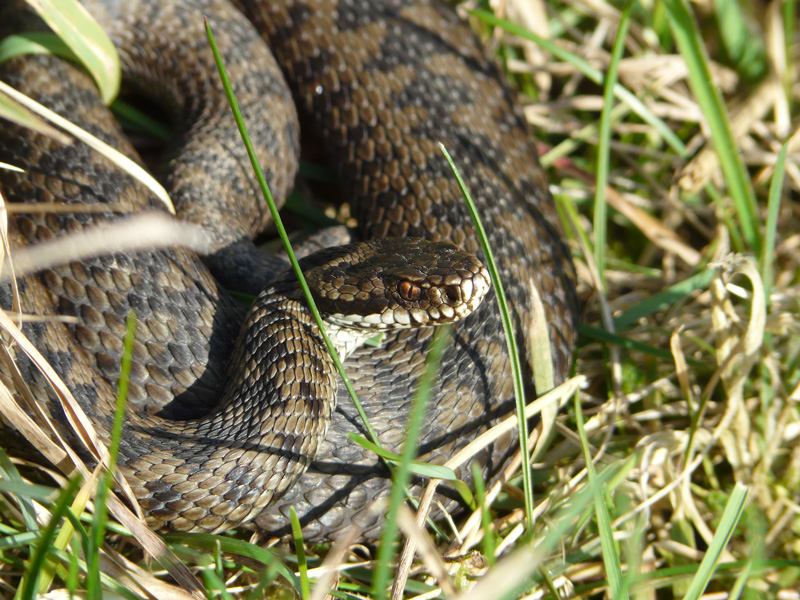
  Near by 2 Adders were our first of the season.

Adder

Over Easter weekend an in house spider hunt revealed not only the Uloborus plumipes already posted, but Pisaura miribalis, Pardosa sp, Woodlouse Spider, Zygiella x-notata and an Oonops in the bathroom.

The local Blackcaps were late to the party on the 14th with 3 singing in our village wood.

When driving back from Alnwick on 15th we were over flown by a Red Kite at Denwick heading south. One day I'll get one on the patch but this was about 4 miles too far west.

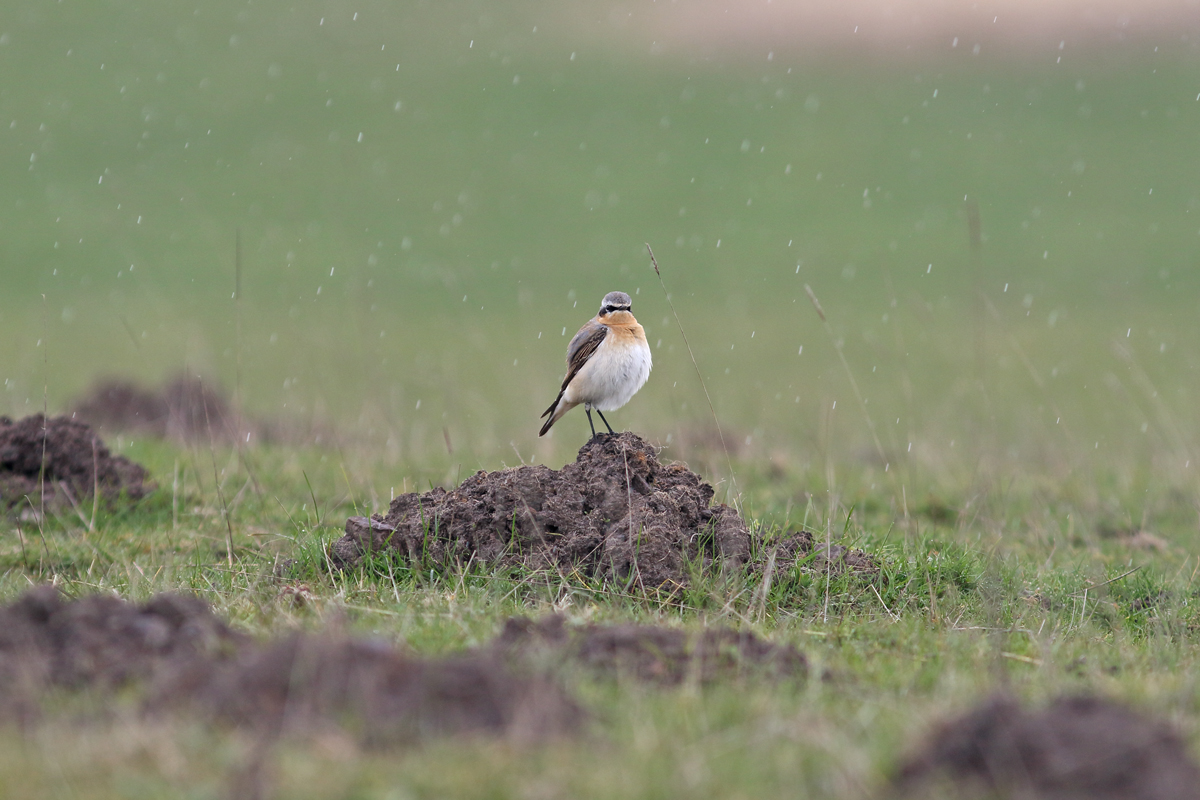
Edit - Not sure how I missd this out? But anyway, Sunday 16th saw me and John up at Brizlee again. It was bright and sunny but cold. 5 male Wheatears in 2 places showed well, even in a rain shower, several displaying Redpolls chased and buzzed around the car and a Bilberry Bumblebee was on a sallow beside the road.

Displaying Curlew


Wheatear in the rain.


On the 18th another poor patch year tick materialised on the coast path when we flushed a pair of Red legged Partridges. I didnt see one here last year so they were sort of welcome.

Holly Blue has shown well in the garden this week with 1 on the 15th and 3 on the 20th. Seems like a good start to the year for them...


One worn and one fresh Holly Blue in the garden...

As usual the wind is swinging North for the weekend so it will be baltic while the rest of the country is basking in 18 degrees. 

Dark edged Bee Fly.


Monday, March 21, 2022

Equinox.

 Out and about recently, its been cold but dry and, dont say it, breezy. Later this week we are due a warmer spell so I'm looking forward to that. Its Equinox today too, so there's more day than dark now. 

Yesterday we ventured to our inland area again hoping for a Gos, but drew another blank. I wonder if the damage caused by storm Arwen has anything to do with it? Massive areas of the upland pinewoods are now lying flat. We managed a few Crossbill families, Stonechat and a lot of Skylarks and Meadow Pipits back on territories but not much else. A short stop on route home brightened things up with our first Adder of the year. Just the one though.


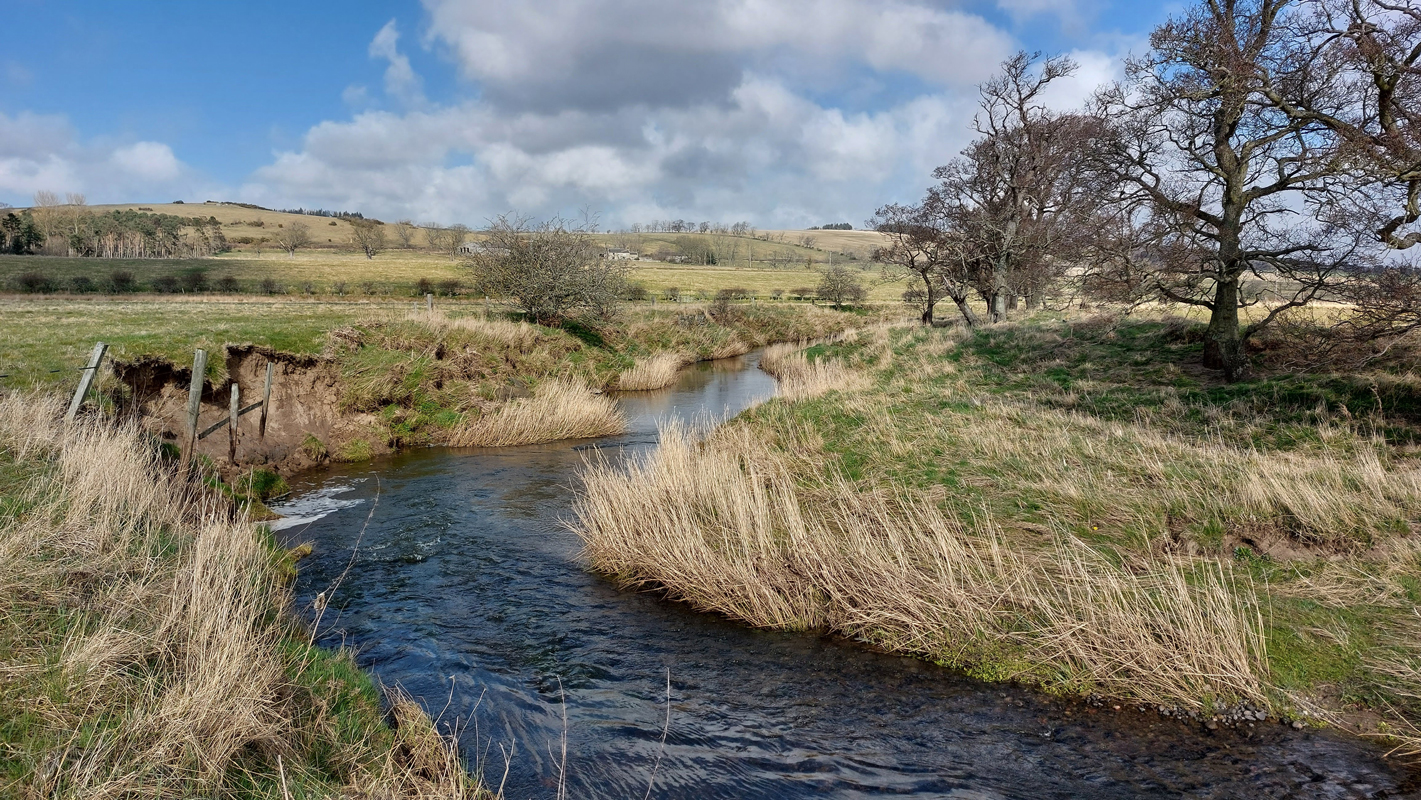
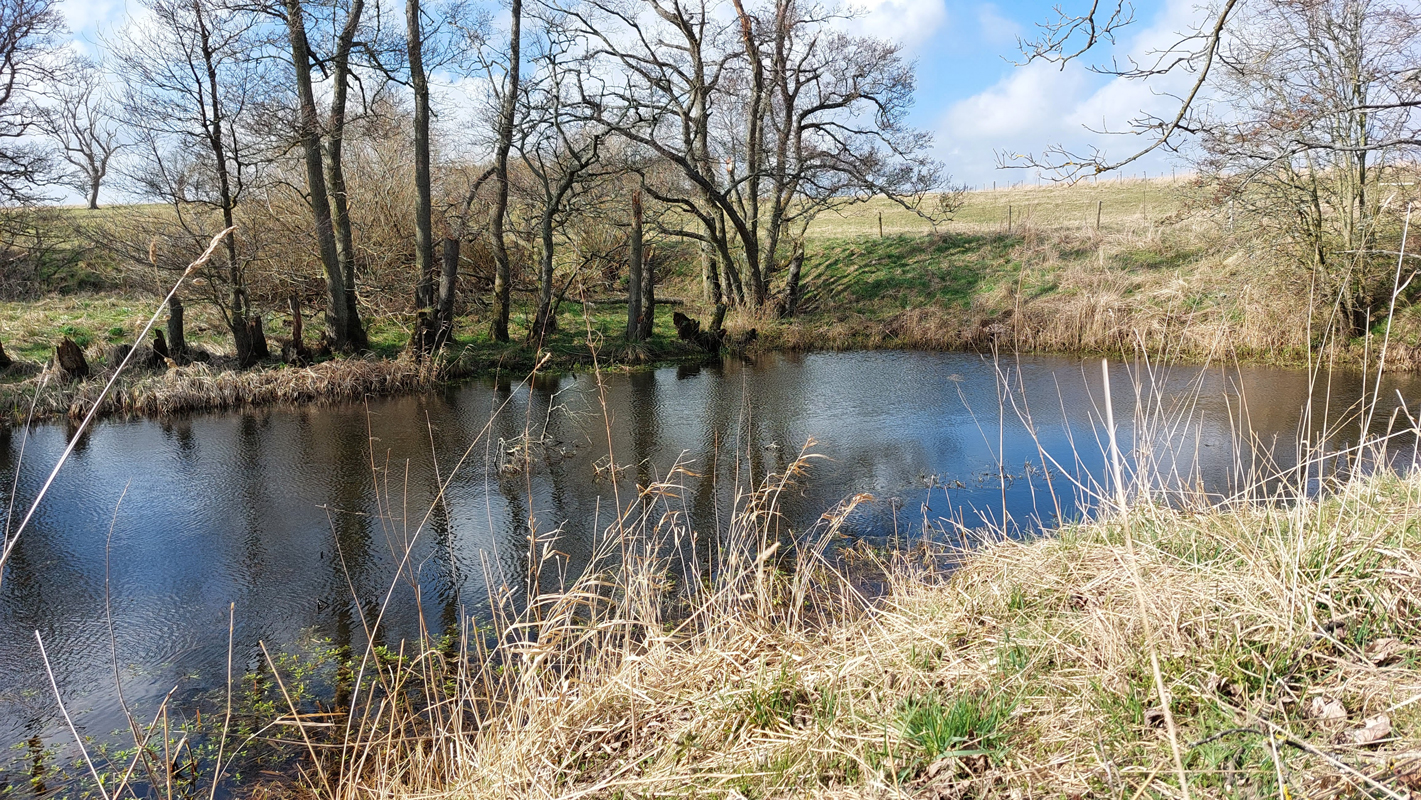
A small stream corner was quite pleasant with lots of Chiffchaffs, a few tumbling male Lapwings, one showing the hen a scrape, singing Curlews, a mass of Frogs and Toads in the same pond and a scatter of Buff tailed Bumblebees on catkins.

The top wire of that old fence was electric and on. I got hold of it twice!

Lots of Frogs in that far damp margin with a few Toads out in more open water.

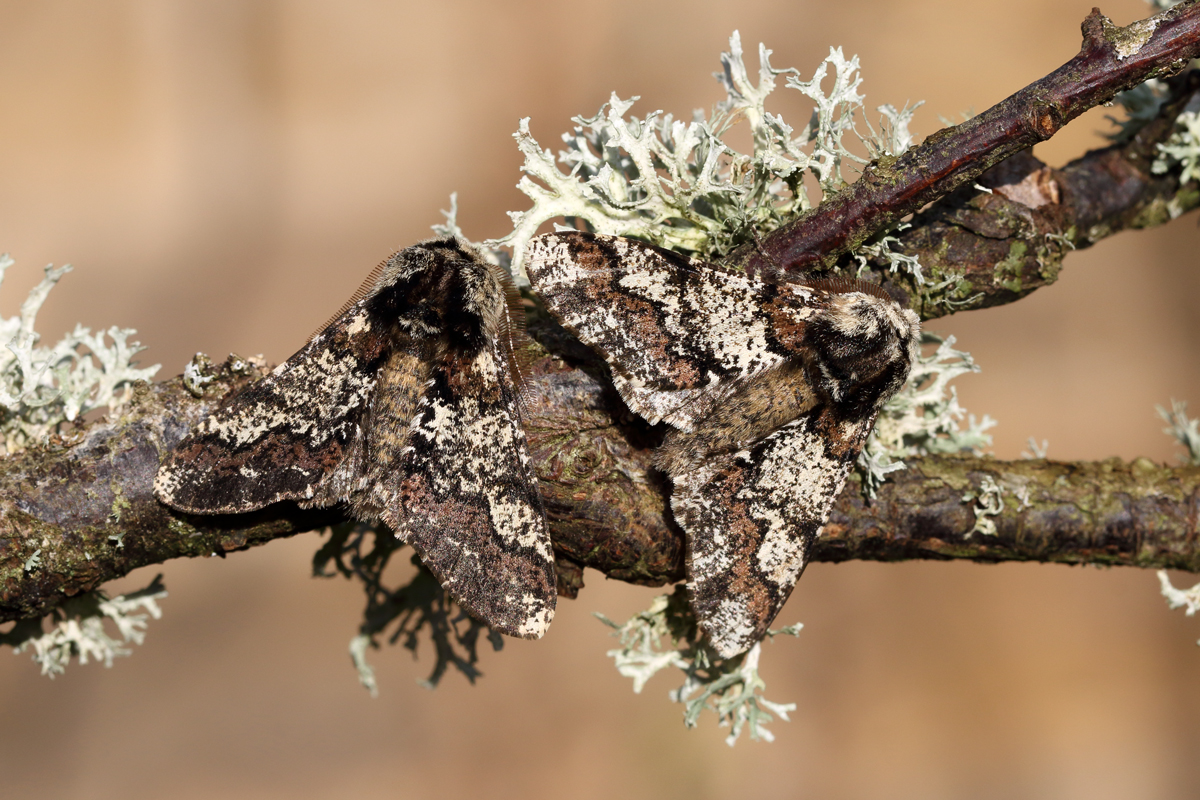
The full moon and frosts have kept the moth trap quiet but two Oak Beauties were suitably attired in furry clothing to brighten one morning. Lovely moths, scarce in my garden so always a pleasure to see.


Monday, July 13, 2020

Hoverflies and humpty back shaggers...


Despite the impression of the title, I am not talking about some of our more rural hill going Northumberland locals. All will be revealed later...

July in upland Northumberland isn't a great place for a birder. Its usually very quiet indeed, but if you have an open mind to other forms of wildlife, you can always find something of interest.

Yesterday morning was such a walk for John  and myself as we dropped inland, only 10 miles or so from my house. Our venue was the moor and forests west of Alnwick. I wont give a grid ref  as there are many similar areas in the county where exploration could give similar rewards.

One reason I have often avoided our midsummer moorland is often due to the large numbers of biting insects that just love me. Clegs, Mozzies and Midgies all home in, but they weren't too bad on Sunday due to the breeze. Here are some photos from the morning...


First thing we found very soon after leaving the car was this large female Adder basking on the track side. She was obviously well warmed because  as I tried to close in for a photo she was gone into cover in a flash, before I was anywhere near.


The tracksides were great for inverts. This one was south facing and sheltered from the wind so Hoverflies and Butterflies were in good numbers... I only took my macro lens on the DSLR and my point and shoot for habitat shots so didn't get any of the birds we encountered, so I'll get them out of the way.

We had 2 Raven, sev Buzzard inc young calling, several Crossbills and Redpolls over, 9 Tree Pipits based on two family parties, 3 Stonechats, a family group of 3 Redstarts, 1 Spotted Flycatcher, plus Willow Warbler, Chiffchaff and Whitethroats. This was much more than expected up here at this time of year. I might have had a few shots if I had the right gear? So back to the job in hand...

Butterflies were dotted around with many Ringlets and Meadow Browns, 8+ Small Skipper, 7+ Red Admiral, 3 Small Tortoiseshell, 1 Small Heath and 4 Common Blues. Moths made an appearance too with red necked Footman and Latticed Heath.

Trackside flora.

Red necked Footman

Small Heath

Small Skipper
The only Odonata representative was the spectacular Gold-ringed Dragonfly with a single that did its best to keep hidden. I couldn't get near it so only have this record shot. Soon, Black Darters will be on the wing here.

Gold-ringed Dragonfly
The real stars of the show were the hoverflies but I'll start the pics with a lifer Bumblebee, Bombus jonellus. Tricky things, bees...

Bombus jonellus
Chrysotoxum arcuatum 

The nationally scarce Megasyrphus erraticus

Sericomyia silentis

Sericomyia lappona

Volucella bombylans
Referring back to the title, these Conopid Flies, Sicus ferrigineus were all over the damp areas. Ugly, hump backed bow legged critters as soon as another one landed nearby it was pounced upon! Whilst they would win no prizes in the beauty stakes, they pretty much kept to themselves.

Sicus ferrigineus or Humpty backed Shaggers to us.


 The walk back, down hill gave some great views over our countryside. All in all it was a good morning out.

Monday, March 20, 2017

Over the weekend...

Part of a pile of 5 Adders

Neonate. All of 6 inches long and thick as a pencil.

Slow Worm.

On Sunday we had a trip across to Branton Pits, with the intention of checking some forest areas for Goshawks, but in the end, we just drank tea, chatted with other friends and paid our annual respects to the local reptiles. Along the usual spots were 13 Adders including a tiny juvenile or neonate and 3 Slow Worms. I was particularly please with these as they are my first in the county.


 Last night was a decent moth night with 63 moths of 10 species caught. March Moth, Diurnea fagella and this Pine Beauty were all new for the year.

Pine Beauty
Today I was on a holiday ( using them up before April) when news came through that ADMc had found a fleeting male Black throated Thrush near the wintering Great Grey Shrike at Prestwick Carr. He had watched it fly off strongly south but it was luckily relocated by local birder Peter Fletcher where the lads on site, or local enough to be there in 20 minutes, managed to connect. Unfortunately, I had driven 27 of the 30 miles from home only to be greeted with the news that it had flown again, this time off the edge of the map and on to the 'no mans land' that is the local golf course, never to be seen again.

Never mind, these flighty thrushes are sent to try our patience. After last Autumn's Whites Thrush on Holy Island and the Wacky Races style twitch from work, I try not to be greedy!


Sunday, March 13, 2016

Go Wild in the Country II...

Despite nursing the mother of all colds, I've tolerated it enough to go to work, so I can certainly manage to get out over the weekend, we headed off west to look for snakes...

Today has been a lovely 'quiet ' calm day, cool at times but a warmer 13* in sheltered spots. Birds were singing, the first Marsh Marigolds were in flower and an odd bumblebee droned by. At Branton Pits, the water was still, only disturbed by the clamour of Canada Geese. A Great crested Grebe was back on territory and Goldeneye were displaying before departure.

A slow stroll along the road side revealed 7 or 8 Adders out basking, hoping for sun through the hazy cloud. These snakes have an irritating habit of lying fully exposed apart from the bit you want to photograph, the head, but today I tried something new. One such individual seemed quite relaxed so I gently stroked its tail with a thin twig, like you would a trout under a stone, to see what it would do. It seemed inquisitive and began to come closer to my twig, tasting the air with its tongue to see what the movement was about. Once fully in the open, I stopped and took some pictures, then left it to bask in peace.


We left here for a brief roadside stop over looking some forest where the sky was full of raptors! There were 12 Buzzards, but better still a juv Goshawk being mobbed by a Sparrowhawk. Whilst too distant for photos, good views could be had with the scope and an excellent comparison with the two accipiters...

Sunday, March 02, 2014

Spring.

This morning dawned bright and sunny with a light frost. John arrived at our house at about eight, just in time to catch a pair of Ravens flying south, high overhead, calling and doing some twisting display flight. This is the first here for two years, I wonder if its the same pair we used to get?

We headed off west to look for Adders at Branton Pits.

Looking west from Beanly Moor....
Spring has definitely sprung up here, despite the back drop of a snow covered Cheviot hills, Oystercatchers had arrived en-masse as had Black Headed and Common Gulls. The Oystercatchers breed on the river shingle beds and are absent all winter. It was good to hear them 'kleeping' about all over the place.


On our walk, Kingfishers could be heard whistling a territorial dispute call, but only brief glimpses were had.


Mute Swans and other wildfowl were already paired up, but the swans are in danger if they keep flying about and fighting. Its so easy for them to hit a pylon or fence.


Passerine targets were in short supply today, with no sign of the usual siskin flocks etc. Only 2 Goldcrest, a Yellowhammer and a few Chaffinches put in an appearance.


When the sun came out we checked the usual Adder basking spots, and were pleased to find a single snake quite well hidden out of the wind, catching a few rays. Although there isnt much to them really, a snake has a certain tropical feel and are always exciting to see.

A short stop near some pine woods had a few distant Crossbills calling and flying about but little else... 


Only another singleton from the moth trap this morning, a nice fresh Hebrew Character.


Sunday, March 11, 2012

Go wild, go wild, go wild in the country...


A belter of a day today, with the temp at 16 degrees at lunchtime.

This morning was spent at Branton doing the WeBs count with John. Before we started, a casual stroll checking a sunny hedge bottom produced 8 Adders basking in the early morning sun. All seemed to be females (They are males, see comment below). A selection of individuals are above, with one pic containing a pile of three!(Count the heads).

[See note below. Thanks the Greenie for his comment on the Adders. I found it a good help, so maybe it will come in handy for you too...
Stewart ,
Males are very variable in colour and when first out of hibernation as they are now , and can be very dull having spent several months under ground . When they 'slough' their skin , they will be much brighter . They also emerge 2/3weeks before females , and can be found lying around in numbers just outside their hibernacular , as your 3 were . In the past I have found up to ten animals lying together . Females tend to have a light brown/ginger ground colour with darker brown zig zag marking , which is less defined at the edges than the black , more defined zig zag of the male . The 'silver' colouration you mention occurs when a female in season , just every other year for them , is found , then hormones in the male go to work to produce that silver and black phase . Of interest , on all four occassions that I have witnessed 'the dance of the Adders' the combatants have always been silver/black males .]


Lots of Coltsfoot was in flower (top) and on the Sallows -

Peacock
Small Tortoiseshell
Of the birds, a darvic ringed Mediterranean Gull ( ring was Red PJJ1), 3 Great crested Grebes and lots of returning upland breeders such as Oystercatchers, Redshank, Curlew, Lapwing and Lesser black backed Gulls were the highlight.

Back home, it was warm enough for the first grass cut of the year. Time in the garden produced Small Tortoiseshell, Red tailed Bumblebee and Buff tailed Bumblebee and the resident Tree Sparrows.