Showing posts with label Pale bellied Brent Goose. Show all posts

Wednesday, April 16, 2025

April

 Last time, I mentioned the possibility that we were experiencing a ‘false spring’, however, it has continued until this post too. In my notebook, the last time precipitation gets a mention was on 16th March with an odd drizzle shower. Since then, we have had dry but cold weather, often in bright sunny days. 

 Another sunny day on the 29th March brought the first Hairy footed Flower Bees or our garden. Always an absolute pleasure to see as they bump from flower to flower in a cartoon like fashion.

 By the 29th, up to 150+ Kittiwakes were back around the Howick / Cullernose cliffs while 31 Whooper Swans flew N in two parties of 22 and 9.

 Another Boulmer search on the 30th found that the female Black Redstart was still present, but the male was long gone. 9 Purple Sandpipers were on the rocks. In the afternoon on a visit to Amble we found a colony of Tawny Mining Bees in a raised bed by the Memorial. Lots of small males danced around the soil interspersed by a few bright tawny orange females.

 March bowed out with more Whooper Swans heading over Howick back to the Icelandic breeding grounds. 27 came over very low, you could almost feel the down draught from the wing beats.

 The first week of April finally saw an emergence of butterflies around the patch with several Peacocks, a Comma, a Red Admiral, 2 Small Tortoiseshells and a few Large White. More Hairy footed flower Bees and a few Dark Edged Bee Flies too.

Dark edged Bee Fly

Comma

Hairy footed Flower Bee, male.

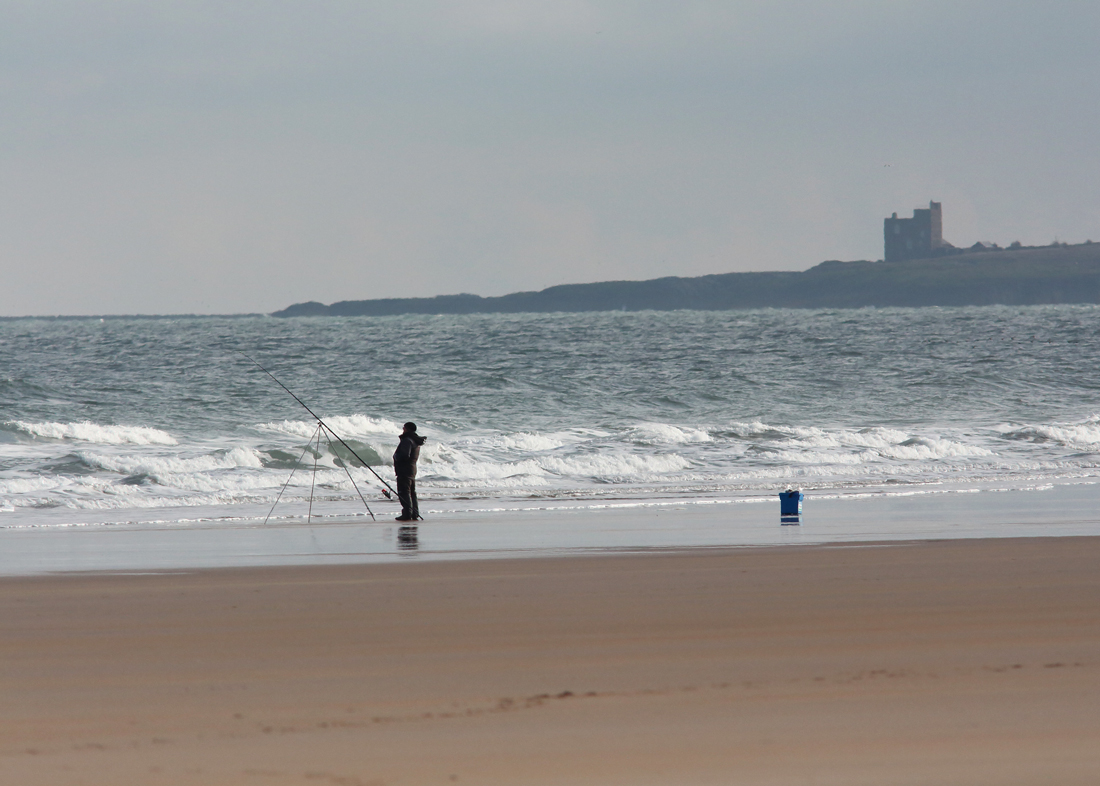
A late afternoon walk at Boulmer on 4th  was still cold but a few migrants battled on. A smart male White Wagtail  was with half a dozen black and white Pieds, a Lesser black backed Gull flew N followed by 3 Sandwich Terns. A good number of 32 Shelducks kept company with a  Pale bellied Brent Goose.

Pale bellied Brent with the Shelducks

Male White Wag...

For a change on the 6th April we walked from Cullernose Point to Craster, hoping for a Wheatear sighting but that plan failed. We did make it worthwhile though with a close Raven, the first Willow Warbler, 2 Blackcaps, 4 Swallows and 2 Sand Martins of the year.

Now the evenings are lighter there is more time to be spent in the field ( while neglecting jobs at home), it could just do with warming up to 15 or so degrees…

 In the fine spell, a few moths kept the trap going while a nice spider graced the bathroom...
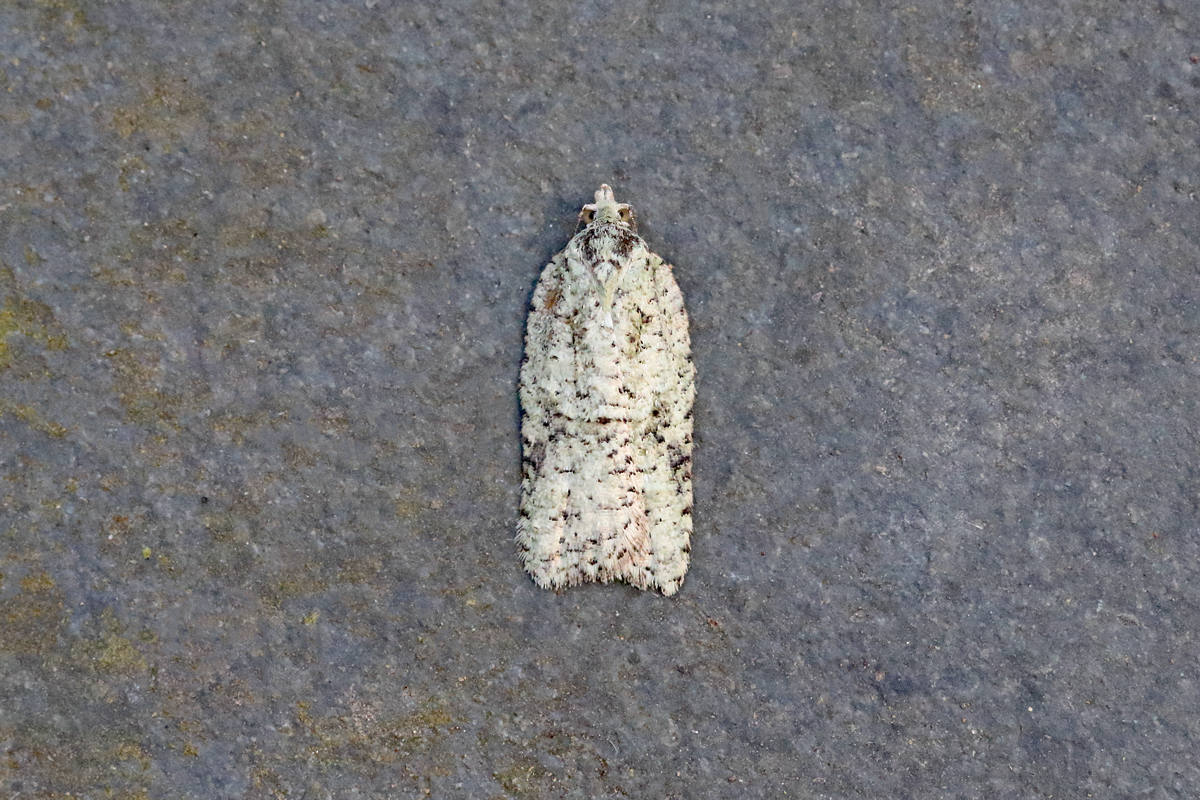
Acleris literana

Brindled Pug

Early Tooth Striped

Harpactea hombergi only my second, both from the bathroom.

Purple Thorn

Finally, on a cool sunny day last Sunday we checked out the new scrapes at Alnmouth Buston Links. It looked well for waders and wildfowl but not today.4 Shoveler and 2 pairs of nesting Lapwing were the highlight, 3 Whooper Swans moved N while the first Grasshopper Warbler of the year reeled unseen from a thick bramble at Hipsburn.


Male Lapwings very vocal and acrobatic.

Shoveler

This Yellowhammer sang from the ground in the car park at the cricket club for 5 minutes.


Monday, August 30, 2021

Bank Holiday

 In a cliched Bank Holiday fashion today began quite miserably. It was fully over cast with regular showers of mizzle, for just long enough to affect the optics.

There had not been too many seabirds yesterday, but the North wind continued so we headed down to Boulmer where we can combine a seawatch with waders and anything else passing. In short, we spent from 6.15am - 11am on a park bench style seat positioned on eight 2ft sq paving slabs (4 x 2 set up) over looking the sea and muddy shoreline. 

The Obs...

There were decent numbers of birds constantly on show with Gannets still streaming past as they have done since last Thursday. It makes you wonder how many thousands of birds have been involved and how many are duplicates going around in huge circles. A few tern and Kittiwake frenzies close inshore were worth perusing as they included Arctic, Common, Sandwich and Roseate Terns and at least 3 first winter Little Gulls pause on the way north.

True 'seabirds' were fewer with 'only' 10 Sooty and 2 Manx Shearwaters, 9 Bonxie and 2 Arctic Skuas. There were divers with 1 Great Northern the first of autumn heading north as well as Red throats with 4 N and 3 S. Wildfowl included 39 Pale bellied Brent Geese, 32 Wigeon, and 45 Teal all north.

Pale phase adult Arctic Skua

Pale bellied Brents.

Around the shore were 129+ Dunlin, 2 Knot, 3 Sanderling, 6 Bar tailed Godwits, a Pergrine seen three times and 2 Yellow Wagtails on the beach.

All in all not a bad morning. Another Fea's slash Desertas ( who actually uses this combined name?) Petrel was eagerly awaited in sea stations along the county coast but it had drifted further offshore at Whitburn.

I remember a time when seawatching was the last bastion of birding that held surprise and intrigue. You never knew what you might see until it loomed up from the waves. Now, a newer version of seawatching means you can sit in the house, wait for a report of rare bird passing Flamborough, Filey, Scarborough or Cowbar, consult your handy smartphone timetable to predict a local arrival time then head out half an hour before and expect the bird to be nailed on. 

I am so pleased birding is not that predictable and that at least this Feas Petrel did the right thing and didn't conform. I like a bird report from the south as much as the next man but I also like to put in the hours without waiting for one individual over the vastness of the sea. 

If you want good seabirds, put some work in, face the elements head on and feel the buzz when a global wanderer pops up...

Joe Pender eat your heart out, 3 Sooties passing...


Wednesday, August 26, 2020

I'm not looking for Dolphins!

 Storm Francis rattled the windows and give the place a good soaking yesterday. Although the wind was from the East, there was also a low pressure over Scandinavia so land migrants would not be in any numbers, however, it only takes one bird. As I have mentioned before, I tend to set my goal targets pretty low when I go out, that way I dont get too disappointed. If I am lucky enough to improve on my goal, that's even better.

When I saw the weather yesterday, my goals were very simple. It is ages since I have had any of these on my patch - Pied Flycatcher, Garden Warbler and Redstart. You would think that living withing stepping distance of the North Sea, these birds would be two a penny. They are in Norfolk or Spurn. Just not here on this random flat bit of coast. In the back of my mind I have some premiership targets too like Wryneck, Barred Warbler and Red backed Shrike but if I stick with the more likely three, you never know one of the rarer ones might step in.

After work yesterday the rain had paused for half an hour so I took Peggy for a walk to the coast path. As we approached a movement near some cut gorse attracted my attention. There was a leaf on the barbed wire strand? No, not a leaf, it was a bird... a female Redstart. First bird looked at goal achieved, my first Redstart since 2017. Its just as well because there were no other birds at all to look at...


Female Redstart.

Today, the wind has swung more Northerly but has dropped off a bit. The rain too. Keen to get a look at the sea in improving conditions, I clocked off at 2pm and headed off the Cullernose Point where I did 2 hrs. 

There were more people than birds. This COVID keeping people at home is getting tedious. I have never seen the coast as busy than it has been this last 4 months. While seawatching, festival style groups wandered by looking for facilities ( we have none). Every third group asked me 'Are you watching Dolphins?' After my Nth reply, I just screwed my eye into the scope and played deaf.  I know its anti-social but I just want to be left to seawatch in peace!

Today's tally was still slow, but only on a Northumberland coast patch would you consider my 2 hr list slow and many would gladly swap me for it, so like when I am looking for reasonable migration targets, I wont complain..  

Gannets, Kittiwakes and Fulmars not counted. Too busy looking for more interesting fare.

Pale belled Brent Geese - 27.22.4.10.11.8.23.6.80.8.6    205 N
Common Scoter 1.3.3.1    8 N
Bonxie 1 N
Sandwich Tern 8 N
Arctic Tern 6 N
Roseate Tern 1 ad N
Goosander 1 N
Teal 1 N
Sanderling 9 juvs N
Arctic Skua 1 dark, hunting offshore.
Sooty Shearwater 1 N
Red throated Diver 1 N

The Brents and the Sanderling both patch year ticks.  

One group of 80 Pale bellied Brents


Oh and yes, 4 bloody Bottle nosed Dolphins too!


Saturday, January 28, 2017

MY List.

Bird listing has always been a bit of a debating topic between birders of all generations. Now I see that there are some big changes coming to the British list in 2018 where some species such as Common and Lesser Redpolls ( that I can identify) will be lumped together and others such as Isabelline type Shrikes ( that I can't identify) will be split into separate species.

This kind of reorder happens ever more regularly these days. What ever happened to the good old Professor Voous order? It served us well for many years. This is where the issues begin I think. It is up to scientists and geneticists to decide on what is a species and what isn't and how those species all fit into the grand order of things. That's a good thing, I mean after all, the science has to be there so internationally those decision makers in power will know whats what.

But what about Joe Public? Birders like me who just enjoy our natural world for what it is? I love to watch birds both common and rare for aesthetic reasons as much as anything else. I also like to wonder, whimsically, about where they come from, what they do, how they featured in history etc. I never ever wonder if the DNA sequence of a Merlin is closer to a parrot, than a Buzzard! Currently I have Mealy Redpoll and Hudsonian Whimbrel on my list. Should I suddenly erase these and tear the page from the guide because, in the laboratory they no longer exist?

I think its time to rebel and push Clements, Howard and Moore, Sangster and the rest to one side and have a look at a list that suits my own needs. I can leave the science to the professionals to sort out.

Basically, do I need to worry whether the birds I watch are even different species at all? I like to look for sub species such as Dark bellied Brents, Scandinavian Rock Pipits, Blue headed Wagtails and Northern Bullfinches, but these are deemed untickable by the powers that be. You can argue that we don't need a list at all, but most birders do keep them, and they are a good way to guide our birding plans, other wise we might as well just be out looking at the same Robin everyday rather than revelling in the variety on offer.

What I think I'll do from now is to record all field identifiable forms, in an order that I recognise. If there are any competitions in the offing such as Patch Challenge, Bird Races, County Listing etc, it will be easy just to conform to the standard like everyone else, but in my own world, falcons will be with raptors, divers will come first, there will be no such thing as Lapland Longspurs, and I might even add another Brent Goose to my list...

Pale bellied Brent Goose. The commonest of the Brents in Northumberland. One of only two Brents that I've seen ( Black Brant might appear one day) 
Today this is an Isabelline Shrike. In 2018 I'll have no idea what it is, thanks to science.

Sunday, February 28, 2016

The Stag and the Pennymen....

A cold frosty morning turned out to be a beautiful crystal clear day. As John was tied up elsewhere, I thought I would pop up to Seahouses to try and get some photos of the Black Redstart that has taken up temporary residence among the boats there. Unfortunately, things didn't go to plan, as the said bird had 'done one'. I spent about an hour and a half over two visits there today seeing only a few Eiders and 20 each of Turnstones and Purple Sandpipers ( during a recent conversation with Iain Robson I find that these little waders were once known as 'Pennymen' by local fishermen, while Sanderling were called 'Sea Mice').

So, it was time for another couple of miles drive up the coast to Bamburgh to see what lurks off the coast there. It was fantastic first thing, with very few people and miles of clean sea, sand and rock. With the cold northerly numbing fingers and air that tasted like a drink of iced water, birds became just a secondary feature, the 'icing on the cake'so to speak.  I could see the snow speckled Cheviot over to the west and Lindisfarne Castle, Bamburgh Castle and the Farne Islands only by turning around. Can there bee a finer place than North Northumberland on a day like this?

Even so, the local sea fowl weren't too bad either, with several hundred Brent Geese, 5 Slavonian Grebes, 4 Long tailed Ducks, another 50 'Pennymen', 6 Red breasted Merganser and an exhaltation of Skylarks to back it all up.


Harkness Rocks and Lighthouse, known locally as Stag Rocks. I cant think why?
Hundreds of Pale bellied Brent Geese flighting into Budle Bay to feed as the tide drops. There were a couple of dark bellied in my photos too.

Him'n'her Long tailed Ducks

Slavonian Grebes lit up by the sun with the raft of Common Scoter. 

I caught all 5 Slavonian Grebes in this one shot.

Displaying Red breasted Mergansers in a channel across the sand.


Tuesday, November 04, 2014

A Field Day...

Rainbow over the sand flats north of the causeway.
A day off work midweek is never an opportunity to be missed so when JWR said he had to use up some annual leave before the end of the month and we should have a trip out, my flexi day was booked in pronto.

Just like the old days, we decided to have the full day out birding up the coast, rather than just grabbing at a Sunday morning, and headed off to Holy Island early doors. The morning was fine and cool with a light NW breeze, but an ominous looking front could be seen further north in to the Scottish Borders, and it was heading our way.

The island was mainly tourist free, as the crossing would be closed mid morning, so we enjoyed an uninterrupted wander around the village for a couple of hours. Chiffchaff and Blackcap with a few Redwing, Fieldfare and Blackbirds were the only migrants, probably lingering from last week. Masses of Pale bellied Brent Geese and assorted waders fed and flew around the flats either side of the causeway.   As the rain arrived we decided it was time to out run it by heading south.

A few Pale bellied Brent Geese.

Chiffchaff

Redwing

Blackcap
The Bamburgh and Seahouses area was our next stop, taking in several sites in the area. At Budle Bay the tide was almost up and had pushed thousands of birds up together. Highlights here were a powerful immature Peregrine that narrowly missed catching a Redshank before continuing south to let the birds relax until the next 'sortie'.  At Stag Rocks, there was little on the sea other than a Slavonian Grebe but a late Sandwich Tern sat on the rocks with waders was a surprise find at this time of year.
A quick check of the castle wood for migrants was quiet apart from a Woodcock flushed from the leaf litter.
A small feeding station just outside Bamburgh village held the usual woodland species including Marsh Tit, Nuthatch and Great spotted Woodpecker. 

Stag Rocks, Bamburgh

Imm Peregrine.

Marsh Tit
 A final stop at Beadnell and Low Newton where the rain was now becoming irritating turned up a single Long tailed Duck, 3 Red throated Divers, another Chiffchaff and a scattering of Goldcrests.

A quick tally showed that we had recorded 81 species of bird, not a bad total with out really trying too hard. We might start and make this a habit....

Sunday, February 05, 2012

Female Blackcap.

After a bit of a blogging break, I thought it high time I got back 'into the saddle'. Last week, despite having a good Sunday out with Hooded Crow, Great Northern Diver, Slavonian Grebes, Long tailed Ducks, Barnacle Geese and Greenshank, I just couldn't get motivated to write about it. It was a dull cold day, and I didnt get any photos or any sketches so I just left it at that.

Today turned out much nicer. An icing sugar coat of snow, plus a clear blue sky and some warmth in the sun raising the temperature to 7 degrees placed springtime at the end of the tunnel.

A walk from home down to the burn moth and back via the coast turned up a good few patch year ticks.Mostly just day to day stuff that remained elusive but my first Meadow Pipits and Pied Wagtail of the year ( another portent of spring days), a female Blackcap on the feeders all weekend, a ridiculously tame Pale bellied Brent Goose grazing on the Rumbling Kern cliff top were all well appreciated.

7 Lesser Redpolls, 3 Grey Plovers, 1 Bar tailed Godwit and 9 Purple Sandpipers also made a worthwhile day on the district. 

PB Brent.
A Grey Seal pup lying on some barely accessible rocks looked at first as if it might have some net tangled on it, but closer investigation showed it just to be sleeping in the sun. Down to four feet it looked in a shabby way, only breathing shallowly, and I thought it was to become Great black back fodder. As I kneeled to take the pic below, one eye opened, then the other and the startled youngster barked his disdain at being woken up at the ungodly hour of 11am on a Sunday morning. Not wanting to face the teenage wrath further I left him to go back to kip until the tide rose...


Now, if that is the end of the snow, my first crocuses and narcissus have just opened in the garden so can we just let spring get on with it...please.