Tuesday, October 26, 2021

Days Off...


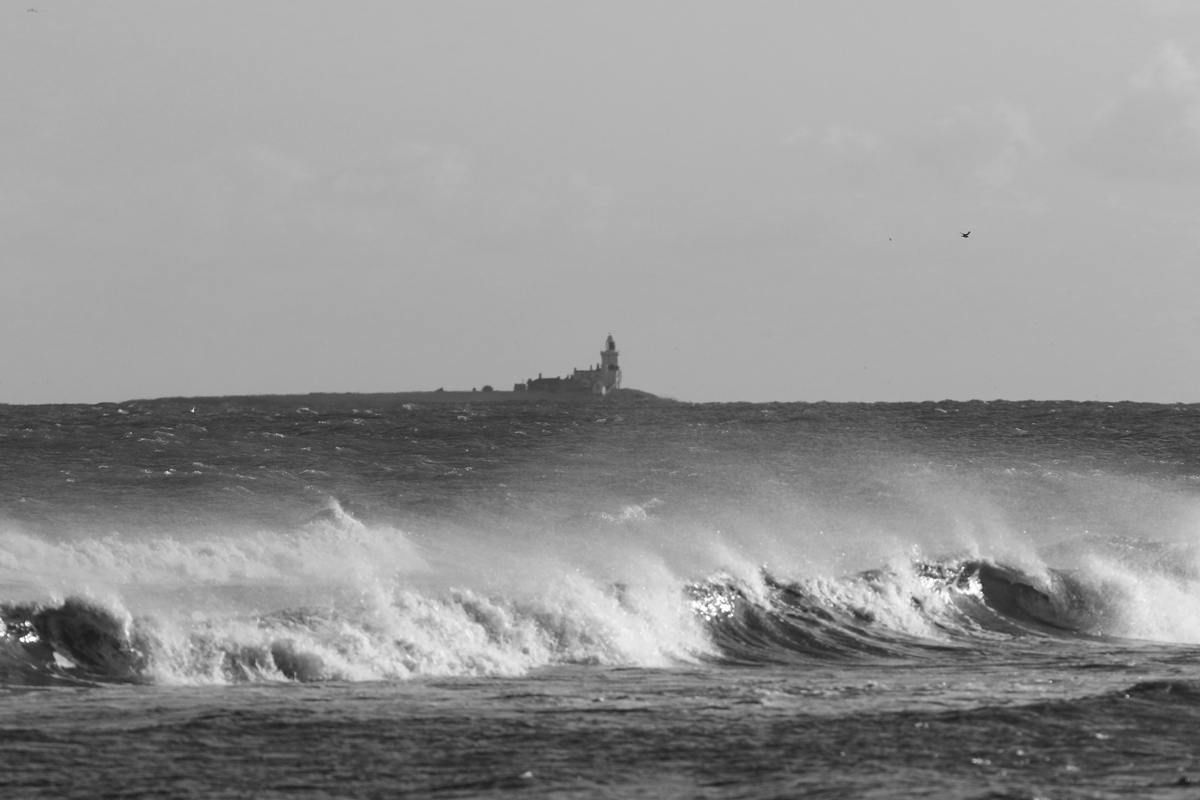
Coquet Island from Seaton Point

I like to keep a few days leave back for autumn just in case we get some 'weather' but this year its all staying pretty much 'as you were' . At least this allows me to just take some odd random days to see what is happening. This week my days off were Thursday and Friday making a nice long weekend. 

Before we get on to that, however, the early part of the week turned up some bits and pieces too.

Monday was a bit interesting despite there being a mild southerly breeze. First thing when I took Peggy for her morning walk, our village was ringing to the sound of Redwing calls for the first time this autumn. Several small flocks of up to a dozen birds left garden cover and moved west.

Later on more seemed to arrive. We did another coast path walk in the afternoon where we soon counted 150 Redwings and a few Blackbirds in-off. One tired individual barely made it, dropping into the long grass of the Bathing House only a few yards from the waves. As we approached the sycamores near the road a small bird scuffling along the track side caught Peggy's attention. A smart male Brambling, again looking knackered after its crossing. Back home another Brambling looked similar on our drive and another dozen Blackbirds and Song Thrushes were in the wood. How many of these birds are lost to the sea isnt known but it will be a big toll I'm sure.

On Tuesday morning, the coast path Brambling was now along the main road verge, looking no better. A few more were picked up on call as they flew west overhead. One Starling, like yesterdays Blackbird struggled in from low over the sea, alone, but it didn't stop, it just steadily kept on course, low west.  

By Wednesday the immigrant passage had dried up, leaving two groups of Whooper Swans, 20 and 25 birds, to keep me looking up. 

There was a nice moth surprise on Wedesday night, again on a Peggy walk. I routinely shone my headlamp along some flowing Ivy beside our lane to see if any moths were present. The first thing I saw was only my 3rd ever Pearly Underwing, fresh conditioned individual alongside 6 Angle Shades and a couple of Silver Ys.

Pearly Underwing, a rare migrant here.

With the working week now done, the wind began to increase from a North westerly direction and with it so did my hopes of some seabird action.

I was in position on Cullernose by 8.15 eagerly awaiting birds to pass. To cut a long story short, by 10.15 a few birds were in the notebook but not enough to merit sitting it out. I decided to cut my losses and try again later on.

Birds seen included 5 Red throated Divers, 48 Wigeon, 3 Common Scoter, 600+ Pinkfeet, 20 Barnacle Geese, 2 Pale bellied Brents and 1 Arctic Skua. Best of all were 2 each of Twite and Snow Bunting south over head.

I gave it another two hours from 2pm, this time at Seaton Point, Boulmer. There were masses of birds feeding along the very high tide line with thousands of Black headed Gulls, Wildfowl and Waders including 17 Grey Plover, 74 Curlew, 35 Bar tailed Godwit, 4 Purple Sandpipers 1 Goosander 56 Mallard and 8 Wigeon. Another 2 Pale bellied Brents flew N and a Swallow over the caravans was my first for 2 weeks. It could well be my last until April. 

Masses of birds along the shore.

Pale bellied Brent Geese

Ever present Eiders

Juvenile Grey Plover

Pinks South

There were hundred of Turnstones with odd Purps.

Wigeon

On Friday we had a nice walk around Longhoughton Steel to Sugar Sands. There had been a Shorelark around but we didnt see it. A bit of viz mig was evident though with 1 Snow Bunting, 5 Whooper Swans, 15 Siskins, 1 Grey Wagtail, 75 Pinkfeet south and 2 Red throated Divers North

We narrowly averted disaster when a freak wave rushed up previously dry shore ( the tide was going out too) and caught us unaware. Jane and myself ended up nearly knee deep in water while Peggy floated around us! Luckily we kept our footing and made it up to dry ground with nothing worse to endure than a slosh back to the car with boots full of briny.

A postcard from Northumberland.

On Sunday, for a change John and myself headed to our inland areas for a change from the sea. Despite the forecast, the sun shone and it was quite pleasant. A great contrast from the coast in only a short drive.

Not expecting many birds, I only took my macro lens to look for fungi and other small stuff. As it happened, we didn't find many fungi but we did get some good birds. 

Highlight was a cracking male Goshawk sparring with a Raven. What a size they are and even the Raven made sure it stayed higher up than the Gos. In flight Gos have a much longer wing than the much smaller Sparrowhawk, to my mind, giving more of a ring tailed Harrier impression. They immediately look different. The two put on a great show for about 15 minutes with one taking advantage of the other in turns, the Raven uttering a short 'gruk' of panic when Gos flipped over to retaliate. Lovely. The things you see when you don't have your gun....

We also had a nice female Merlin low overhead, another Raven, 1 male Crossbill song flighting and another 7 over, 4+ Brambling, 7+ Jays, 1 female Sparrowhawk, 1 Kestrel, 1 Buzzard, 10+ Meadow Pipits and a Stonechat. A nice suite of upland birds for the time of year.

The only fungi we had were - 

Dusky Puffball Lycoperdon nigrescens

Raspberry Slime Mould Tubulifera arachnoidea


Monday, October 18, 2021

Stick with it, be positive.

 Last night I was thumbing through my current big notebook, the one I write up my scribbled field notes into, mainly just to see what the coming weeks gave us last year when I found a recurring theme. In a lot of entries for Boulmer they begin something like this...


It seems that most local patch days are 'generally quiet'. But is that true? Quiet days are all relative to where we watch I suppose. For example on the 25th October 2020 the rest of the page shows...


 For many birders who watch an inland or urban areas to walk out in a morning and get Black Redstart, Brent Goose, Purple Sandpipers, Grey Plover, Grey Partridge, Crossbills and Willow Tit would be a very decent patch visit. To be honest its not so bad here too, so its time to be a bit more positive. Whilst we do get some great birds locally, they are the exceptions rather than the rule and most days do get a few good birds of the calibre above. Enough to keep us going. 

I digress. Keeping the above in mind, getting back to this week. 

A moderate NW wind on Tuesday was enough to get me on to Cullernose Point for an hour and a half seawatching. It was steady going with Great Northern Diver, Bonxie, 9 Barnacle Geese, 3 late Arctic Terns, 3 Velvet Scoters inc 2 lovely smart drakes, Manx Shearwater and Goldeneye amongst others.

Yesterday morning it was back to Boulmer as per. As above, incoming passerine migrants were in short supply, but the sea always helps out. On this occasion we had 26 Whooper Swans S, 1 juv Peregrine, 1 ad winter Little Gull, very smart too, 2 Arctic Skuas, 1 Bonxie, 7 Red throated Divers and a few Common Scoter. On the shore were 21 Ringed Plover, 100 Lapwing, 8 Bar tailed Godwits and 4+ Grey Plovers but we didn't get in to counting them really. 

The bushes were 'shivvering' with Dunnocks, up to 6 at a time, something I enjoy seeing in October. High flying Dunnocks are always unusual but we only saw a single Chiffchaff.

Hopefully there will be more seawatching weather later in the week. Thursday seems canny...

The male Grey Partridge made short work of keeping female Pheasants away from the 'conservation measures'...

Lapwings pushed by a rising tide.


Tuesday, October 12, 2021

Busy...

 12th October and no blog posts. Anyone would think it has been a busy bird filled autumn but no, the first part is correct 'busy' but bird filled, no. I just haven't had much time to blog so here is a potted catch up.

Rather than birds keeping the Adrenalin flowing in October it has been invertebrates that have provided several lifers over the last few days.

To start with, an arachnid came as a surprise. When the Wild Guides 'Britains Spiders' book came out I was intrigued by a small spider that was almost only found on the smooth grey trunks of old Beech trees. We have a few good candidates in the arboretum beside us so thought I would look sometime. That project slipped my mind until 29th Sept when walking Peggy after work. We came down a steep woodland bank ending up face to trunk with a massive tree. As I looked at the bulk of the timber, a small creature ran across. A spider! Could it be the one from the book? By now I had forgotten its name and didnt have my camera so tried to see any marks on the long legged money spider. It had an obvious white band on the abdomen and thin striped legs. As described there were strands of web across the trunk too.

Sure enough back home a browse of the internet and check of the book showed the spider to be Invisible Spider Drapetisca socialis. Since then I have checked and found another couple on different trees, so it must be quite widespread.

Invisible Spider.

Several visits to Boulmer have been slow for birds but a colour ringed Bar tailed Godwit in a flock of 29 was a male bird of the year ringed in Norway.

On 5th October a Northerly storm rattled some torrential rain along the coast. I walked the north end at Boulmer hoping to find grounded migrants but returned to the car with rain running down my armpits under my clothes and a single Wheatear in the notebook. The following day the morning had a good passage of wildfowl with 2,139 Wigeon, 5 Pintail, 2 Shoveler all heading North.

On 7th a warm plume of air from the Azores bathed us in an unseasonal 20 degrees, and also dropped some migrant moths in our village. A Gem was only the second here after one in 2010 plus Dark Sword-grass, Rush Veneer, Silver Y and Diamond back. Our neighbour along at the farm did even better and caught a  , only the 15th for Northumberland.

The Delicate

The Gem

  
Rhigognostis incarnatella 

Another new species for me was a Diamond back look-a-like Rhigognostis incarnatella. The moth fest wasn't over just yet however. There was a bigger surprise waiting. Overnight on 10th it was cooler and there didnt seem much activity around the lamp. The next morning it only took a few minutes to identify and count the 20 moths of 16 species in the egg trays. That is until I noticed a single moth lying in the bottom of the trap. A long looking, Setaceous Hebrew Character shaped 'flame shoulder'?

Straight away I sort of knew what was instore here. The moth was soon processed, photographed and discussed with Tom Tams. We agreed it was Northumberlands first and most unlikely Radford's Flame Shoulder, a rare migrant of the south coast and around 400 miles north of its main known range!
Tom had it confirmed by Steve Nash and I was commented on by Dave Grundy and Les Evans-Hill.
What an amazing record! 

Radford's Flame Shoulder, centre, with a Flame Shoulder from the summer on the right to compare. 

Check out the distribution. We are at the top line, 5 squares above the Isle of Wight.


 Now, all was not lost on the bird front either. On Friday 8th a visitor to Holy Island found Northumberland's 3rd and only twitchable Red eyed Vireo along the Straight Lonnen. The previous two were only seen by the finders so all county birders were interested in this one. I can remember being in awe of the first in 1988 and again racing to the scene in 2014 to no avail. However this latest blood shot yank was much more polite and is still present on day 5.

I went up on Saturday morning and managed a lot of short glimpses in thick cover then two longer more open views. We went back on Sunday for another look but the breeze made it impossible so we left empty handed. Not to worry I was please to update Bubo with my 357th county bird.


Above - Red eyed Vireo, Holy Island. 


Monday, September 27, 2021

Two Sundays.

 Back at work now and its as if our holidays had never happened. Still it could be worse we are working a mixed system of 3 days from home and two in the office.

I didnt get time to post last weeks Boulmer visit. The weather was calm, dull and mild maybe with a hint of a south easterly breeze. Although not a classic day, there was enough to keep the interest up. 

A few wildfowl were on the move with small numbers of Wigeon and Teal plus 6 Pintail and, scarce here, a flack of 7 Shovelers on the sea in the haven while another flew north with Teal. At least 7 Snipe were seen to arrive from high to the east during the morning. Its great to see these birds arriving after a sea crossing. 40 Common Scoter also moved N.

On the viz mig front, lots of hirundines were heading south intermittently with groups of say 100 House Martins and Swallows appearing then heading low along the shore leaving a quiet spell for a few minutes before another group would arrive. 4 Yellow Wagtails S and 1 on the shore might be the last I see this year.

Lots of waders were around but there was no trace of the Semi-Palmated Sandpiper I dipped by 5 minutes on the Friday evening. It would have been a great patch addition but at least Ive seen one in the county. This is the 3rd for Northumberland. . While scanning the waders for the Semi-P we had 300+ Dunlin, 20+ Sanderling, 14+ Bar tailed Godwit, 1 Knot, 2 Grey Plover.

A flock of 6 birds flying north just a bit too far in not good light were intriguing. I couldn't decide on Black Terns or Little Gulls, but 6 Black Terns here would have been unprecedented. They certainly weren't juv 'sterna' terns. A bit of revising convinced me that they were probably Little Gulls. So frustrating!

Later a brace of Skuas came low over the rocks, a dark adult Arctic and a juv or maybe first summer Long tailed Skua. The Long tail landed on the sea for a while allowing some scrutiny. Beside the Arctic it was very fragile and small looking.


We ended the morning with another 3 Arctic Skuas and a Bonxie.

 Yesterday we were at Boulmer for first light. It was very quiet. Despite coving a good area by lunchtime we had little of note. It was mild calm and damp but birds were thin on the ground.

An adult Mediterranean Gull on the rocks was probably best or maybe the singles of Bonxie S, Sooty and Manx Shearwater N. 8+ Wheatears were the only passerines of note and after last weeks swallow fest we only had a few local birds remaining.

I scanned through 2000 Golden Plovers on Longhoughton Steel in good light hoping for a Lesser or a Dotterel but found neither. Later Ross Ahmed found a Dotterel with Golden Plovers at Monks House! What can you do?

Otherwise in the notebook were 21 Grey Partridges in one covey, 3 Grey Wagtails S, 2 Red throated Divers N and 2S. 28 Bar tailed Godwits in the haven was a good number.

Lets hope for a change in weather to jiggle things up a bit.


Thursday, September 23, 2021

Suffolk Part 2.

 As I have said in the previous post, while pottering around the Suffolk Sandlings area doing the tourist thing, visiting Southwold, Walberswick, Aldeburgh etc a few other creatures of interest to a Northern Naturalist were discovered. In no particular order here are a few..


Many of us who use a moth trap are familiar with a wide range of Ophions or Ichneumon species. They range from orangy yellow to black and white things and are generally tricky to id. Some just stand out from the crowd. This Enicospilus inflexus is one such specimen. Looking at the photo you might shrug and think you've had loads like that, but in life I had never seen anything like it that was quite so big. It was huge. You can almost make out that it was bigger than a cranefly and in flight was like a Common Darter. Apparently it is a parasite of the large Eggar / Drinker type moths. I wish I had taken its photo with a good size comparison now. On Google, sites show it to be quite sparsely distributed, but that is maybe due to a lack of recorders rather than it being a rare insect. Impressive.


Above, another parasitoid, Ichneumon sarcitorius was contrastingly, very common with up to half a dozen in the trap every night. I dont see these in the trap at home. Smart little things, unless you are a moth.


Finally for the hymenoptera were the Hornets around the garden. I like to catch up with them when we are here and they did enjoy the moth sugar. They were quite defensive towards trespassers such as Red Admirals who would be chased off by a short wing flicking open jawed charge from the Hornet. They're like terriers....


This large, blackcurrant Fruit Gum lookalike beetle Chrysolina banksii was quite a good record too. I dont really do beetles as they mostly need a microscope but this one was id'd from the Facebook beetle page. 


Dark Bush Crickets are common and can be heard stridulating from bushes under street lights and in gardens etc. There are no Bush Crickets in Northumberland.


Oak Bush Cricket was new to me found on the kitchen window attracted to the light. This one is a male. Smart.


A special visit to Carlton Marshes was required to see this one, the rare Fen Raft Spider, Dolomedes plantarius. We found three in a nicely vegetated ditch near the visitor centre. It is only found in 3 UK locations. This one can be seen with its feet on the water surface feeling for the vibrations of insect prey using it a bit like a web.

While we were here Wasp Spider was seen along with Brown Hawkers and Chinese Water Deer.

Chinese Water Deer looking more like a dog than most deer.


Then we come to some odds and sods - Bugs. True Bugs, not that Americanised slang for insects. 

Ant Damsel Bug.

Dock Bug final instar nymph.

Hawthorn Shieldbug 

To end with, although there wasn't much birding to be had, a morning on the heath with a flock of 8 calling Stone Curlews and a dozen Dartford Warblers is always appreciated.


A ringed Dartford Warbler, Dunwich.


Tuesday, September 21, 2021

Long Time No See.

 A bit of a gap between blog posts here due to being away on holiday for two weeks. We went to Suffolk, as is usual these days, but this time for two weeks rather than just the one. We couldn't get away in June this year so it was good to have a longer break.

It was great to hear locals both on TV and around villages on some days saying that winter was on its way and things like 'well at least we had one good week' etc when outside it was 23 degrees and sunny. One day at Dunwich there was a 15 minute shower and people were going around in big coats. Needless to say, like the cliche, we were in T shirts the whole time...it was glorious!   What visitors to Northumberland from the South must think when they get here. It is usually dry but usually a few degrees colder than most of the country. A few times recently we have commented that on the TV weather forecast we are often the coldest in the UK including Shetland.

All the lovely days did little for the birding, so most of my wildlife watching was of the invertebrate kind. Northumberland  may be good for birding but we cant touch the south when it comes to insects etc.

Our base for the fortnight was Westleton an area we know quite well now, this was our 9th stay in the village.

Armed with the moth trap, I had a few targets in mind but unlike birding you cant 'up your game' you just turn the light on and wait. A tin of sugary elixir was also taken, for a very specific reason.

We drove the 350 miles down on Friday the 3rd Sept, returning on Friday 17th.

There were some good highlights but I am starting with the best of the bunch. A very big and previously very rare moth, the Clifden Nonpariel or Blue Underwing has been having a resurgence in the last couple of years. Once a mythical migrant at coastal traps, it now breeds in southern England and seems to be doing well. This is the reason I took a tin of treacley sugar mix. These 'underwings' are often more easily attracted to this than to light, so it wouldn't hurt my quest to do both. 

Five nights passed without a single moth taking the bait. Nothing at all. But nothing ventured they say, on Twitter loads of Blue Underwings were being trapped from Norfolk to Somerset and even in Suffolk, so I hoped luck would be with me.

On night 6, it certainly was. I had painted the usual tree trunk at dusk and checked a couple of times to no avail so when it came to bedtime, I thought Id have another glance. At midnight, I looked out and there was this huge apparition on the bait. Like finding a rare bird, I went into panic mode. I shouted for Jane to get up, she had just gone to bed 10 mins earlier and was keen to see the moth, as I flapped around more than the moth would, putting the flash on the camera, hoping the Clifden wouldn't do a bunk. Luckily it was enjoying the sugar and it was quite happy to allow a few shots to be taken. It was a pristine new specimen so I didn't want to pot it up or keep it over night. I took my photos then turned off the moth trap so it could go about its business without disturbance. What a moth...


What a beauty. The name means 'Beyond Compare'. How appropriate.

The garden sugar, on a different night attracted another lifer for me but a much more understated one - 

...the Buttoned Snout. A local and scarce species.

Meanwhile the moth trap was no slouch either. The warm nights pulled in hundreds of moths. As it was a holiday, I didnt spend time counting Setaceous Hebrew Characters, Common Wainscots, Turnip Moths, Brimstones and Vines Rustics of which I caught hundreds of each, I concentrated on 'good' or new species for me that we don't see at home. Here is a sample - 

Labelled from top left like reading a book, see below.  

Row 1. Anania crocealis, Evergestis limbata, Cypress Pug, Dusky Thorn.

Row 2. Evergestis extimalis, Yellow Belle, Box Tree Moth, Small Blood Vein.

Row 3. Celypha rufana, Nephopterix Angustella, White Point, Dogs Tooth.

Row 4. Cochylis molliculana, Monopis monachella, Hedge Rustic, Webb's Wainscot.

Over the holiday we did a few nice walks around coastal marshes and nice picturesque villages, we even twitched locations for the TV series 'The Detectorists' one of our faves around the small town of Framlingham.

'Danebury Scout Hut' the base camp for Lance and Andy...The Detectorists.

On our travels it wasn't just pub lunches and Adnam's Cider, there were more small wildlife to be had...

To be continued...


Monday, August 30, 2021

Bank Holiday

 In a cliched Bank Holiday fashion today began quite miserably. It was fully over cast with regular showers of mizzle, for just long enough to affect the optics.

There had not been too many seabirds yesterday, but the North wind continued so we headed down to Boulmer where we can combine a seawatch with waders and anything else passing. In short, we spent from 6.15am - 11am on a park bench style seat positioned on eight 2ft sq paving slabs (4 x 2 set up) over looking the sea and muddy shoreline. 

The Obs...

There were decent numbers of birds constantly on show with Gannets still streaming past as they have done since last Thursday. It makes you wonder how many thousands of birds have been involved and how many are duplicates going around in huge circles. A few tern and Kittiwake frenzies close inshore were worth perusing as they included Arctic, Common, Sandwich and Roseate Terns and at least 3 first winter Little Gulls pause on the way north.

True 'seabirds' were fewer with 'only' 10 Sooty and 2 Manx Shearwaters, 9 Bonxie and 2 Arctic Skuas. There were divers with 1 Great Northern the first of autumn heading north as well as Red throats with 4 N and 3 S. Wildfowl included 39 Pale bellied Brent Geese, 32 Wigeon, and 45 Teal all north.

Pale phase adult Arctic Skua

Pale bellied Brents.

Around the shore were 129+ Dunlin, 2 Knot, 3 Sanderling, 6 Bar tailed Godwits, a Pergrine seen three times and 2 Yellow Wagtails on the beach.

All in all not a bad morning. Another Fea's slash Desertas ( who actually uses this combined name?) Petrel was eagerly awaited in sea stations along the county coast but it had drifted further offshore at Whitburn.

I remember a time when seawatching was the last bastion of birding that held surprise and intrigue. You never knew what you might see until it loomed up from the waves. Now, a newer version of seawatching means you can sit in the house, wait for a report of rare bird passing Flamborough, Filey, Scarborough or Cowbar, consult your handy smartphone timetable to predict a local arrival time then head out half an hour before and expect the bird to be nailed on. 

I am so pleased birding is not that predictable and that at least this Feas Petrel did the right thing and didn't conform. I like a bird report from the south as much as the next man but I also like to put in the hours without waiting for one individual over the vastness of the sea. 

If you want good seabirds, put some work in, face the elements head on and feel the buzz when a global wanderer pops up...

Joe Pender eat your heart out, 3 Sooties passing...